Local fact sheet
Blackpool's homes, by the numbers
Blackpool in the 2021 census: 64,791 households, 79% houses, 21% flats.
Private renting stands at 31.8% in Blackpool, up from 26.1% a decade earlier, while ownership has slipped to 57.5%. FY1, FY2, FY3 and FY4 reach Bispham, Layton, Marton, Bloomfield, Claremont and Hawes Side. Detached properties are scarce at 9.6%, and 5.6% of homes are flats formed inside existing houses — a high share pointing to older buildings subdivided over time. Both facts push one way: rapid tenancy turnover favours hard-wearing coverings that can be replaced in sections, and converted upper floors need the joist build-up and sound insulation assessed before anything rigid is fixed down. Terraced stock at 29.5% often hides patched, uneven bases that call for levelling compound first.
Private renting reaches close to a third of all Blackpool households, and the town has an unusually large number of flats converted out of bigger buildings. Bloomfield, Brunswick and Claremont carry most of that, and much of it is let, furnished, and turned over more often than family housing is.
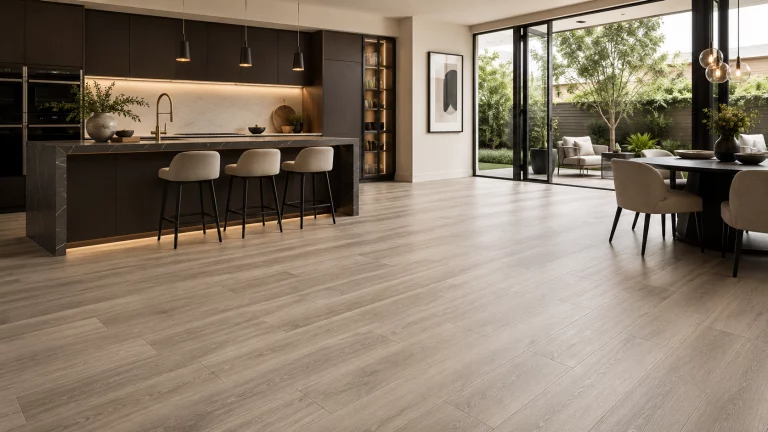
A property that stands empty and unheated between lettings is a difficult place for a wooden floor. Boards take up moisture from the air around them and should sit in the room, at its normal temperature, before they are fitted — a step often skipped here.
Delivery times and options depend on the delivery postcode. See Delivery & Returns for the applicable estimate.