

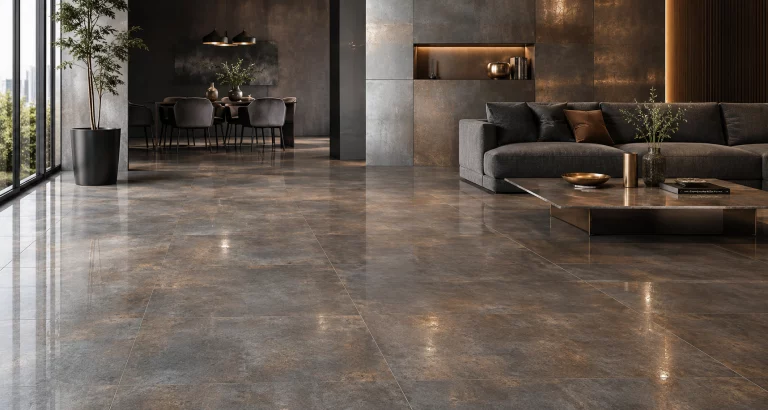
Porcelain Tiles
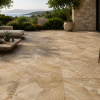
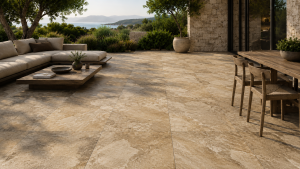
Durable style for indoor and outdoor living. Porcelain tiles offer an easy care surface that stands up to moisture, daily use, kitchens, bathrooms, patios and busy spaces. Choose from natural and contemporary finishes for a clean, lasting look that works beautifully throughout the home.
Shop Tiles
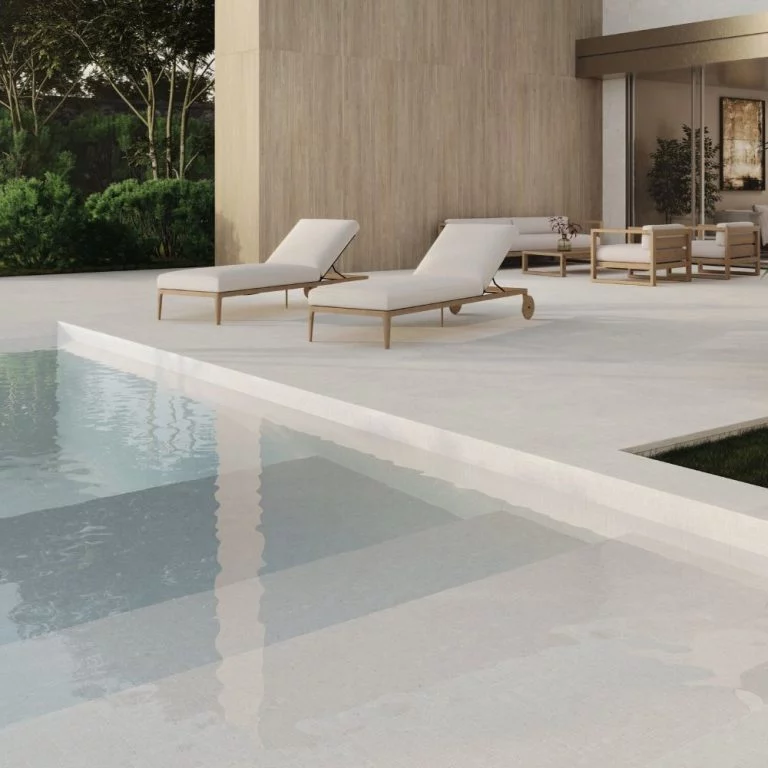
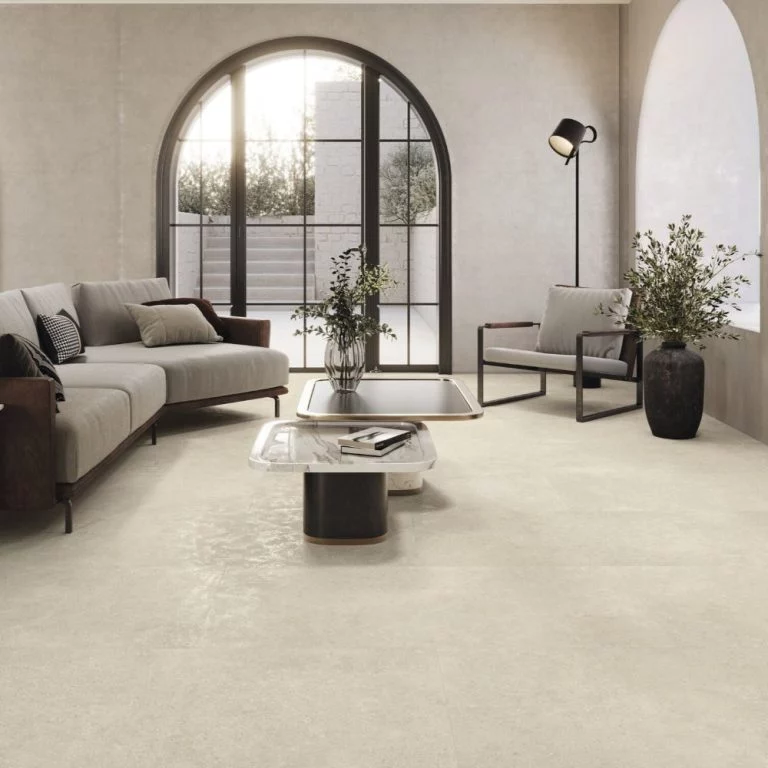
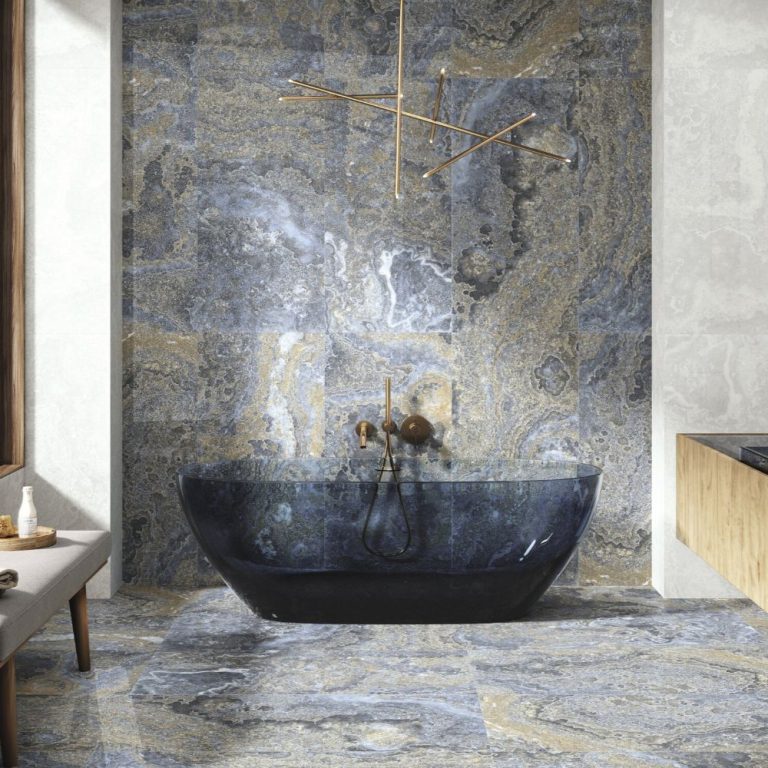
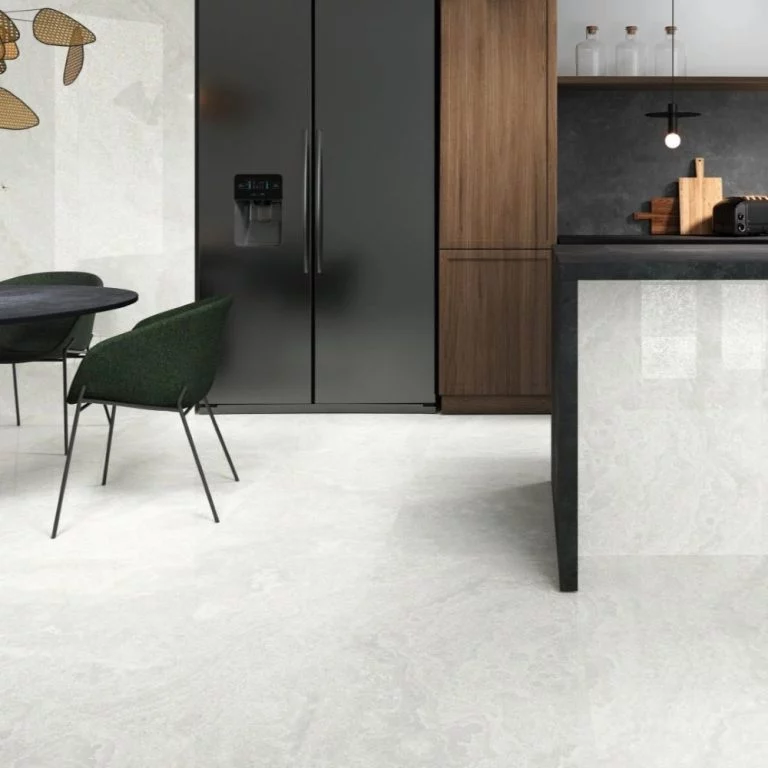
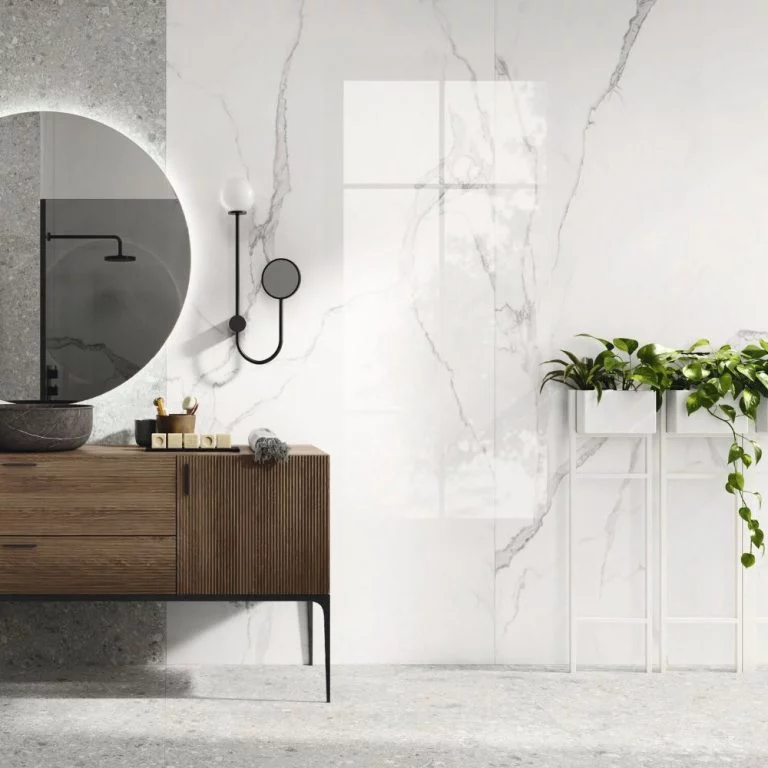
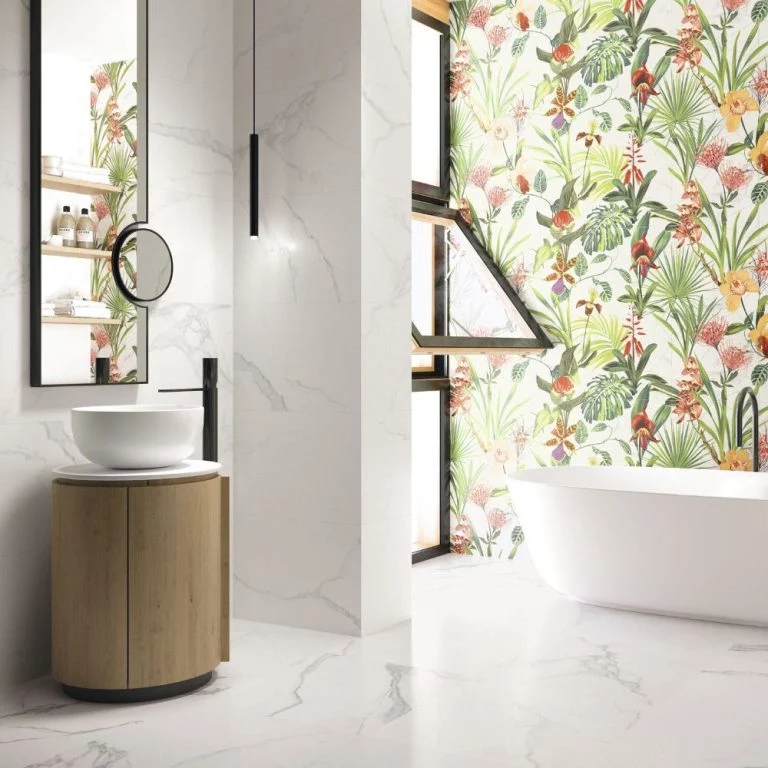
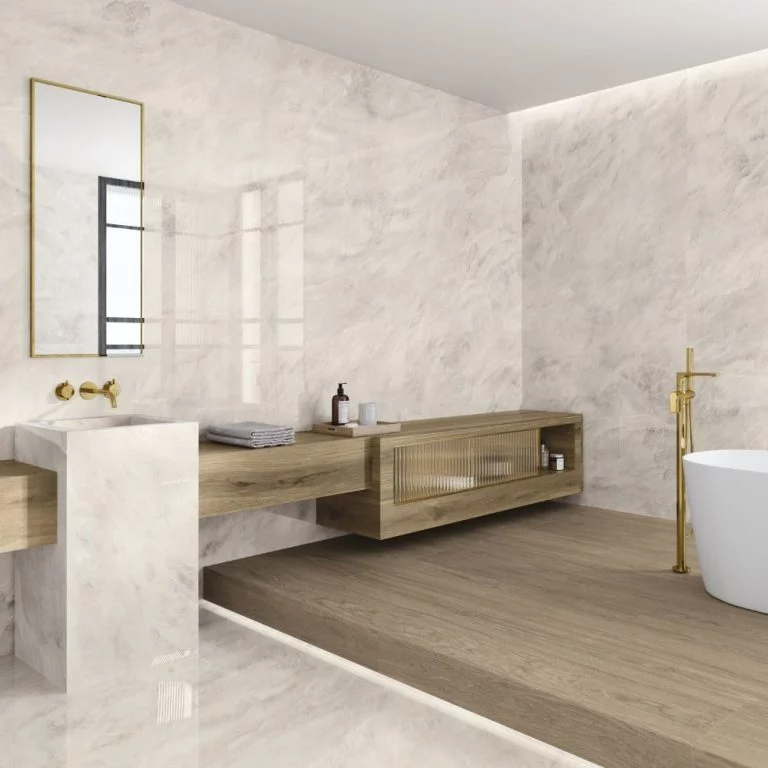
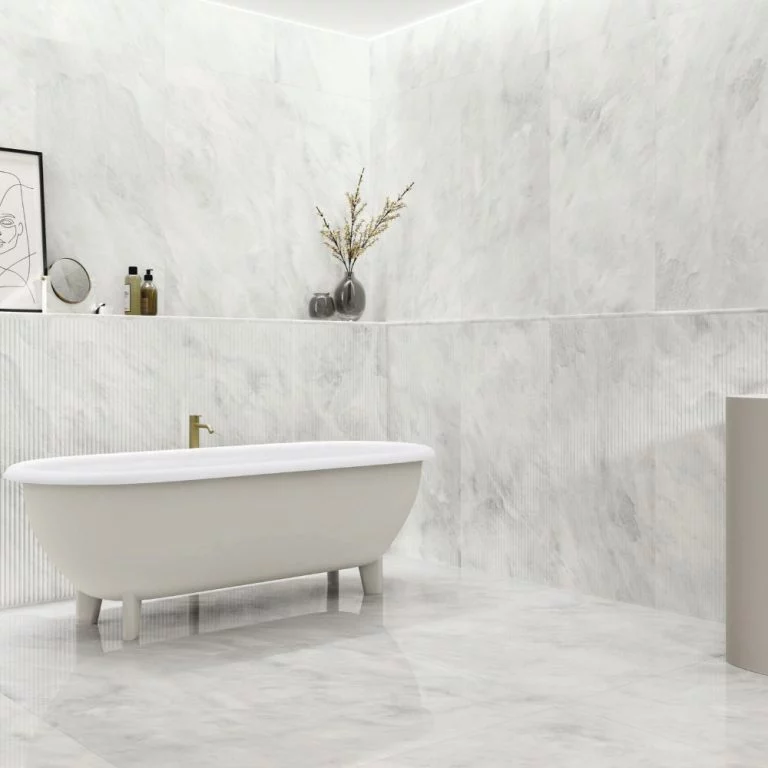
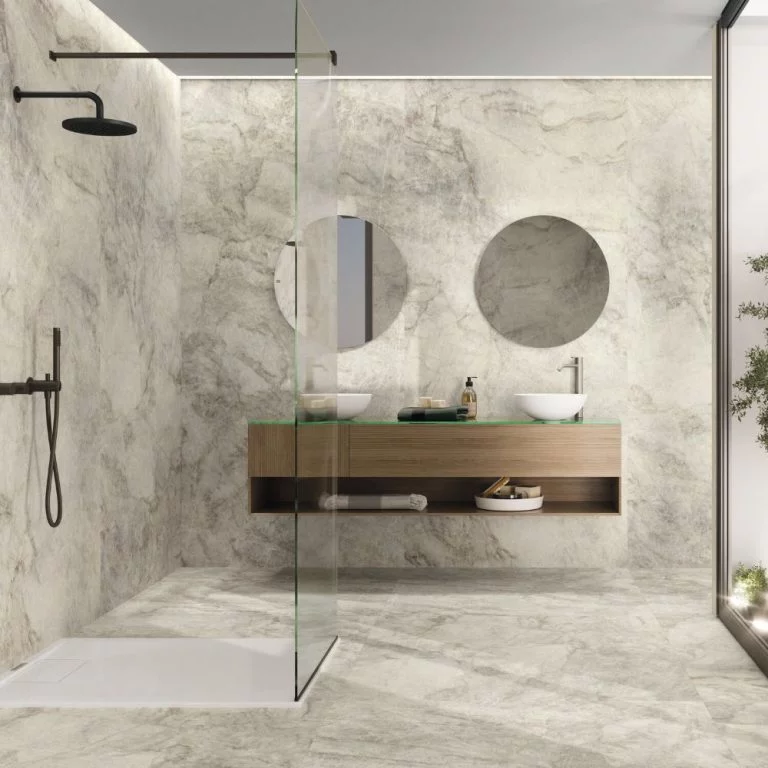
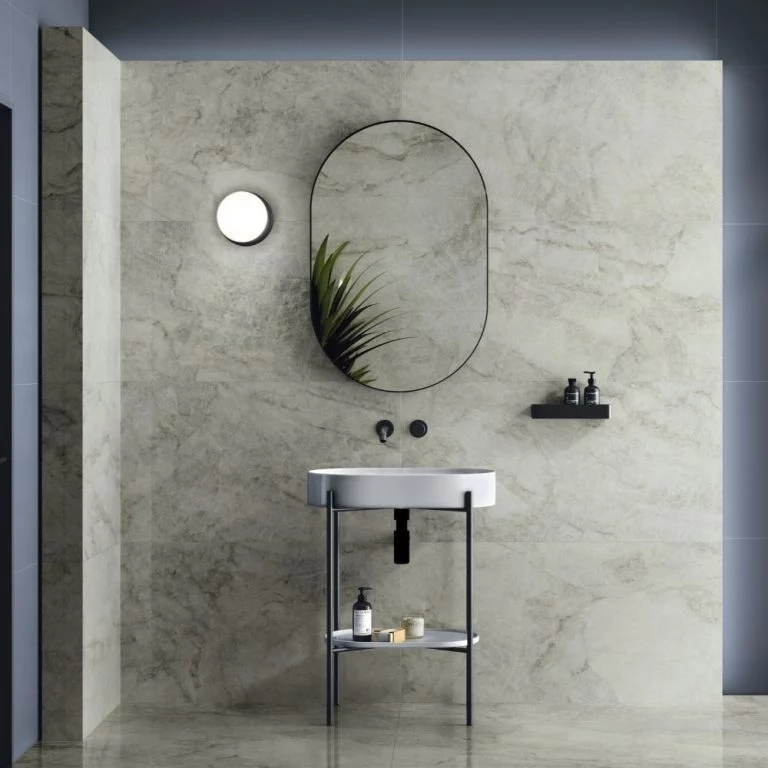
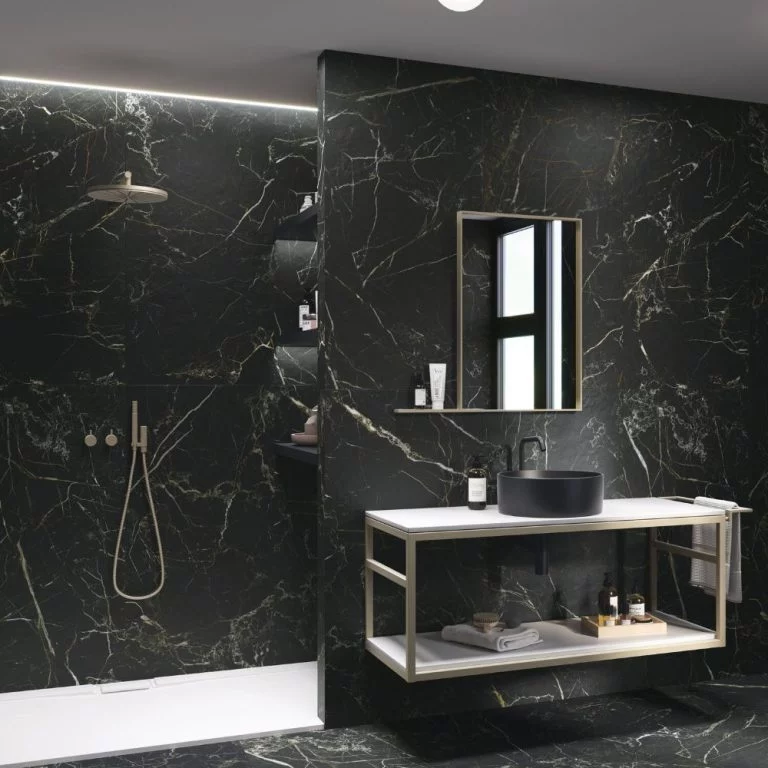
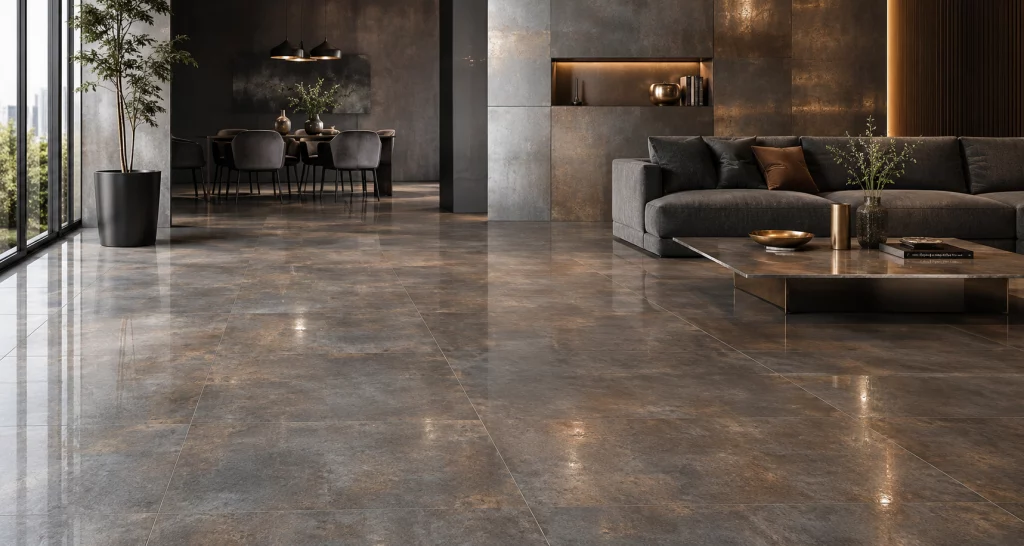
“Porcelain that behaves like stone and cleans like tile. Underfloor heating’s best friend.”
— our flooring team
TilesBuying guide
Still unsure? Real people, honest advice.
Buying guide
A few simple decisions—finish, format and where it’ll live—make choosing your tiles straightforward.
Best for permanence
Best for bathrooms
Best heat conductor
In depth
How to choose porcelain tiles
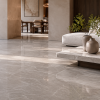
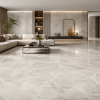
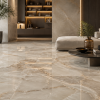
Eleven porcelain tiles, all 600 mm by 1200 mm, 9 or 10 mm thick, made in Spain, frost resistant, with a water absorption ratio listed under 0.50, specified for floor and wall, listed as compatible with underfloor heating, two to a box covering 1.44 square metres. Seven follow marble, four follow stone; five are polished, four lappato and two matt. The format is the same across the range, so the decision is the stone the tile follows and the finish on its surface.
Porcelain is chosen over the stone it imitates for what it does not do. It takes on almost no water, which is what the absorption ratio measures; it does not etch under household acids as marble does; it does not scratch under grit as limestone does; and it is consistent from tile to tile where stone is not. Frost resistance and the low absorption ratio together are the specification a tile needs to run from a kitchen across a threshold to a covered terrace, and both are listed on every tile here.
Shop by shade
In practice
The finish is the practical decision. Polished porcelain is the marble look at its most convincing and it is slippery when wet, which is why Luna Blanca and Night Lux come matt as well as polished. Lappato is the honed, semi-polished surface of the four stone effects, with more light than a matt and more grip than a polish. Slip resistance is a measured value, not a property of the finish: the HSE grades floors by the pendulum test value, quoted below, and the figure for a specific tile is on its manufacturer's data sheet. For a bathroom floor, ask for it before choosing.
The look is the other half. The marble effects run from the white marbles, Luna Blanca and Alexandria White, through the warm Alexandria Cream and the banded Taj Mahal Cappuccino and Pearl, which also sit under onyx, to the dark Night Lux. The stone effects, Wabi Bianco and Wabi Sabbia, are the quiet sand and white surfaces; Agate White and Agate Blue follow a banded stone. Because every tile is large-format, the floor reads as few joints and a calm surface, and the subfloor has to be flat enough for a tile that size to bear evenly.
That is the one condition. A tiled floor is laid by a tiler on a flat, sound, dry base, in adhesive, grouted and sealed at the edges; the screed regularity classes the trade works to and the moisture and preparation requirements for the base are quoted below. Over underfloor heating, porcelain conducts heat readily, and the surface temperature limits the heating standard sets are quoted as well. For a stone look that clicks together and floats, the concrete and cement rigid vinyl tiles are the alternative without the tiler.
FAQ
What is the difference between porcelain and ceramic tiles?
Are tiles good for bathroom floors?
Do tiles work with underfloor heating?
What does tile fitting cost?
Do you deliver UK-wide and can I get a sample first?
Standards
What the published standards say
Each entry is quoted from its source and linked to it. The full set is in the standards reference.
Pendulum Test Value — how slip risk is assessed
HSE grades pedestrian slip potential from the pendulum test value (PTV): 0-24 is high slip potential, 25-35 moderate and 36 or above low slip potential, the pendulum coefficient-of-friction test being the subject of BS 7976 Parts 1-3.
| low slip potential | 36 + PTV |
|---|---|
| moderate slip potential | 25-35 PTV |
| high slip potential | 0-24 PTV |
“Table 1 Slip potential classification, based on pendulum test values (PTV) PTV High slip potential 0-24 Moderate slip potential 25-35 Low slip potential 36 +”
Source: HSE - Assessing the slip resistance of flooring (GEIS2)BS EN 13893 — slip resistance, dry conditions
EN 13893 sets the parameters for measuring the dynamic coefficient of friction of resilient, laminate and textile floor coverings walked on with shoes; the result is a dynamic coefficient of friction and the measurement is taken on dry surfaces only.
| measured quantity | dynamic coefficient of friction (u) |
|---|---|
| relief floor coverings included up to displacement volume | 4 cm3/dm2 |
“This European standard specifies the parameters for the measurement of dynamic coefficient of friction (u) on surfaces of resilient, laminate and textile floor coverings, usually walked on with shoes. Reliefed floor coverings with a displacement volume <= 4 cm3/dm2 are included.”
Source: BS EN 13893:2002 - Resilient, laminate and textile floor coverings. Measurement of dynamic coefficient of friction on dry floor surfaces (British Standard)BS 8204 — surface regularity classes SR1 to SR3
BS 8204 defines three surface regularity classes for screeds and concrete bases, SR1, SR2 and SR3, measured as the maximum deviation below a 2 m straightedge placed directly on the surface.
| SR1 (max deviation under 2 m straightedge) | 3 mm |
|---|---|
| SR2 (max deviation under 2 m straightedge) | 5 mm |
| SR3 (max deviation under 2 m straightedge) | 10 mm |
| straightedge length | 2 m |
“Surface regularity classes are given in BS 8204 as SR1, SR2 and SR3 relating to 3mm, 5mm and 10mm respectively.”
Source: Surface regularity - straightedge method | The Concrete SocietyCFA guidance — the subfloor is the installer’s first responsibility
The CFA Guide to Contract Flooring requires the base to be a clean, sound, level surface that is strong enough to carry the preparation materials and the floor finish, mechanically prepared and dust free, and dry enough to give a hygrometer reading of no more than 75% relative humidity.
| maximum hygrometer reading before laying a floor finish | 75 % RH |
|---|
“Before the application of the floor finish a solid (cementitious or similar) base must be sufficiently dry to show a hygrometer reading not greater than 75% Relative Humidity when tested in accordance with the British Standard Code of Practice.”
Source: CFA Guide to Contract Flooring - Contract Flooring AssociationMaximum floor surface temperature
EN 1264 caps the floor surface temperature at 29 °C in the occupied area, 35 °C in the edge (perimeter) zone and 33 °C in bathrooms.
| occupied area | 29 °C |
|---|---|
| edge zone | 35 °C |
| bathrooms | 33 °C |
“Max. surface temperatures in DIN EN 1264: • 29 °C in the occupied area • 35 °C in the edge zone • 33 °C in bathrooms”
Source: Uponor underfloor heating/cooling — Planning information (Technical Information TI-1186660)Delivery & areas