


























Bathroom Wall Panels
Explore our premium wall panels designed to bring clean, seamless style to modern bathrooms and interiors. Waterproof, durable, and easy to maintain, they offer the look of marble, stone, or tile without the need for grout.
Shop Wall Panels

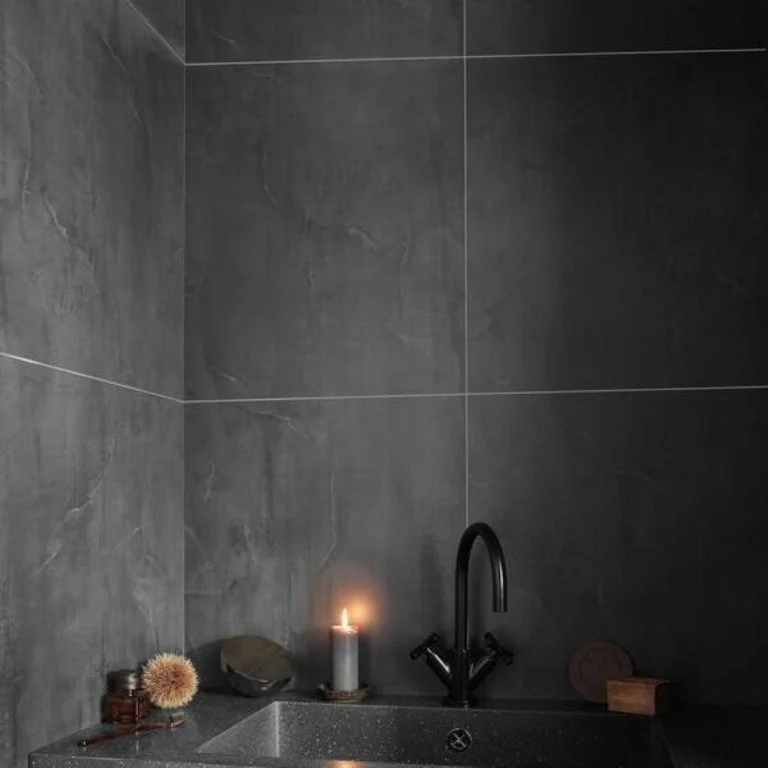




“The fastest change a room can have. No plaster, no mess, up in an afternoon.”
— our flooring team
Wall PanelsBuying guide
Still unsure? Real people, honest advice.
Buying guide
A few simple decisions—finish, format and where it’ll live—make choosing your wall panels straightforward.
Best grout-free showers
Best for fast renovations
Built for wet rooms
In depth
How to choose shower wall panels
Wall panels are the one category here that is not a floor, and the decision they answer is a bathroom decision: tile the shower, or panel it. The range is a single product, the Berry Alloc Wall and Water panel, in five surfaces. Each panel is 600 mm wide and 2400 mm tall, 10.2 mm thick, a high-pressure laminate face on a seven-layer plywood core, listed as waterproof, with an interlocking system along the long edge, made in Belgium, with the manufacturer's lifetime warranty. Concrete, Cement and White Brooklyn Concrete are the three concrete looks from dark to pale; White Marble is the veined surface; Black Velvet the dark, matt one.
Tiling a shower means bedding small units in adhesive and grouting between them, and every grout line is a joint that has to be sealed, cleaned and, in time, raked out and redone. Panelling it means fixing a few large units to the wall and sealing the handful of joints where they meet, at the corners and around the valve and the shower head. That is the whole comparison. The high-pressure laminate face is the material of a hard-wearing worktop; it is wiped clean with a soft cloth and has no grout to discolour. Because there is no grout to cure, the enclosure is back in use far sooner than a tiled one.
Shop by shade

In practice
What the panels depend on is the wall behind them and the sealing at their joints. A sound, flat wall takes them directly; sound, flat, firmly fixed tiles can often take them as well, which is why bathrooms are frequently re-done with panels rather than re-tiled, and a fitter judges that on site. A 2400 mm panel reaches floor to ceiling in most bathrooms without a horizontal joint, and 10.2 mm keeps the build-up small. The panels are not glued and grouted; they interlock and are fixed, and the joints, edges and cut-outs are sealed. That sealing is where a careful fitter earns the lifetime the warranty promises.
The surface is chosen with the floor. A concrete or cement panel over a matt grey floor reads as one material through the wet room; White Marble pairs with the marble-effect porcelain; Black Velvet makes a dark enclosure in a pale room. Two floors stay flat and dry alongside any of them: the matt marble-effect tiles and the concrete rigid vinyl tiles, both linked below, one laid by a tiler and one clicked together.
A lifetime warranty deserves a careful read, and so does what it sits alongside. The Consumer Rights Act's own quality term applies to the panels as it does to any goods, the remedies it gives are the buyer's regardless of the warranty, and a manufacturer's guarantee cannot reduce those statutory rights; all three are quoted below. What decides whether a panelled shower stays dry is not written in any of them: it is the sealing at the joints, and that is where the fitter's time goes.
FAQ
What are shower wall panels?
Are wall panels really waterproof?
Can wall panels be fitted over existing tiles?
How do I clean wall panels?
Do you deliver UK-wide and can I get a sample first?
Standards
What the published standards say
Each entry is quoted from its source and linked to it. The full set is in the standards reference.
A guarantee is in addition to your legal rights
Section 30 of the Consumer Rights Act 2015 requires a goods guarantee to state that the consumer has statutory rights in relation to the goods and that those rights are not affected by the guarantee, so a manufacturer's guarantee sits alongside statutory rights rather than replacing them.
“the guarantee states that the consumer has statutory rights in relation to the goods and that those rights are not affected by the guarantee”
Source: Consumer Rights Act 2015, section 30: Goods under guarantee — legislation.gov.ukConsumer Rights Act 2015 — goods must be of satisfactory quality
The Consumer Rights Act 2015 treats every consumer contract to supply goods as including a term that the quality of the goods is satisfactory, measured against what a reasonable person would consider satisfactory taking account of the description, the price and all other relevant circumstances. The Act names fitness for all the purposes for which goods of that kind are usually supplied, appearance and finish, freedom from minor defects, safety and durability as aspects of quality.
| aspect of quality (s.9(3)(a)) | fitness for all the purposes for which goods of that kind are usually supplied |
|---|---|
| aspect of quality (s.9(3)(b)) | appearance and finish |
| aspect of quality (s.9(3)(c)) | freedom from minor defects |
| aspect of quality (s.9(3)(d)) | safety |
| aspect of quality (s.9(3)(e)) | durability |
“(3)The quality of goods includes their state and condition; and the following aspects (among others) are in appropriate cases aspects of the quality of goods— (a)fitness for all the purposes for which goods of that kind are usually supplied; (b)appearance and finish; (c)freedom from minor defects; (d)safety; (e)durability.”
Source: Consumer Rights Act 2015, section 9 (Goods to be of satisfactory quality), subsection (3)Consumer Rights Act 2015 — the short-term right to reject
Under the Consumer Rights Act 2015 a consumer whose goods do not conform has a short-term right to reject, a right to repair or replacement, and a right to a price reduction or a final right to reject. The time limit for the short-term right to reject is 30 days beginning with the day after transfer of ownership, delivery and any trader installation have all taken place.
| short-term right to reject | 30 days |
|---|
“(3)The time limit for exercising the short-term right to reject (unless subsection (4) applies) is the end of 30 days beginning with the first day after these have all happened— (a)ownership or (in the case of a contract for the hire of goods, a hire-purchase agreement or a conditional sales contract) possession of the goods has been transferred to the consumer, (b)the goods have been delivered, and (c)where the contract requires the trader to install the goods or take other action to enable the consumer to use them, the trader has notified the consumer that the action has been taken.”
Source: Consumer Rights Act 2015, section 22 (Time limit for short-term right to reject), subsection (3)Delivery & areas