

Herringbone Flooring
Herringbone is a block laid at right angles to its neighbour, and in our range it comes in two materials: 10 engineered oak block floors, 14 mm thick with a 3 mm oak wear layer, glued down; and 8 rigid vinyl herringbone floors, 6.5 mm thick with a 0.55 mm wear layer, click fitted and listed as waterproof. A laminate herringbone is not in the range on the catalogue of 15 September 2026.
The pattern, in one paragraph
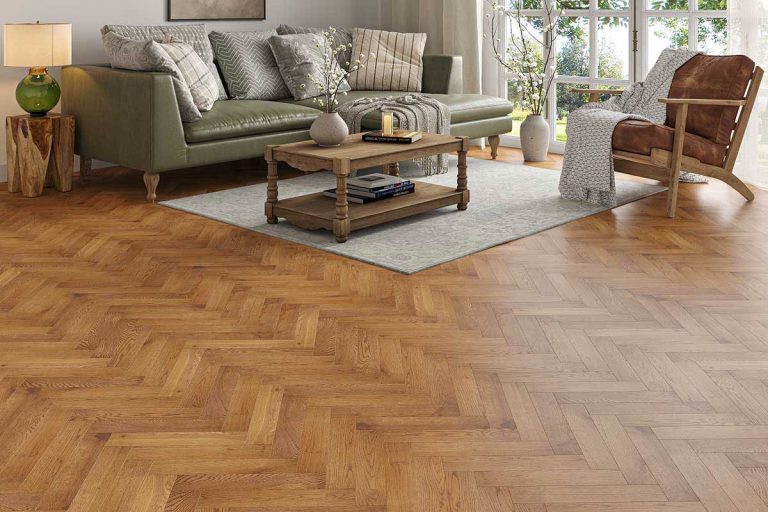
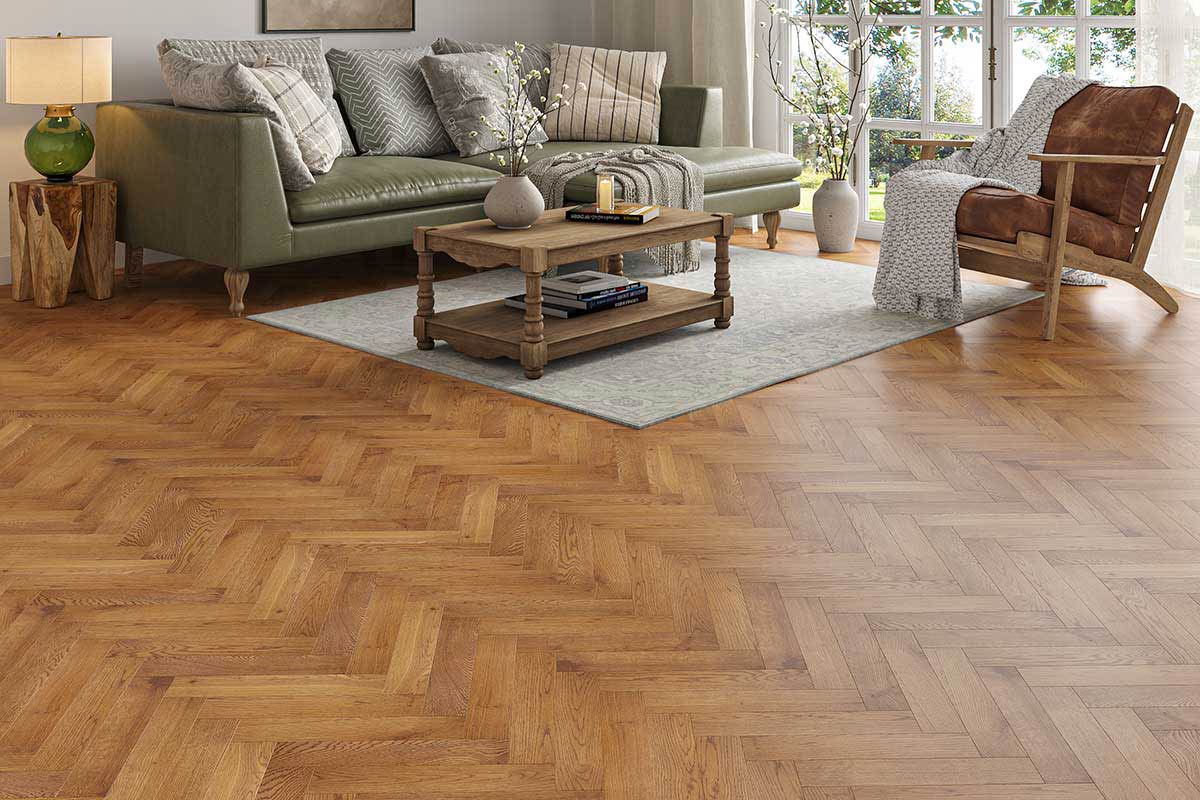
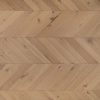
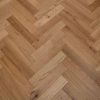
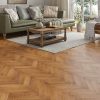
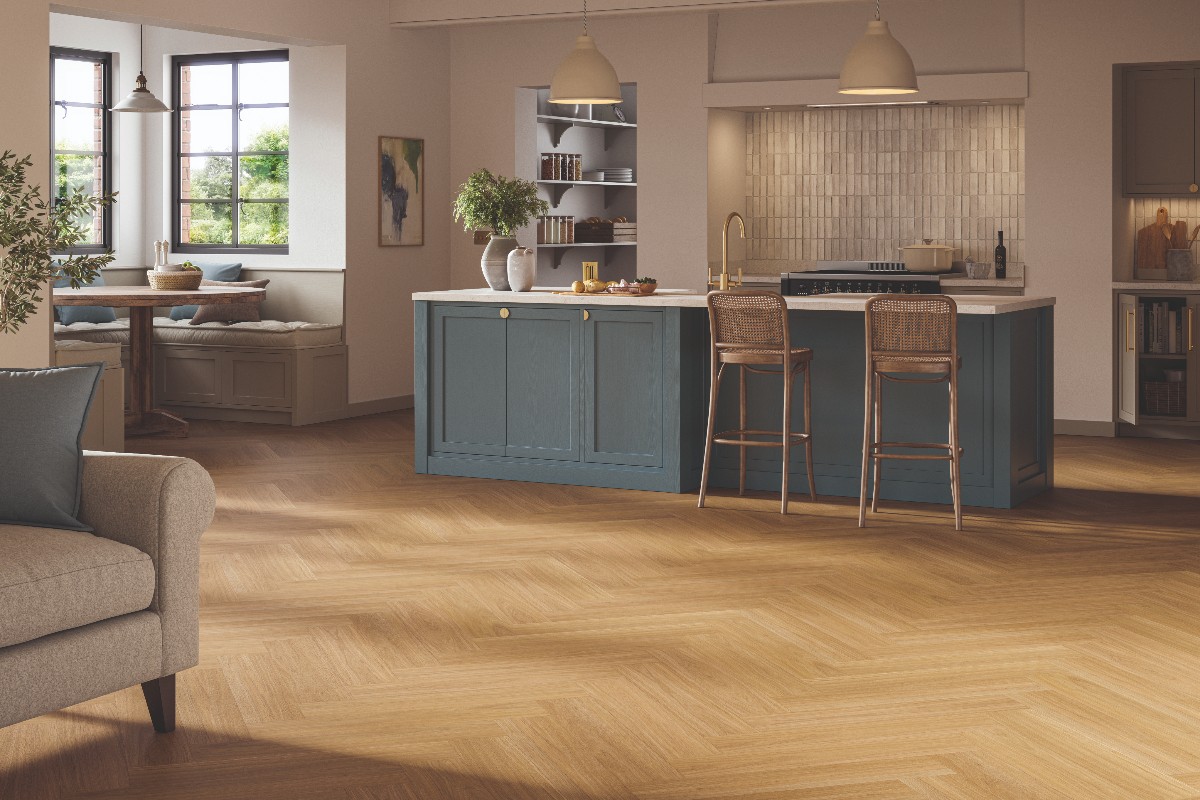
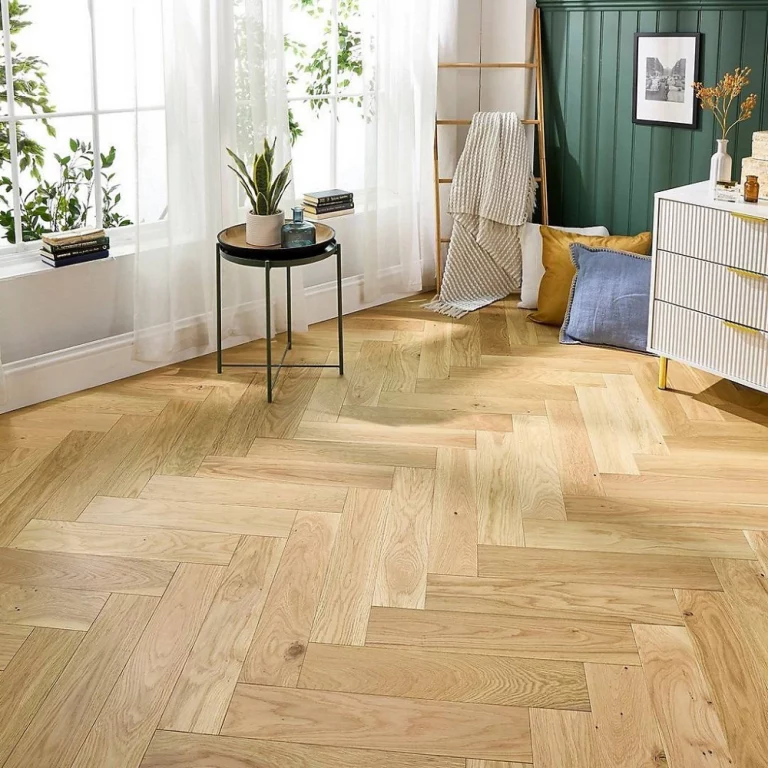
A herringbone floor is made of short blocks of equal size, each laid at a right angle to the next, so that the rows step across the room in a broken zigzag. The blocks are cut square; a chevron is the same idea with the ends cut at an angle so the rows meet in a continuous V. That one difference decides how the floor reads: herringbone is busier and more traditional, chevron more formal and directional, and the pattern is set along the longest view through the room, usually from the door towards the main window.
Because every block meets a wall at an angle, a herringbone floor produces more offcuts than a straight plank floor, and it asks more of the base underneath: an oak herringbone is glued to a flat, dry surface, block by block, from a centre line. That is why the manufacturers we can cite give 15% to 20% for the waste allowance where a plank floor takes 8% to 12%, and why the fitting guide linked below starts with a setting out drawing rather than a pack of boards.
Oak herringbone: the 10 Oxford block floors
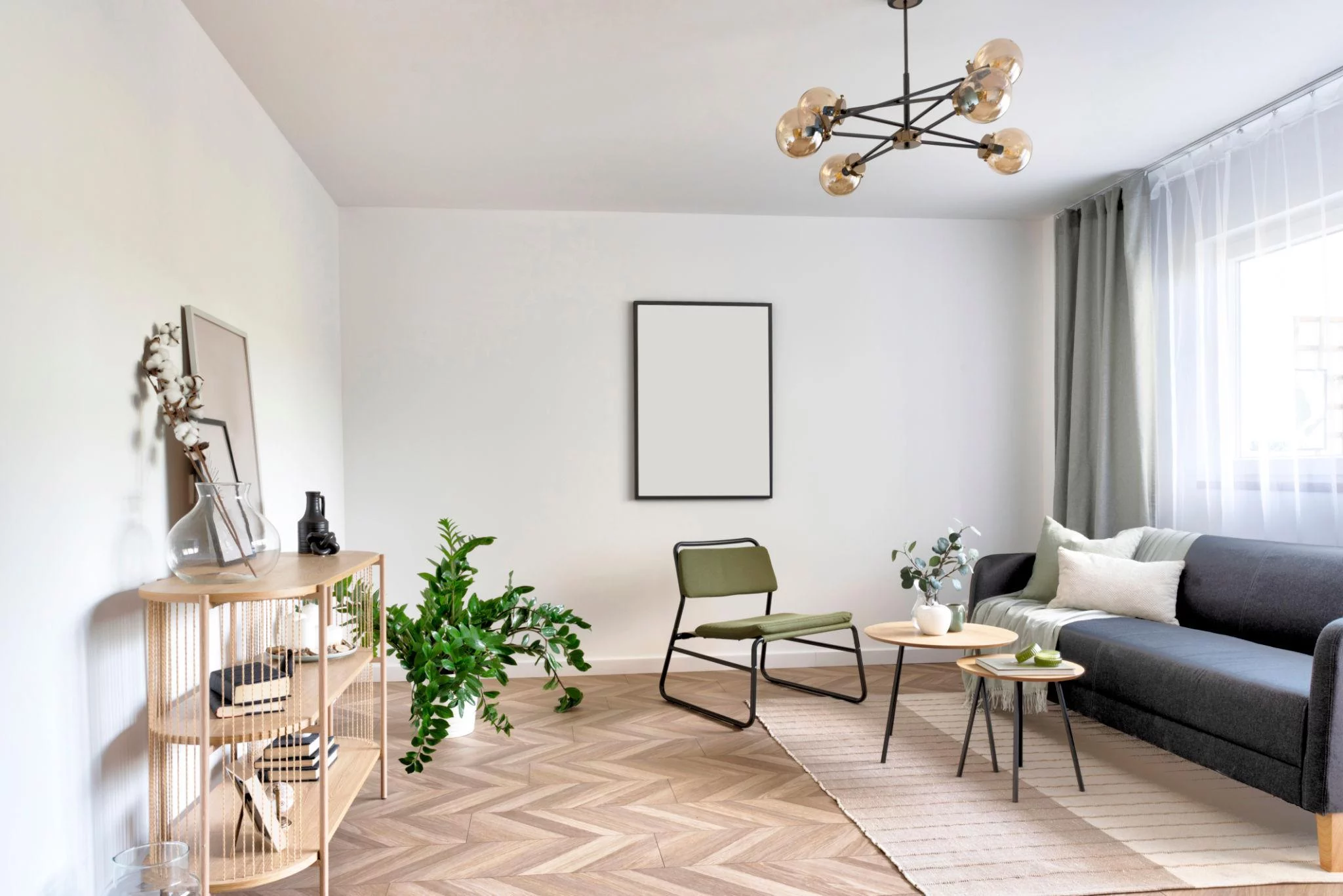
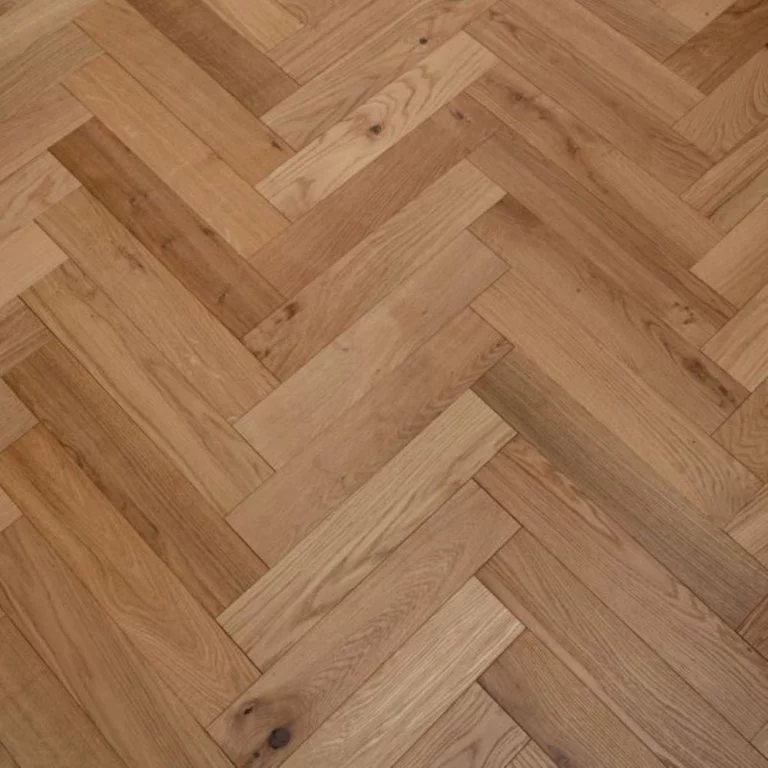
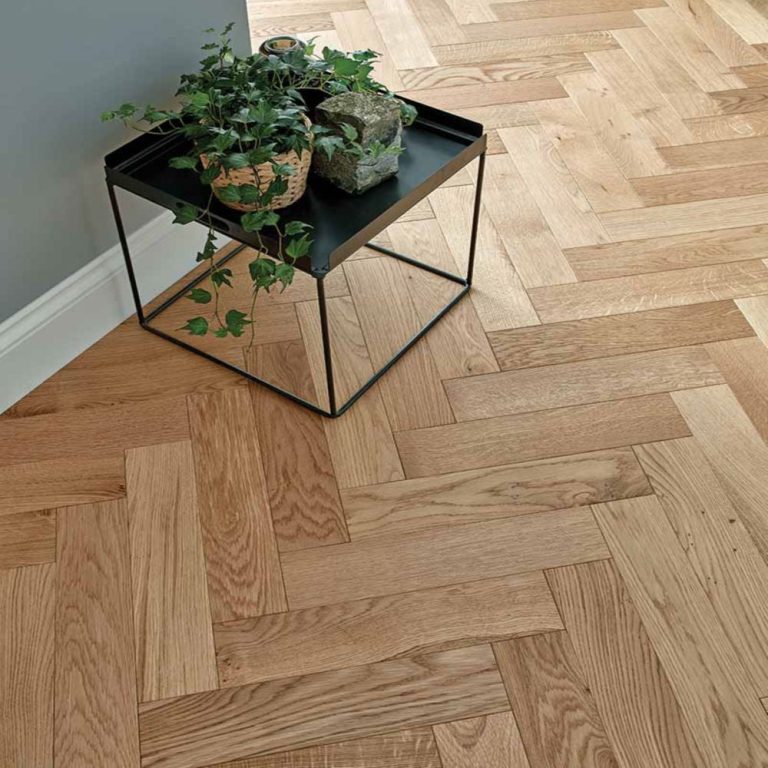
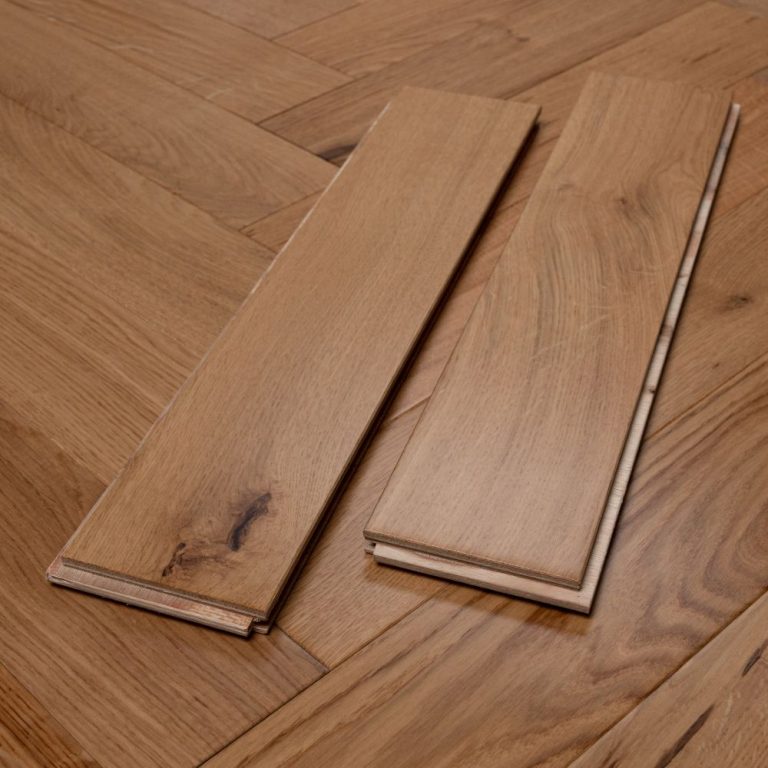
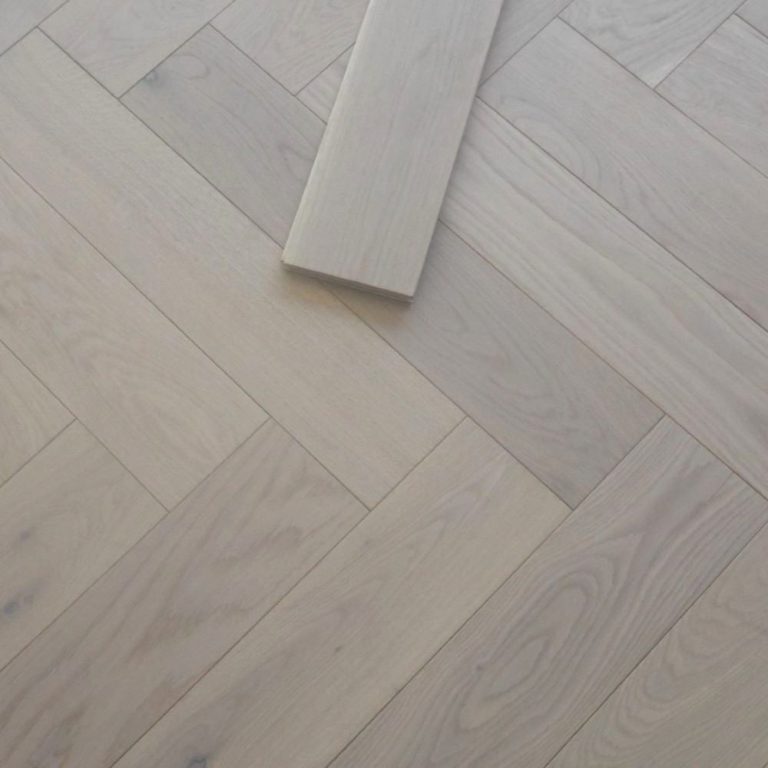
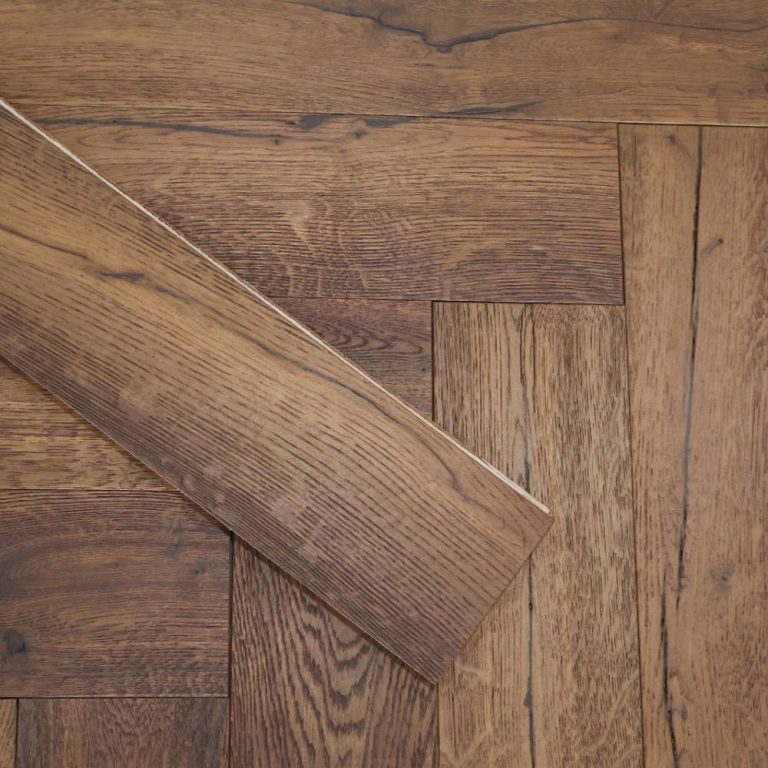
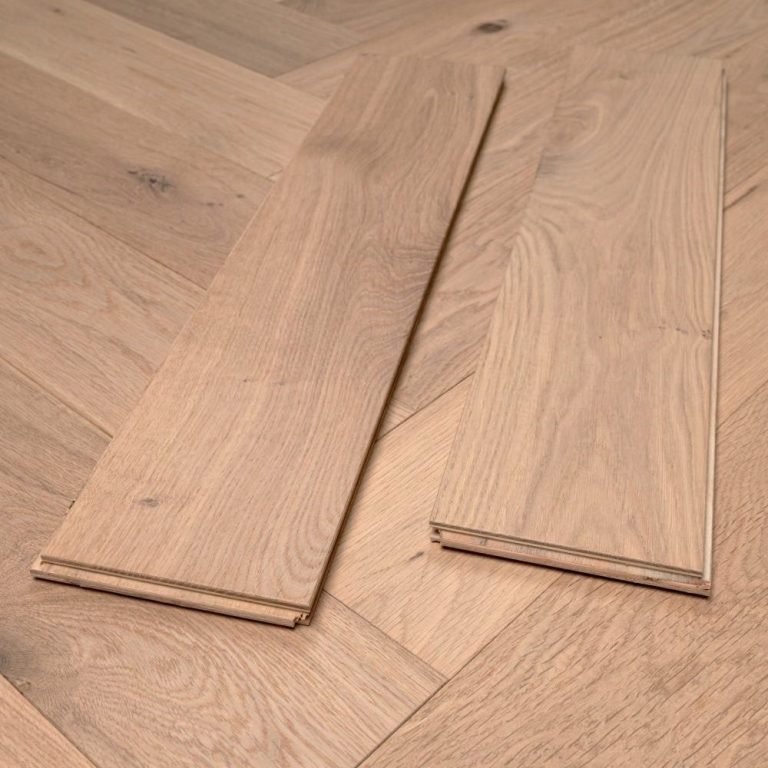
The Oxford herringbone blocks are engineered oak: a 3 mm oak wear layer on a 14 mm cross layered board, in two formats, 90 x 450 mm and 125 x 600 mm, in brushed, lacquered, oiled, fumed and whitewashed faces. Every one of the 10 is listed for underfloor heating and carries a 15 year manufacturer's warranty; the blocks are tongue and groove and are glued down, which is the construction a pattern floor needs over a heated screed. A 3 mm wear layer can be sanded back at least once.
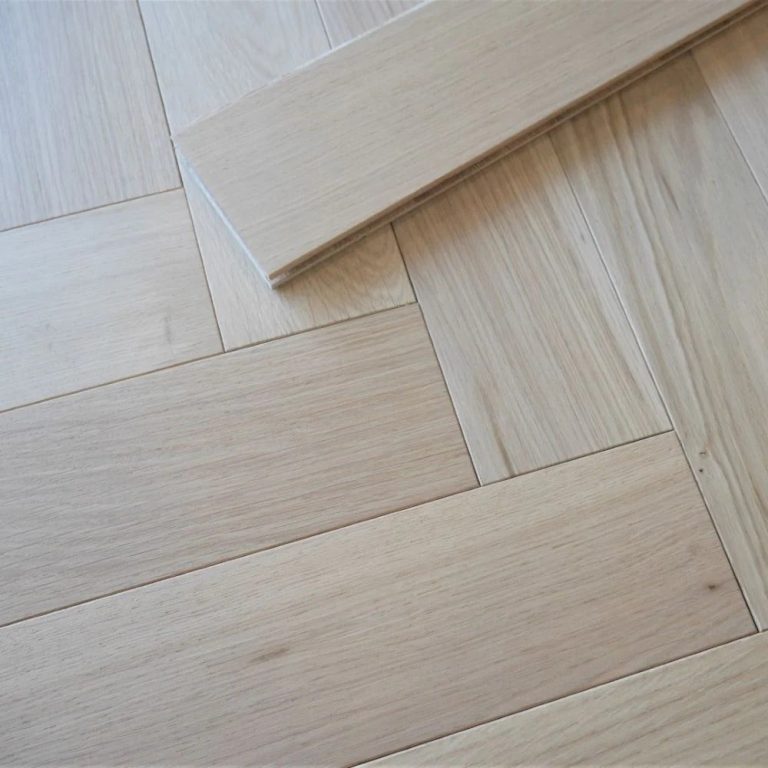
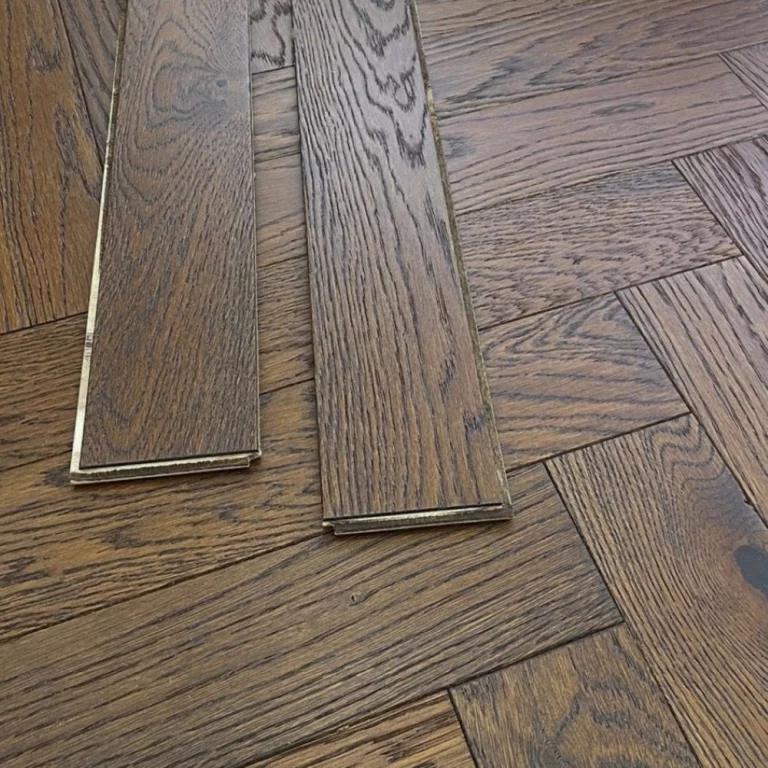
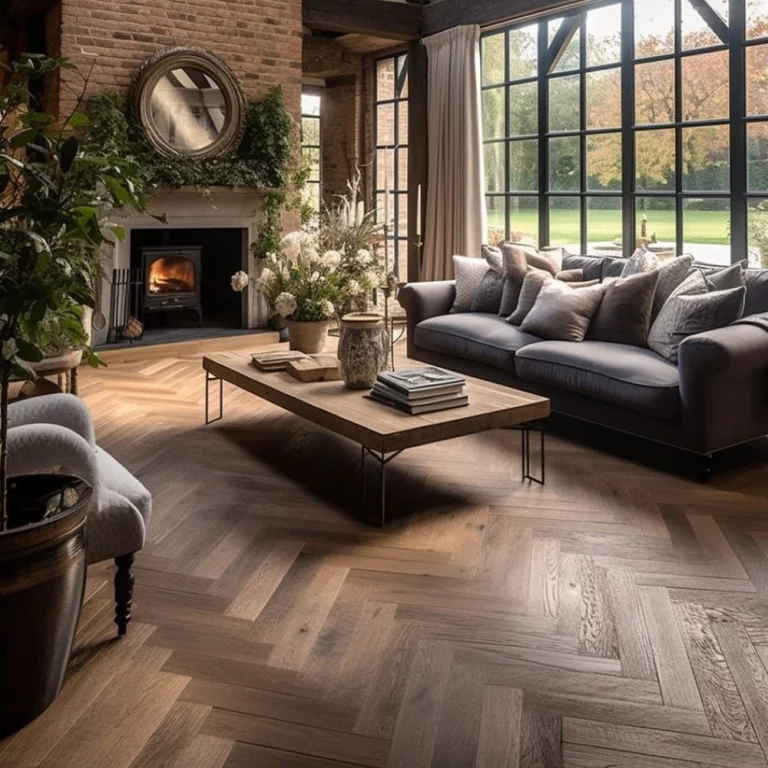
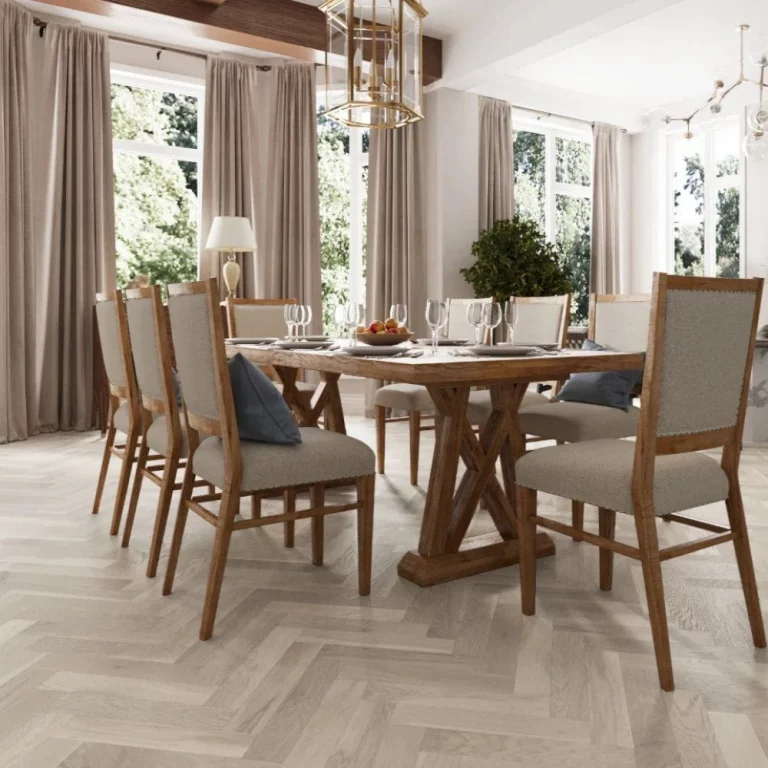
| Product | Format | Wear layer / thickness | Fitting | Underfloor heating | Warranty |
|---|---|---|---|---|---|
| Oxford Herringbone Oak Brushed UV Oiled Wood Flooring 14 x 90 x 450 | 14mm x 90mm x 450mm | 3mm | Tongue & Groove | Compatible | 15 Years |
| Oxford Herringbone Oak Lacquered Wood Flooring 14 x 90 x 450 | 14mm x 90mm x 450mm | 3mm | Tongue & Groove | Compatible | 15 Years |
| Oxford Herringbone Light Oak Wood Flooring 14 x 90 x 450 | 14mm x 90mm x 450mm | 3mm | Tongue & Groove | Compatible | 15 Years |
| Oxford Herringbone Dark Brown Oak Wood Flooring 14 x 90 x 450 | 14mm x 90mm x 450mm | 3mm | Tongue & Groove | Compatible | 15 Years |
| Oxford Herringbone Fumed Oak Wood Flooring 14 x 90 x 450 | 14mm x 90mm x 450mm | 3mm | Tongue & Groove | Compatible | 15 Years |
| Oxford Herringbone Whitewashed Oak Wood Flooring 14 x 90 x 450 | 14mm x 90mm x 450mm | 3mm | Tongue & Groove | Compatible | 15 Years |
| Oxford Herringbone Natural Brushed Oak 14 x 125 x 600 | 14mm x 125mm x 600mm | 3mm | Tongue & Groove | Compatible | 15 Years |
| Oxford Herringbone White Oiled Oak 14 x 125 x 600 | 14mm x 125mm x 600mm | 3mm | Tongue & Groove | Compatible | 15 Years |
| Oxford Herringbone Antique Brown Oak 14 x 125 x 600 | 14mm x 125mm x 600mm | 3mm | Tongue & Groove | Compatible | 15 Years |
| Oxford Herringbone Light Brushed Oak 14 x 125 x 600 | 14mm x 125mm x 600mm | 3mm | Tongue & Groove | Compatible | 15 Years |
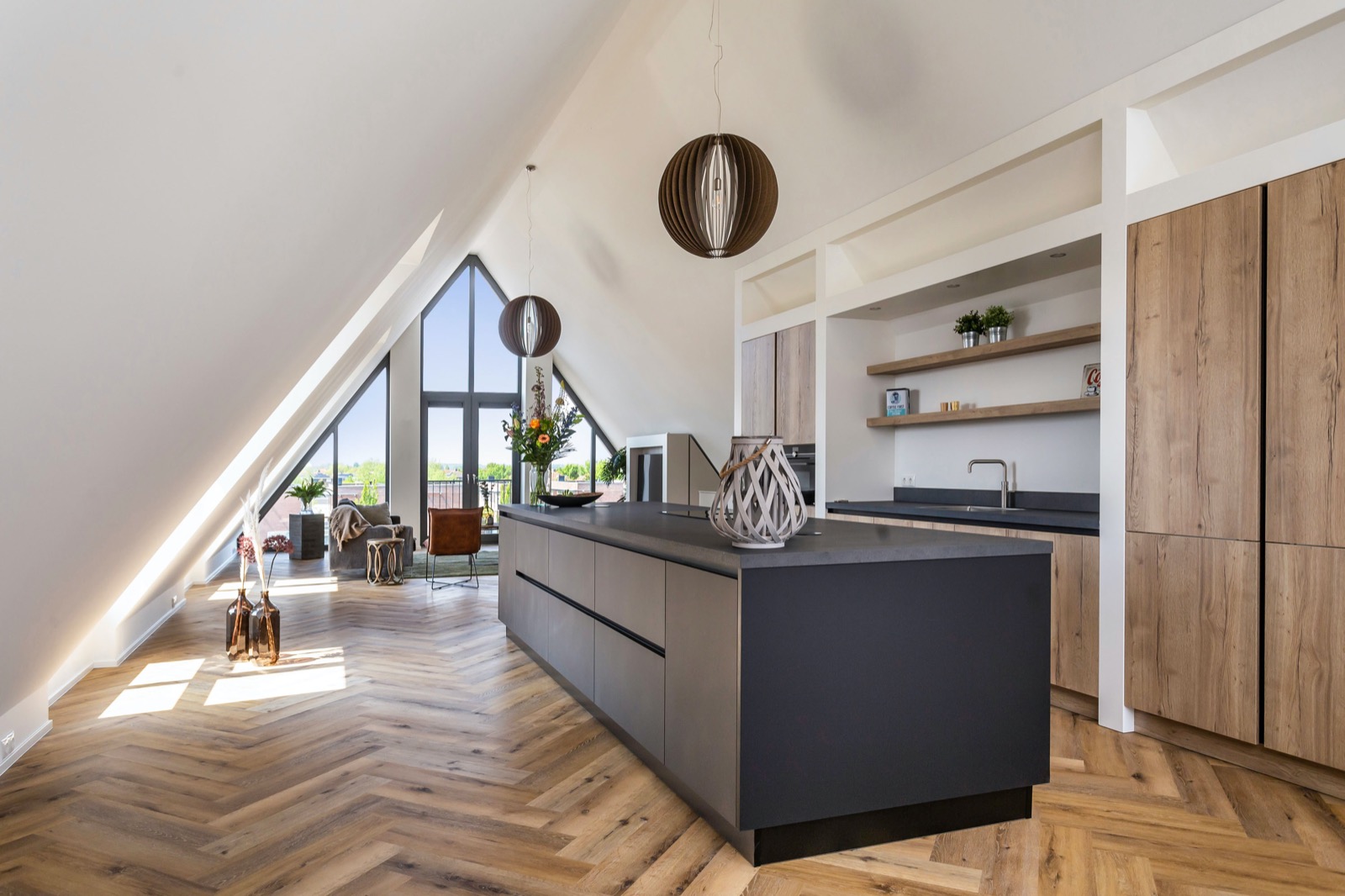
Rigid vinyl herringbone: the 8 BML floors
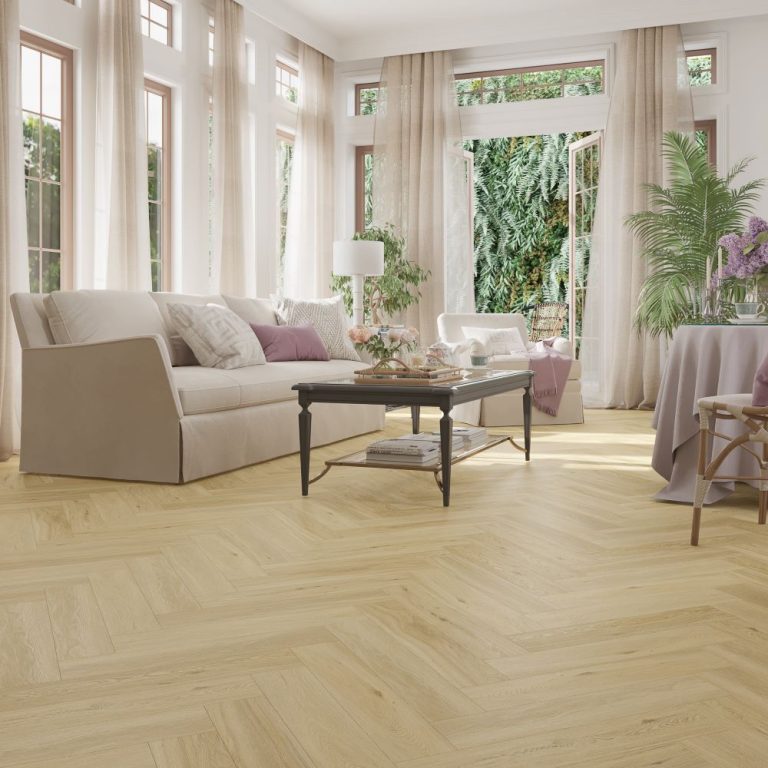
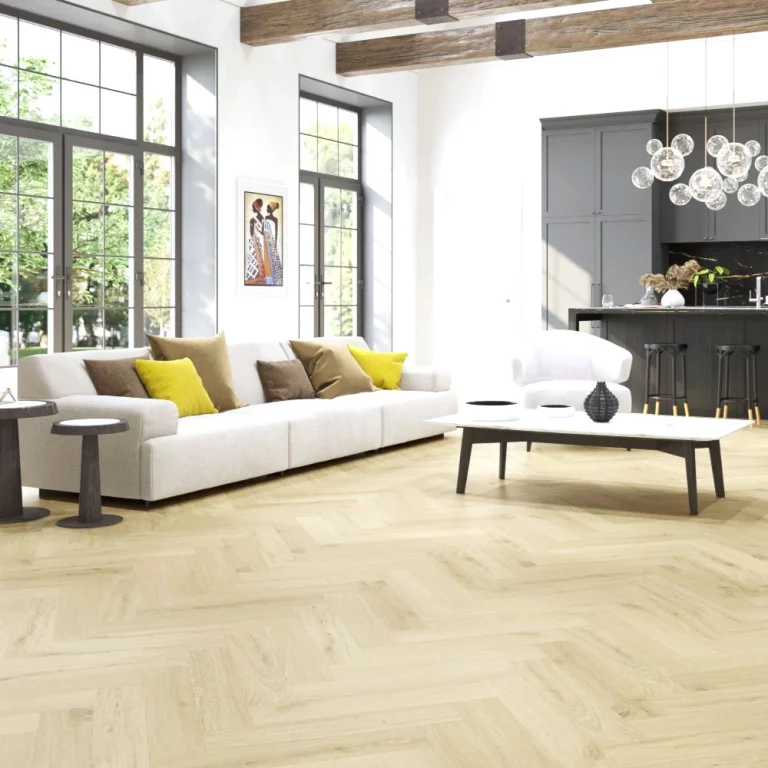
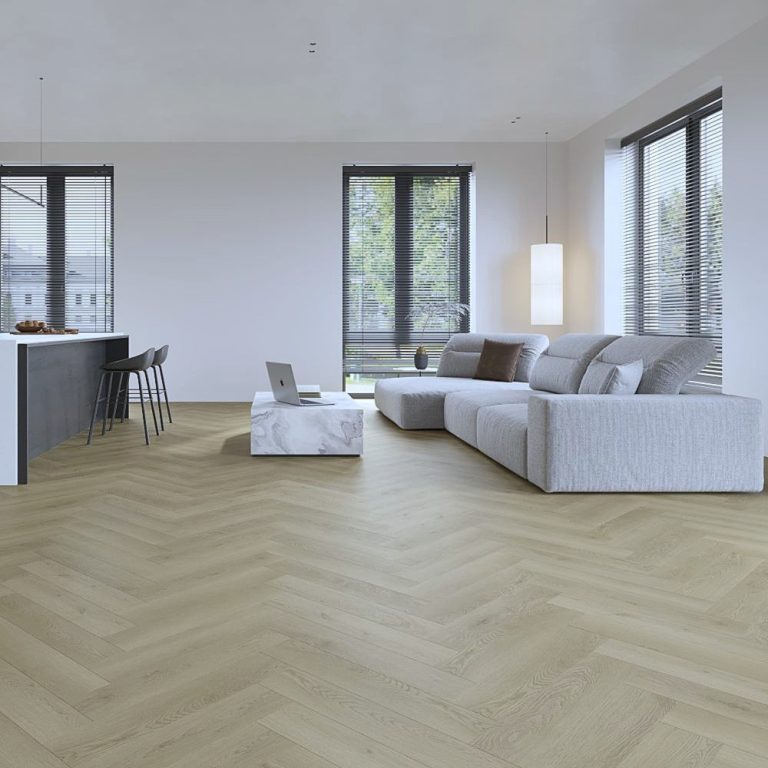
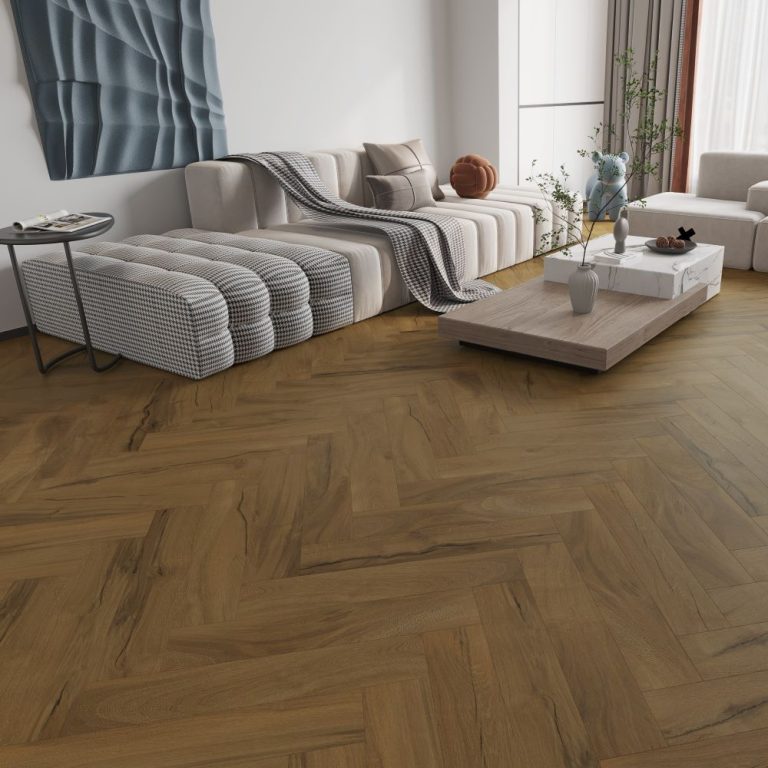
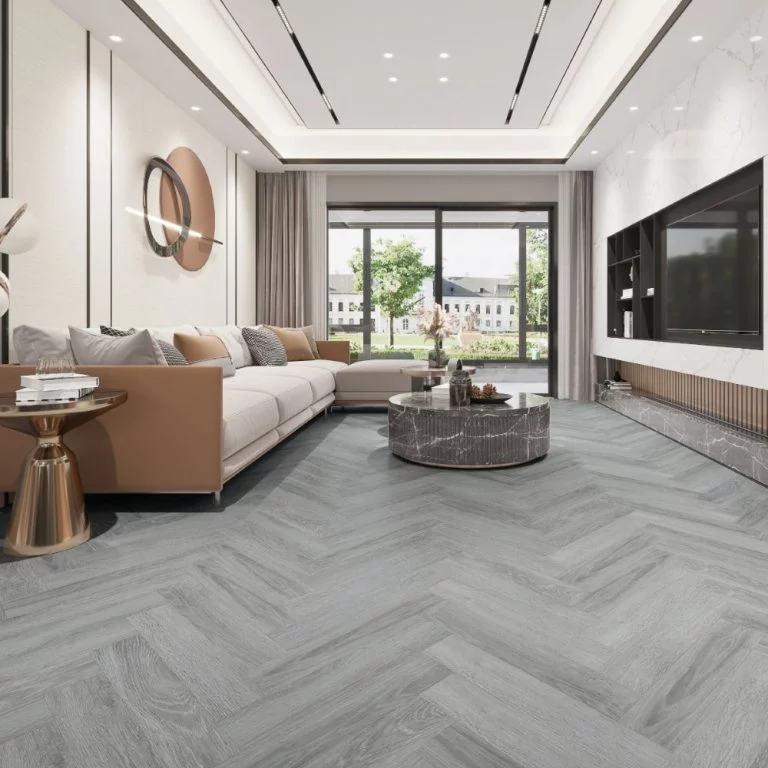
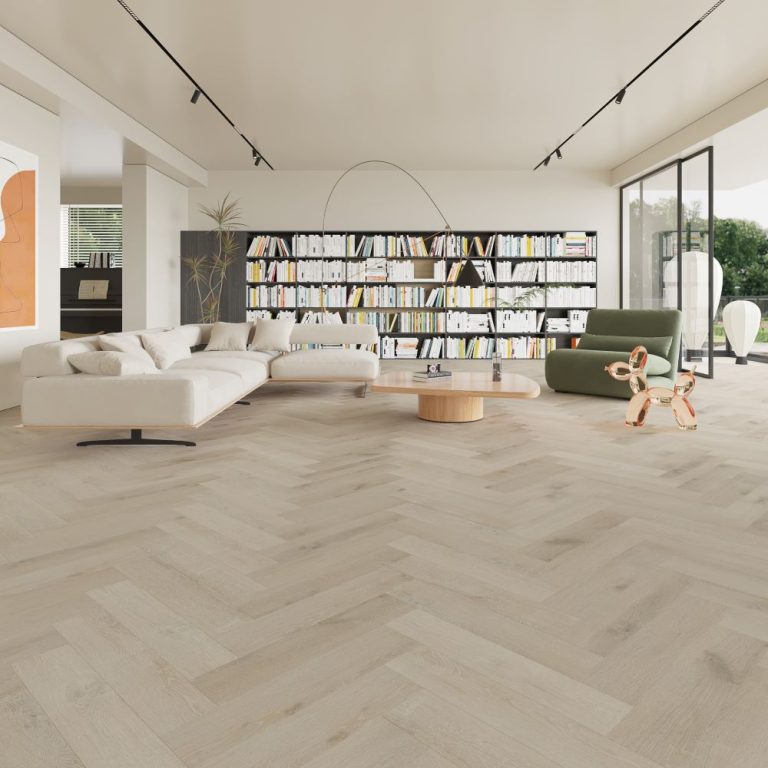
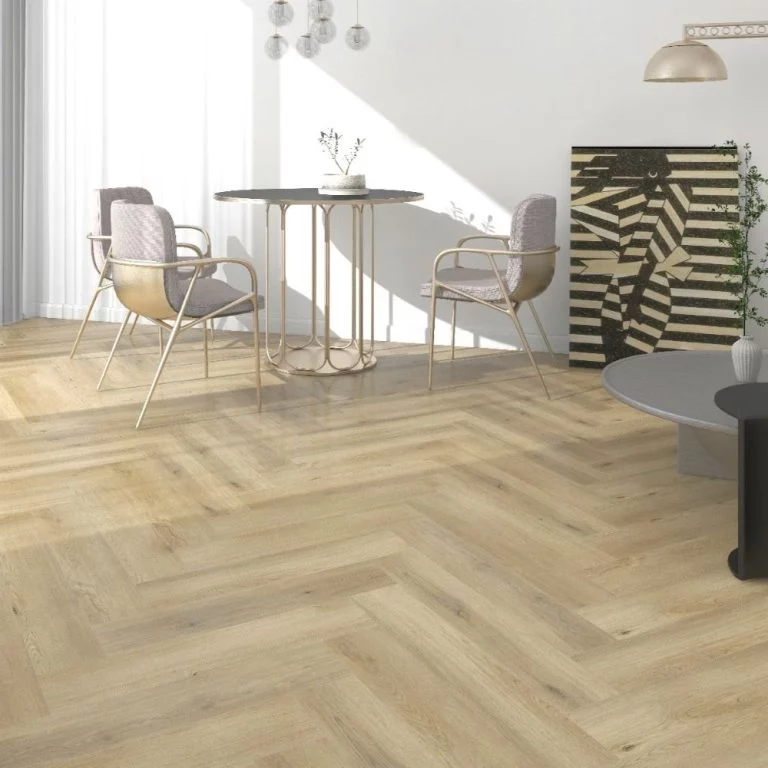
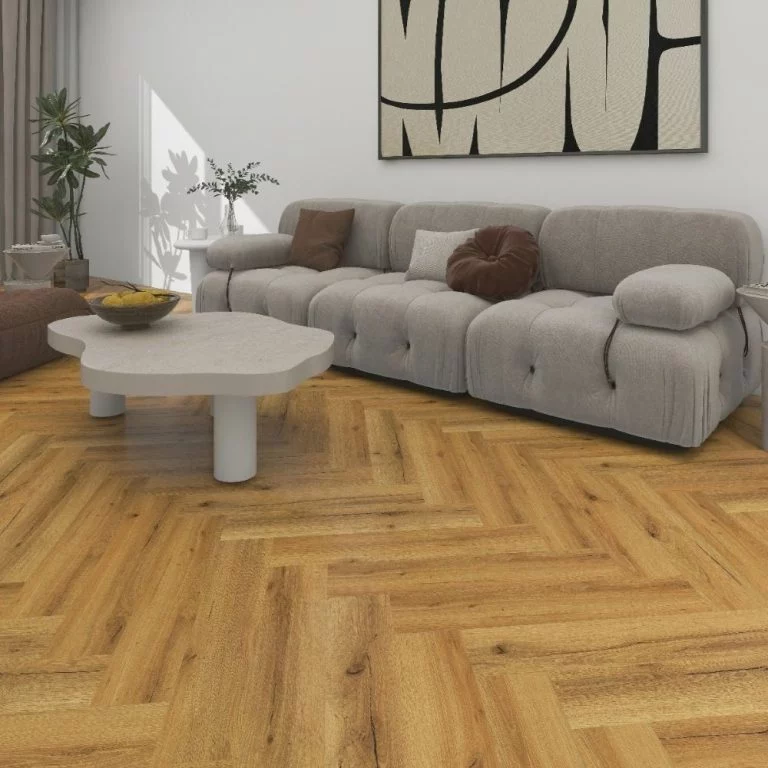
The BML herringbone floors are rigid core vinyl (SPC): 6.5 mm thick, 126 x 630 mm blocks with a 0.55 mm wear layer, click fitted and floated over an underlay. All 8 are listed as waterproof, listed for underfloor heating and carry a 25 year manufacturer's warranty. They are the herringbone for the rooms an oak block does not suit: the kitchen, the hallway, the bathroom, the utility room and a flat where the lease asks for an acoustic layer under a floating floor.
| Product | Format | Wear layer / thickness | Fitting | Underfloor heating | Warranty |
|---|---|---|---|---|---|
| BML Herringbone European Oak SPC Luxury Vinyl Flooring | 6.5mm x 126mm x 630mm | 0.55mm | Click | Compatible | 25 Years · listed as waterproof |
| BML Herringbone American White Oak SPC Luxury Vinyl Flooring | 6.5mm x 126mm x 630mm | 0.55mm | Click | Compatible | 25 Years · listed as waterproof |
| BML Herringbone Light Oak SPC Luxury Vinyl Flooring | 6.5mm x 126mm x 630mm | 0.55mm | Click | Compatible | 25 Years · listed as waterproof |
| BML Herringbone Vintage Fumed Oak SPC Luxury Vinyl Flooring | 6.5mm x 126mm x 630mm | 0.55mm | Click | Compatible | 25 Years · listed as waterproof |
| BML Herringbone Grey Oak SPC Luxury Vinyl Flooring | 6.5mm x 126mm x 630mm | 0.55mm | Click | Compatible | 25 Years · listed as waterproof |
| BML Herringbone Smoked Limed Oak SPC Luxury Vinyl Flooring | 6.5mm x 126mm x 630mm | 0.55mm | Click | Compatible | 25 Years · listed as waterproof |
| BML Herringbone Invisible Oak SPC Floor | 6.5mm x 126mm x 630mm | 0.55mm | Click | Compatible | 25 Years · listed as waterproof |
| BML Herringbone Antique Smoked Oak SPC Floor | 6.5mm x 126mm x 630mm | 0.55mm | Click | Compatible | 25 Years · listed as waterproof |