

Delivery
Delivered to Blackpool
Delivery times and options depend on the delivery postcode. See Delivery & Returns for the applicable estimate.
Also nearby: Preston, Lancaster, Blackburn, Wigan
Speak to our team 020 3858 0353 Shop by category
Start with a sample: real cuts of our floors at £1.99 each, sent to your door across the UK.
Start with a sample: real cuts of our floors at £1.99 each, sent to your door across the UK.
Lancashire · flooring delivered
Pre-war houses and old guest houses
60.2% of Blackpool dwellings date from before 1940, 1st of 141 towns. What inter-war semis, converted guest houses, lets and wet days mean for a floor.
Delivered to Blackpool: FY1 to FY4
Start here · Blackpool in one figure
60.2%
built before 1940
1st highest of 141 towns
VOA, 2025-03-31 · all local facts →60.2% of the dwellings in Blackpool's built-up area date from before 1940, against 35.4% across England and Wales, which puts the town 1st of 141 towns on this measure.
For a new floor, that single figure tells you more than any colour chart. A house of that age commonly rests on a suspended ground floor: boards fixed to timber joists, with an open space beneath them that outside air is meant to pass through. Whatever you choose goes onto that structure, not onto concrete. So in a typical pre-war Blackpool home the planning begins below the surface, with how firmly the boards sit and whether the vents in the outer wall still breathe.
The sections below move from the inter-war semis to the converted guest houses, then to lettings, conservation areas and the weather at the door.
Read the 7 chapters on Blackpool homes See all 19 local facts
At a glance
Delivery
Delivery times and options depend on the delivery postcode. See Delivery & Returns for the applicable estimate.
Also nearby: Preston, Lancaster, Blackburn, Wigan
Speak to our team 020 3858 0353Homes in Blackpool
7 chapters on Blackpool homes and what they ask of a floor · about 5 min read
01/ 07
The years between the wars stand out in the figures. Dwellings built from 1930 to 1939 make up 22.9% of the stock, against 9.9% for England and Wales, and again no town of the 141 has a larger share: Blackpool is 1st. A further 11.5% date from 1919 to 1929, 4th of 141, where the national figure is 4.8%. The housing market assessment prepared for the Fylde Coast councils reaches the same picture by another route, the councils' house condition surveys: Blackpool's homes are older than England's as a whole, with far more of them built between 1919 and 1944. For you this means that a 1920s or 1930s house shares its ground floor construction with far older ones. Lift a corner of carpet, find boards, and expect joists and a ventilated gap below them rather than a slab.
Semi-detached houses are home to 39.1% of households, 28th of 151 towns and above the 31.5% recorded for England and Wales. A semi normally has a hall between the front door and the rooms you sit in, so the grit and rain brought in on shoes are met in a corridor before they reach the lounge. Put the hardest-wearing surface in that corridor and on the stairs; the front room and the bedrooms can take something gentler.
02/ 07
Terraced houses account for 28.4% of households, 48th of 151 towns, against 23.2% for England and Wales. Part of the older stock predates 1919: 11.4% of dwellings were built between 1900 and 1918, 6th of 141 towns, where England and Wales stand at 5.2%. Houses from those years have the same kind of boarded floor over a void as the inter-war ones, so the checks underneath are identical. Where a terrace has a single bathroom, that room and the kitchen absorb every splash the household makes, and those two floors deserve a surface that shrugs water off. The rooms between them can be timber without much risk.
03/ 07
Blackpool's housing has a second layer that the age figures do not show. The Fylde Coast housing market assessment finds flats and terraces concentrated in the inner part of the town, with semi-detached houses more frequent across the rest of the borough. It also records a high proportion of homes with five or more bedrooms in inner Blackpool and says the evidence suggests that many of them are former guest houses that have been converted. A 2011 economic study summarised in the same report adds an over-supply of former and current holiday accommodation, much of it turned into houses in multiple occupation.
The census measures one part of this: 5.7% of households live in a flat in a converted or shared house or another converted building, 21st of 151 towns, against 4.2% for England and Wales. In a converted house the floor between two flats may be the original timber joist floor of the building or a concrete slab, and the two behave differently under the same covering. Find out which you have before you order. Over joists, a hard floor needs an underlay with a stated impact sound figure, because footsteps travel through timber to the ceiling below, and it is worth checking whether your lease says anything about hard floors.
04/ 07
Households renting privately make up 30.9%, 9th of 151 towns, against 20.3% for England and Wales. Specifying a floor for a let is a different exercise from choosing one for your own home, and a poor decision tends to show itself years later rather than on the day the floor is laid. In a let, and above all in a shared house or a converted flat, think about the places where water escapes without anyone reporting it straight away: the kitchen, the bathroom and the corner with the washing machine. A vinyl plank there turns a leak into a drying job rather than a reason to rip out the floor, and a hard-wearing surface in the hall copes with the traffic of several households using one front door.
05/ 07
Only 4.5% of dwellings were built in 2009 or later, 138th of 141 towns, while England and Wales stand at 11.8%. New-build estates have a quite different base from the older streets around them, a screed in place of joists, and in Blackpool you will meet that base far less often than elsewhere. If you are flooring one of the newer houses, give the screed time and have its moisture measured before anything goes down. A screed can look finished, pale and firm underfoot, well before it has given up its water, and a covering laid too early is usually the part that gets blamed when it fails.
06/ 07
Blackpool Borough Council's records list seven conservation areas: Raikes, Foxhall, Stanley Park, North Promenade, Marton Moss, Town Centre and Layton. For the Raikes Hall conservation area an Article 4 direction, in force since 2020, removes permitted development rights for outside works such as porches, roof extensions and alterations, and boundary treatments. Controls of this kind concern how a building looks from the street, so the floor you put down indoors is not what they regulate.
Listing, which can reach inside a building, is rare in the town: 0.6 listed building entries per 1,000 dwellings, 132nd of 135 towns, against 14.7 per 1,000 for England. If your house happens to be one of the listed ones, works that affect its character can need listed building consent, and taking up original boards may count. Speak to the council's conservation officer before the old floor comes up, not afterwards.
07/ 07
The town centre averages 25.3 days a year with ten millimetres of rain or more, against a median of 17.8 days for the 151 towns, which ranks it 30th. What a floor meets at the threshold, grit and wet, depends on where the house stands, and here the wet part comes round often. A deep mat inside the door and a hall floor you can mop without a second thought protect everything further in.
Summers, by contrast, are cool: 3.9 days a year above twenty-five degrees, against a median of 13.8 for the 151 towns, so Blackpool ranks 141st. A conservatory still swings between a bright afternoon and a cold night, and its floor has to live with that movement, but the hot end of the swing arrives far less often than in the median town. The modelled median of the postcode districts FY1 to FY4 is 0.15 dogs per household for 2015, 142nd of 150 towns, against 0.41 for the 2,737 postcode districts in Great Britain. Where a dog does live, the water on its paws after a wet walk and whether it can keep its footing matter more than claw marks.
Floor by floor
19 floors, rooms and needs, each with a note written for Blackpool homes. Pick one to read it.
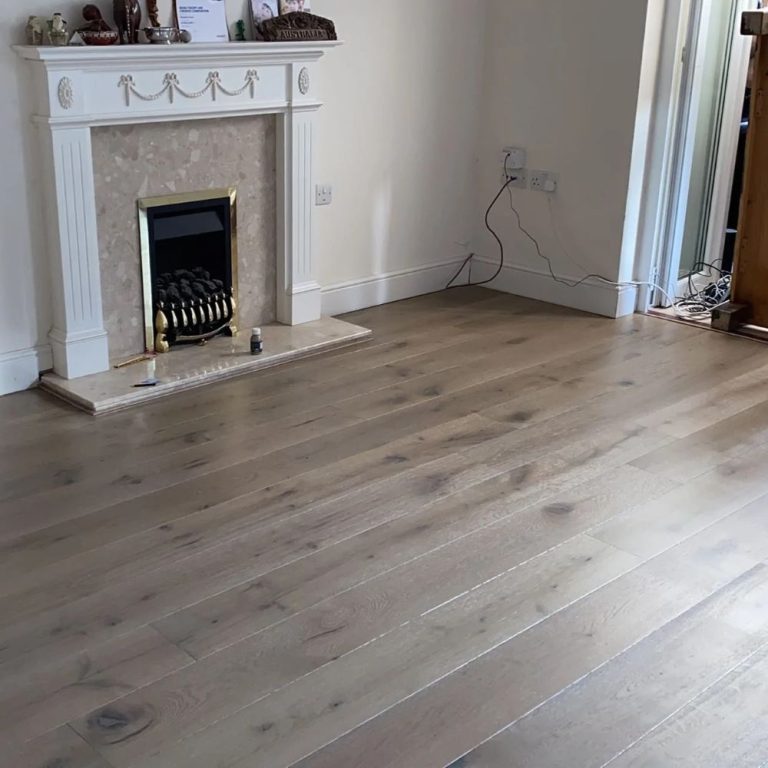 Floor type
Blackpool
Engineered boards can be floated over the old boards of a pre-war Blackpool house once loose ones are screwed down and the void beneath is properly ventilated.
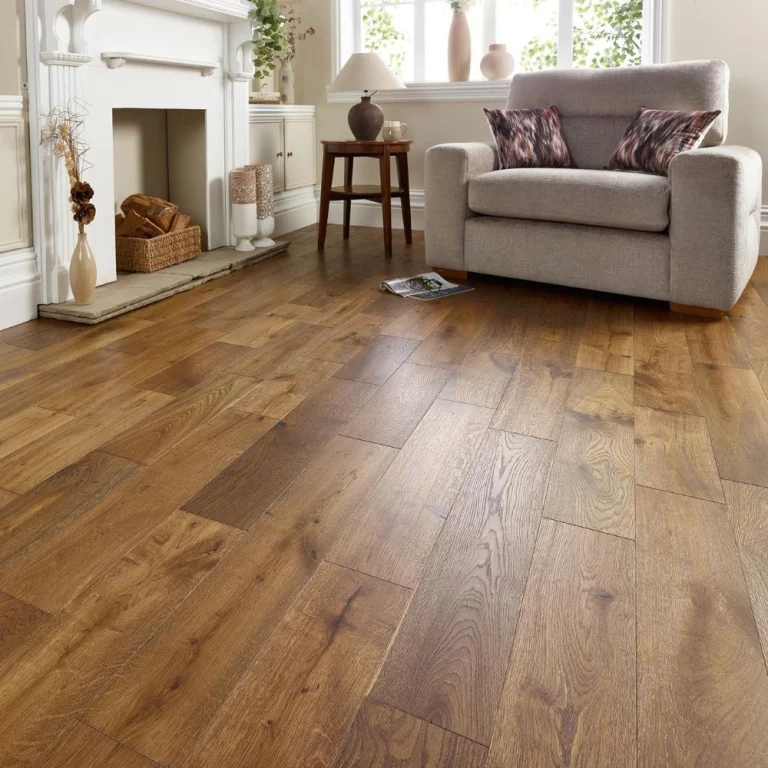 Floor type
Blackpool
Solid oak can be fixed to the joists of a 1920s or 1930s house much as the original boards were; in a converted flat, think first of the neighbour below.
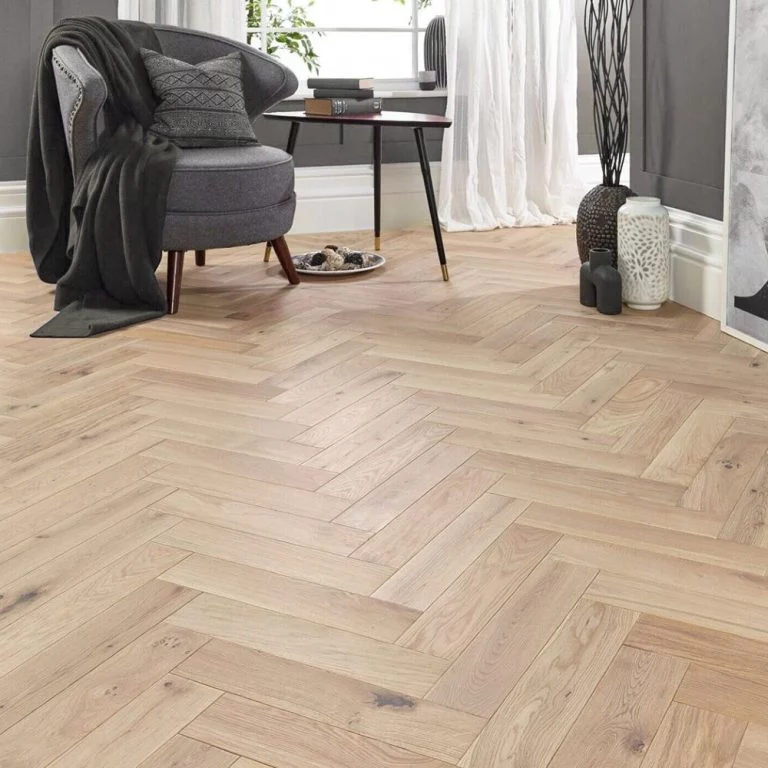 Floor type
Blackpool
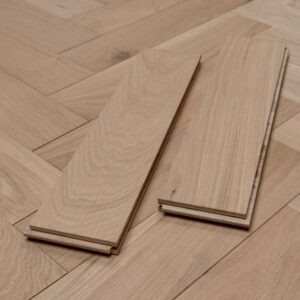
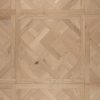
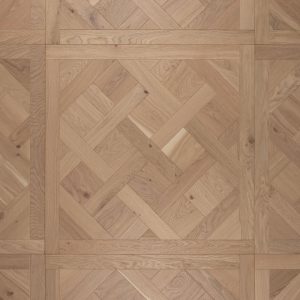
Parquet belongs to period rooms, and with 60.2% of dwellings built before 1940 there are plenty of those here, so look for surviving blocks under the carpet first.
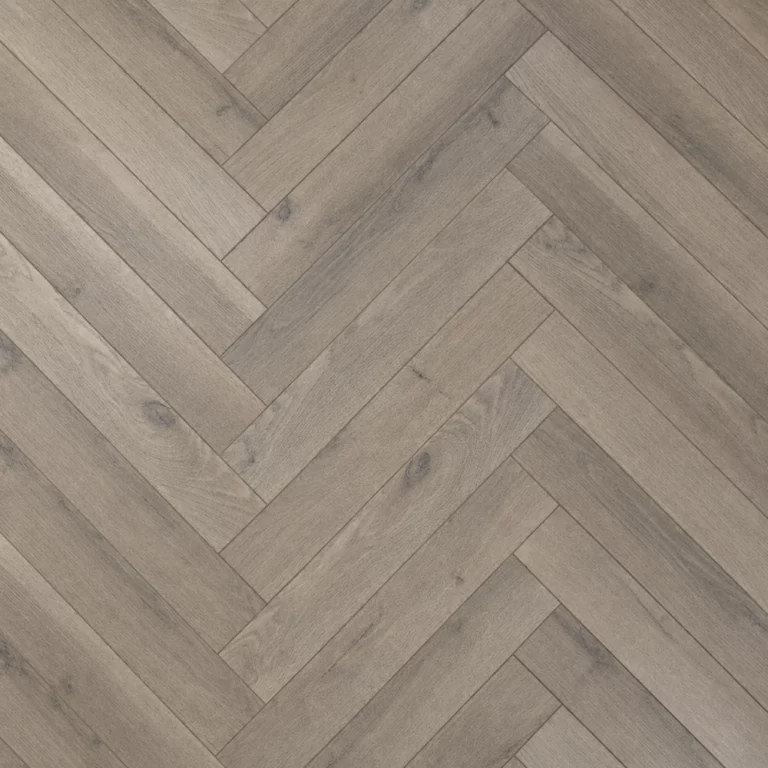 Floor type
Blackpool
In a privately let terrace, choose laminate with an abrasion class for the hall rather than the bedroom, because grit arrives on wet shoes all year.
 Floor type
Blackpool
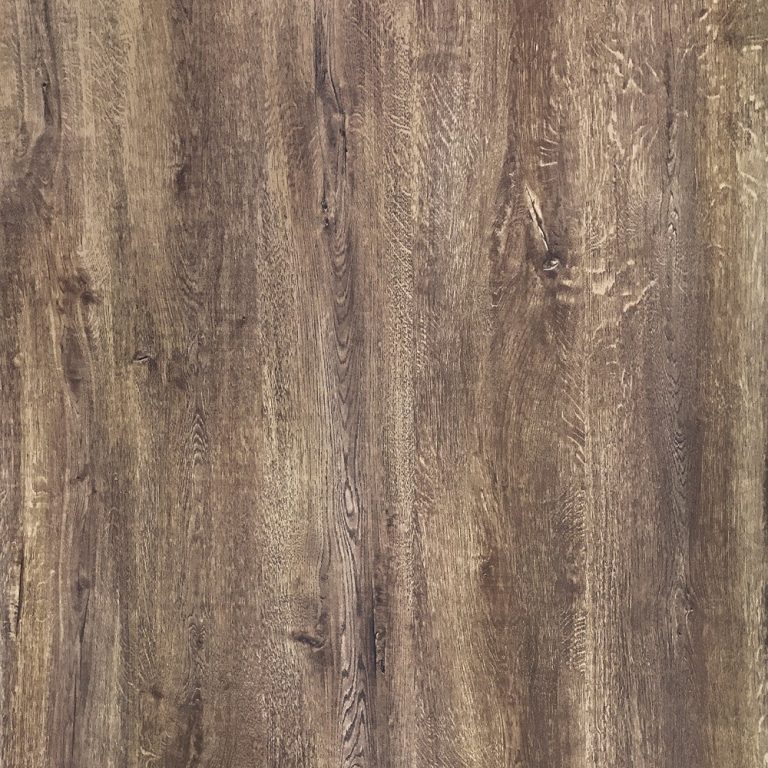
With 30.9% of households renting privately, vinyl tiles or planks in kitchens and bathrooms turn a leak between tenancies into a mop-up rather than a refit.
 Floor type
Blackpool
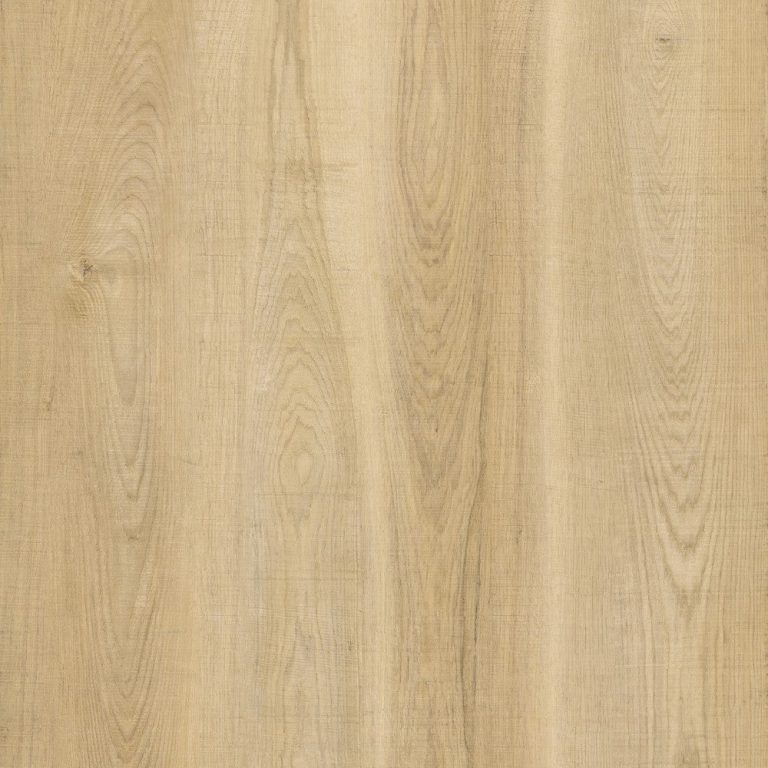
A rigid SPC core bridges boards that are no longer perfectly flat, a common state in houses built before 1940, the age of 60.2% of dwellings here.
RoomBlackpool
The hall meets the 25.3 days a year with ten millimetres of rain or more before any other room, so choose its floor for wet shoes and grit before colour.
 Room
Blackpool
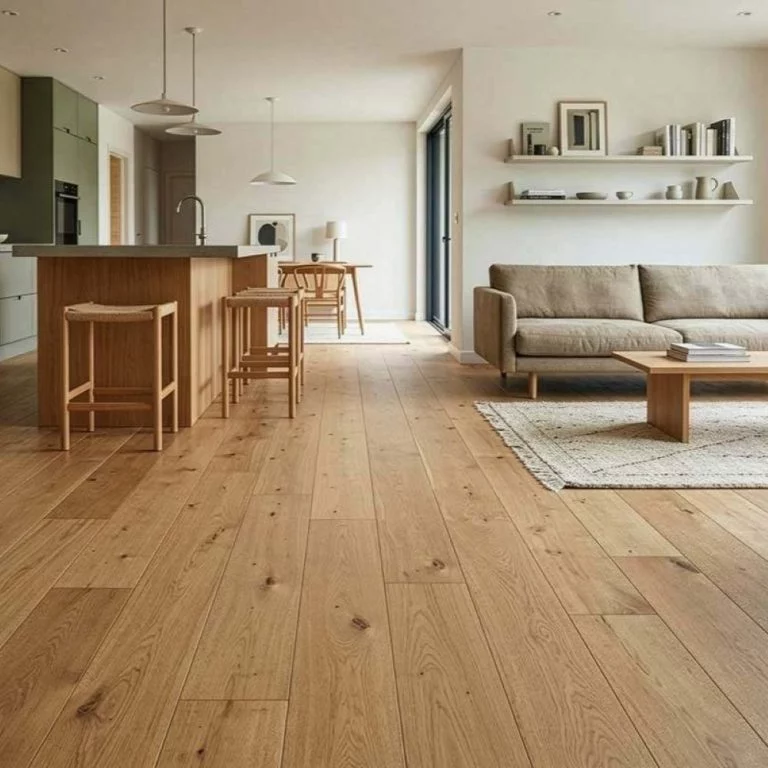
Where a terrace has one bathroom, the kitchen takes the rest of the household's water, so a surface that shrugs off splashes matters more there than the grain.
 Room
Blackpool
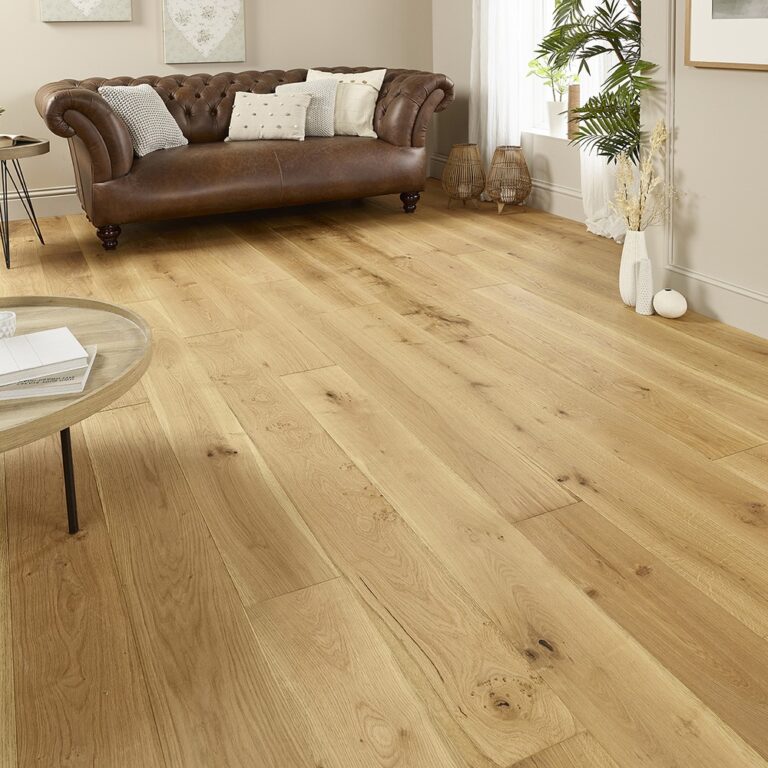
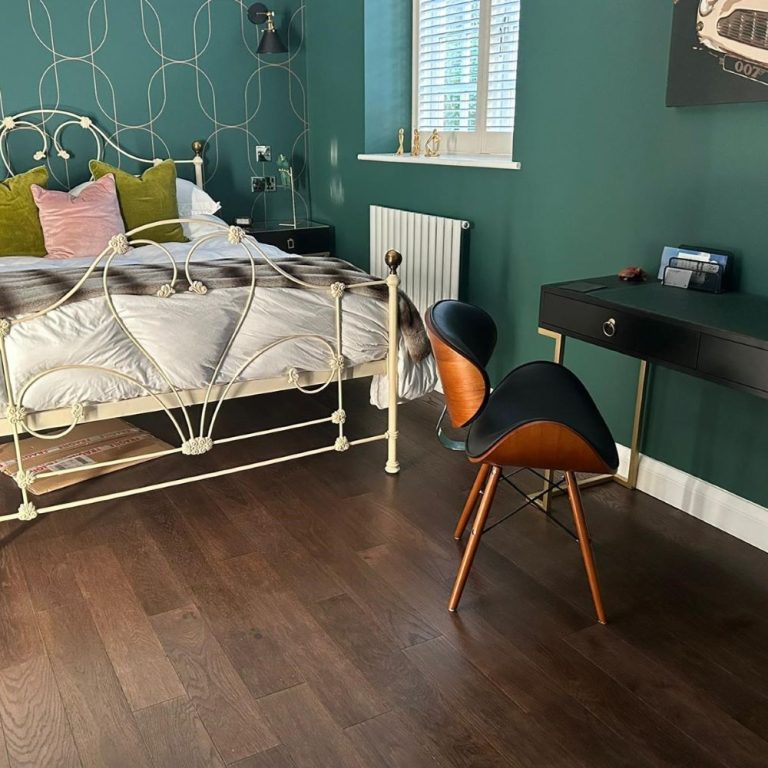
The front room of a semi lies beyond the hall, so the grit has mostly been left behind and a wood floor there wears far more slowly than the one by the door.
 Room
Blackpool
Upstairs rooms in a Blackpool semi or terrace see little grit, so a lighter-duty floor is enough and the tougher one belongs in the hall and on the stairs.
 Room
Blackpool
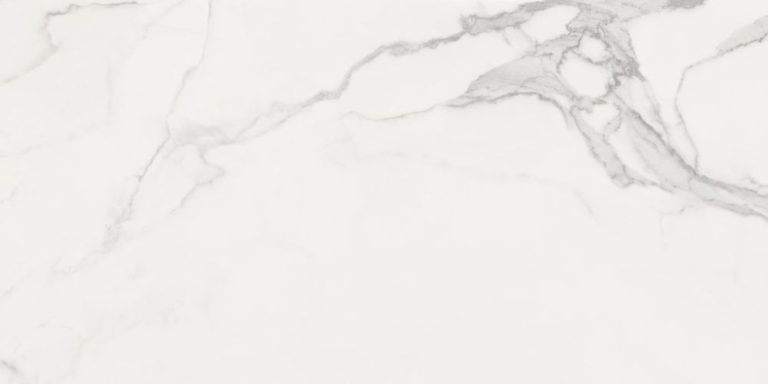
In a flat in a converted house the bathroom floor may be the ceiling of the flat below, which makes sealed edges as important as the covering itself.
 Room
Blackpool
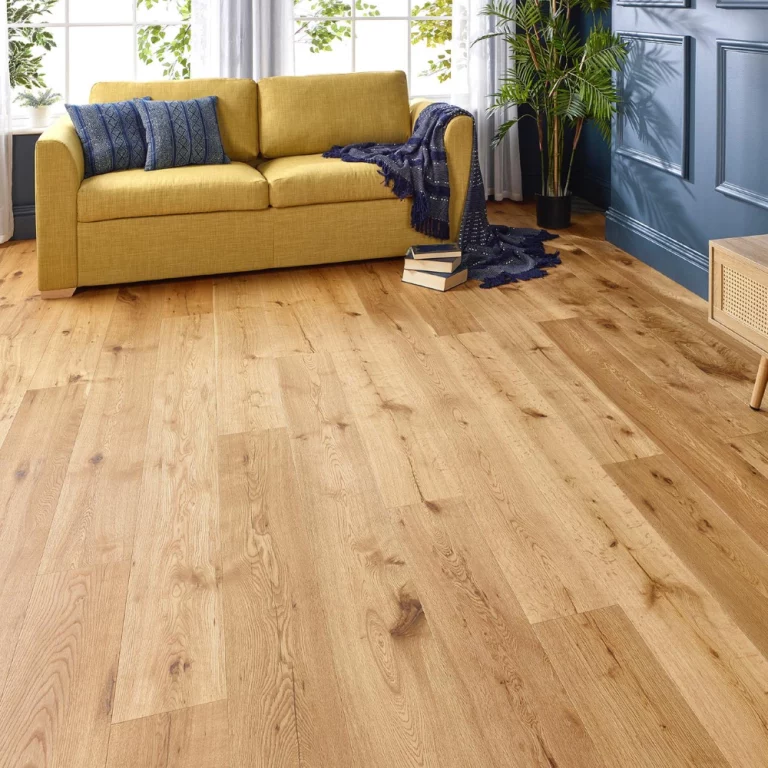
A washing machine in a shared house or a let runs often and can leak unseen, so the utility room needs a floor that keeps standing water on its surface.
 Room
Blackpool
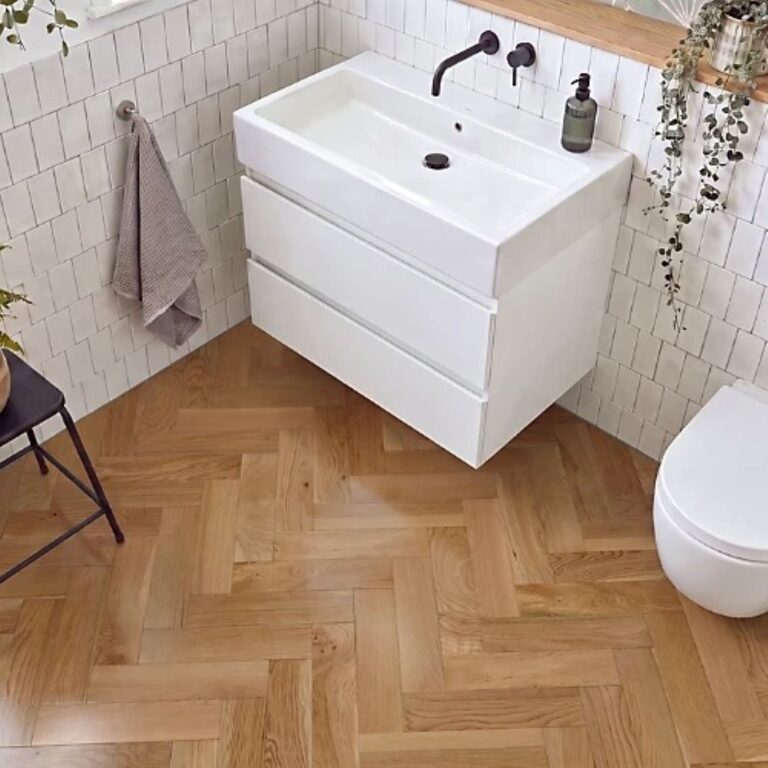
A Blackpool conservatory rarely bakes, with 3.9 days a year above twenty-five degrees, but it still cools sharply after dark, so its floor must tolerate movement.
 Pattern or need
Blackpool
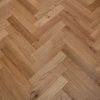
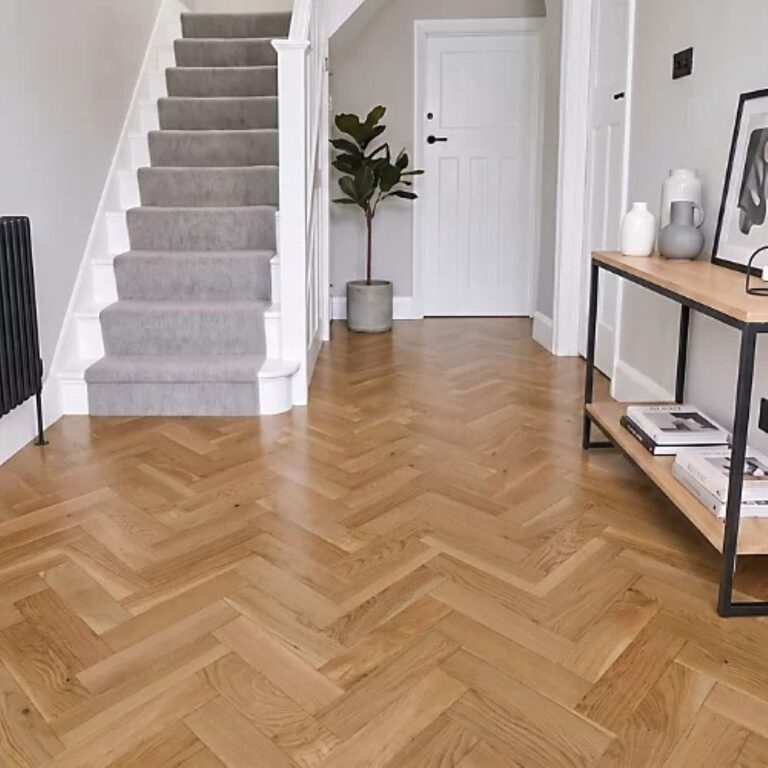
In the hall of an inter-war semi, herringbone puts a period pattern into the room that takes the heaviest wear, so pair it with a mat that catches the rain.
 Pattern or need
Blackpool
A chevron floor indoors is not what Blackpool's conservation area controls address, since they deal with the outside; only listed buildings, rare here, bring the interior into play.
 Pattern or need
Blackpool
A floor listed as waterproof will not soak up a spill, but in a converted guest house the joints and edges still let water through to the boards, so seal the perimeter of wet rooms.
 Pattern or need
Blackpool
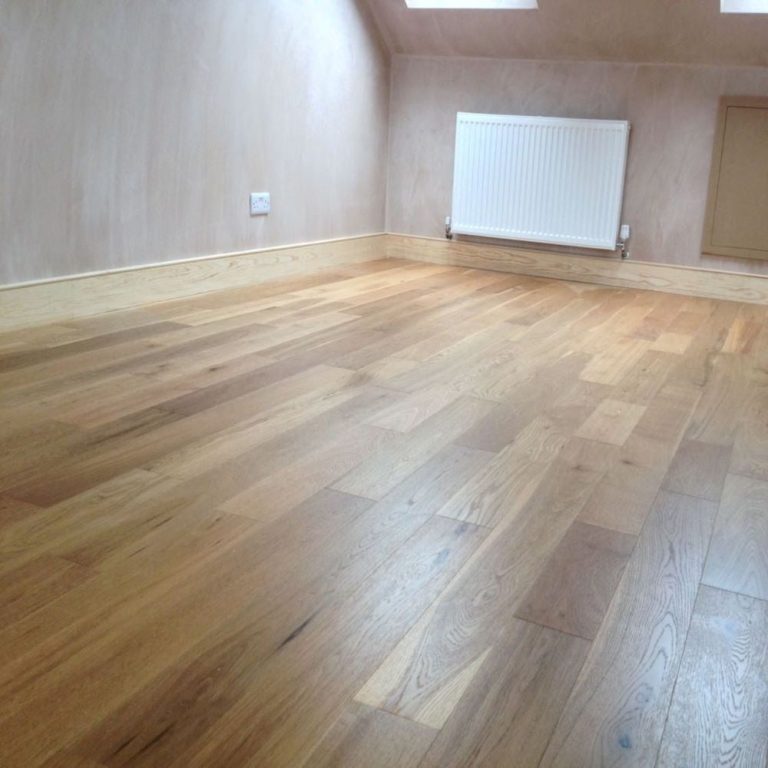
Heating laid between the joists of a pre-war house changes which wood can go on top, so tell us how your floor is built when you ask about boards for it.
 Pattern or need
Blackpool
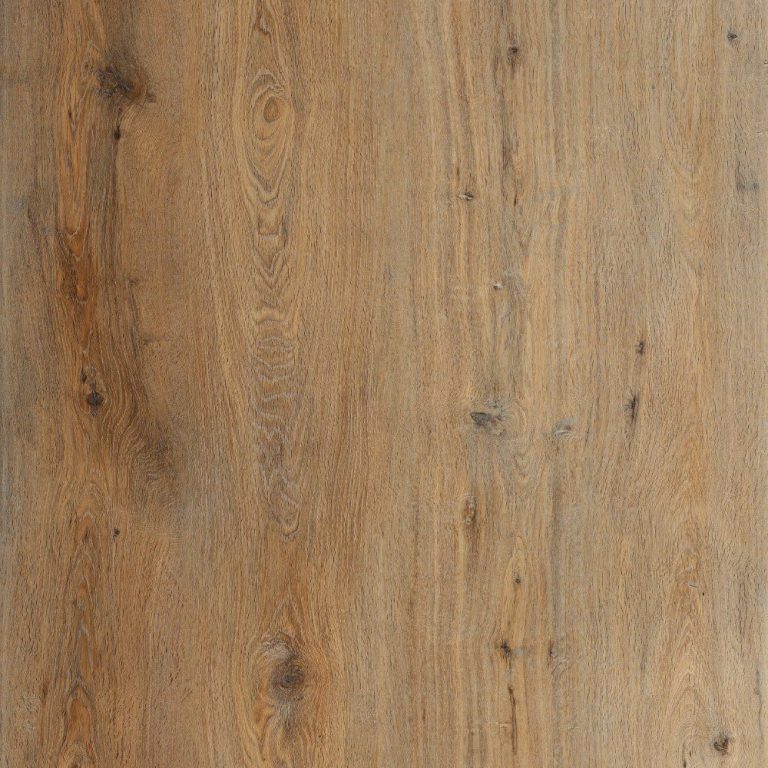
The postcode districts' modelled median is 0.15 dogs per household, yet where a dog lives, wet paws after a walk test a floor more than claws.
 Pattern or need
Blackpool
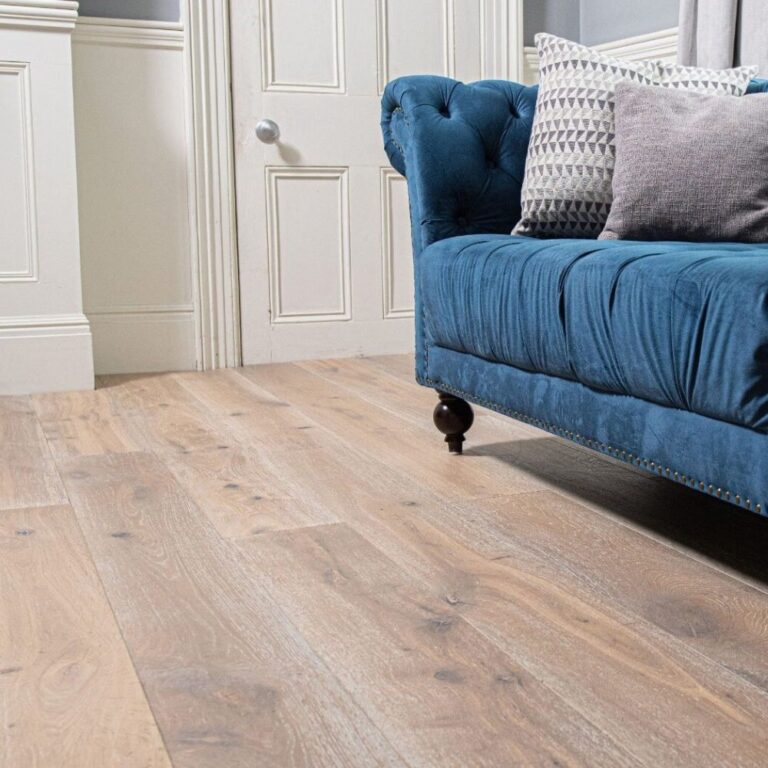
Grey reads as modern against the doors and skirtings of a 1930s semi, so hold it against the woodwork before deciding; in a refitted flat the question hardly arises.
Bestsellers
Reviews
Trustpilot
Reviews written by our customers on Trustpilot.
Read all reviews on TrustpilotReviews on our Google Business Profile.
Read all reviews on GoogleAsk us first
Call 020 3858 0353, Monday to Friday 10am to 6pm, Saturday 10am to 4pm, or send a photo of the room to info@homesandfloors.com.
Contact usQuestions
Timber joists over a ventilated gap rather than a concrete slab. 22.9% of dwellings here were built from 1930 to 1939, 1st of 141 towns, so you will meet this construction often. Check that the airbricks are clear and that no board rocks before you choose between engineered boards, laminate and vinyl.
If the floor between you and the flat below is timber, yes: use an underlay with a stated impact sound figure. 5.7% of Blackpool households live in a flat in a converted or shared house or another converted building, against 4.2% for England and Wales, and the separating floor in such a building may be joists or concrete.
Not as a rule. Conservation area controls, such as the Article 4 direction for Raikes Hall, concern the outside of buildings. Listing is different and can reach inside, but it is rare here, with 0.6 listed building entries per 1,000 dwellings against 14.7 for England.
One that tolerates water in the kitchen and bathroom and can be dried rather than replaced. With 30.9% of households renting privately, 9th of 151 towns, many floors here are chosen by a landlord rather than the occupant, so put vinyl where leaks go unreported and a hard-wearing surface in the hall.
Expect wet shoes regularly: the town centre averages 25.3 days a year with ten millimetres of rain or more, against a median of 17.8 days for the 151 towns. A mat that holds the water at the door and a hall floor you can wipe dry protect the boards further in.
Local facts
19 facts from the census, the Met Office, the council and other public records, each with what it means for a floor in Blackpool and where it comes from.
When they were built
60.2%
built before 1940
1st highest of 141 towns
For your floorWith 60.2% of Blackpool dwellings built before 1940, the ventilated space under a boarded ground floor is the base most new floors here will meet.
Dwellings built before 1940. Area: Blackpool built-up area (ONS Built-up Areas 2024). VOA, Council Tax: stock of properties 2025, table CTSOP4.1 (build period). Data: 2025-03-31 · retrieved 2026-09-22.
When they were built
22.9%
built 1930 to 1939
1st highest of 141 towns
For your floorBlackpool's 1930s houses, 22.9% of dwellings, have the same suspended timber ground floor as older houses, so the void and the airbricks come before the finish.
Dwellings built 1930 to 1939. Area: Blackpool built-up area (ONS Built-up Areas 2024). VOA, Council Tax: stock of properties 2025, table CTSOP4.1 (build period). Data: 2025-03-31 · retrieved 2026-09-22.
When they were built
11.5%
built 1919 to 1929
4th highest of 141 towns
For your floorThe 11.5% of dwellings from 1919 to 1929 fall in the years when ground floors were still boards on joists over a void.
Dwellings built 1919 to 1929. Area: Blackpool built-up area (ONS Built-up Areas 2024). VOA, Council Tax: stock of properties 2025, table CTSOP4.1 (build period). Data: 2025-03-31 · retrieved 2026-09-22.
When they were built
11.4%
built 1900 to 1918
6th highest of 141 towns
For your floorHomes from 1900 to 1918, 11.4% here, share the suspended timber ground floor of the inter-war houses rather than the slab of a new build.
Dwellings built 1900 to 1918. Area: Blackpool built-up area (ONS Built-up Areas 2024). VOA, Council Tax: stock of properties 2025, table CTSOP4.1 (build period). Data: 2025-03-31 · retrieved 2026-09-22.
When they were built
Building period
Drawing on the councils' house condition surveys, the assessment describes Blackpool's housing stock as typically older than England's as a whole, with double the national average of dwellings built between 1919 and 1944.
For your floorAn assessment that finds Blackpool's stock older than England's, with far more homes from 1919 to 1944, points to joisted ground floors and rooms stacked in older plans.
Area: Blackpool (Blackpool Council area). Fylde Coast Strategic Housing Market Assessment (December 2013, final version issued February 2014). Data: December 2013, final version February 2014 (stock data mainly Census 2011; age of stock from the councils' private sector house condition surveys, Blackpool 2007) · retrieved 2026-10-21.
Homes
Housing type
The Fylde Coast Strategic Housing Market Assessment traces Blackpool's housing mix to a high concentration of flats and terraces in the inner area and a high frequency of semi-detached houses in the rest of the borough.
For your floorInner Blackpool's flats and terraces and the semis further out bring different floor questions: shared floors and sound in one, halls and abrasion in the other.
Area: Blackpool (Blackpool Council area; SHMA sub-areas Inner Blackpool and rest of Blackpool). Fylde Coast Strategic Housing Market Assessment (December 2013, final version issued February 2014). Data: December 2013, final version February 2014 (stock data mainly Census 2011; age of stock from the councils' private sector house condition surveys, Blackpool 2007) · retrieved 2026-10-21.
Homes
Housing type
The same assessment finds a high proportion of homes with five or more bedrooms in inner Blackpool and says the evidence suggests that many of them are conversions of former guest houses.
For your floorFormer guest houses divided into homes put one household's floor over another's ceiling, so sound through the old floor structure is the first thing to plan for.
Area: Inner Blackpool (SHMA sub-area). Fylde Coast Strategic Housing Market Assessment (December 2013, final version issued February 2014). Data: December 2013, final version February 2014 (stock data mainly Census 2011; age of stock from the councils' private sector house condition surveys, Blackpool 2007) · retrieved 2026-10-21.
Homes
Housing type
Summarising a 2011 economic baseline study for Blackpool, the assessment lists an over-supply of former and current holiday accommodation, much of which has been converted to houses in multiple occupation.
For your floorHoliday accommodation turned into houses in multiple occupation means floors chosen for many occupants and frequent changes, not for one owner's taste.
Area: Blackpool (Blackpool Council area). Fylde Coast Strategic Housing Market Assessment (December 2013, final version issued February 2014). Data: December 2013, final version February 2014 (stock data mainly Census 2011; age of stock from the councils' private sector house condition surveys, Blackpool 2007) · retrieved 2026-10-21.
Who lives here
30.9%
rent privately
9th highest of 151 towns
For your floorWith 30.9% renting privately, many Blackpool floors are specified by landlords, where durability and quick drying count for more than the finish.
Households renting privately. Area: Blackpool built-up area (ONS Built-up Areas 2024). ONS, Census 2021, TS054 Tenure (households). Data: 2021-03-21 · retrieved 2026-09-22.
When they were built
4.5%
built 2009 or later
138th highest of 141 towns
For your floorOnly 4.5% of dwellings date from 2009 or later, so a new screed is the exception here, but where there is one it has to be dry before a floor goes down.
Dwellings built 2009 or later. Area: Blackpool built-up area (ONS Built-up Areas 2024). VOA, Council Tax: stock of properties 2025, table CTSOP4.1 (build period). Data: 2025-03-31 · retrieved 2026-09-22.
Heritage & plans
Conservation areas
Blackpool Borough Council's records in the government's planning data platform list seven conservation areas: Raikes, Foxhall, Stanley Park, North Promenade, Marton Moss, Town Centre and Layton.
For your floorThe seven conservation areas govern how buildings look from outside, so a new floor indoors is not what their rules address.
Area: Blackpool (Blackpool Borough Council area). Planning Data, dataset "Conservation area": entries supplied by Blackpool Borough Council (references Bpl_CA001 to Bpl_CA007). Data: entries dated 2025-09-09 (entry-date), as retrieved 2026-10-21 · retrieved 2026-10-21.
Heritage & plans
Conservation areas
Blackpool Borough Council's Article 4 direction for the Raikes Hall conservation area, in force since 2020, removes permitted development rights for outside works including porches, roof extensions and alterations, and boundary treatments.
For your floorThe Raikes Hall Article 4 direction lists outside works such as porches, roofs and boundaries, which shows the controls stop at the front wall rather than the floor.
Area: Raikes Hall conservation area, Blackpool. Planning Data, dataset "Article 4 direction": entries supplied by Blackpool Borough Council (references Bpl_A4D1 to Bpl_A4D6). Data: records as retrieved 2026-10-21 (directions in force from the start-date of each record) · retrieved 2026-10-21.
Heritage & plans
0.6
listed entries per 1,000 homes
132nd highest of 135 towns
For your floorListed buildings, where lifting old boards can need consent, are rare in Blackpool at 0.6 entries per 1,000 dwellings.
Listed building entries per 1,000 dwellings. Area: Blackpool built-up area (ONS Built-up Areas 2024). Historic England, National Heritage List for England, listed building entries. Data: 2026-09-21 · retrieved 2026-09-22.
Weather & ground
25.3
days with 10 mm of rain or more
30th highest of 151 towns
For your floorAt 25.3 days a year with ten millimetres of rain or more, the doorway and the hall see wet shoes and grit more often than in the median town.
Days with at least 10 mm of rain per year (1991–2020 average, town centre). Area: Blackpool town centre (Met Office HadUK-Grid 2 km cell). Met Office, HadUK-Grid (v1.1.0.0) climate averages 1991-2020, Met Office Climate Data Portal: Monthly Temperature Observations 1991-2020 (2 km grid), Monthly Min Temperature Observations 1991-2020 12km (12 km grid), Annual Count of 10mm Rainfall Days 1991-2020 (2 km grid). Data: 1991-2020 · retrieved 2026-09-22.
Weather & ground
3.9
days above 25 °C
141st highest of 151 towns
For your floorWith 3.9 days a year above twenty-five degrees, a Blackpool conservatory floor has less summer heat to cope with than in the median town, though cold nights remain.
Days above 25 degrees C per year (1991-2020 average, town centre). Area: Blackpool town centre (Met Office HadUK-Grid 2 km cell). Met Office, HadUK-Grid climate averages 1991-2020 (climate data portal). Data: 1991-2020 · retrieved 2026-09-22.
Who lives here
0.15
dogs per household
142nd highest of 150 towns
For your floorA modelled median of 0.15 dogs per household across the postcode districts FY1 to FY4 makes pet wear a smaller factor here, though wet paws still count where a dog lives.
Dogs per household, estimate (median of the postcode districts named under Area). Area: median of 4 postcode districts (FY1–FY4). Animal and Plant Health Agency, dogs per household per postcode district (modelled). Data: 2015-01-01 · retrieved 2026-09-22.
Nearby
Distances are straight-line miles from Blackpool.
United KingdomLancashireBlackpool
151 towns and cities, 24 county guides, one map.
New ranges and offers. Hear it first.
No spam. Unsubscribe any time.
Free to join
Ideas, advice and offers to help you plan your next floor, by email.
No spam. Unsubscribe any time.