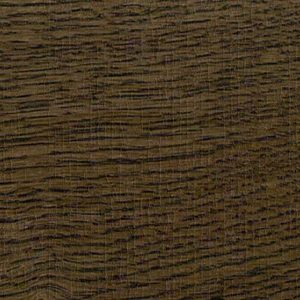
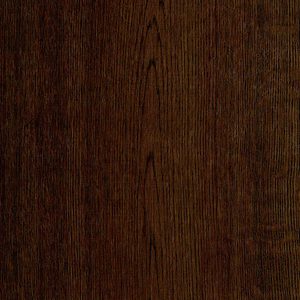
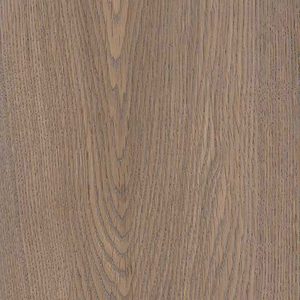
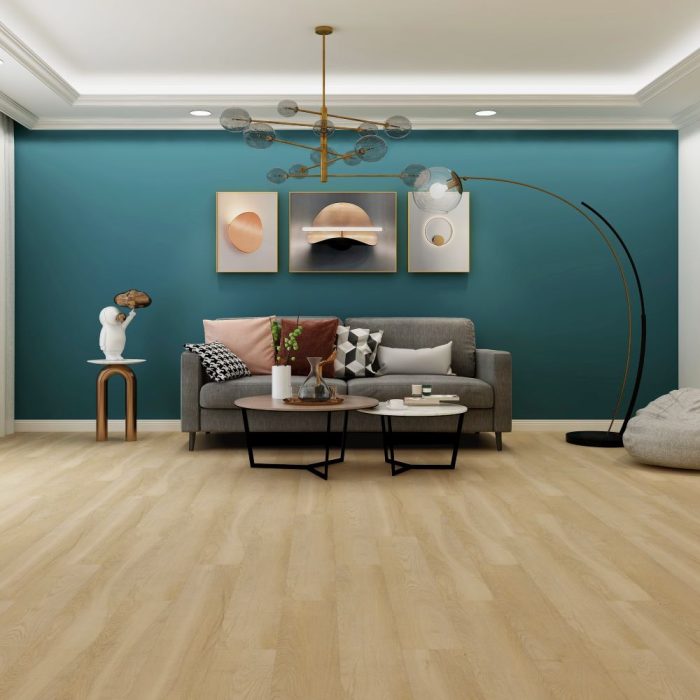
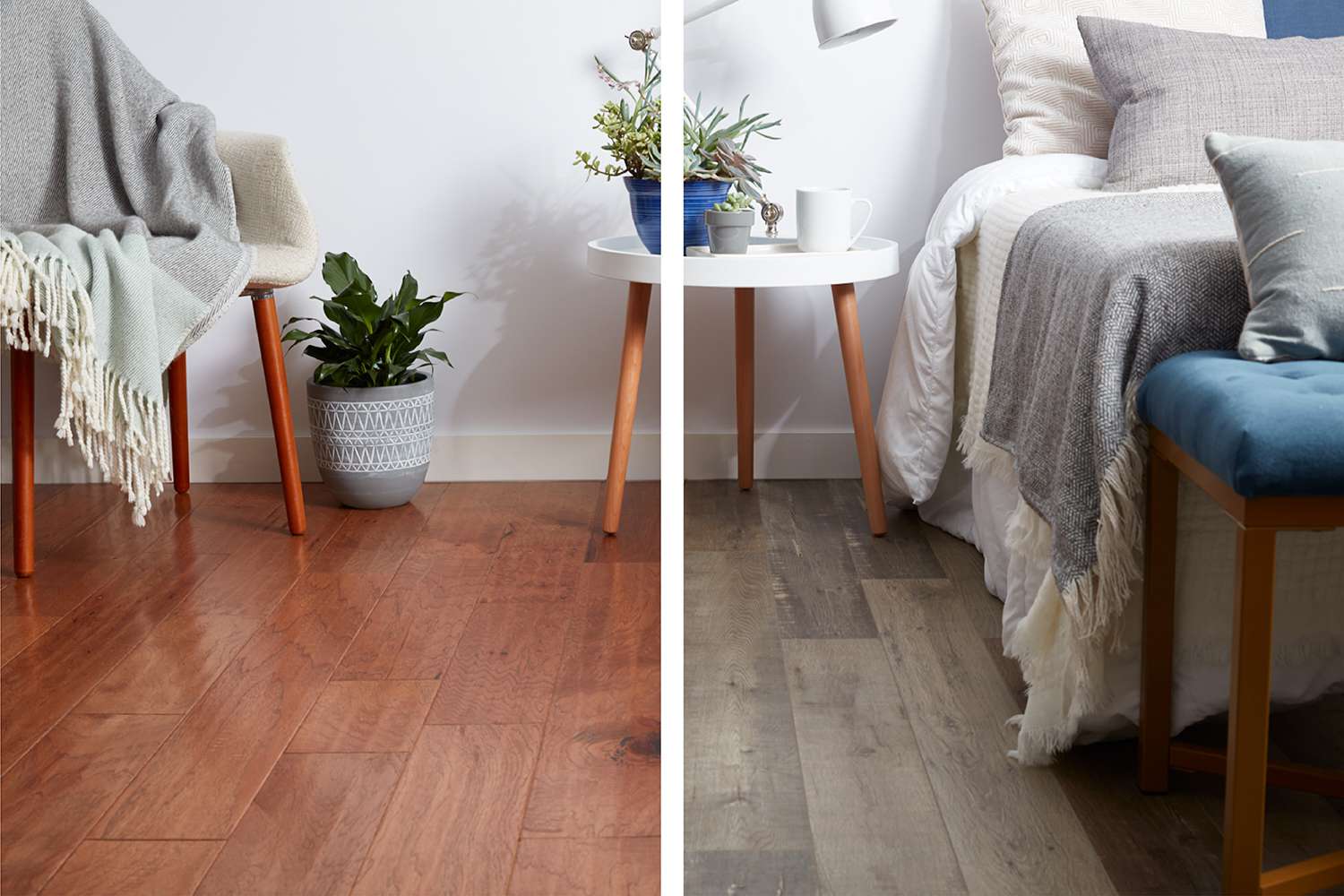
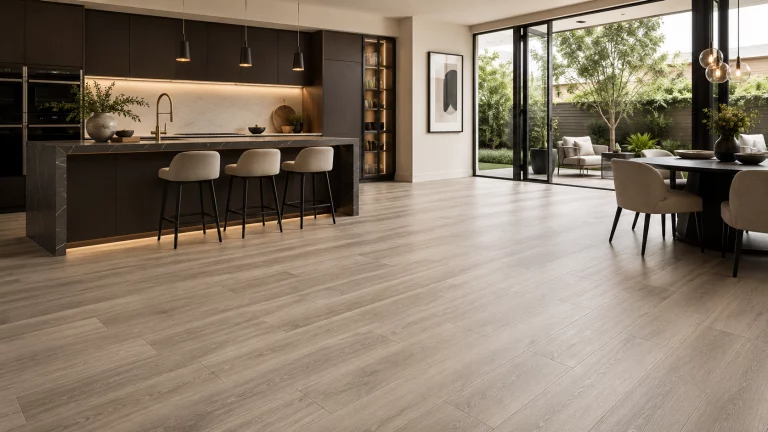
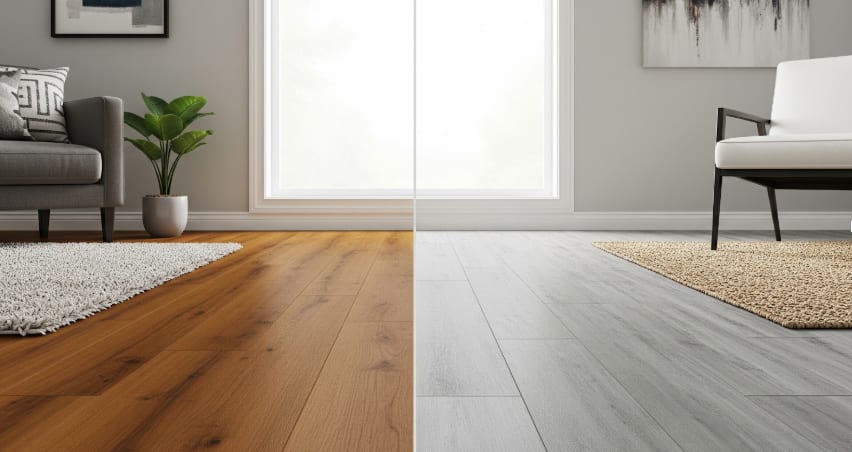
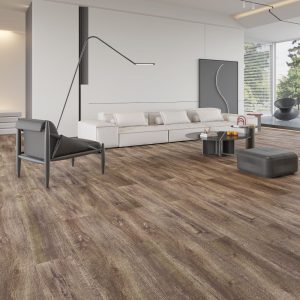
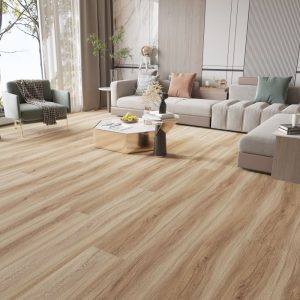
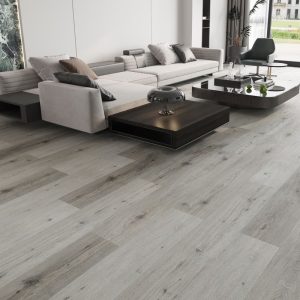
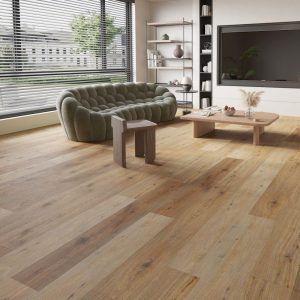
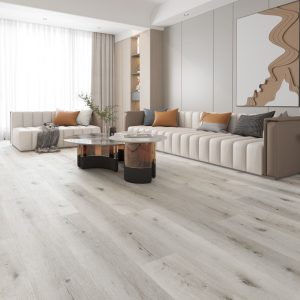
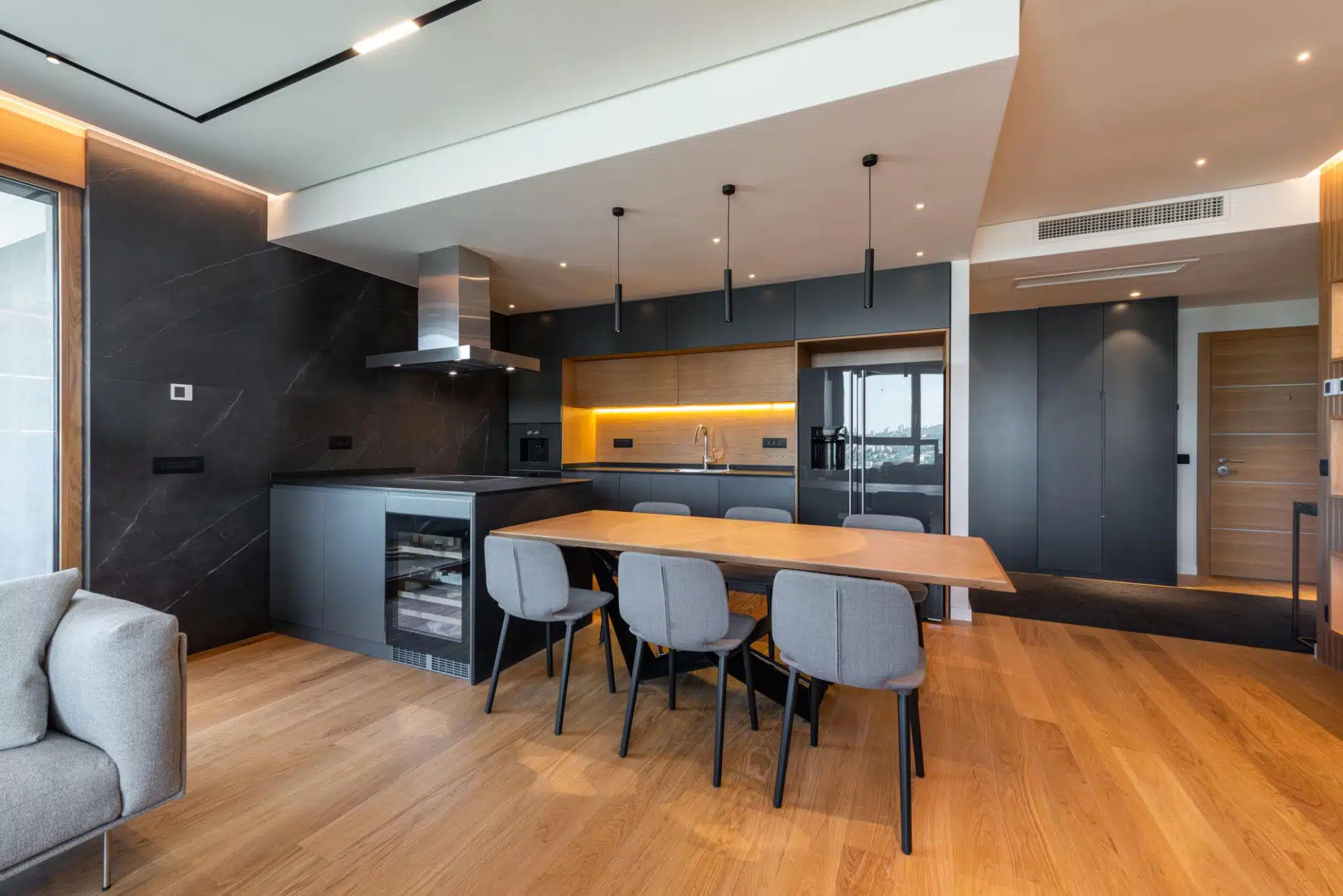
It is quieter and warmer underfoot than tile over the same base, and a single damaged plank is a repair rather than a replacement floor.
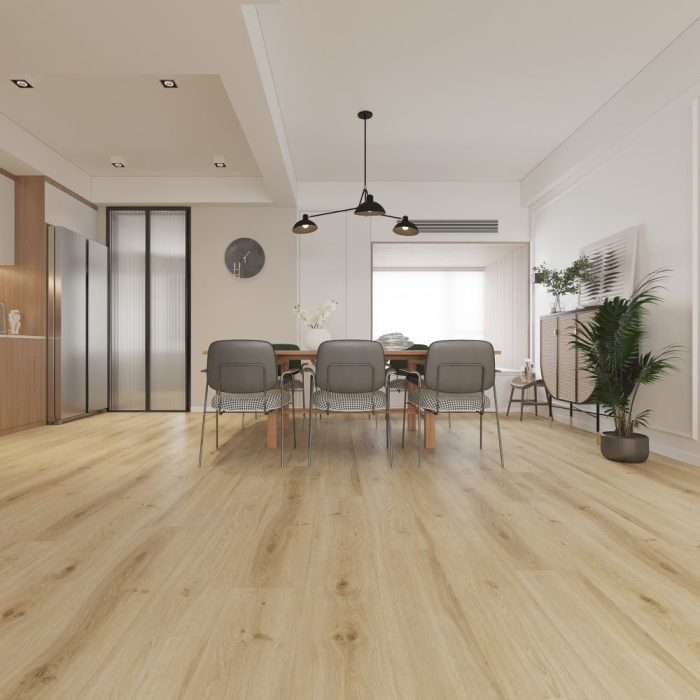
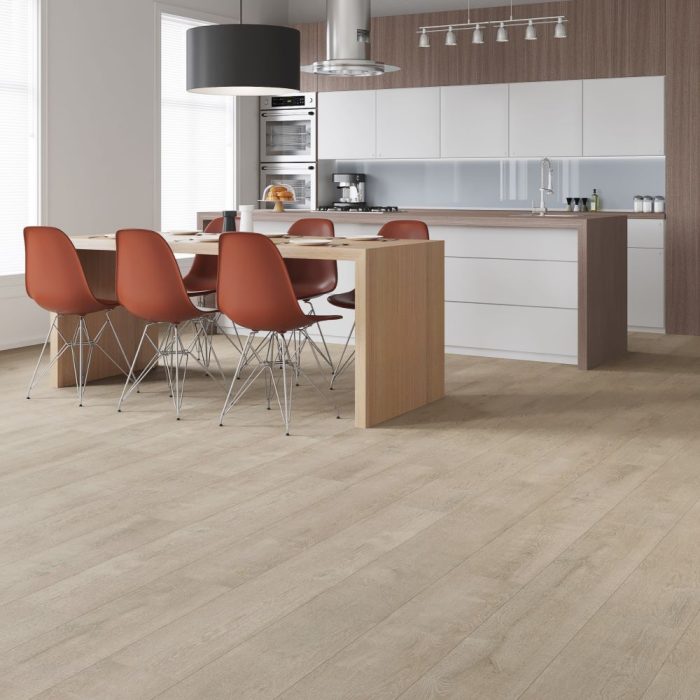
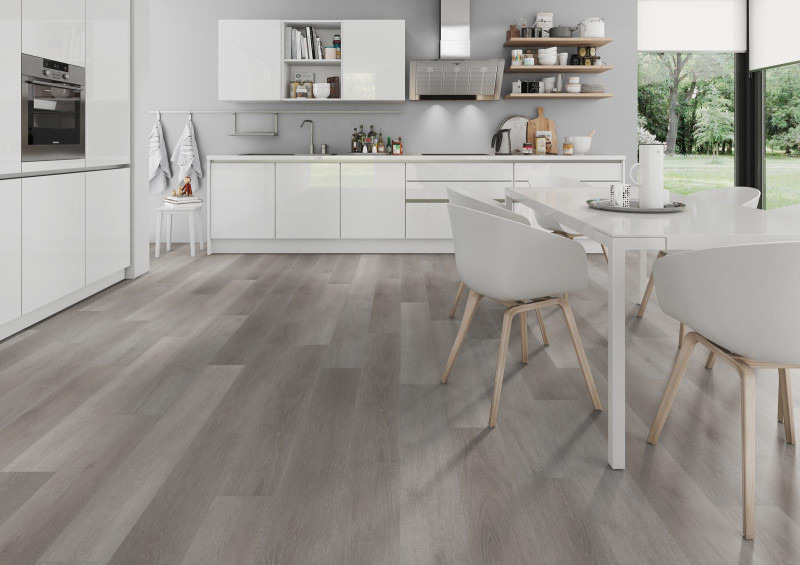
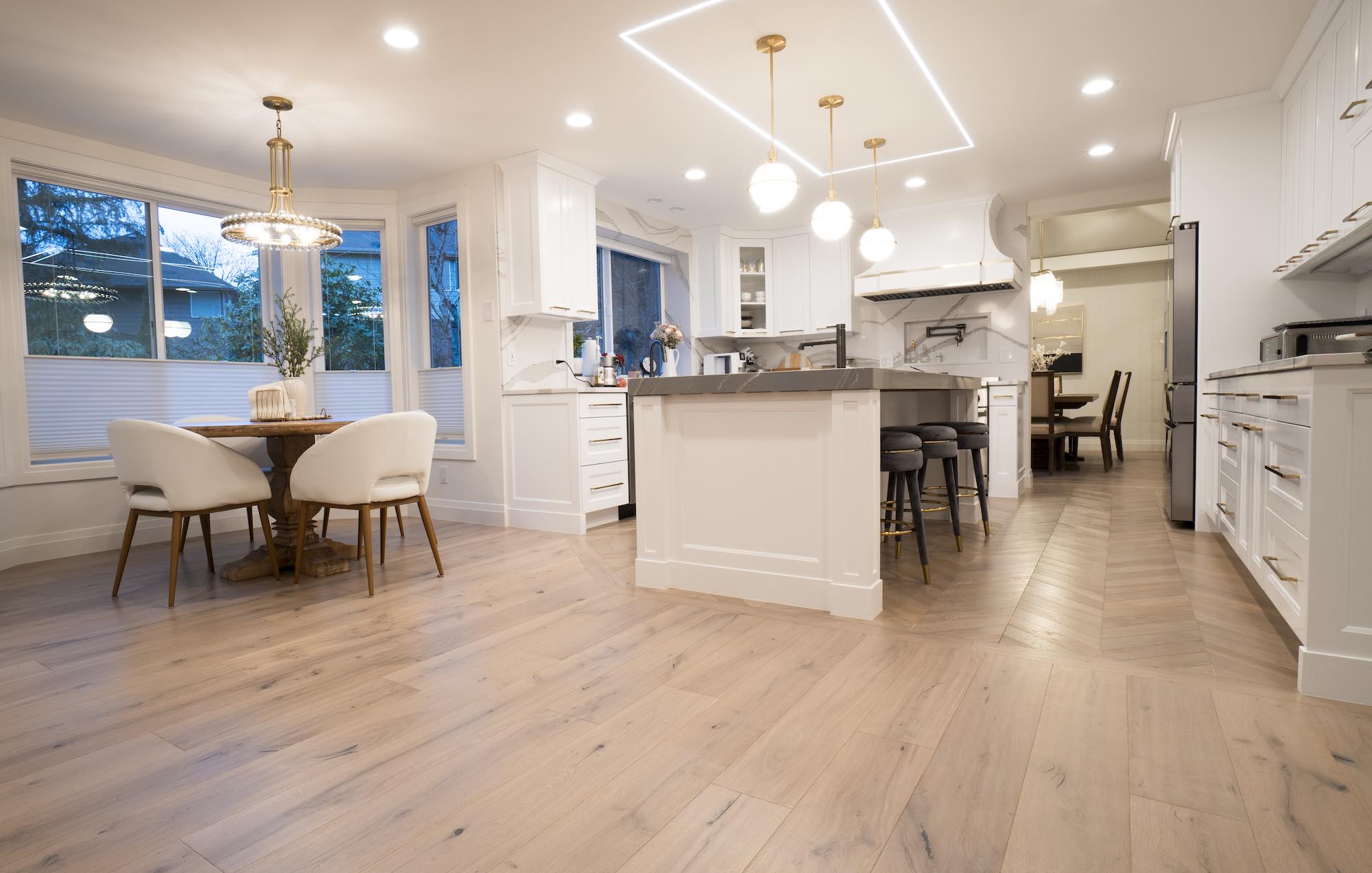
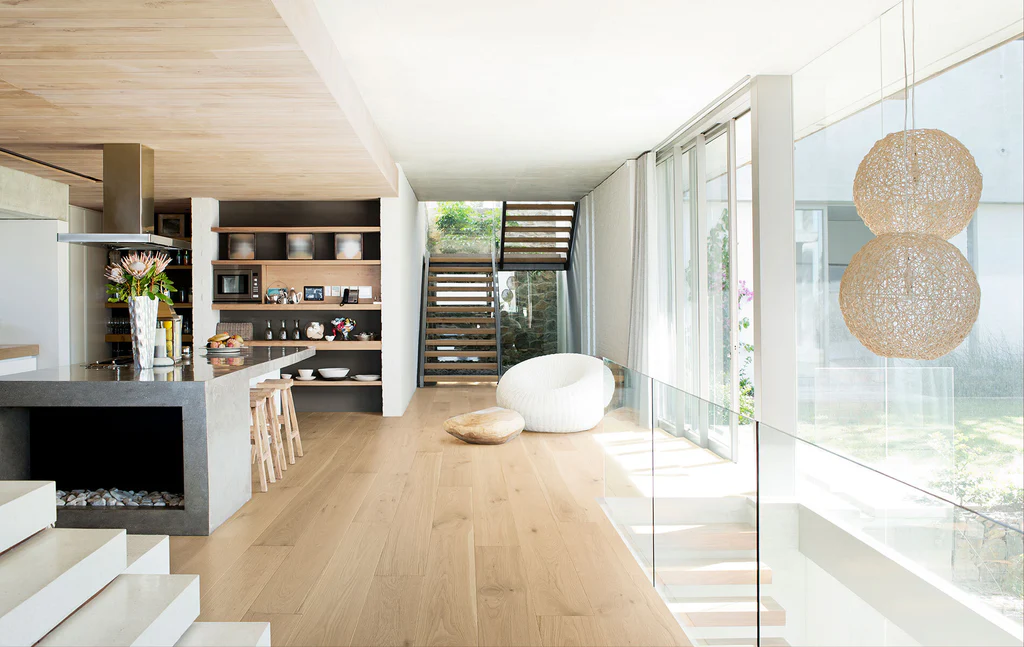
The BML rigid vinyl plank goes into a Reading house for the rooms that take water and the rooms that take casters. In the kitchen and the utility room of a Tilehurst or Whitley semi it floats over a checked slab on its own bonded underlay, and the plank itself is listed as waterproof; in the home office that so many part-time commuters have made of a back bedroom, it takes a desk chair’s wheels without marking the way a lacquered timber would.
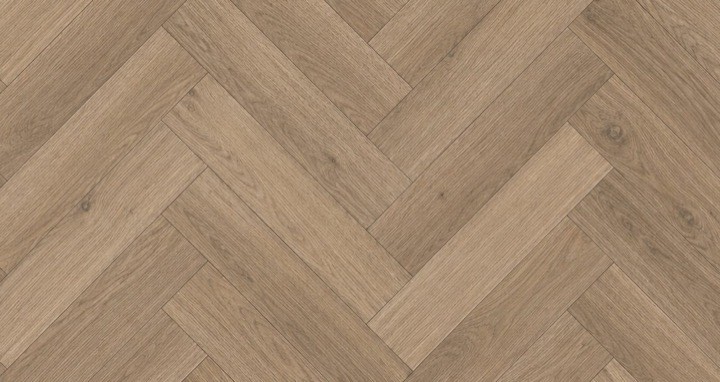
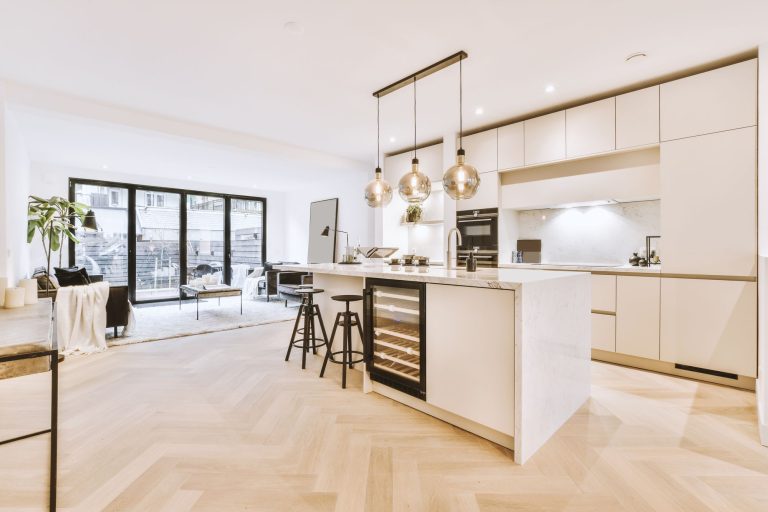
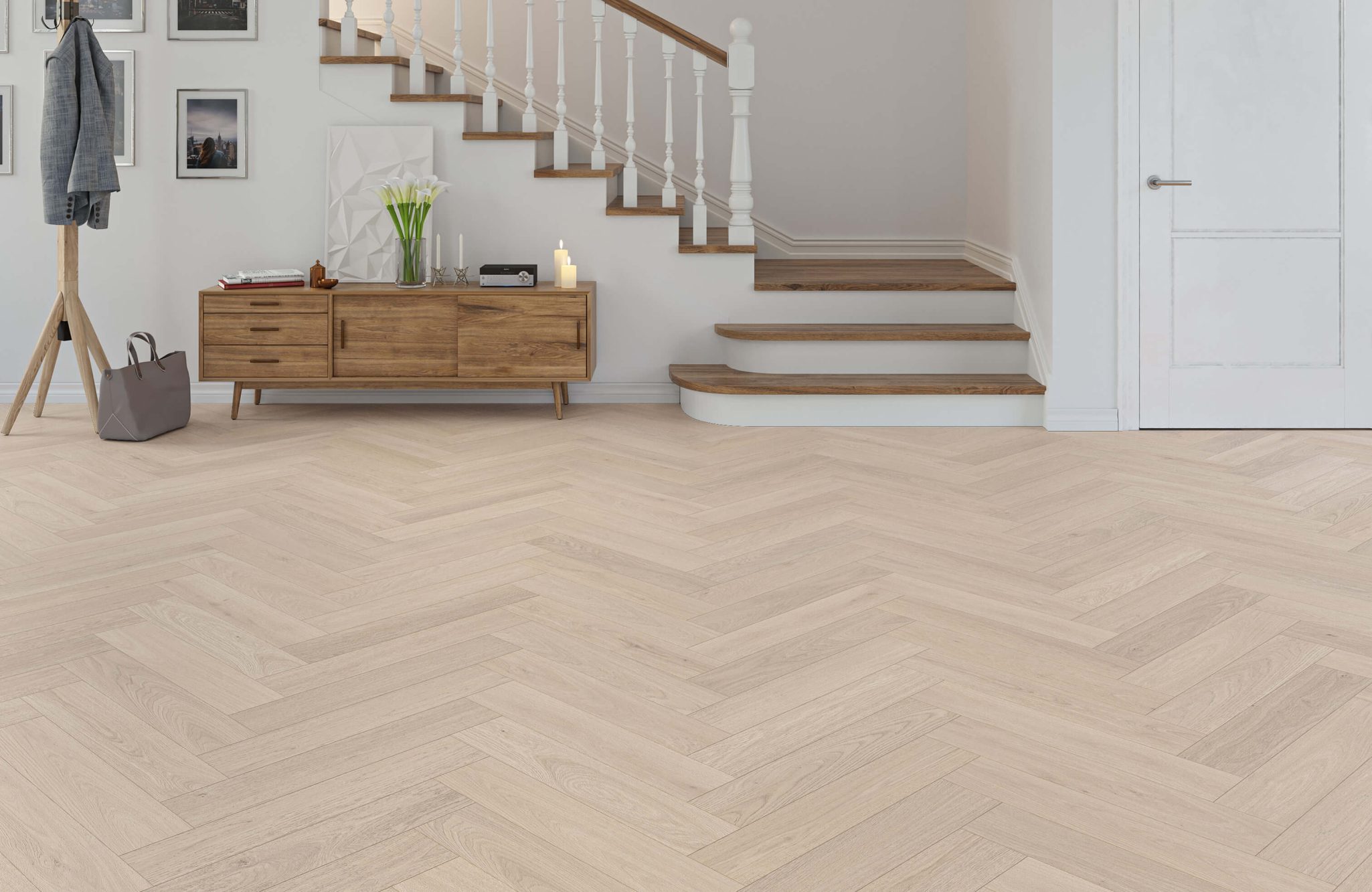
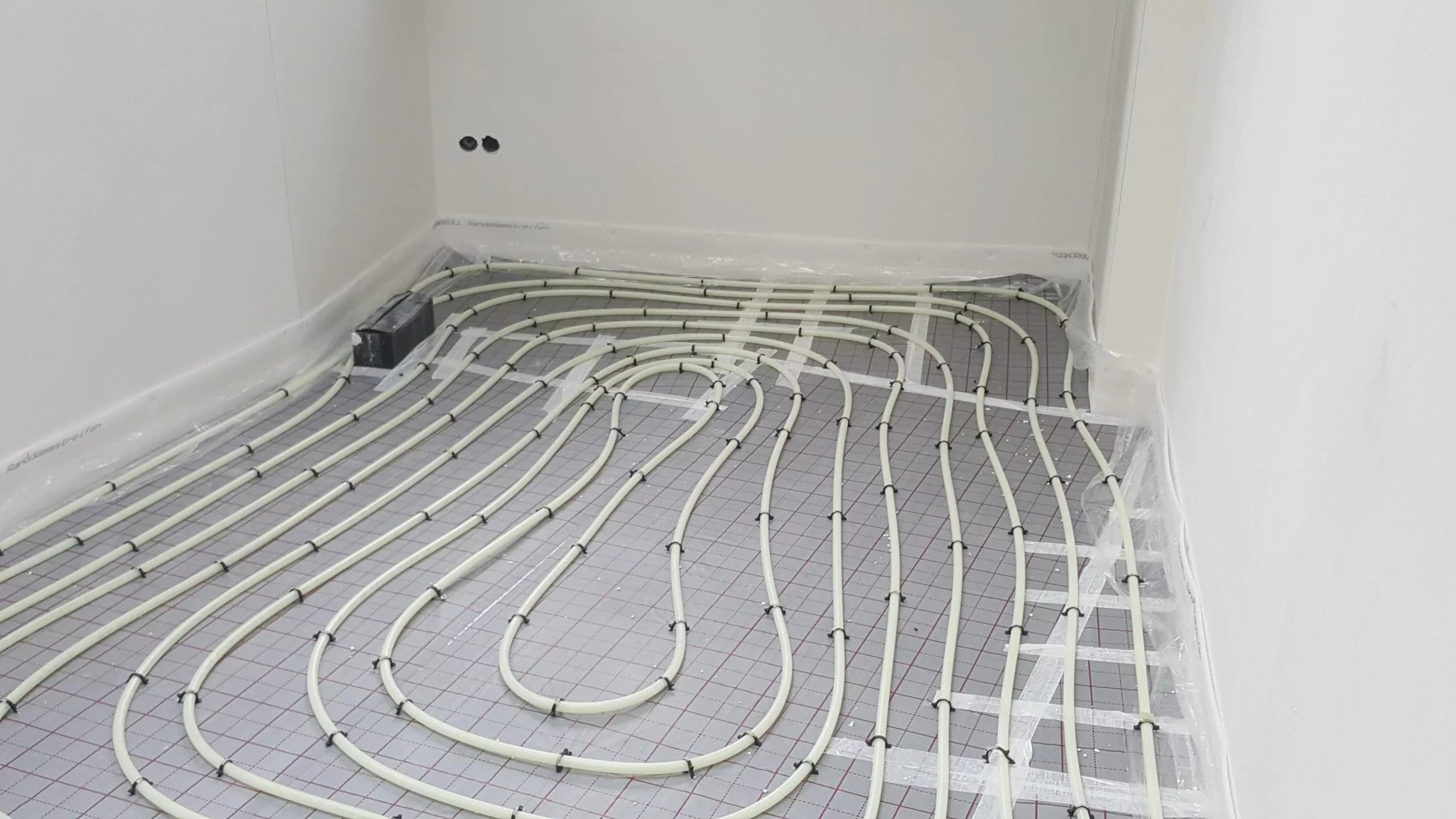
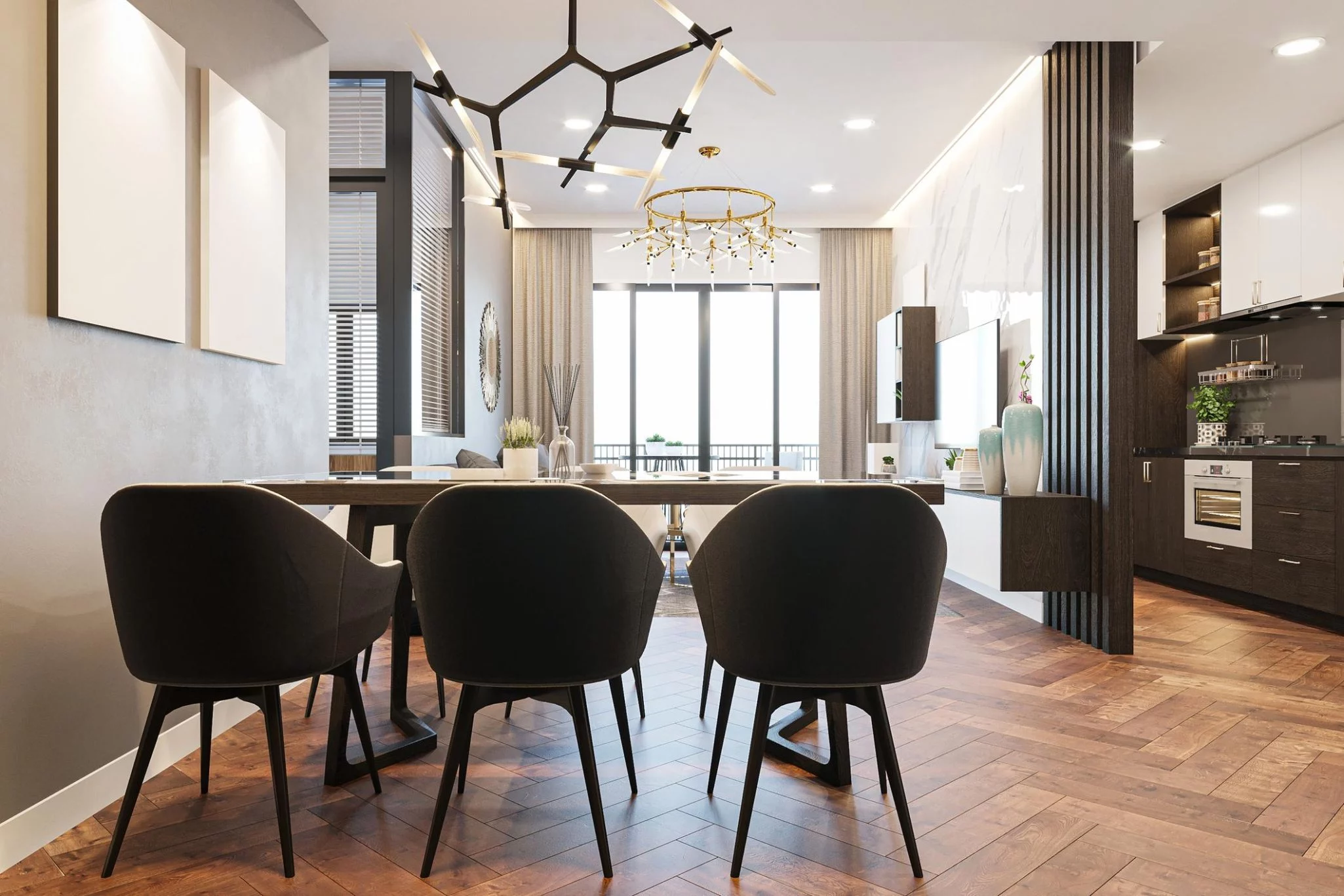
In a Kennet Island or Green Park flat the plank goes over concrete with the lease’s acoustic layer beneath and, over heated screed, is listed as compatible with the heating. For a landlord in a town where nearly a third of households rent, one scuffed plank is replaced on its own between tenants. The herringbone block in the same range gives an RG1 hall the parquet pattern on the same core.
Flats are 33% of the homes in the Reading district, and a rigid-vinyl floor in a flat goes over the slab on an acoustic underlay: it is thin enough to stay under the door thresholds and quiet enough, with the right underlay, to meet the impact-sound clause a lease carries. The kitchen and the bathroom of a flat are its two natural rooms.
Terraced houses are 28% of the homes in Reading, and the terrace is where the rigid-vinyl range does most of its work in Reading: the kitchen at the back, often a concrete floor with a history of damp, and the hallway that takes the traffic. A rigid board floats over both on an underlay, and its stiff core bridges the small unevenness an old floor has. Over a slab the base is checked for moisture first; BS 8203 practice puts the limit at 75 percent relative humidity under a sealed hygrometer.