
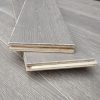
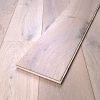
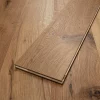
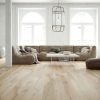
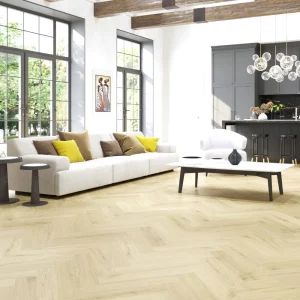
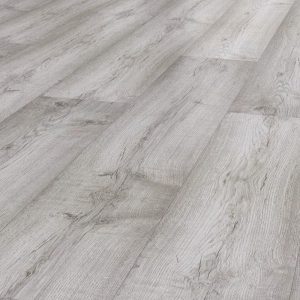
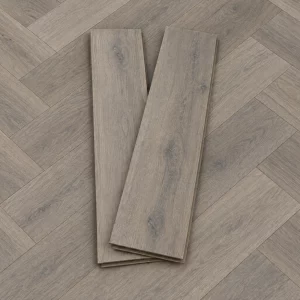
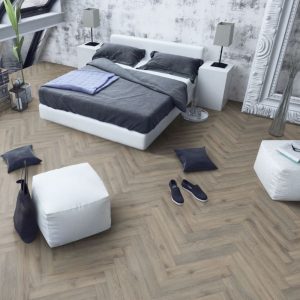
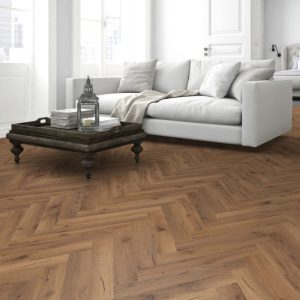
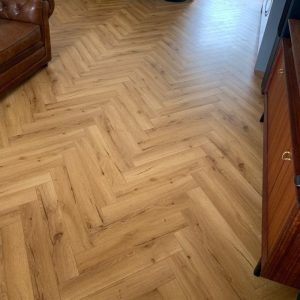
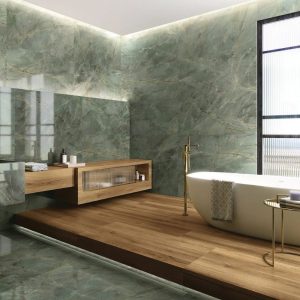

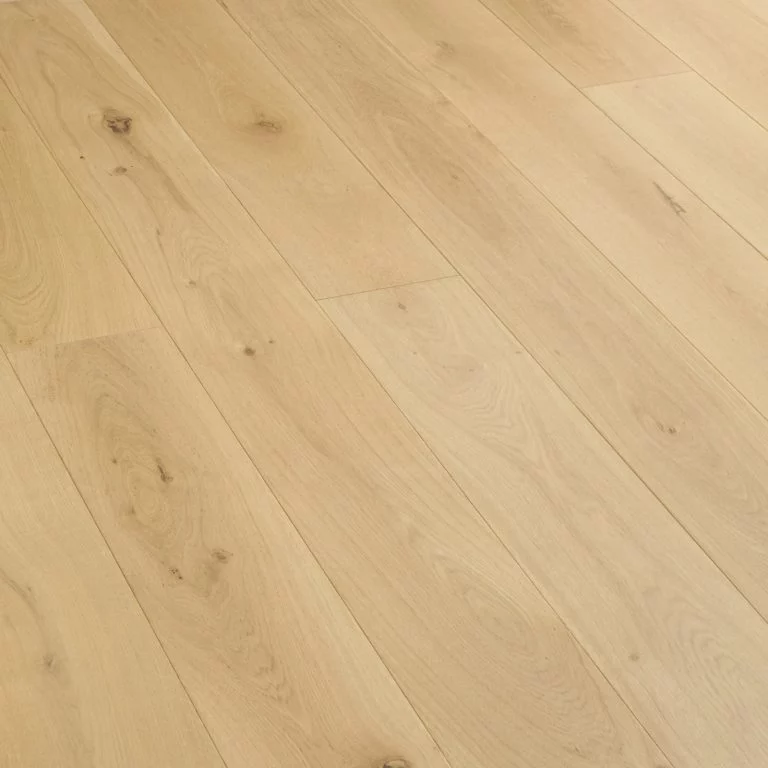
What Is SPC / Rigid Core Vinyl?
SPC means solid polymer core, a dense mineral-filled rigid core. How it differs from WPC and flexible LVT, why the wear layer matters more, where it fits.
Vinyl flooring stopped being one product some years ago, and the labels have not kept up. SPC, WPC, LVT, rigid core, luxury vinyl — some of these are the same thing, some are not, and the difference is worth two minutes.
On this page
The category and the cores
LVT — Luxury Vinyl Tile is the category, not a product. Everything below is LVT, and the click-together versions of it belong to the modular multilayer family that EN 16511 covers.
What varies is the core, the layer beneath the printed design and the clear wear layer:
All three take on no water as a material. The core changes how the floor behaves, not whether water can reach the subfloor through the joints.
Why SPC has taken over
Two properties, and both solve real problems in British houses.
The trade-off is that SPC is firmer and slightly cooler underfoot than WPC. Some people prefer that; some do not. It is worth standing on a sample.
The specification that actually matters
Not the core. The wear layer — the clear protective film on top, measured in mil or microns.
It determines how the floor stands up to grit, pets, castors and furniture. A bedroom and a shop entrance are not the same job, and the same design is often sold in more than one wear layer. Check it against the use, not against the price.
Everything else — core type, thickness, click system — is secondary to this one number.
Click or glue-down
Click floats over the subfloor, fits quickly, can be lifted and reused, and is the usual domestic choice.
Glue-down bonds directly. It sits flatter, handles heavy rolling loads better, and is the appropriate specification for a wet room or anywhere water may sit — because a click floor is water-resistant at the surface, but water can still reach the subfloor through the joints and the perimeter gap.
That distinction is the one most often misunderstood: waterproof material does not mean waterproof installation.
Underfloor heating
Most SPC and WPC ranges are compatible and warm up quickly, because the board is thin. Check the maximum surface temperature in the specification, and remember that underlay thickness affects heat transfer as much as the board does.
SPC against the alternatives
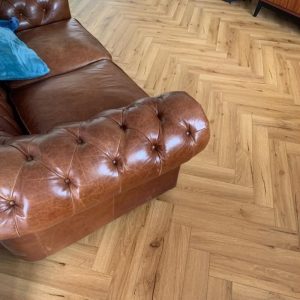
Where SPC is not the answer
In a room where you want the floor to develop character over twenty years, choose timber. Where the floor takes heavy point loads or extreme wear, choose porcelain. And in a formal reception room of a period house, an SPC floor will do its job perfectly and still look like what it is.
In short
SPC is the practical choice for kitchens, bathrooms, utility rooms, hallways, rentals and sunlit rooms — anywhere water, traffic or temperature swings are the problem. Check the wear layer against the use, and choose glue-down if the floor will ever stand in water.
See the range:
There is no substitute for a board on the floor, and rigid core SPC flooring is where the range sits. Checking the wear layer against the use, and glue-down against the risk of standing water, is a decision more easily made with the product in front of you than from a description of the material.
Common questions
What does SPC actually stand for?
Solid Polymer Core, in the wording of the multilayer flooring association; retailers often write it as stone plastic composite. Either way it describes the core of the board: a dense mineral-filled layer under the printed design and the wear layer. The name says nothing about the surface, which is why two SPC floors can look and wear quite differently.
How is SPC different from ordinary LVT?
The core. A flexible vinyl plank follows the subfloor beneath it, so it shows every ridge and hollow. A rigid mineral core does not flex in the same way, which makes it more forgiving of a subfloor that is not perfectly flat and more stable as the room warms and cools.
Is SPC suitable for a kitchen or bathroom?
It takes on no water, so a spill or a leak is an inconvenience rather than a replacement, and that is the strongest argument for it in a kitchen. As with any floor, the fit around the perimeter and any appliances is what decides whether water can get underneath it, so the specification and the fit are one decision, not two.
A rigid core earns its keep over subfloors that are not perfectly flat, which is most of the older housing stock. Browse by town and region.

Who publishes this guide
What the published standards say
Related reading
- Samples £1.99 each
- UK-wide delivery
- Advice before you order