Local fact sheet
Birmingham's homes, by the numbers
Birmingham in the 2021 census: 423,455 households, 75% houses, 25% flats.
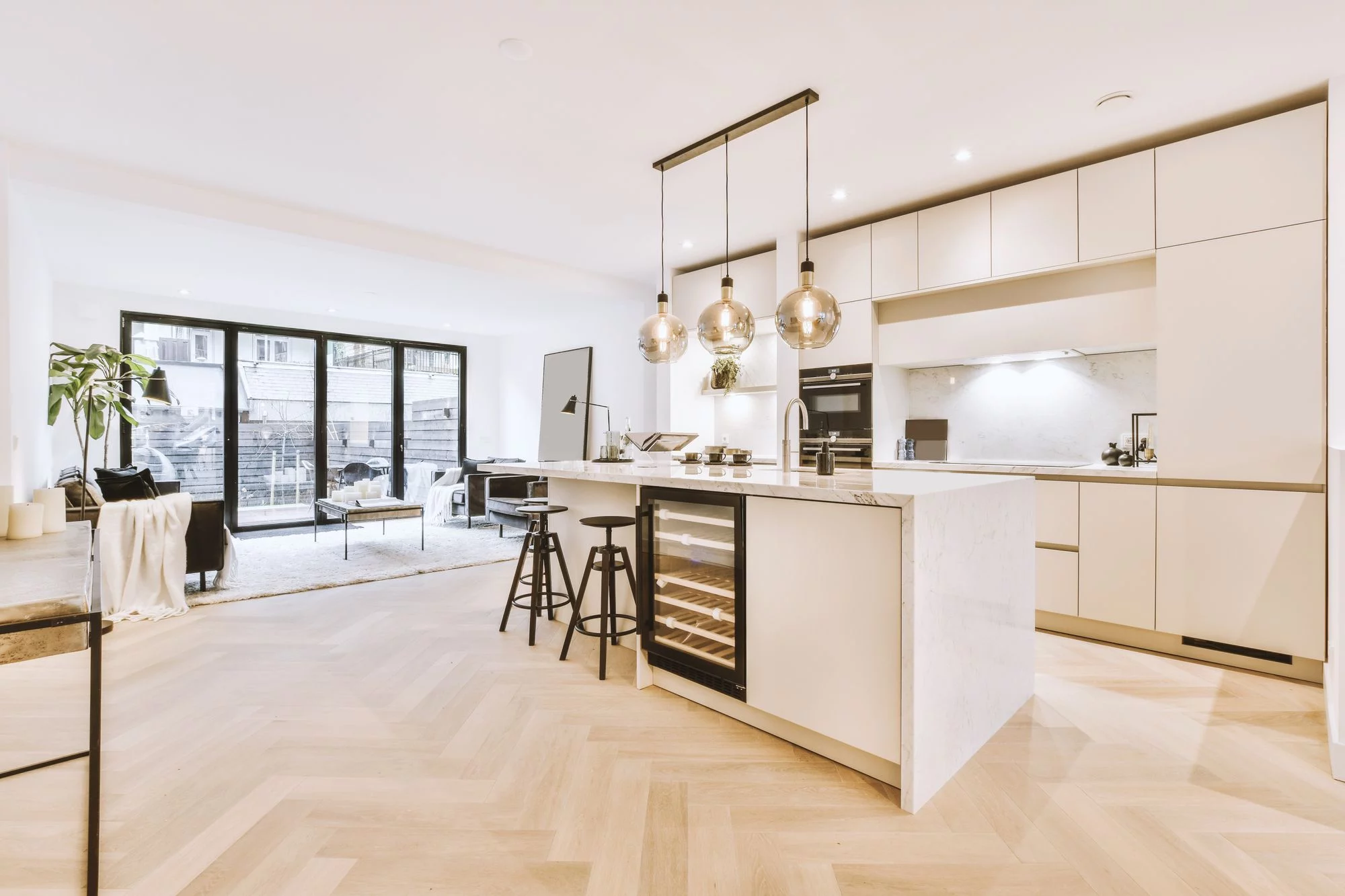
Birmingham's housing is comparatively old — large parts of the city were laid out in the Victorian, Edwardian and inter-war periods, so most homes are seventy years or more. In practice you meet one of two ground floors: suspended timber with boards in the older terraces, or a solid concrete slab in the inter-war semis of Hall Green, Kingstanding and Weoley Castle. The first needs levelling; the second needs the damp-proof membrane checked before anything goes down. In the 29 conservation areas — the Jewellery Quarter, Edgbaston, Moseley, Bournville Village among them — original boards cannot simply be lifted and skipped without consent. The new quarters are the opposite case: Smithfield, Perry Barr and Icknield Port Loop are screed with underfloor heating, where engineered wood is the right call and solid is not.
Birmingham’s property landscape ranges from grand Edwardian villas in Edgbaston and Harborne to modern apartments in the regenerated city centre and Jewellery Quarter. The city’s ongoing transformation means both heritage renovations and new-build projects drive strong demand for quality flooring.
A modern estate house usually has a beam-and-block ground floor: concrete beams with blocks between them, insulation over, then a screed. It is flat, dry and predictable, and it behaves nothing like the suspended timber in the older wards — the same house type, two different jobs.
Delivery times and options depend on the delivery postcode. See Delivery & Returns for the applicable estimate.