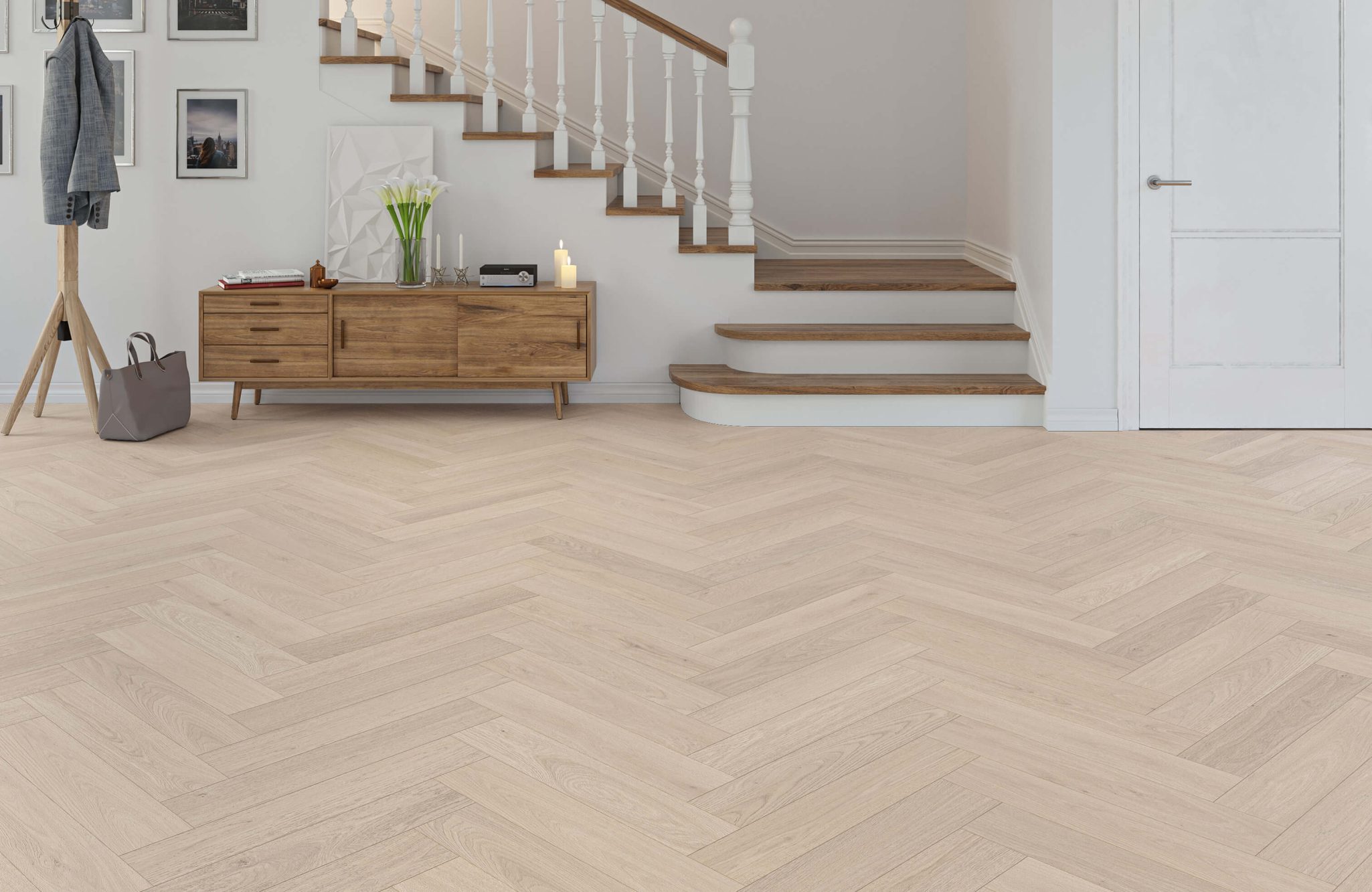
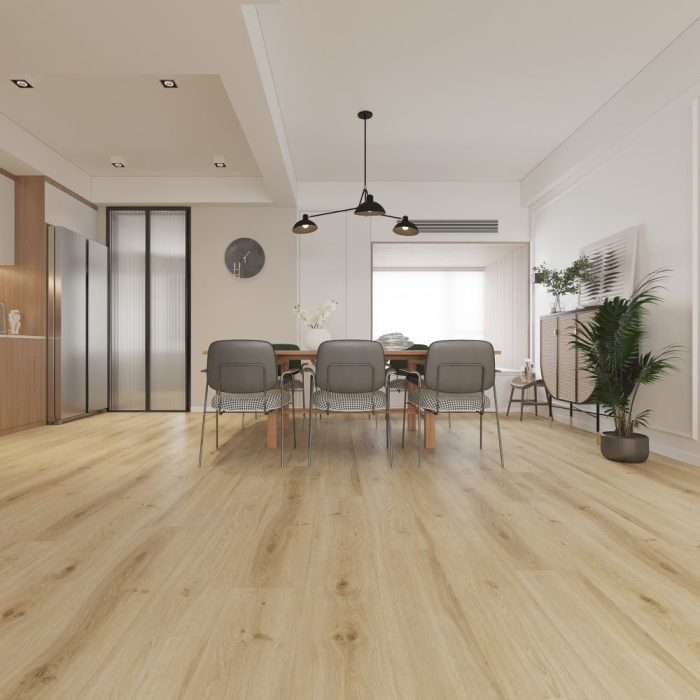
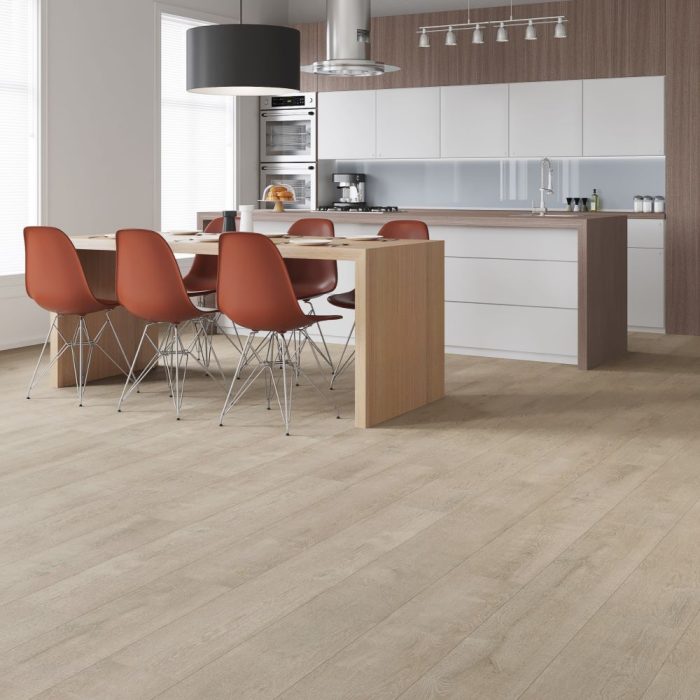
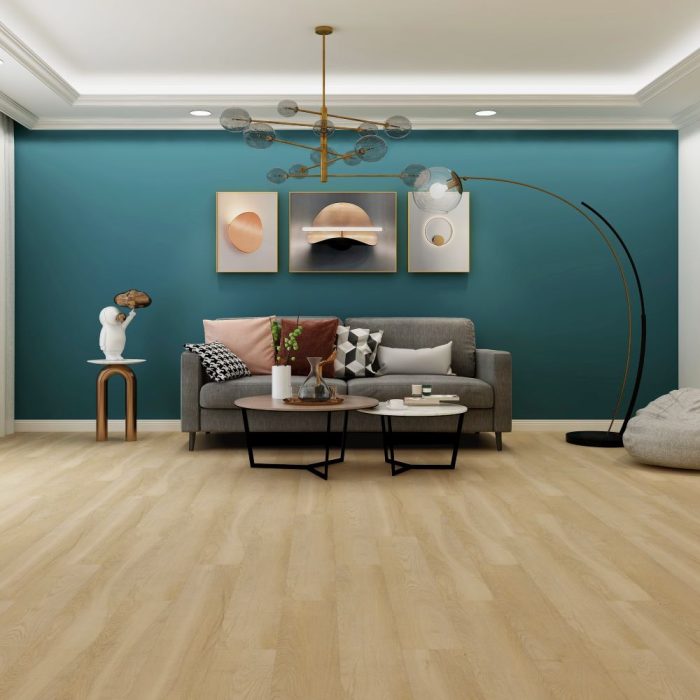
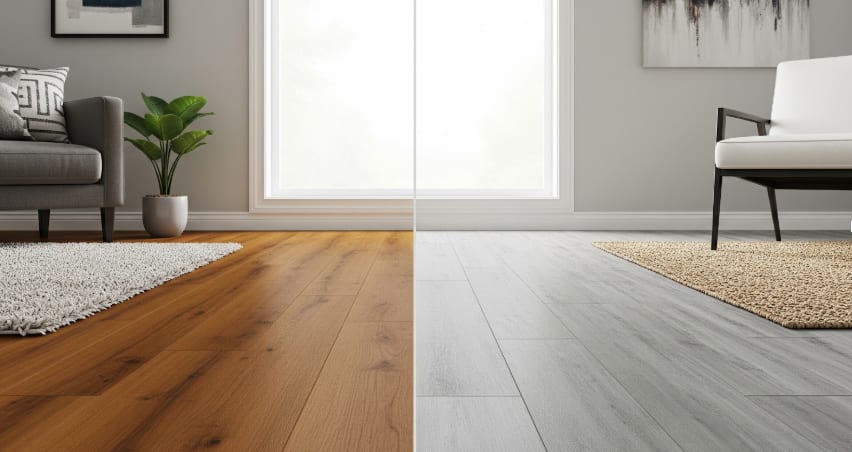
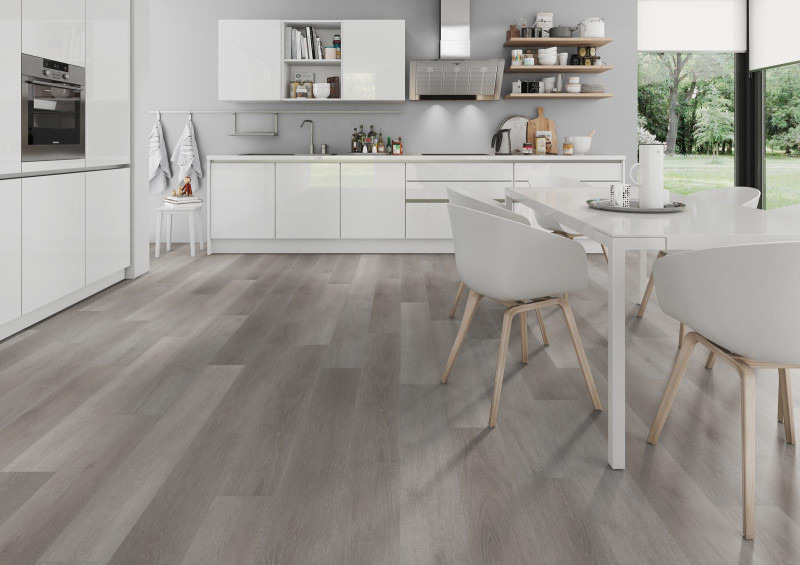
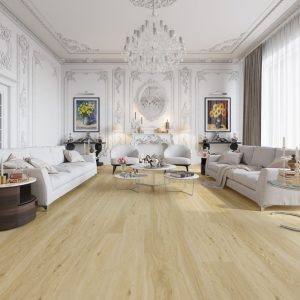
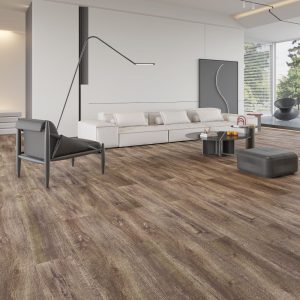
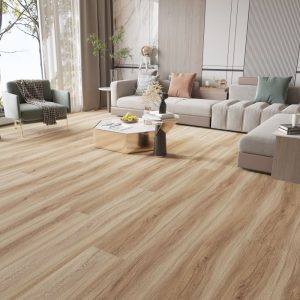
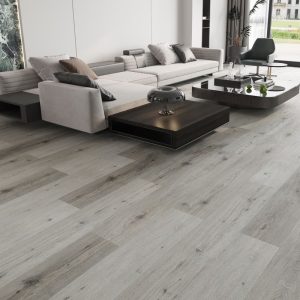
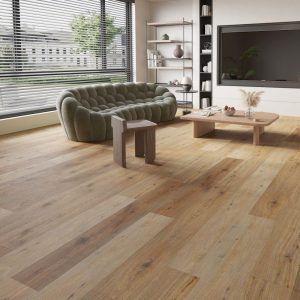
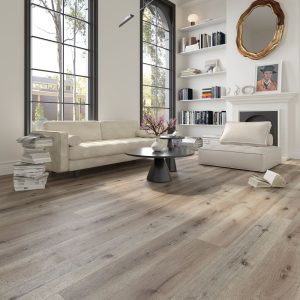
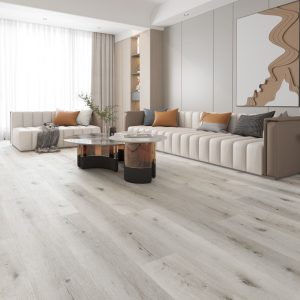
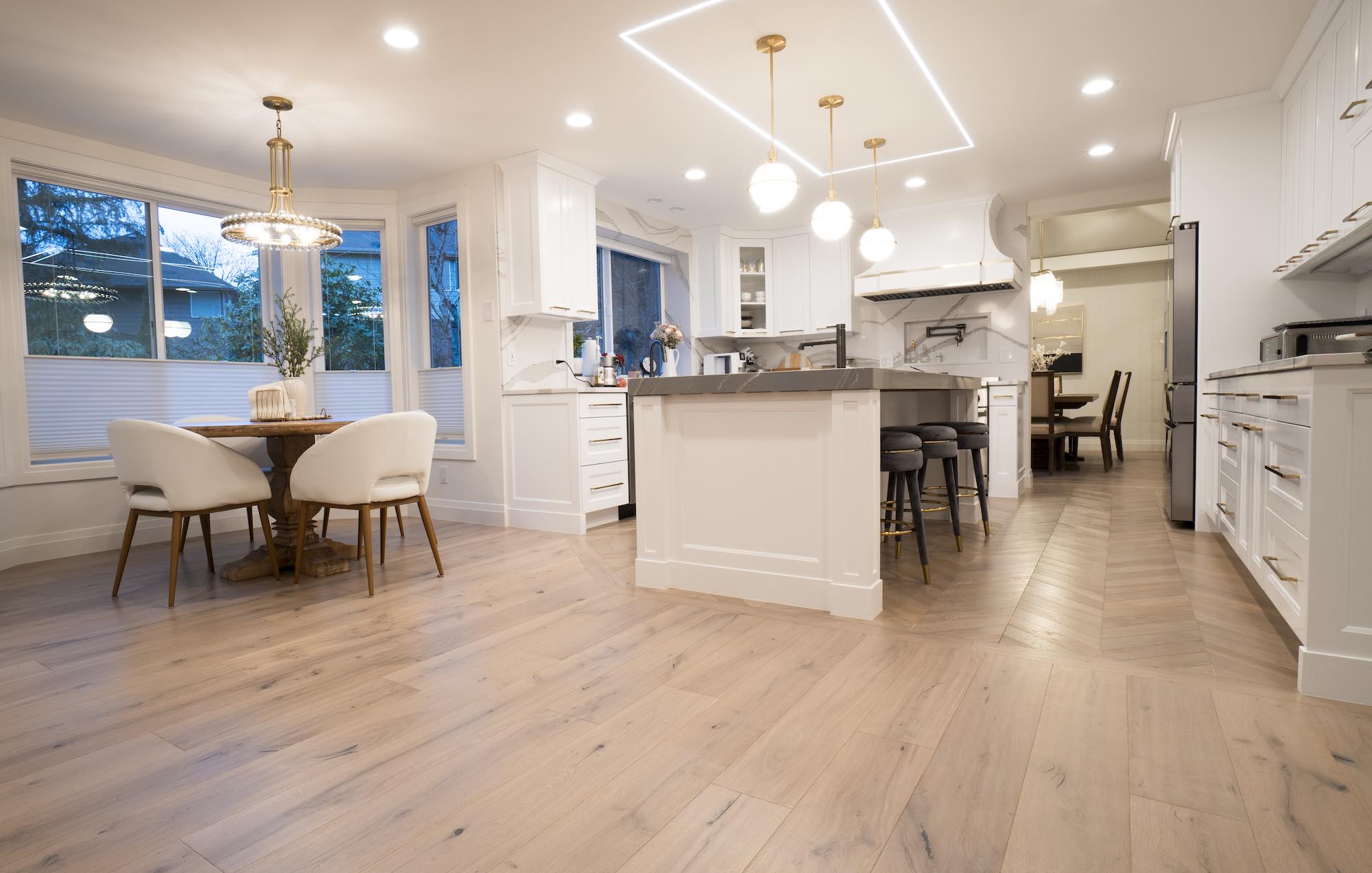
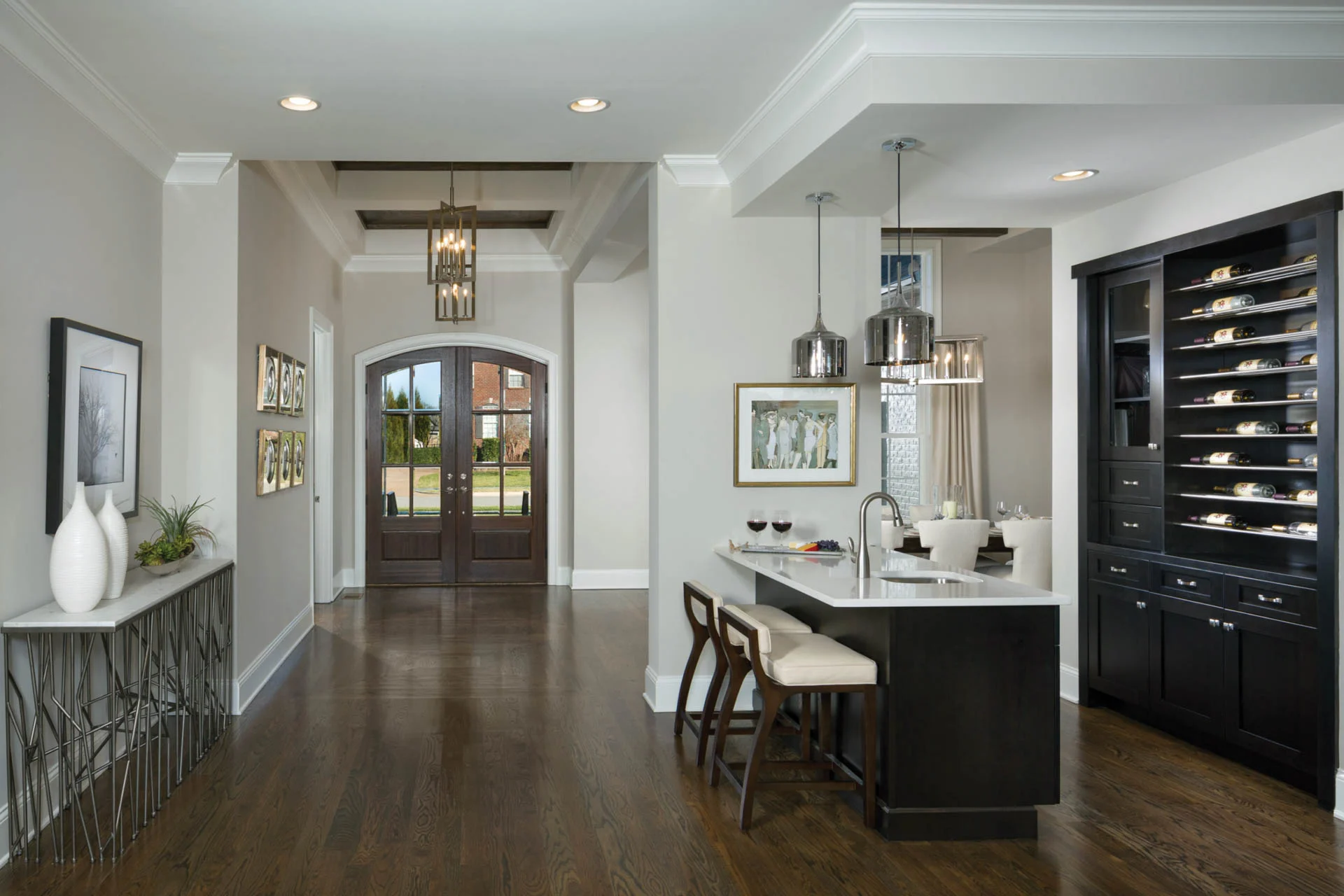
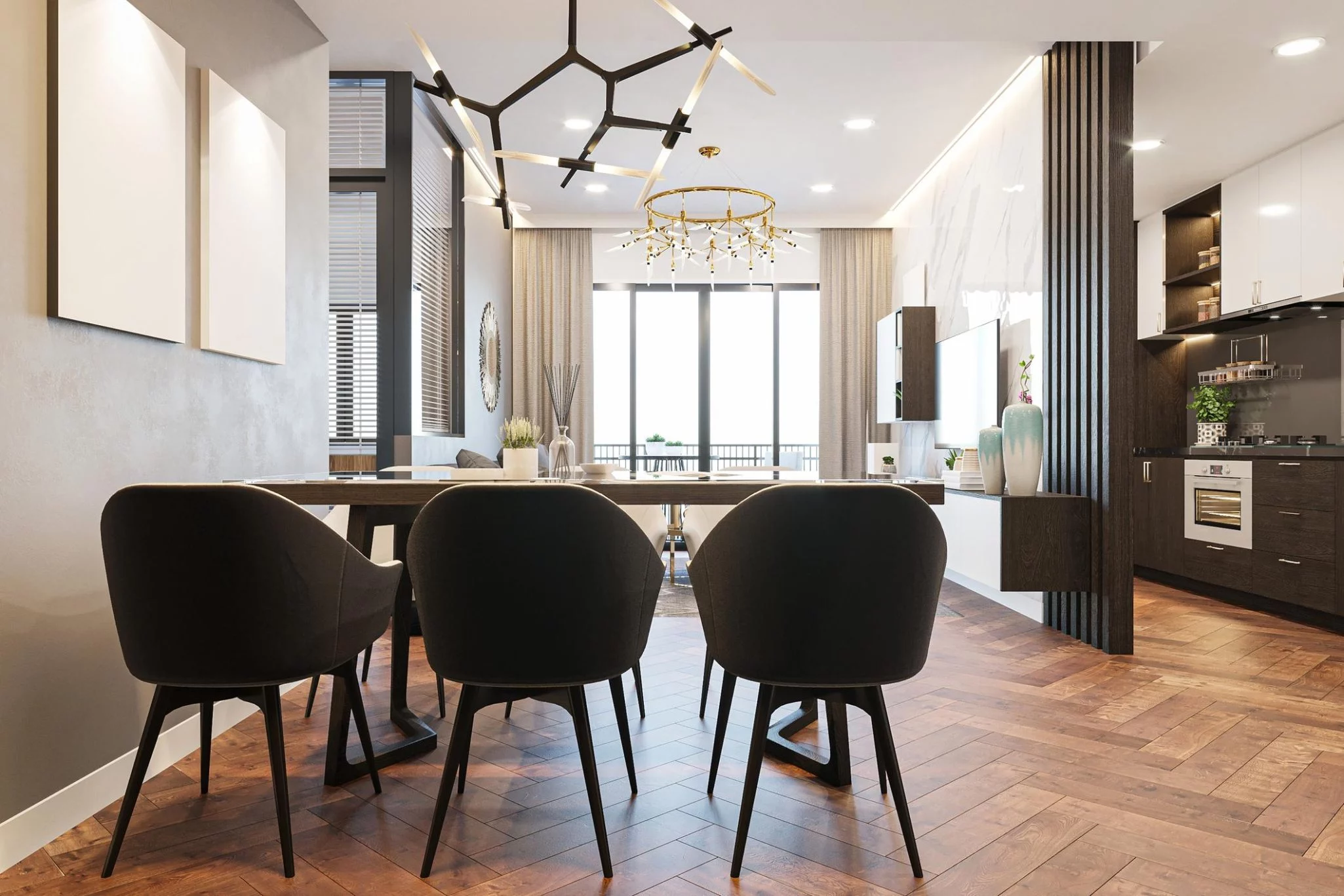
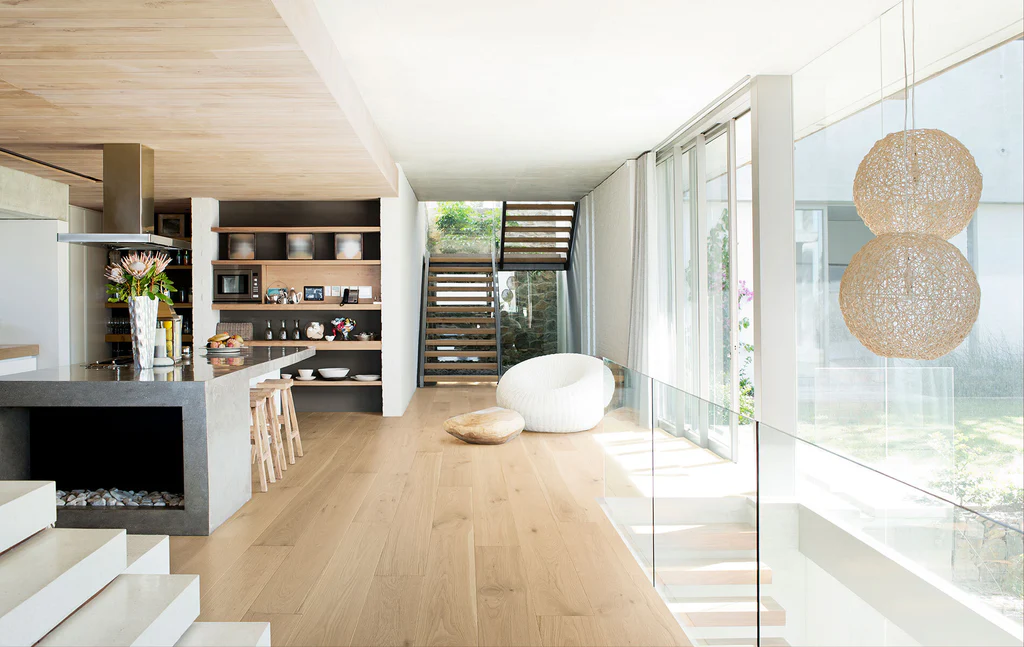
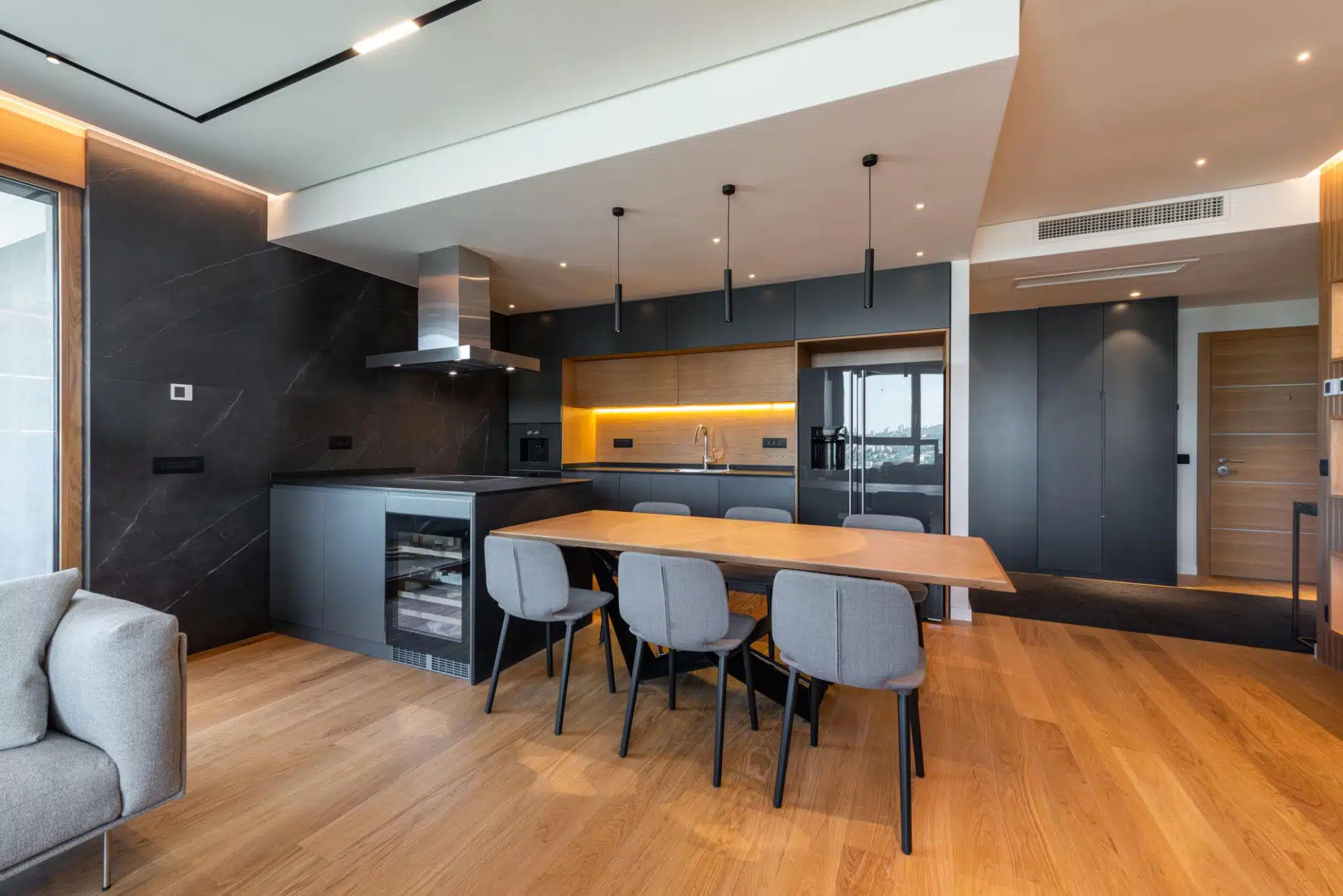
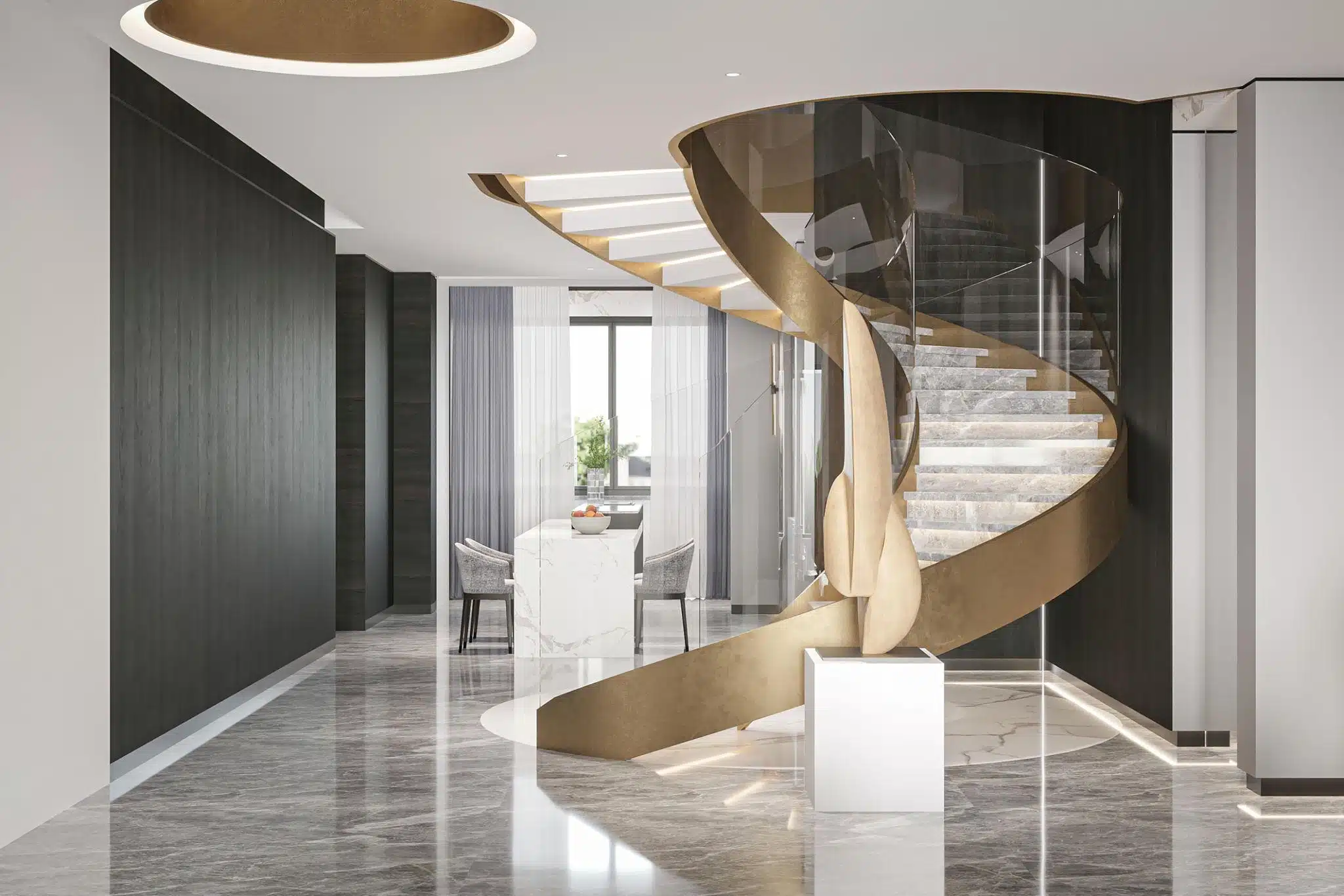
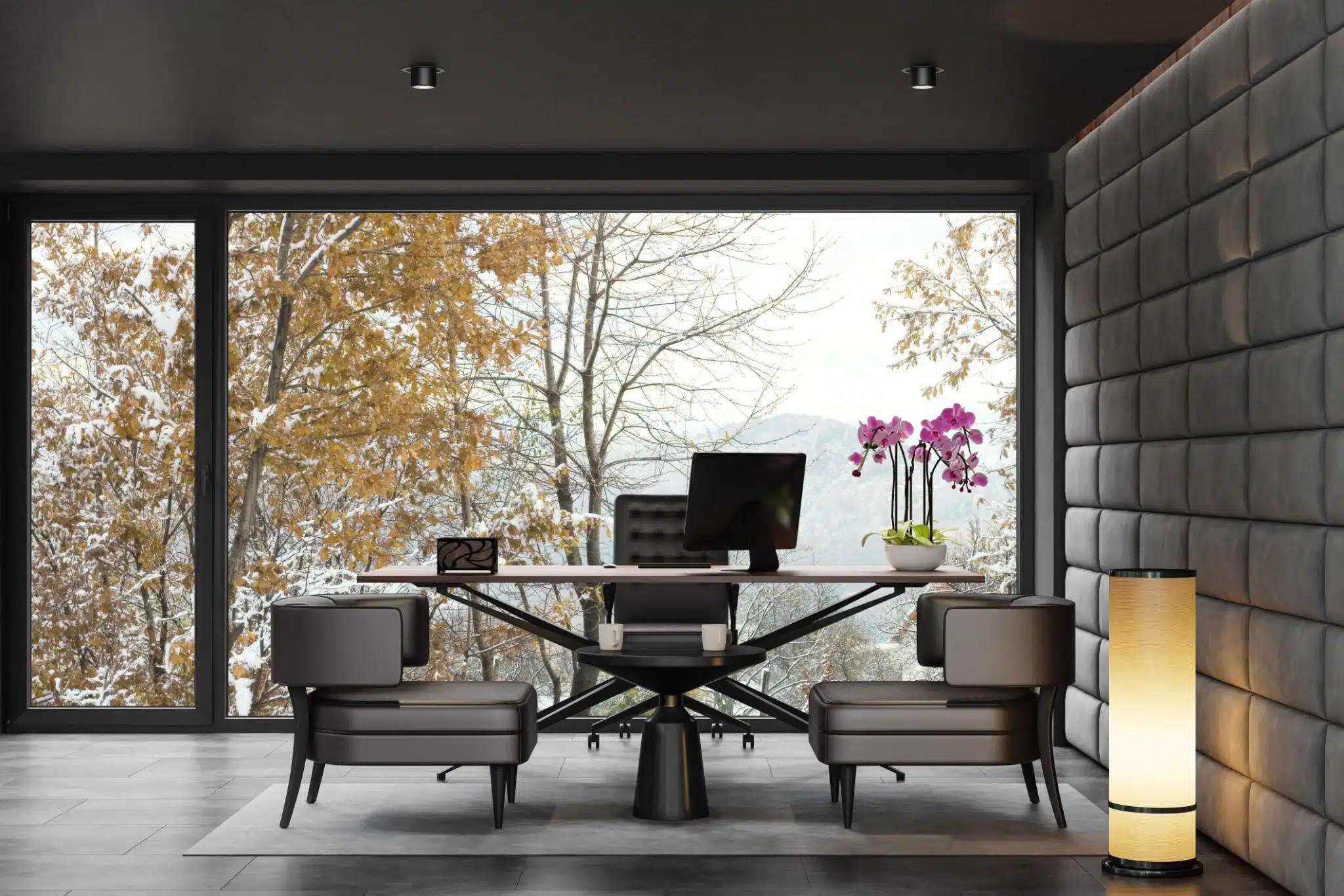
Spills lift off rather than soaking in, so the rooms that defeat timber – kitchen, utility, the hallway everyone tracks through – stop being a compromise.
The inter-war semis that make up so much of Birmingham sit on a solid slab, and once the damp-proof membrane has been checked the BML rigid vinyl planks float over it on their own bonded underlay without another layer. The plank itself is listed as waterproof, which is why the same floor runs from the hall through the kitchen to the back door in a Kingstanding or Weoley Castle house.
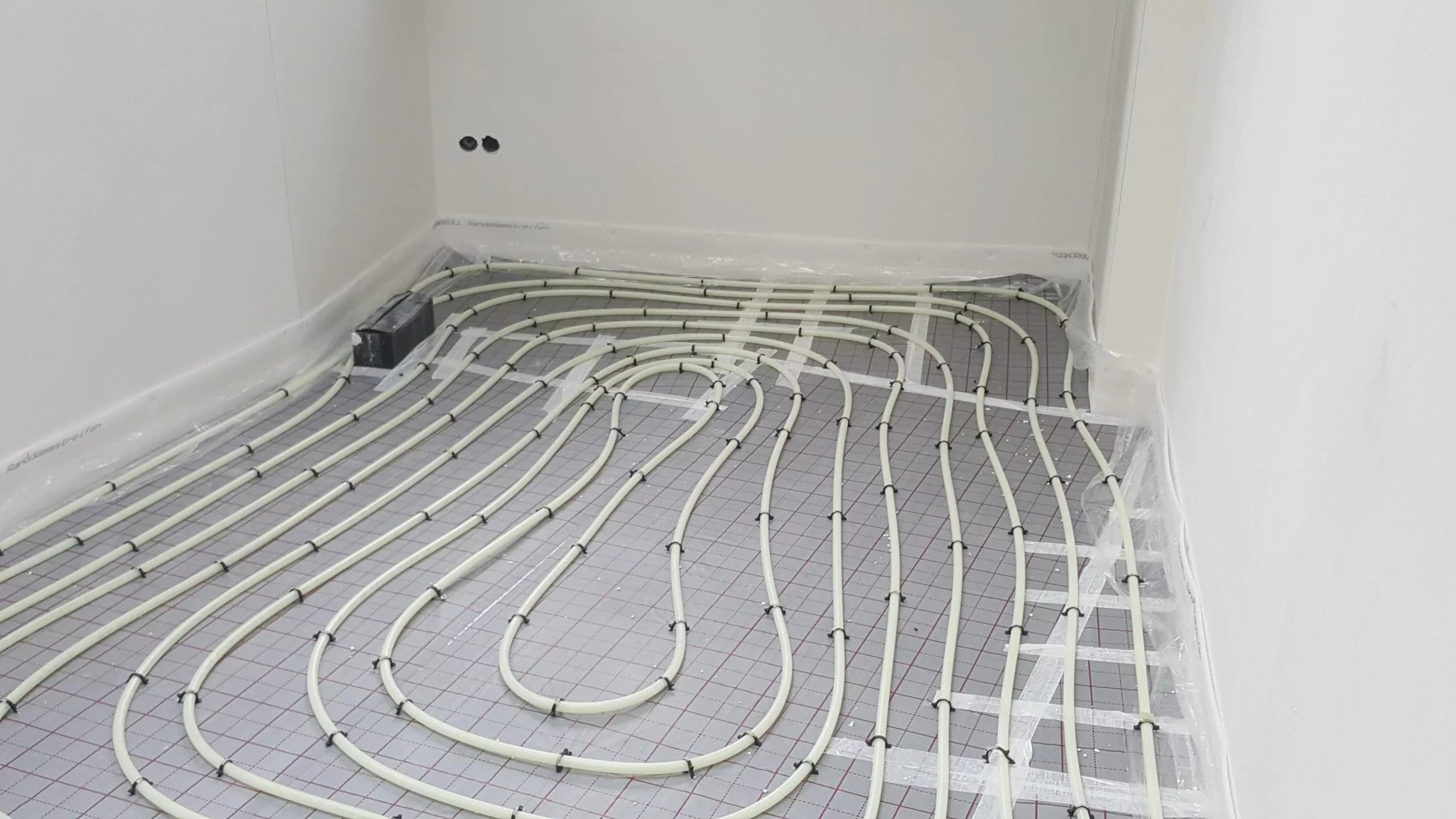
The rented stock tells a different story: private renting and social renting together account for a large share of the city, and for a landlord in Handsworth or Aston a click plank that is replaced one board at a time is the floor with the lowest cost per tenancy. Over the heated screed of a Perry Barr flat the plank is listed as compatible with underfloor heating and lays as it would anywhere else.
Semi-detached houses are 36% of the Birmingham stock, and the semi's kitchen-diner, timber at the front and concrete under the extension, is a rigid-vinyl floor more often than any other in Birmingham: one click floor across both bases, an underlay chosen per base, and no seam at the join. The wear layer decides the room: 0.55 mm for the kitchen and the hall, 0.3 mm where the traffic is lighter.
Terraced houses are 28% of the homes in Birmingham, and the terrace is where the rigid-vinyl range does most of its work in Birmingham: the kitchen at the back, often a concrete floor with a history of damp, and the hallway that takes the traffic. A rigid board floats over both on an underlay, and its stiff core bridges the small unevenness an old floor has. Over a slab the base is checked for moisture first; BS 8203 practice puts the limit at 75 percent relative humidity under a sealed hygrometer.