

Delivery
Delivered to Birmingham
Delivery times and options depend on the delivery postcode. See Delivery & Returns for the applicable estimate.
Also nearby: West Bromwich, Sutton Coldfield, Solihull, Dudley
Speak to our team 020 3858 0353 Shop by category
Start with a sample: real cuts of our floors at £1.99 each, sent to your door across the UK.
Start with a sample: real cuts of our floors at £1.99 each, sent to your door across the UK.
West Midlands · flooring delivered
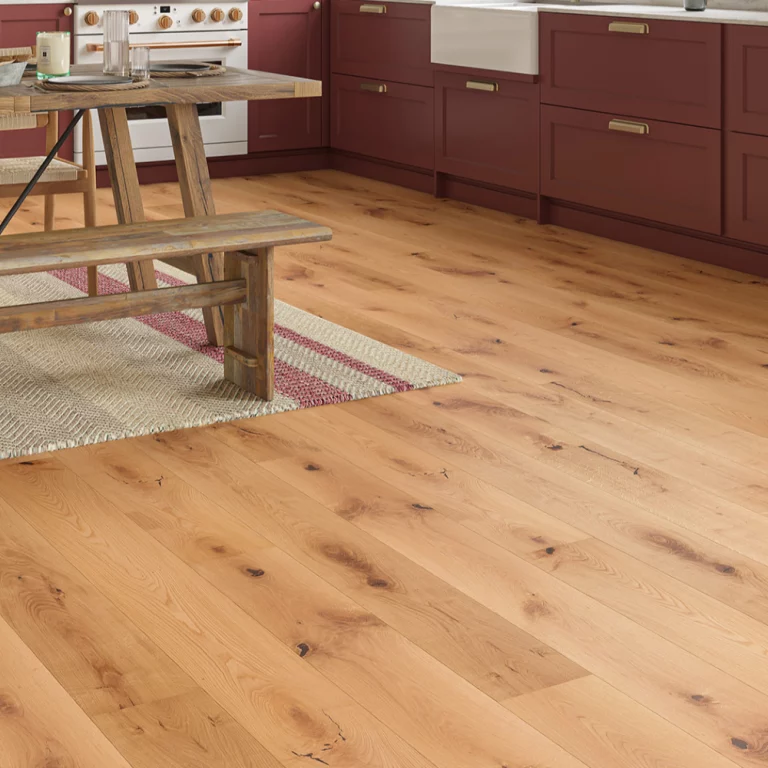
Oak and vinyl for inter-war homes
Inter-war houses on boards, the Bournville and Moor Pool estates, council and association lets, purpose-built blocks and freezing days in Birmingham.
Delivered to Birmingham: 13 postcode districts
Start here · Birmingham in one figure
10.7%
built 1919 to 1929
6th highest of 141 towns
VOA, 2025-03-31 · all local facts →10.7% of Birmingham's dwellings were built between 1919 and 1929, against 4.8% for England and Wales; that is the 6th highest share among the 141 towns where housing age is counted.
Another 16.3% went up from 1930 to 1939. Houses from those two decades were commonly built with boards on joists above a ventilated void at ground level, a kind of floor no new build has, and that shapes your choice more than the colour of any sample. Before oak, laminate or vinyl goes down, check which of the two is under your feet: boards over a void, or a slab poured later.
Further down, this page adds what else Birmingham's housing brings to that question: planned estates, semis and terraces, council and housing association homes, flats in purpose-built blocks, and winter days on which the temperature stays below freezing from morning to night.
Read the 7 chapters on Birmingham homes See all 19 local facts
At a glance
Delivery
Delivery times and options depend on the delivery postcode. See Delivery & Returns for the applicable estimate.
Also nearby: West Bromwich, Sutton Coldfield, Solihull, Dudley
Speak to our team 020 3858 0353Homes in Birmingham
7 chapters on Birmingham homes and what they ask of a floor · about 5 min read
01/ 07
Take the whole housing stock and the picture holds. 46.7% of Birmingham's dwellings predate 1940, ranked 19th of 141 towns, and that includes the 7.9% built from 1900 to 1918, against 5.2% nationally. A Victorian house, a house from the first years of the last century and a house from the 1930s have something in common that a new build lacks: a ground floor of boards on joists with air moving underneath.
The timber stays dry because that air keeps moving, and it stays sound only while the airbricks in the outside walls are unblocked. Check them from outside before you plan anything, then raise a board at the edge of the room and look at what lies below.
The age shares are the Valuation Office Agency's figures by age band; they do not record what the floors are made of. A 1920s house can have a concrete kitchen floor laid long after it was built, so treat the age of the house as a likely answer and the board you lift as the real one.
02/ 07
Not all of Birmingham's suburbs grew house by house. A council consultation sheet on the Bournville Village conservation area says building on the estate began in 1895 and was largely finished ten years later.
In Harborne, the Moor Pool Estate appraisal by the council describes a scheme designed on Garden City principles as a reaction to Victorian by-law terraced housing. Its first house was finished in May 1908, and the estate was fully open by 1912.
Austin Village in Northfield is a different case again. The council's designation notice describes a geometric layout from 1917 that includes timber bungalows imported from the USA.
Why should that matter when you order a floor? The layout of rooms over rooms, and the material of the joists, follow from when a house went up, and that in turn follows from where it stands. A house in Bournville, a house on the Moor Pool Estate and a timber bungalow in Austin Village can each need a different answer to the same question.
All three are among the 29 conservation areas the council lists across its area. Conservation-area rules deal with a building's exterior, not with the floors inside it.
03/ 07
More Birmingham households live in a semi-detached house than in a terrace: 35.6% against 29.7%. Both shares are above the figures for England and Wales, where the terrace share is 23.2%. Detached houses are scarce, at 8.7% of households, 141st of 151 towns.
That mix shows in where a floor wears. Abrasion gathers in different rooms depending on how a house is lived in, and a terrace entered straight from the pavement is lived in differently from a semi with a hall. Wet rooms follow the house as well: a single-bathroom terrace and a house with three differ in where water lands, and how often.
Detached houses being this scarce, a floor in Birmingham often has a neighbour beyond a party wall, or below it in a flat. Within a house, a room that echoes needs rugs and furniture rather than a different underlay. Above another home, though, the underlay's impact rating is what the household downstairs will notice.
Bungalows make up just 2.3% of the stock, against 9.2% across England and Wales, 134th of 141 towns. In a bungalow every room is on the ground floor, where whether a damp-proof membrane exists, and what state it is in, decide what may be laid.
04/ 07
25.2% of Birmingham households rent their home from the council or a housing association, against 17.1% for England and Wales, 26th highest of 151 towns. 50.7% are owner-occupiers, with or without a mortgage, 130th of 151 towns, against 61.6% nationally.
A landlord specifies a floor for one tenancy after another; an owner specifies one for their own household. The two calculations come out differently, and a poor pick in a let only comes to light years afterwards. Leaks are a case in point. An appliance seeps, a shower overflows, and the tenant may not mention it straight away. If the covering does not absorb water, the job is to dry it out. If it soaks water up, the job is to replace it, and the home stands empty while that happens.
If you own your home, you choose for yourself: for comfort, for colour and for the way each room is actually used.
05/ 07
21.3% of Birmingham households live in purpose-built blocks of flats or tenements, 57th highest of 151 towns, where England and Wales stand at 16.7%. Building rules set tighter limits for airborne and impact noise on the floor between two flats in such a block than in a flat carved out of a converted house.
That puts the underlay, and the way the floor is fixed, ahead of your taste. Ask the managing agent what the building requires, and choose an underlay that states its impact figure, before you order the floor that goes on top.
06/ 07
On 1.5 days a year, on the 1991 to 2020 average, the temperature in Birmingham's town centre stays below freezing all day. The median for the 151 towns is 0.8 days, and Birmingham ranks 13th highest. It is not many days, but on days like these salt and grit are carried indoors on shoes.
Where a house has a hall, every trip through the house crosses it, and whatever comes in from outside lands on its floor first: grit, rain and, in winter, salt. Put a tough, easily cleaned floor in the hall, with a mat inside the door, and save the gentler finishes for the rooms beyond it.
07/ 07
The Birmingham Development Plan, adopted in 2017, provides for 51,100 additional homes across the city council area between 2011 and 2031. In the year to March 2026, new homes finished in the council area equalled 2.2 per 1,000 dwellings, against 5.5 for England, joint 104th of 135 towns.
New homes often come with new screeds, and a screed that seems ready may be nothing of the sort. Its surface is smooth and pale, a footprint leaves no mark on it, and it can still hold more water than anything else in the building. A drying time in a build programme is only an estimate for planning; it marks when testing can start, not when the screed is dry. Get a moisture reading in writing, and wait until it meets the limit given for your floor.
Floor by floor
19 floors, rooms and needs, each with a note written for Birmingham homes. Pick one to read it.
 Floor type
Birmingham
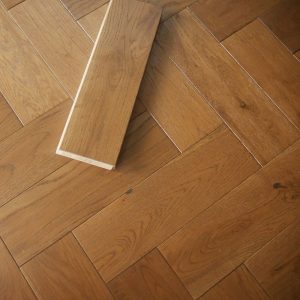
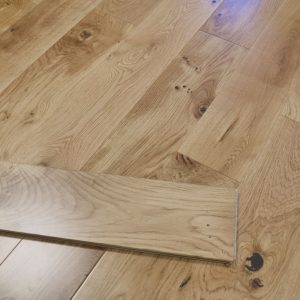
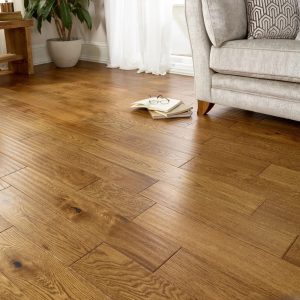
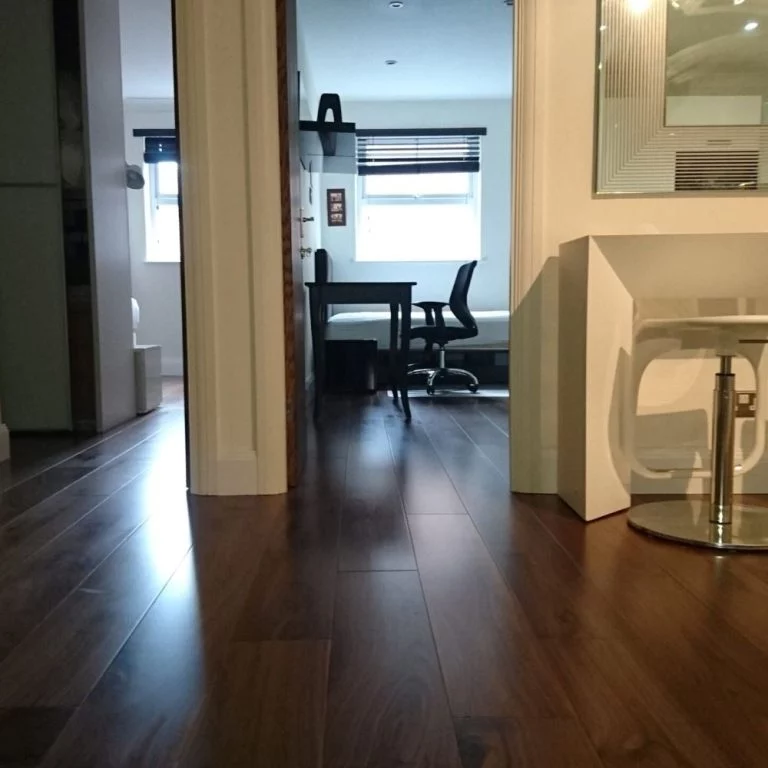
Engineered oak is a practical choice where a Birmingham ground floor turns out to be a later concrete slab, and it can also go over sound boards in an inter-war semi.
 Floor type
Birmingham
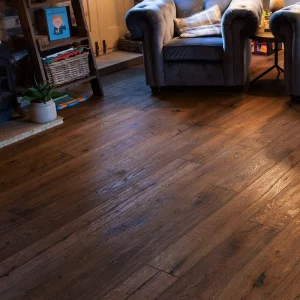
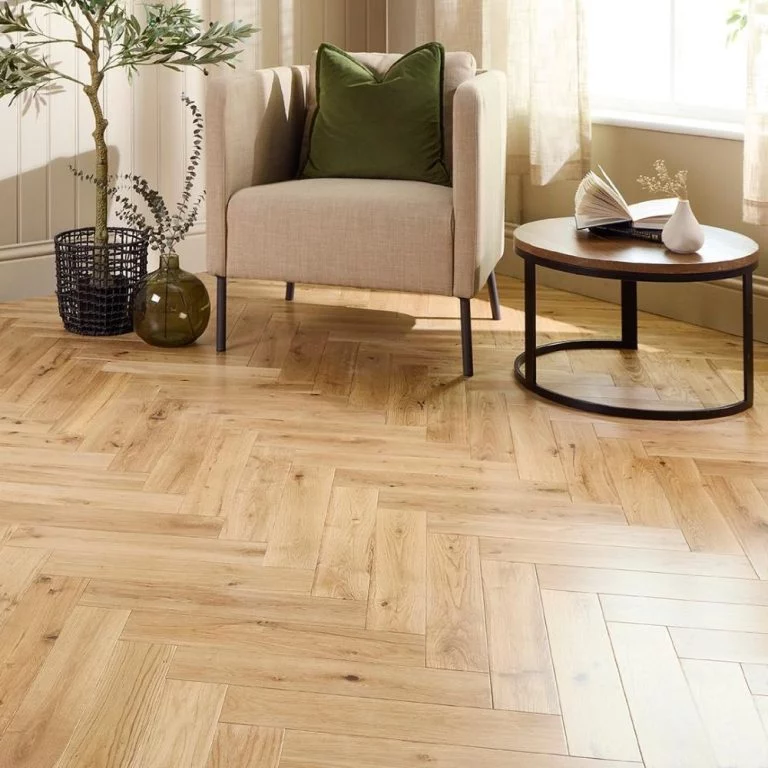
Solid oak can go onto the joists of a house built before 1940 once you have checked the void beneath it for damp and for moving air.
 Floor type
Birmingham
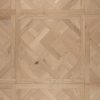
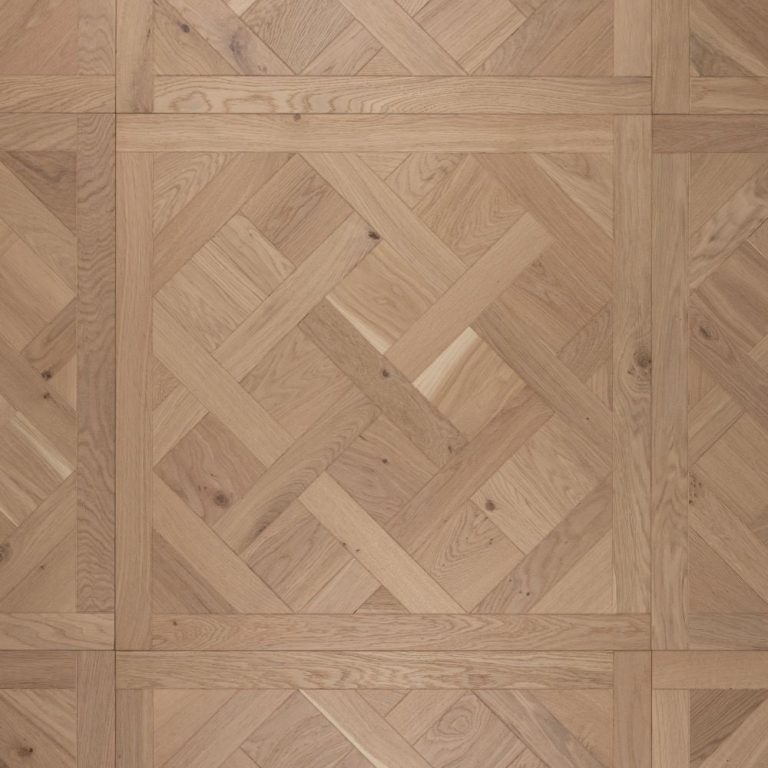
Parquet blocks want a sound, level base; check what a 1930s ground floor really is before planning a block floor on it.
 Floor type
Birmingham
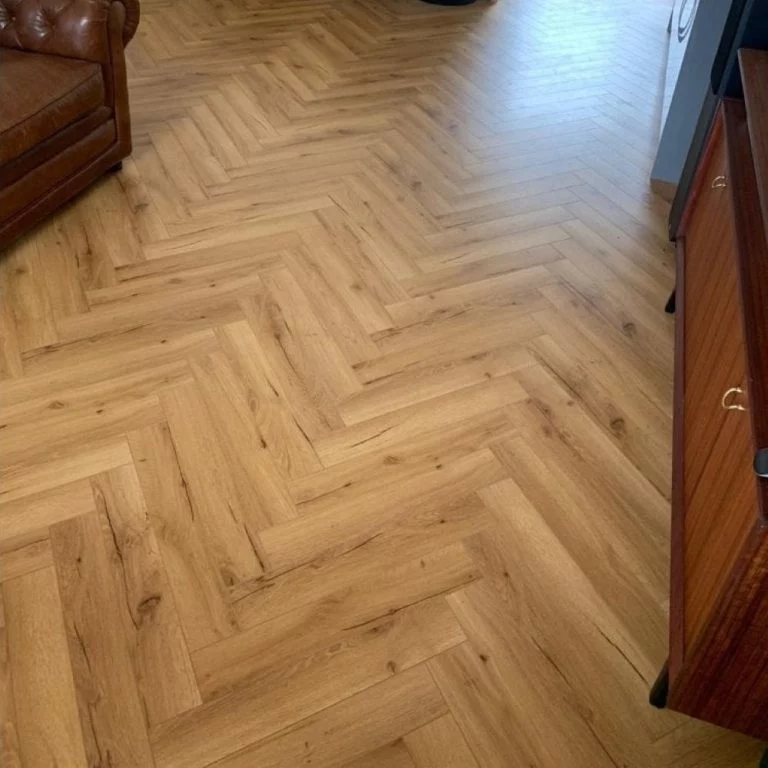
Laminate for a Birmingham let should be chosen by abrasion class room by room, with a harder class where the street door opens straight into the house.
 Floor type
Birmingham
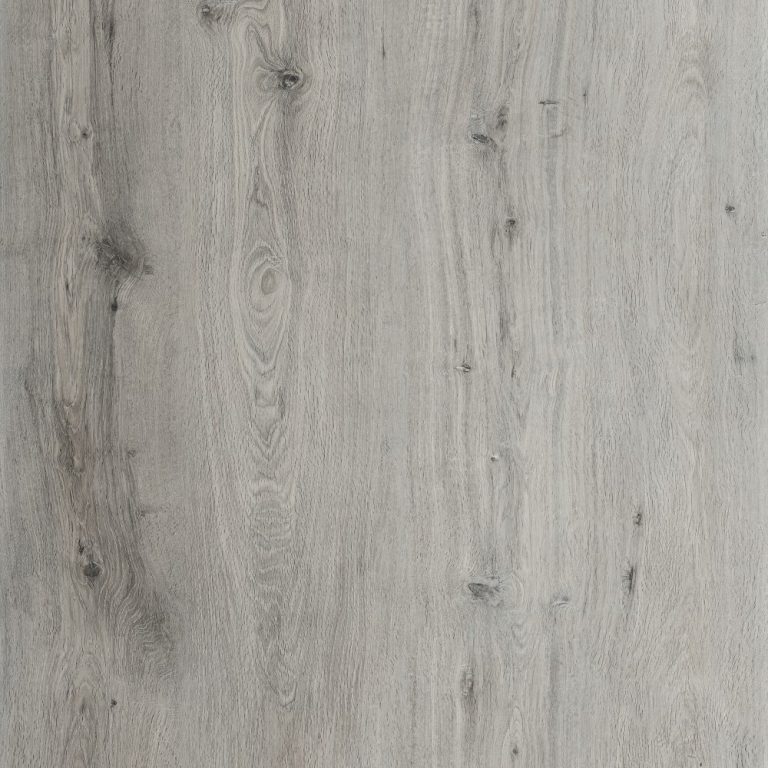
In council and association kitchens and bathrooms, vinyl planks and tiles do not soak up a spill, though water can still find the joints.
 Floor type
Birmingham
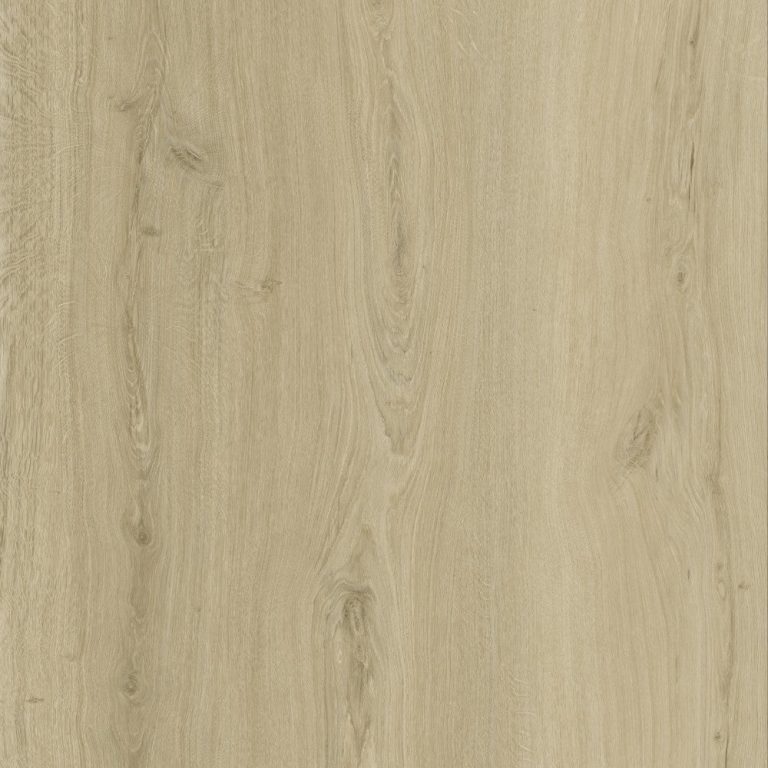
A rigid core floor suits flats in purpose-built blocks, laid over the underlay the building asks for.
RoomBirmingham
The hall meets salt and grit first on the days Birmingham stays below freezing, so it wants the toughest surface you lay and a mat inside the door.
 Room
Birmingham
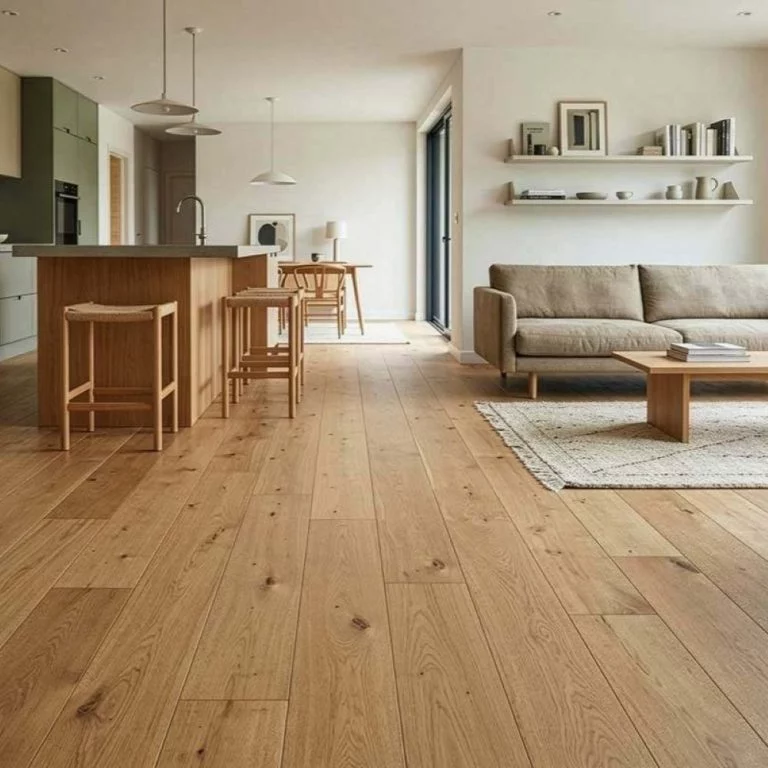
The kitchen of a 1920s or 1930s house may sit on a later slab, so check for a damp-proof membrane before a wood-based floor goes in.
 Room
Birmingham
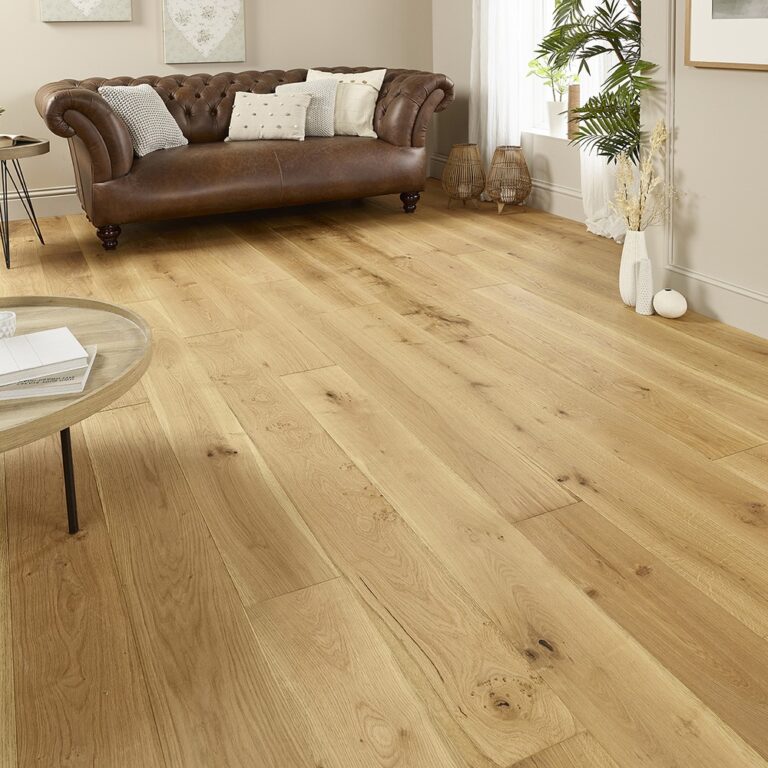
An echoing living room in a semi calls for rugs and furniture; above other people's homes, pick the underlay with the neighbours below in mind.
 Room
Birmingham
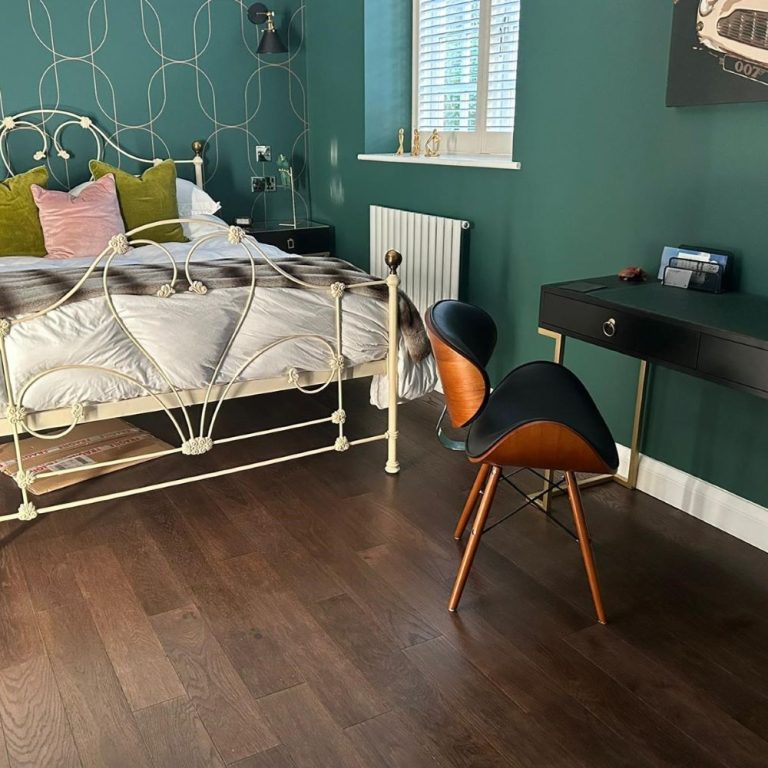
Bedrooms upstairs in a semi or terrace see little grit, so a lighter wear class will do there.
 Room
Birmingham
Where a terrace has just one bathroom, every bath and shower in the house lands on that floor, so its covering should shed water rather than absorb it.
 Room
Birmingham
Where the washing machine stands in a utility room, give that room a floor that holds a slow leak on top, where you will spot it.
 Room
Birmingham
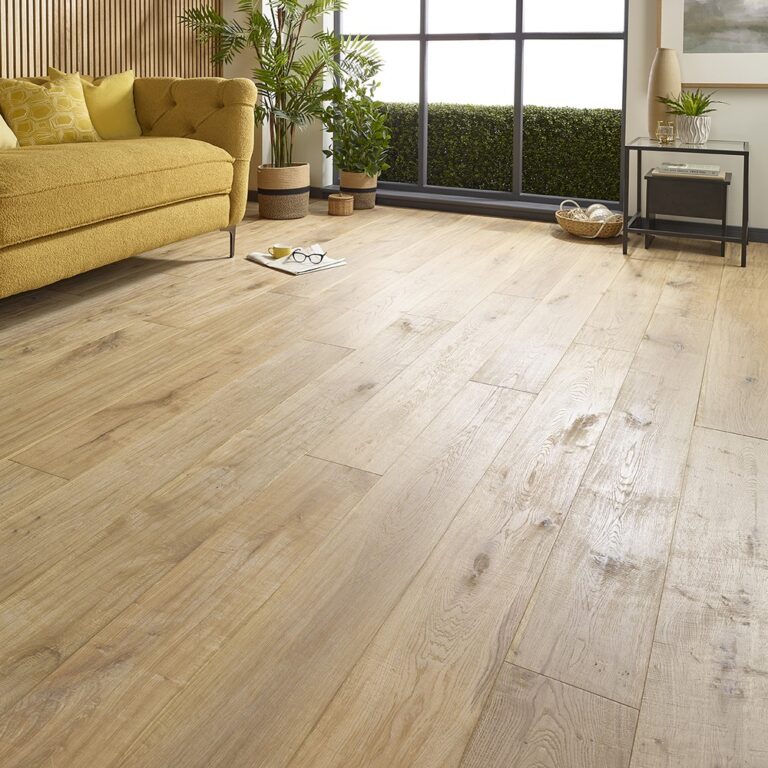
A conservatory goes from frost on the coldest winter days to summer heat, so pick a floor made for glass rooms.
 Pattern or need
Birmingham
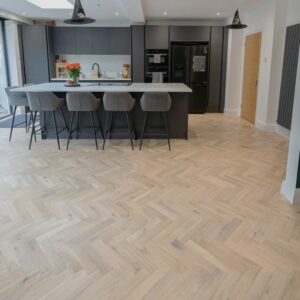
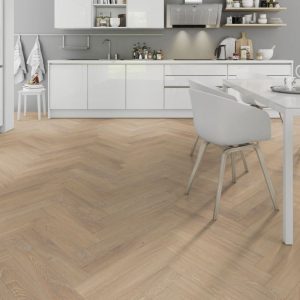
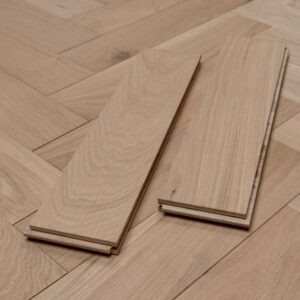
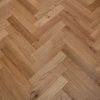
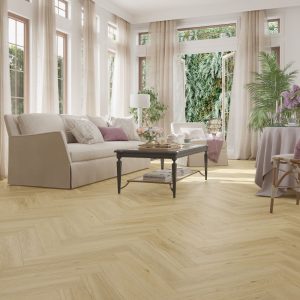
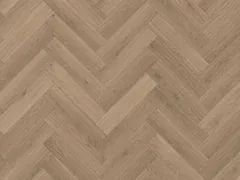
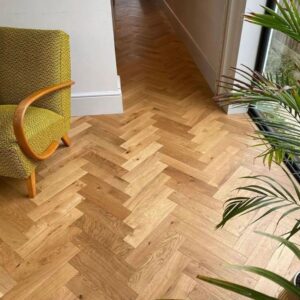
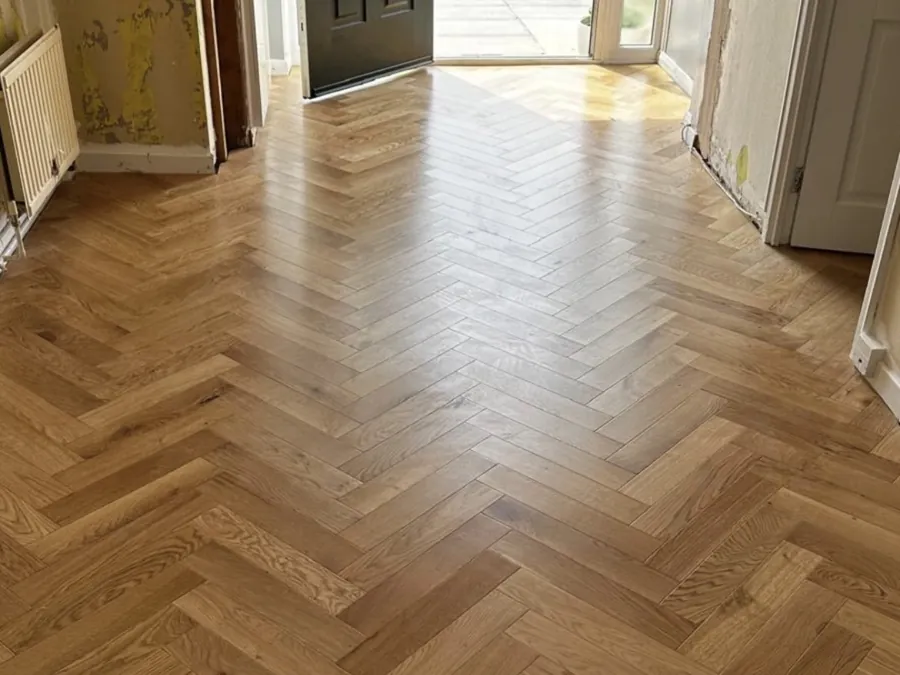
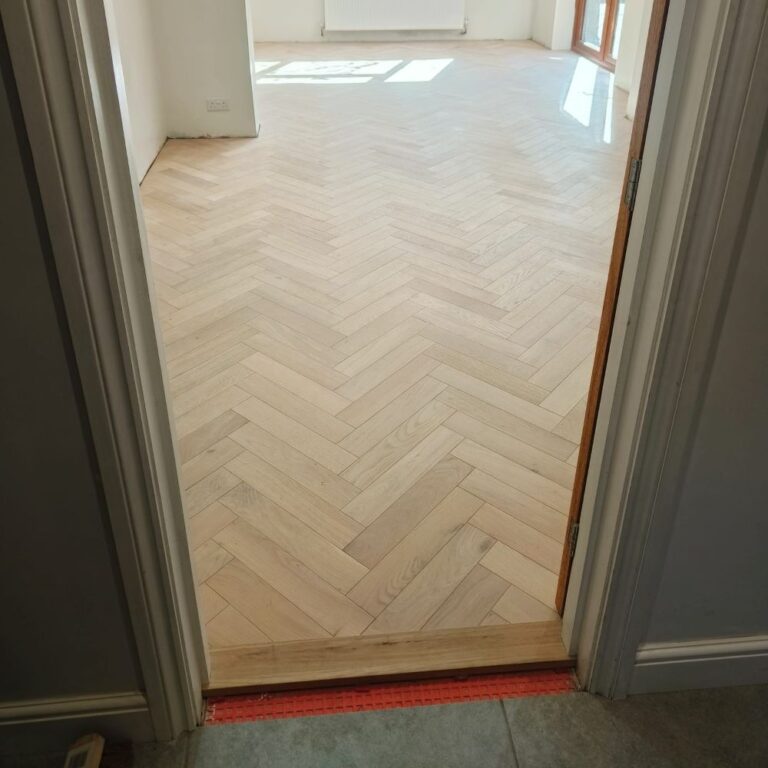
A herringbone pattern gives the hall of an inter-war semi a strong first impression, laid once the boards beneath it are sound.
 Pattern or need
Birmingham
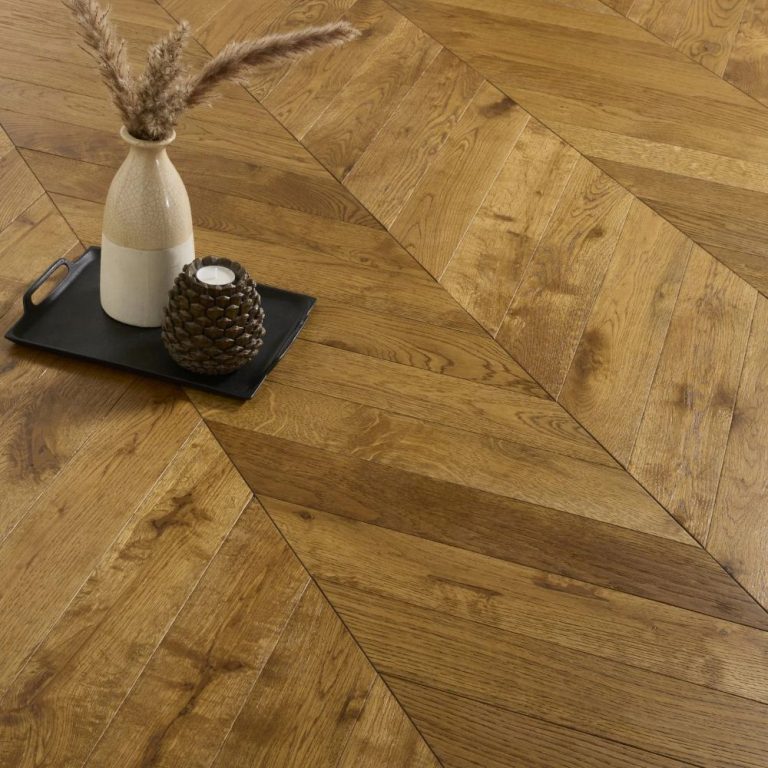
Chevron gives a narrow terrace hall a sense of direction from the street door inwards, provided the boards under it are firm.
 Pattern or need
Birmingham
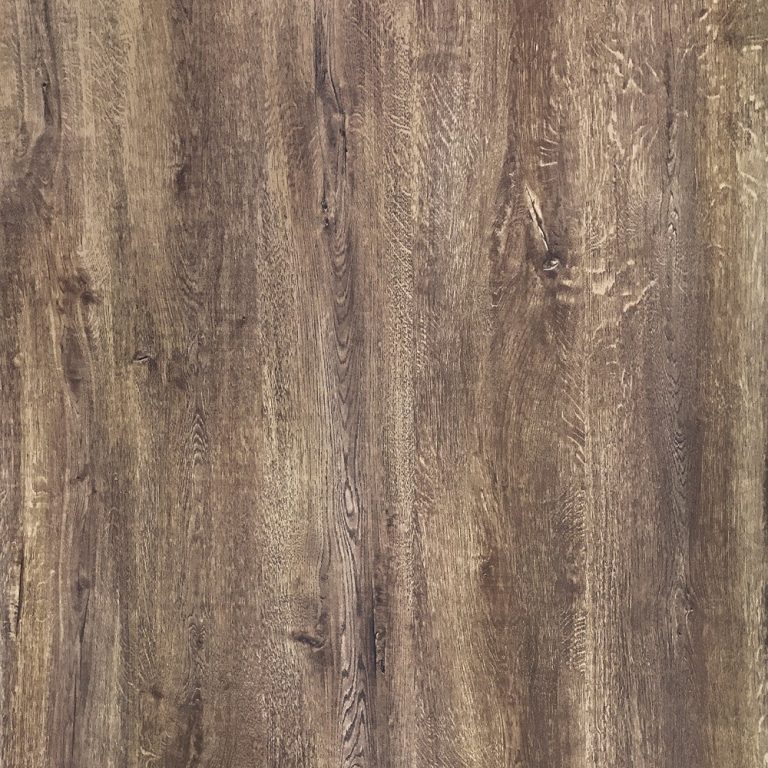
Floors listed as waterproof keep water out of the material itself, but in a bathroom or utility room the seams and perimeter still need sealing.
 Pattern or need
Birmingham
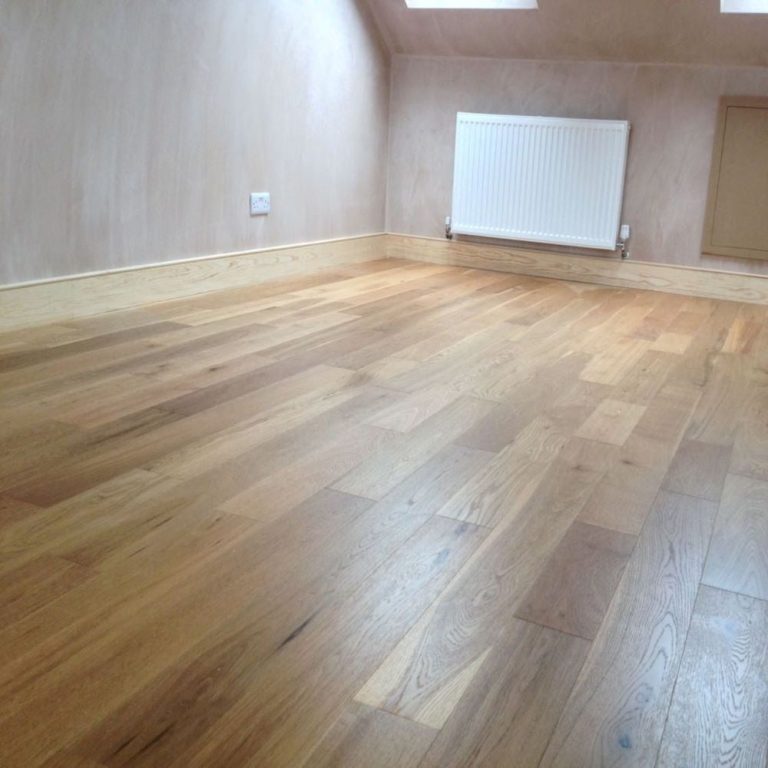
Underfloor heating in a new screed needs a floor rated for it, laid only after a moisture reading on the screed allows.
 Pattern or need
Birmingham
A dog in a terrace brings wet paws straight in from the street, so a pet-friendly floor in the first room must take wet paws and claws alike.
 Pattern or need
Birmingham
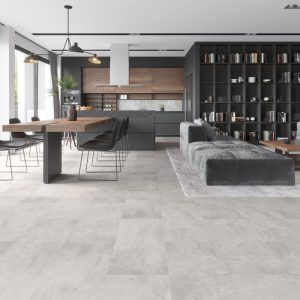
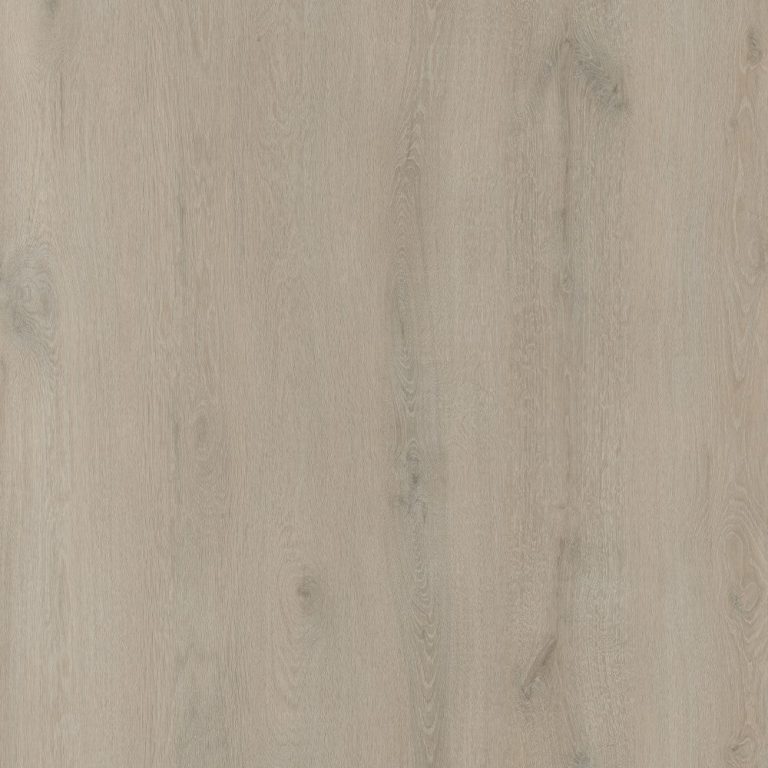
Grey keeps a council or association home neutral for the next household.
Bestsellers
Reviews
Trustpilot
Reviews written by our customers on Trustpilot.
Read all reviews on TrustpilotReviews on our Google Business Profile.
Read all reviews on GoogleAsk us first
Call 020 3858 0353, Monday to Friday 10am to 6pm, Saturday 10am to 4pm, or send a photo of the room to info@homesandfloors.com.
Contact usQuestions
Look for airbricks low in the outside walls and raise a board where it will not show. 10.7% of Birmingham dwellings were built in the years 1919 to 1929, and at that age a timber ground floor over a ventilated void is common. A later kitchen or hall floor may be concrete, so check each ground-floor room.
The council lists 29 conservation areas across its area, the Bournville Village, Moor Pool and Austin Village estates among them. The rules for those areas concern a building's exterior, so your choice of floor indoors falls outside them. Listed buildings are another matter, since works inside one may require listed building consent, and taking up original boards may be among them.
Start with water. 25.2% of Birmingham households are council or housing association tenants, and leaks in rented homes are not always reported straight away. Choose a floor whose material soaks up nothing, with sealed edges in the kitchen and bathroom; that keeps a leak to a drying job.
Because salt and grit arrive with the cold. The town centre averages 1.5 days a year on which the temperature stays below freezing, 13th highest of 151 towns. The hall floor is where everything from outside lands first.
When a moisture reading says the screed is dry, not when it looks dry. Across the council area, completions equalled 2.2 per 1,000 dwellings in the year to March 2026, and every new screed among them needs that test before a covering goes down.
Local facts
19 facts from the census, the Met Office, the council and other public records, each with what it means for a floor in Birmingham and where it comes from.
When they were built
10.7%
built 1919 to 1929
6th highest of 141 towns
For your floorBirmingham's share of 1920s housing is well above the national figure, and in that decade a boarded ground floor over a ventilated void was still common.
Dwellings built 1919 to 1929. Area: Birmingham built-up area (ONS Built-up Areas 2024). VOA, Council Tax: stock of properties 2025, table CTSOP4.1 (build period). Data: 2025-03-31 · retrieved 2026-09-22.
When they were built
16.3%
built 1930 to 1939
15th highest of 141 towns
For your floorA 1930s house in Birmingham has the same kind of timber ground floor as older houses, one no new build has.
Dwellings built 1930 to 1939. Area: Birmingham built-up area (ONS Built-up Areas 2024). VOA, Council Tax: stock of properties 2025, table CTSOP4.1 (build period). Data: 2025-03-31 · retrieved 2026-09-22.
When they were built
46.7%
built before 1940
19th highest of 141 towns
For your floorWith so many pre-1940 homes, keeping airbricks clear matters here, because the air under the boards keeps them dry.
Dwellings built before 1940. Area: Birmingham built-up area (ONS Built-up Areas 2024). VOA, Council Tax: stock of properties 2025, table CTSOP4.1 (build period). Data: 2025-03-31 · retrieved 2026-09-22.
When they were built
7.9%
built 1900 to 1918
22nd highest of 141 towns
For your floorHomes from 1900 to 1918 add to the city's stock of timber ground floors above a void.
Dwellings built 1900 to 1918. Area: Birmingham built-up area (ONS Built-up Areas 2024). VOA, Council Tax: stock of properties 2025, table CTSOP4.1 (build period). Data: 2025-03-31 · retrieved 2026-09-22.
When they were built
Building period
The Moor Pool appraisal records that the first house on the estate in Harborne was completed in May 1908 and that the estate was fully opened by 1912.
For your floorMoor Pool's houses went up from 1908, with the estate fully open by 1912, and the age of a house says a lot about what its joists are made of.
Area: Moor Pool Estate Conservation Area, Harborne (Birmingham City Council). Moor Pool Estate Conservation Area Character Appraisal and Management Plan. Data: March 2012 · retrieved 2026-11-03.
When they were built
Building period
A council consultation sheet on the Bournville Village conservation area states that building of the estate began in 1895 and was for the most part completed ten years later.
For your floorBuilding at Bournville began in 1895, and a house's age says a lot about how its rooms are stacked and how its floors were built.
Area: Bournville Village Conservation Area (Birmingham City Council). Bournville Village Conservation Area Designation and Article 4(2) Designation Reports (file of committee reports 1971-1996, including the residents' consultation sheet 'Bournville Village Conservation Area Character Appraisal/Article 4 Direction'). Data: consultation sheet attached to the Planning Committee report of 9 May 1996 (conservation area designated June 1971); scanned file with OCR text layer, excerpt checked against the page · retrieved 2026-11-03.
Homes
Housing type
The council's designation notice describes Austin Village in Northfield as a geometric layout from 1917 that includes timber bungalows imported from the USA.
For your floorIn the timber bungalows of Austin Village every room is on the ground floor, so the house type decides where water and grit arrive underfoot.
Area: Austin Village Conservation Area, Northfield (Birmingham City Council). Austin Village Conservation Area Designation Report (notice of designation, Conservation Area in the vicinity of Austin Village, Northfield). Data: designated 17 July 1997; scanned notice without text layer, read from the page image · retrieved 2026-11-03.
Homes
Housing type
The appraisal describes the Moor Pool Estate in Harborne as designed on the principles of the Garden City Movement, as a reaction to Victorian by-law terraced housing.
For your floorMoor Pool was planned as a reaction to the by-law terrace, and the type of house shapes where water lands indoors and how much grit is carried in.
Area: Moor Pool Estate Conservation Area, Harborne (Birmingham City Council). Moor Pool Estate Conservation Area Character Appraisal and Management Plan. Data: March 2012 · retrieved 2026-11-03.
Heritage & plans
Conservation areas
Birmingham City Council lists 29 recognised conservation areas across its area.
For your floorBirmingham's conservation-area rules deal with exteriors and leave the floor you lay indoors to you.
Area: Birmingham City Council area (the list also covers areas outside the Birmingham built-up area). Conservation areas in Birmingham (web page, section "Birmingham's conservation areas"). Data: web page last updated 2 June 2026 · retrieved 2026-11-03.
Who lives here
25.2%
rent socially
26th highest of 151 towns
For your floorTenants of council and association landlords may not report a leak at once, so a floor whose material soaks up nothing spares a replacement.
Households renting from a council or housing association. Area: Birmingham built-up area (ONS Built-up Areas 2024). ONS, Census 2021, TS054 Tenure (households). Data: 2021-03-21 · retrieved 2026-09-22.
Who lives here
50.7%
own their home
130th highest of 151 towns
For your floorOwner-occupation is lower here than in England and Wales as a whole, so a larger share of Birmingham's floors is picked by landlords, not by the households who walk on them.
Households owning their home outright or with a mortgage. Area: Birmingham built-up area (ONS Built-up Areas 2024). ONS, Census 2021, TS054 Tenure (households). Data: 2021-03-21 · retrieved 2026-09-22.
Weather & ground
1.5
ice days a year
13th highest of 151 towns
For your floorOn the days Birmingham stays below freezing, salt comes in with the grit, and the hall floor takes it first.
Days on which the temperature stays below 0 degrees C (1991-2020 average, town centre). Area: Birmingham town centre (Met Office HadUK-Grid 2 km cell). Met Office, HadUK-Grid climate averages 1991-2020 (climate data portal). Data: 1991-2020 · retrieved 2026-09-22.
When they were built
2.2 per 1,000 dwellings
New homes completed in the year per 1,000 existing homes
joint 104th highest of 135 towns
For your floorEach year's completions across the council area arrive with screeds that can seem dry well before they are.
New homes completed in the year per 1,000 existing homes. Area: Birmingham local authority. MHCLG, Live tables on housing supply: indicators of new supply, Table 253 "Permanent dwellings started and completed, by tenure and district", sheet FY_2025_26, column "All Completions" (building control reported, rounded to the nearest 10 by MHCLG); per 1,000 dwellings in Live Table 125 (dwelling stock at 31 March 2025). Data: 2025-04-01/2026-03-31 · retrieved 2026-09-22.
When they were built
New homes planned
The adopted Birmingham Development Plan provides for 51,100 additional homes in the city council area over 2011 to 2031.
For your floorThe plan provides for many new homes, and in any new home the screed's drying time is only a planning figure: it marks the point to begin testing, not the point the screed is dry.
Area: Birmingham City Council area. Birmingham Development Plan (part of Birmingham's Local Plan), Policy GA5 Langley Sustainable Urban Extension. Data: adopted 10 January 2017 (current adopted plan per council page 'Adopted Birmingham Development Plan', last updated 19 January 2026) · retrieved 2026-11-03.
Nearby
Distances are straight-line miles from Birmingham.
United KingdomWest MidlandsBirmingham
151 towns and cities, 24 county guides, one map.
New ranges and offers. Hear it first.
No spam. Unsubscribe any time.
Free to join
Ideas, advice and offers to help you plan your next floor, by email.
No spam. Unsubscribe any time.