







Herringbone vs Chevron: Patterns, Costs and Which Suits Your Room
Two pattern floors that people often confuse. How to tell them apart, how they differ to fit, and which suits which room.
On this page
01
Telling them apart
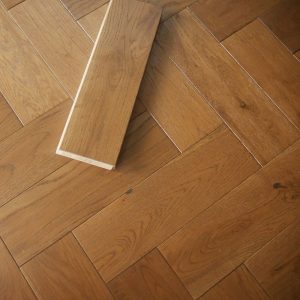
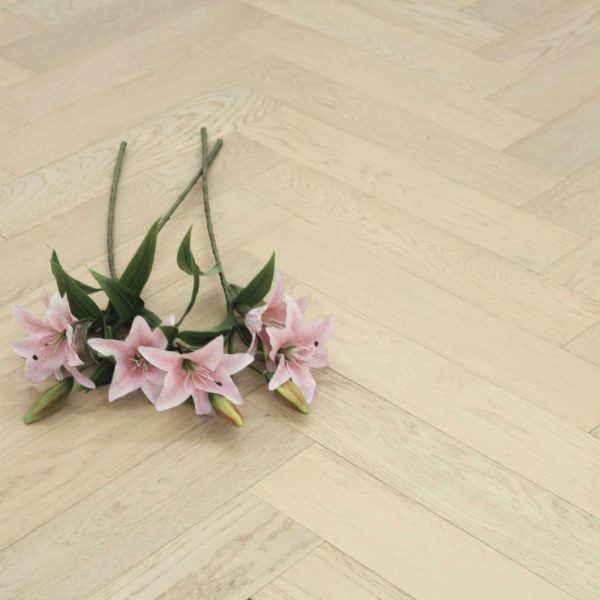
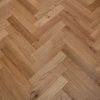
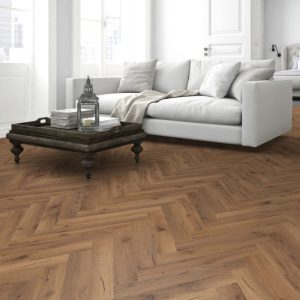
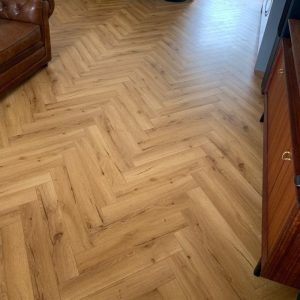
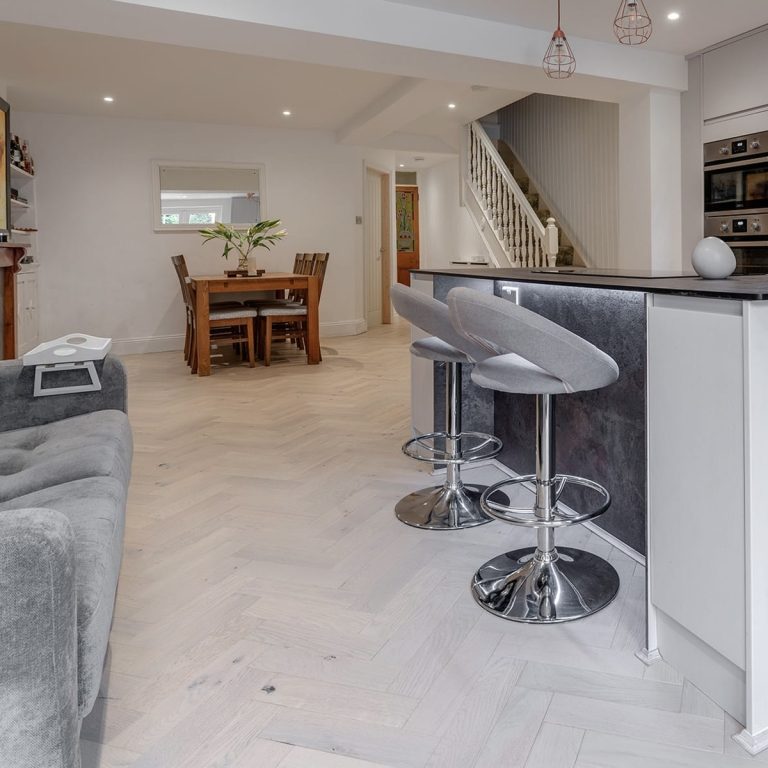
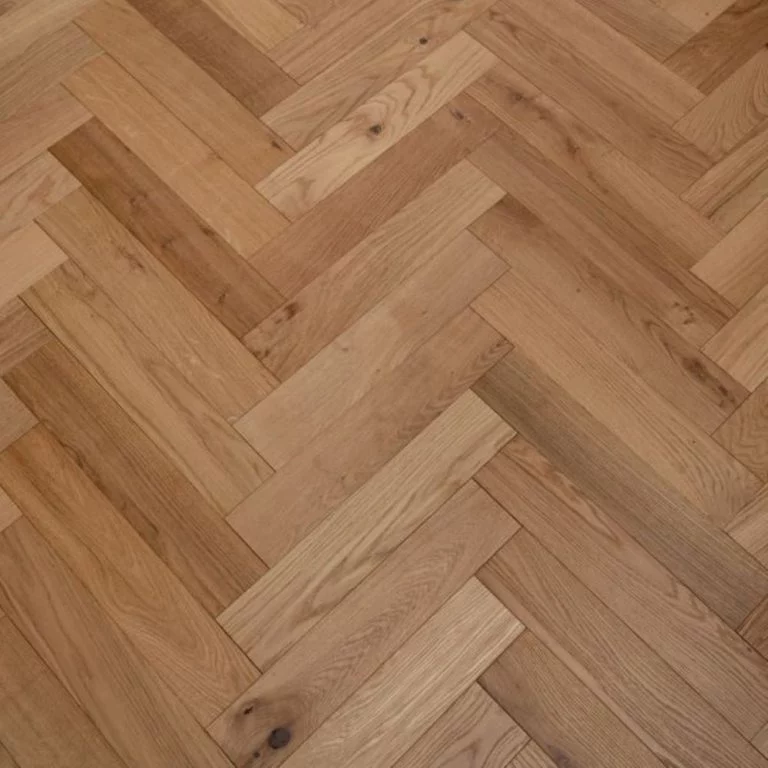
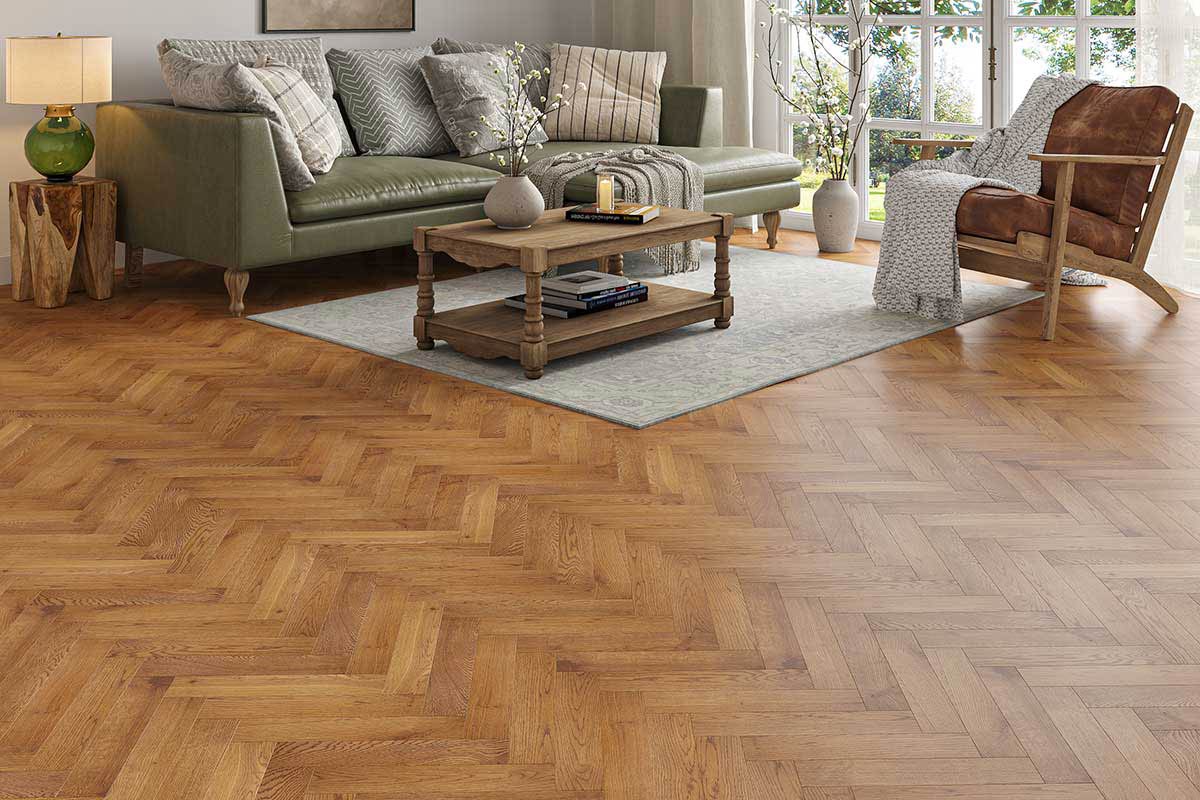
Herringbone blocks are cut square at both ends. Laid alternately, each block meets its neighbour at a right angle, and the rows step across the room in a broken zigzag.
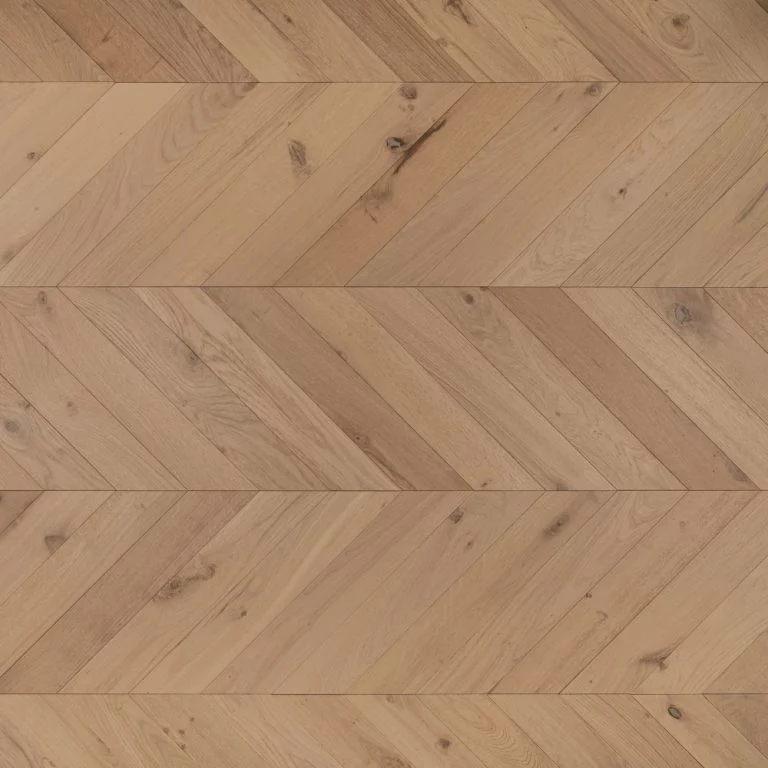
Chevron blocks are cut at an angle at each end. Laid point to point, the rows form a continuous unbroken V that runs the length of the room.
The easy test: Look at where two blocks meet. If the join is a straight continuous line running down the room, it is chevron. If the ends step past each other, it is herringbone.
See also
02
What each does to a room
They are not interchangeable, and the room usually prefers one.
Herringbone
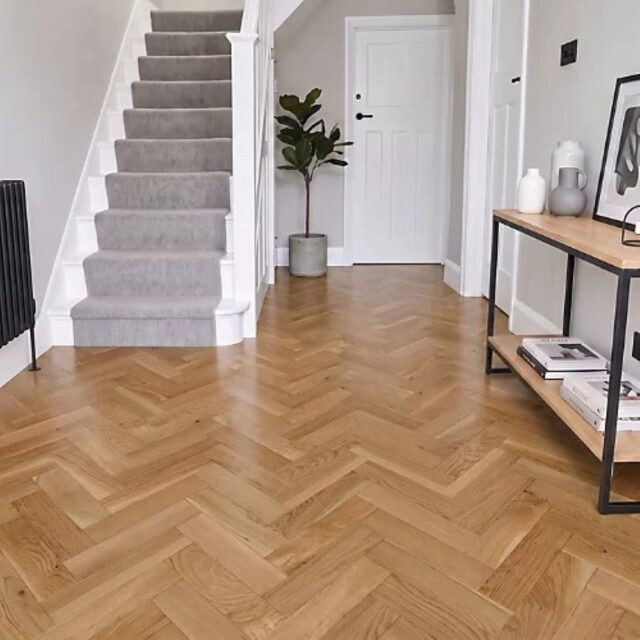
Busier and more textural. Reads as traditional and suits period rooms and hallways.
Chevron
Cleaner and more directional. Reads as contemporary and pulls the eye down the room.
In a narrow room
Chevron along the length emphasises the run. Herringbone breaks it up.
In a large room
Both work. Herringbone fills the space, chevron organises it.
03
What they share
Almost everything about the job is the same, and it is more demanding than a plank floor either way.
Full glue down
Both. A floating pattern floor opens at the joints over time.
15% to 20% for waste
Against 8% to 12% for straight plank. Every perimeter cut produces an unusable offcut.
Setting out decides the floor
The first two rows determine everything. This is a job for a professional.
Both suit underfloor heating
Glue down puts the floor in direct contact with the heated screed.
Important: Chevron blocks are cut to a specific angle and are not interchangeable with herringbone. Order the pattern you intend to lay, and order it all in one go.
04
Choosing between them
When the room does not decide for you, this usually does.
Period property
Herringbone. It suits the proportions without looking like a copy.
Modern open plan
Chevron. The clean lines suit the architecture.
Long hallway
Either, laid along the sightline. Chevron makes the run feel longer.
Small broken up room
Neither, honestly. Most of the pattern ends up cut away at the edges.
05
Questions about herringbone and chevron
What is the difference between herringbone and chevron?
Herringbone blocks are cut square and laid so that each meets its neighbour at a right angle, giving a broken zigzag. Chevron blocks are cut at an angle at each end and laid point to point, so the rows form a continuous V. Chevron reads more formal and directional; herringbone reads busier and more traditional.
Is chevron more expensive to fit than herringbone?
The blocks are more expensive to produce because of the angled cut, and the fitting demands more precision because every point has to meet. Both are glued down and both carry the same waste allowance of 15% to 20% on manufacturer guidance. Ask a fitter to quote both before deciding on cost alone.
Which suits a small room?
Herringbone usually. Its broken pattern is forgiving in a room with several doors and alcoves, and the small block suits a hall or a small reception room. Chevron needs length to show its direction and reads best in a long room with a clear axis.
Can I get either pattern in a click floor?
Herringbone, yes: the rigid vinyl herringbone in our range clicks and floats, listed as waterproof, for kitchens and halls. The chevron in our range is engineered oak, glued down.
06
What the published standards say
07
Related reading
Your next step
See the pattern before you commit
Both read very differently at home than in a photograph. Order a sample and live with it for a week.
- Samples £1.99 each
- UK-wide delivery
- Advice before you order
On this page
Not sure it suits your room?
A real cut from a real board. Samples £1.99 each, up to 10 per order.
Order samples · £1.99