



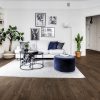
Herringbone Laminate Flooring
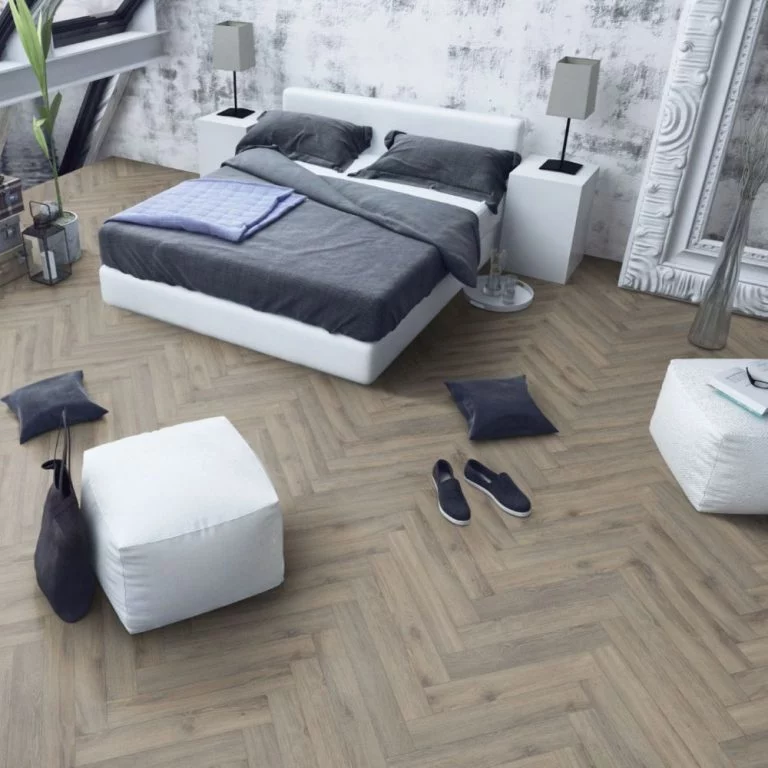
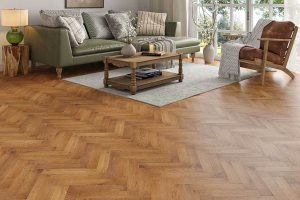
Herringbone laminate combines classic parquet style with everyday practicality. The pattern adds movement and elegance, enhancing both traditional and modern spaces.
Shop Herringbone
“The most floor for the money. A modern laminate takes traffic that would mark real timber.”
— our flooring team
HerringboneThe look
Still unsure? Real people, honest advice.
The look
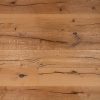
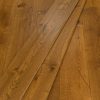
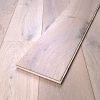
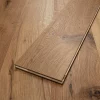
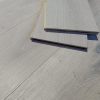
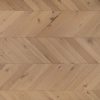
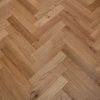
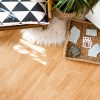
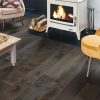
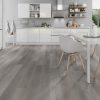
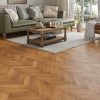
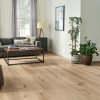
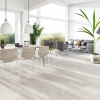
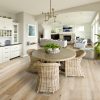
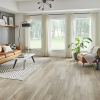
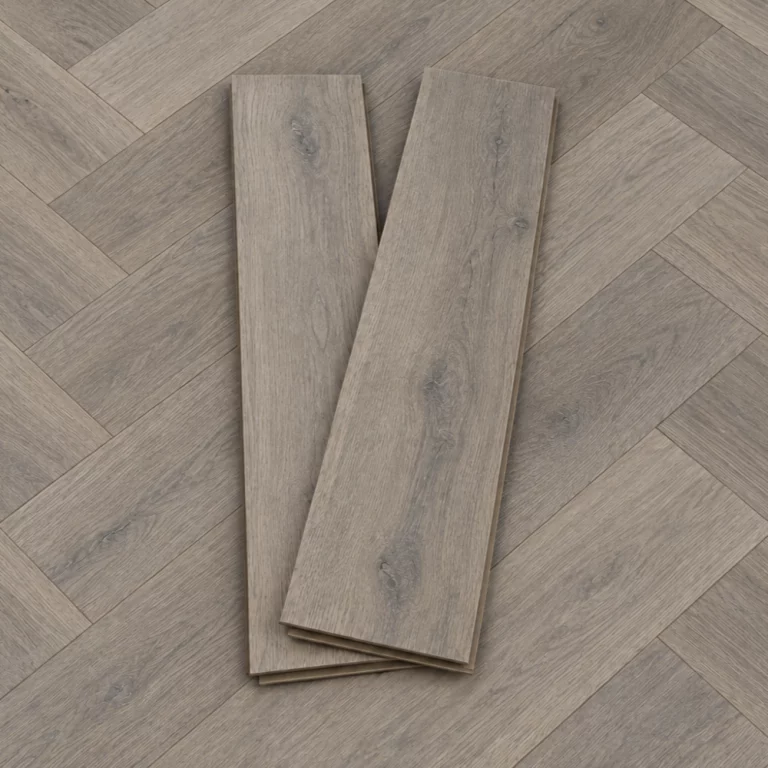
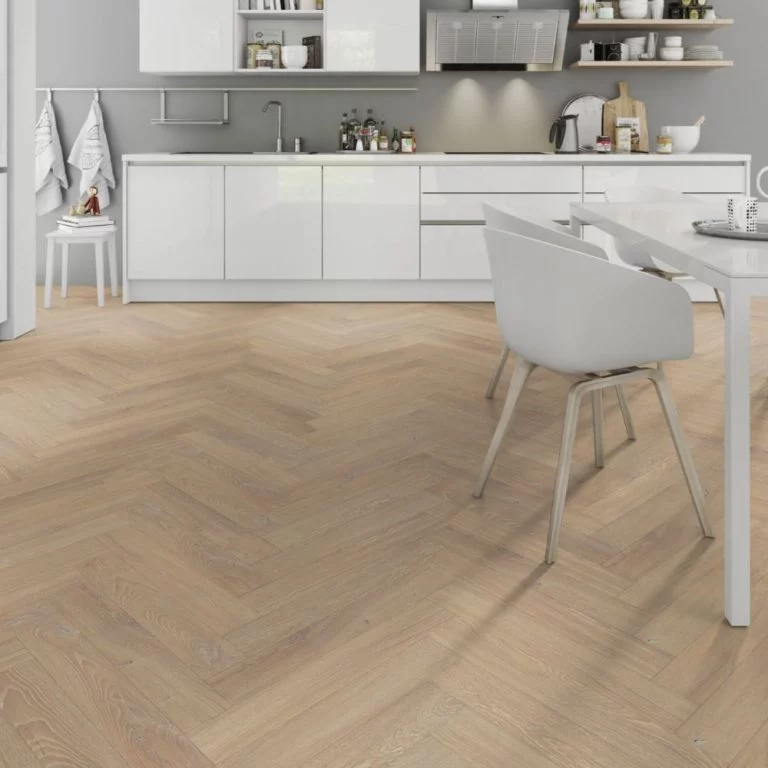
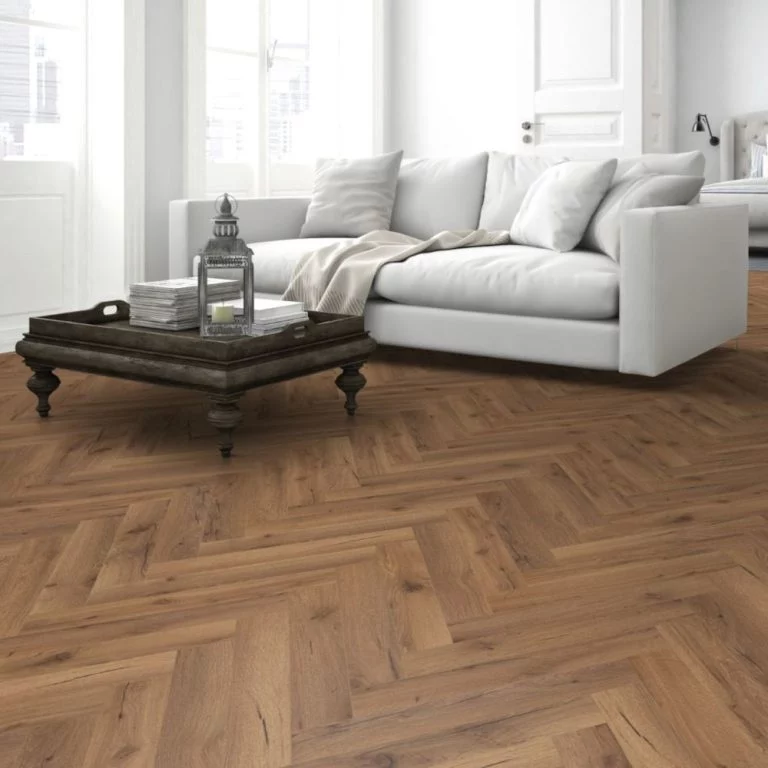
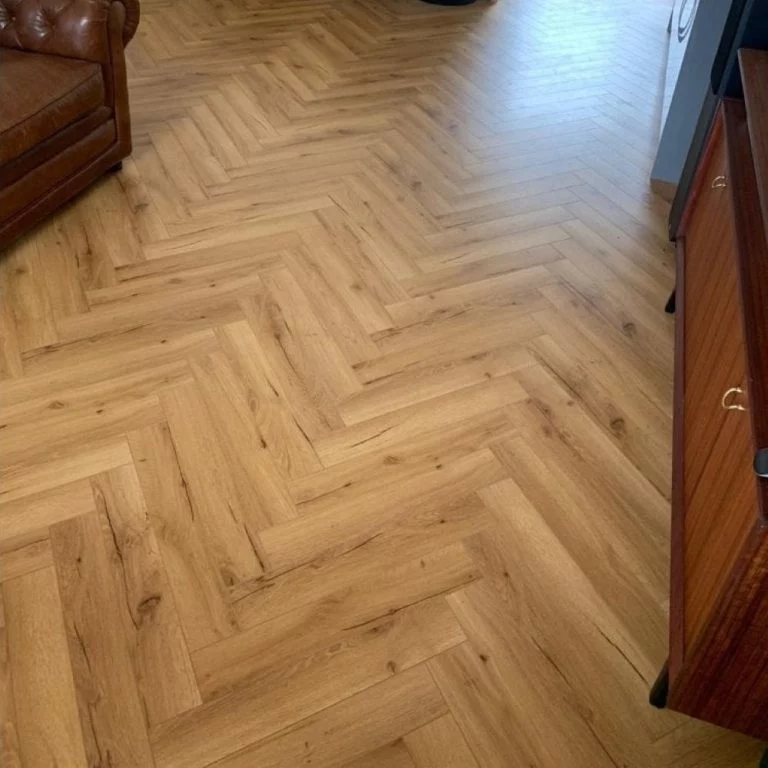
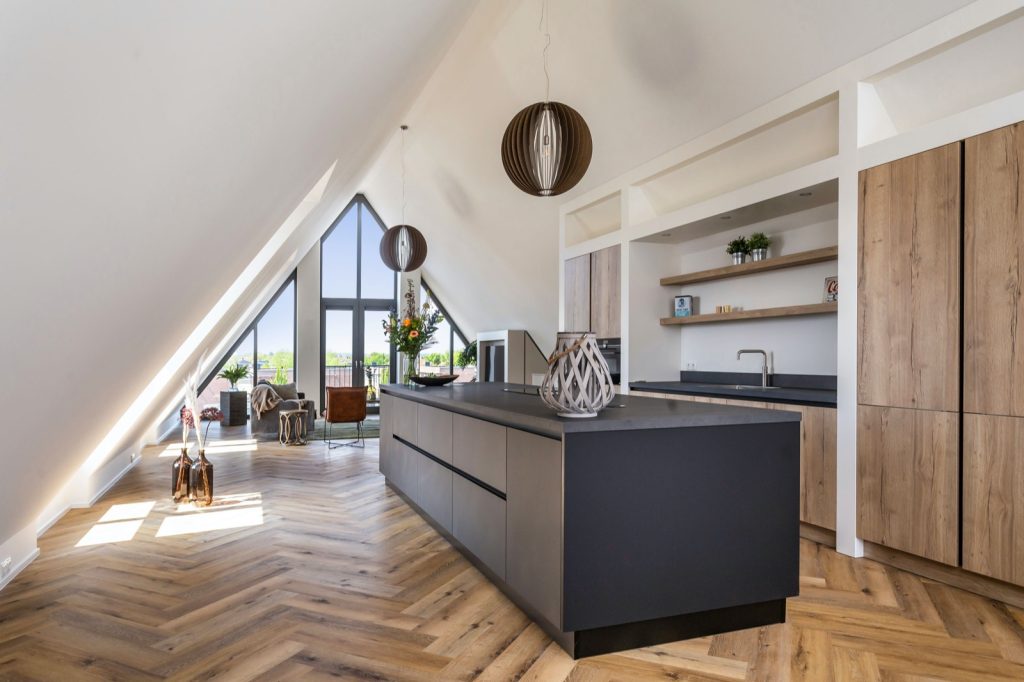
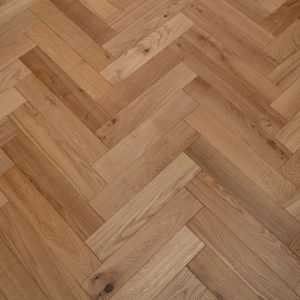
Herringbone in laminate: 5 click blocks, each 12 mm thick, 100 mm by 600 mm and rated AC4. Canterbury, Durham, Leicester, Whitby and York, oak designs on a high-density fibreboard core, listed as compatible with underfloor heating and made for the dry rooms of a house.
One block, five designs
AC4 on every block
Five oak designs
In depth
Choosing laminate herringbone
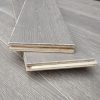
Laminate herringbone puts the parquet pattern into the rooms laminate is meant for: bedrooms, living rooms, landings and home offices. The range is 5 blocks, Canterbury, Durham, Leicester, Whitby and York, on one specification: 12 mm thick, 100 mm by 600 mm, an oak design on a high-density fibreboard core with a registered embossed surface, a click joint, rated AC4, listed as compatible with underfloor heating and covered by a 15 year manufacturer's warranty. A box holds 32 blocks and covers 1.92 square metres.
With one specification across the range, the choice comes down to the design. Going by the colour each is listed under, Leicester and Whitby are natural oak, Canterbury is greige, Durham grey and York smoked oak. Four of the five have a 4V edge; Canterbury is micro-bevelled. A pattern lays every block out as a line, so a tone carries further across a herringbone than across planks of the same colour; lay a few samples in the pattern on the floor of the room before deciding.
In practice
Water is where laminate stops. The laminate standard, quoted below, leaves out areas subject to frequent wetting, and the fibreboard core of these blocks is the reason. A bathroom or a laundry room is not a place for them; a kitchen depends on how much water reaches the floor in practice. The same standard grades abrasion resistance from AC1 to AC6, and AC4 is the class all five blocks carry. For the pattern in a bathroom, the rigid vinyl herringbone blocks are listed as waterproof; for real wood, there are the engineered herringbone blocks in the parquet range.
The blocks click together and float over an underlay, set out from a centre line in the room. The underlay levels small unevenness in the subfloor and shapes how the floor sounds; the edge gap lets a floating floor move; and the cutting allowance at the walls is higher than for planks. The industry guidance on underlay and edge gaps, and the manufacturer figures for cutting waste, are quoted below.
FAQ
Can laminate herringbone go in a kitchen or bathroom?
How is laminate herringbone different from oak parquet?
How much should I order for a laminate herringbone floor?
How long does laminate last?
Do you deliver UK-wide and can I get a sample first?
Standards
What the published standards say
Each entry is quoted from its source and linked to it. The full set is in the standards reference.
BS EN 13329 — laminate floor coverings
BS EN 13329 specifies the characteristics, requirements and test methods for laminate floor coverings with a surface layer based on aminoplastic thermosetting resins, including requirements for marking and packaging. It also contains a classification system based on EN ISO 10874 for areas and levels of use, and it does not cover areas subject to frequent wetting such as bathrooms, laundry rooms or saunas.
“BS EN 13329 specifies characteristics, requirements, and test methods for laminate floor coverings with a surface layer based on amino plastic thermosetting resins. BS EN 13329 specifies requirements for marking and packaging.”
Source: BS EN 13329:2016+A2:2021 | 31 Oct 2021 | BSI KnowledgeAC1 to AC6 — abrasion classes for laminate
EN 13329 classifies the abrasion resistance of laminate floor coverings in abrasion classes AC1 to AC6. The EPLF's own Environmental Product Declaration for DPL laminate floor covering states the property "Abrasion Class EN 13329" with the value range AC1-AC6.
| Abrasion classes under EN 13329 | AC1-AC6 |
|---|
“Abrasion Class EN 13329 | AC1-AC6 | -”
Source: Environmental Product Declaration - Direct Pressure Laminate Floor Covering (DPL Floor Covering), owner of the declaration: European Producers of Laminate Flooring e.V. (EPLF), decl. no. EPD-EPL-20210138-CBE1-ENCutting waste — how much extra to order
There is no published industry standard for cutting waste; the figures come from manufacturers' own guidance and they vary. Havwoods advises 8-12 % wastage for planks and 15-20 % for patterned floors such as herringbone or chevron. Quick-Step's UK guidance for laminate is 5 % extra in a regular room and 10 % in a room with many angles or curves.
| Wastage allowance, plank floors (Havwoods UK) | 8-12 % |
|---|---|
| Wastage allowance, herringbone or chevron (Havwoods UK) | 15-20 % |
| Extra to order, regular room, laminate (Quick-Step UK) | 5 % |
| Extra to order, room with many angles or curves, laminate (Quick-Step UK) | 10 % |
“For planks we typically advise on 8-12% wastage and patterned floors, such as herringbone or chevron, may need 15-20% wastage.”
Source: Havwoods UK - FAQs: How Much Wastage Shall I Encounter For? · second sourceThe expansion gap
The EPLF, the European association of laminate flooring producers, recommends an edge gap of 8 mm to 12 mm on all sides of a floating floor, so that the covering can expand and contract without lifting.
| recommended edge gap on all sides | 8 to 12 mm |
|---|
“To accommodate such changes, a edge spacing should be observed on all sides. A free space of 8 mm to 12 mm is recommended.”
Source: EPLF Technical Bulletin — Installation of Laminate Floor Coverings (06/2022), 6.4 Edge gapsWhat an underlay is actually for
The MMFA groups the benefits of an underlay under floating multilayer modular flooring into three headings: ensuring a satisfactory installation by levelling unevenness, permanently protecting the floor against wear and against rising residual building moisture, and improving the floor's properties in terms of impact sound, walking noise, heat insulation and walking comfort.
“The requirements for suitable underlays are aimed at protecting the floor from daily wear and tear such as falling objects and walking, as well as shielding the floor from rising residual building moisture or damp.”
Source: Underlays — MMFA (Multilayer Modular Flooring Association)
Delivery & areas