










Delivery
Delivered to Glasgow
Delivery times and options depend on the delivery postcode. See Delivery & Returns for the applicable estimate.
Also nearby: Paisley, East Kilbride, Stirling, Livingston
Speak to our team 020 3858 0353 Shop by category
Start with a sample: real cuts of our floors at £1.99 each, sent to your door across the UK.
Start with a sample: real cuts of our floors at £1.99 each, sent to your door across the UK.
Scotland · flooring delivered
Flats, tenements and the floor between
68.7% of Glasgow households live in a flat, 1st of 151 towns. What the city's tenements, lets, older districts and climate mean for choosing a floor.
Delivered to Glasgow: 13 postcode districts
Start here · Glasgow in one figure
68.7%
live in a flat
1st highest of 151 towns
National Records of Scotland, 2022-03-20 · all local facts →Flats, maisonettes and apartments are home to 68.7% of Glasgow households, a share that puts the city 1st of 151 towns; the Scottish figure is 34.4%.
That is the fact to start from when you plan a new floor here. In a flat the floor is shared property in practice, if not on paper: each footstep, each chair pushed back, travels through the structure and arrives as noise in somebody else's ceiling. A hard covering passes that sound on more readily than the carpet it replaces.
So the first decision in most Glasgow homes is not oak against vinyl, but what goes beneath the new surface and who lives under it. The sections below take the same order: buildings first, then tenure, then the streets and the weather.
At a glance
Delivery
Delivery times and options depend on the delivery postcode. See Delivery & Returns for the applicable estimate.
Also nearby: Paisley, East Kilbride, Stirling, Livingston
Speak to our team 020 3858 0353Homes in Glasgow
7 chapters on Glasgow homes and what they ask of a floor · about 4 min read
01/ 07
Purpose-built blocks and tenements account for 66.7% of households, again 1st of 151 towns, with 32.4% in Scotland as a whole. Building standards expect more of the separating floor in a purpose-built flat than of one in a flat formed by converting a house: stricter figures for airborne and for impact sound. Whatever you lay on top becomes part of what the neighbours hear, so an underlay with a stated impact figure is a requirement, not an extra.
The tenement is not one design. According to the national house condition survey, flats in the older tenements, those from before 1919, differ widely from one another in floor area, plan and exposure. Before the war the council's own housing schemes added other forms, Historic Scotland and the council note: flats grouped 4-in-a-block, and tenemental buildings of 4 storeys. Which rooms get wet, and how much grit crosses the threshold, owes as much to the building as to the household. Two flats in the same street can need different floors in the same room.
02/ 07
Only 4.9% of Glasgow households occupy a detached house, 150th of 151 towns, where Scotland stands at 23.9%. Semi-detached homes hold 13.9%, 149th of 151 (Scotland: 23.3%). The distinction matters for sound: in a house, echo in a room is dealt with by rugs and furniture, while in a flat the underlay's impact figure is about the people below.
It matters for wear as well. A semi normally has a hall that takes the abrasion before anyone reaches the living room, whereas a terrace whose door opens onto the street sends grit straight into the first room. Where you do have a house, plan the hard-wearing floor around that route.
03/ 07
Start with the West End. The council sees there a close cluster of neighbourhoods from the Victorian and Edwardian decades, marked by tenements in good repair, public buildings and streets laid out to a plan. At the other end of the timeline sit the large post-war townships on the edge of the city, Drumchapel and Easterhouse, Castlemilk and Pollok, all set up by the Development Plan of 1951 according to Historic Scotland and the council.
Between those two dates the structure under a floor changes. Which rooms sit above which, and what the joists are made of, depends on the age of a building, and the bedrooms guide adds that the age in turn depends on where it stands. A Victorian tenement floor and a post-war township floor are different starting points for the same laminate or oak, and the district you live in is the first clue to which one you have.
04/ 07
Social landlords house 35.0% of Glasgow households, the highest share of the 151 towns and well above Scotland's 22.5%. Glasgow's private rented sector holds a further 16.9% of its households (Scotland: 12.9%), and owner-occupiers make up 45.7%, 145th of 151 against 62.3% nationally.
The rentals guide treats specifying a floor for a let as a different calculation from choosing one for yourself, because a wrong choice shows up years later. The everyday reason is water: washing machines leak and showers overflow, and in a let nobody reports it straight away. A floor that takes on no water turns that into drying; one that does not turns it into a replacement and a flat standing empty. Owner-occupiers choose for the people who walk on the floor every day; landlords choose for the tenancy after next.
05/ 07
Glasgow has 6.1 listed building entries per 1,000 households, 7th of 10 towns on this measure and below the Scottish rate of 18.6. Where a building is listed, works that affect its character inside as well as out can need consent. Lifting original boards or blocks can be such work.
Conservation areas are a different instrument. Several of the council's conservation areas, Shawlands, Govan, Strathbungo, Walmer Crescent and Pollokshields East among them, mix homes with other uses around tenement town centres. Their rules concern the outside of buildings, so a new floor inside a flat there is not what they regulate unless the building itself is listed.
06/ 07
Under the council's proposed development plan, which is out for representations and not yet adopted, land is needed for 22,569 homes across 10 years. New homes mean new screeds, and the guide to laying floors on them makes one point plainly: the drying allowance for a screed is a planning figure. It tells you when to start testing. It does not tell you the screed is dry.
07/ 07
The town centre records 3.6 summer days a year (1991 to 2020), 142nd of 151 towns against a median of 13.8, and the mean January minimum is 1.7 °C (median of the 141 towns: 1.7 °C). A conservatory still swings between a sunny afternoon and a freezing night, whatever the town averages say. The floor in a glazed room is chosen for that swing, not for the room's use.
Floor by floor
19 floors, rooms and needs, each with a note written for Glasgow homes. Pick one to read it.
 Floor type
Glasgow
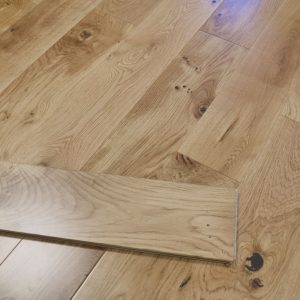
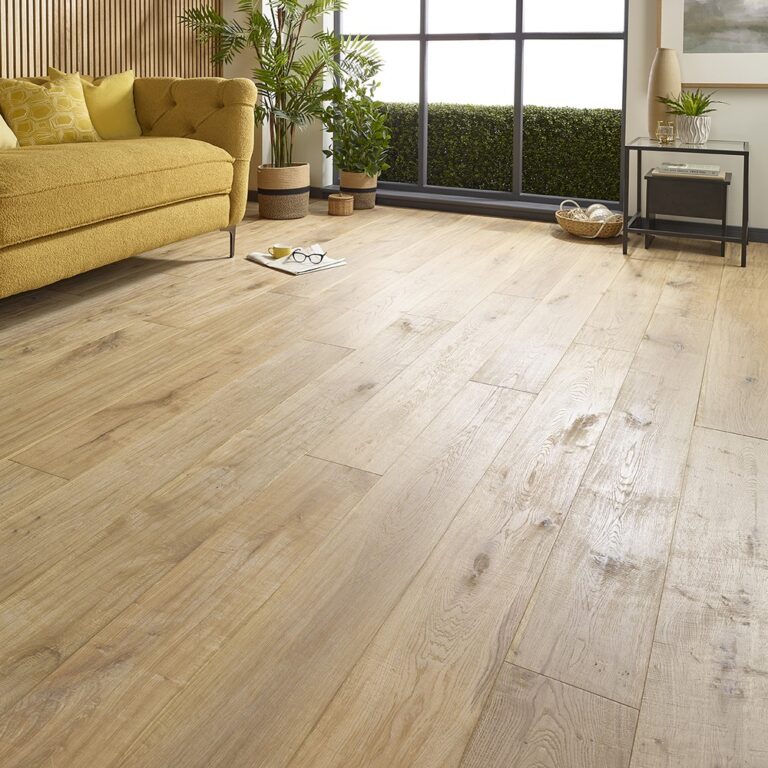
In a Victorian or Edwardian West End building, the base under the old floor decides whether engineered oak is floated or glued.
 Floor type
Glasgow
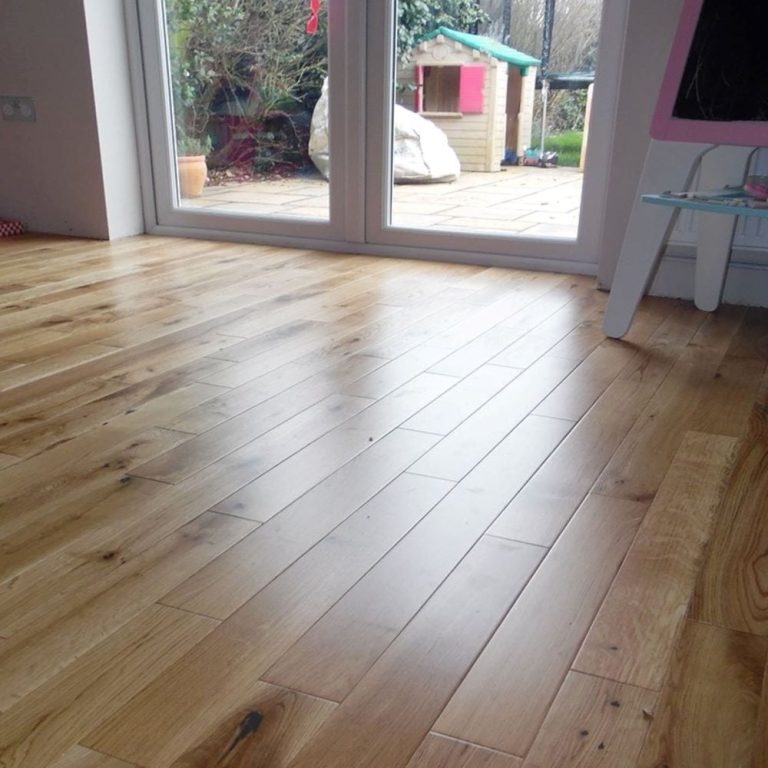
Solid oak in a listed interior begins with the conservation officer, because taking up original boards can need consent.
 Floor type
Glasgow
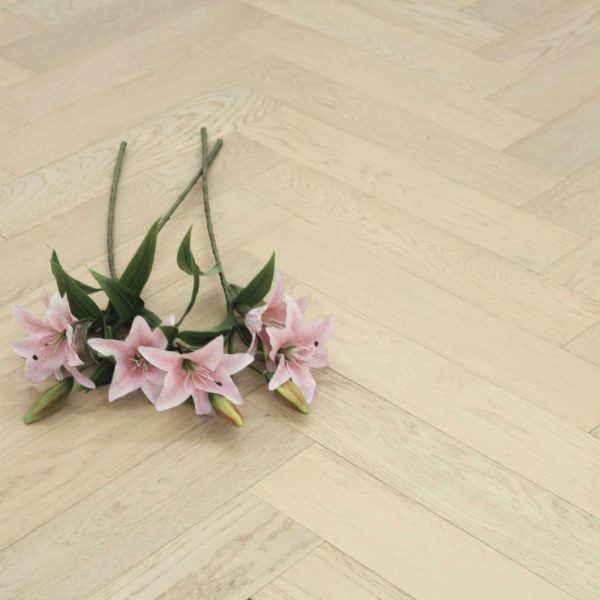
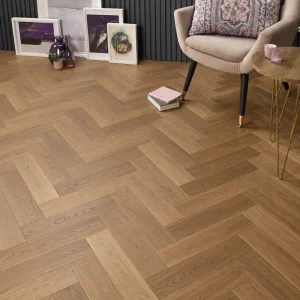
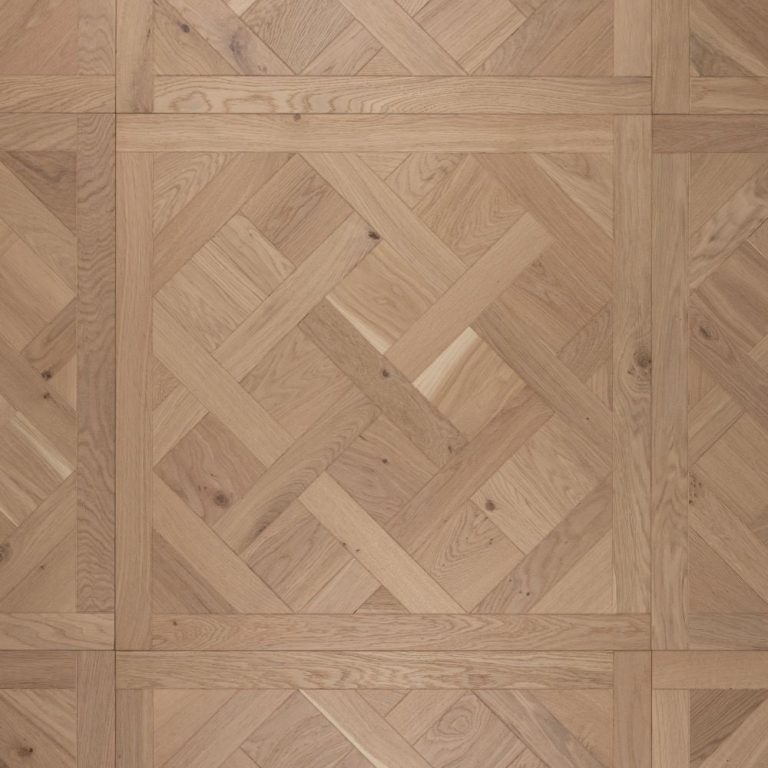
Parquet belongs to period rooms, so the age of your street tells you as much about it as the pattern does.
 Floor type
Glasgow
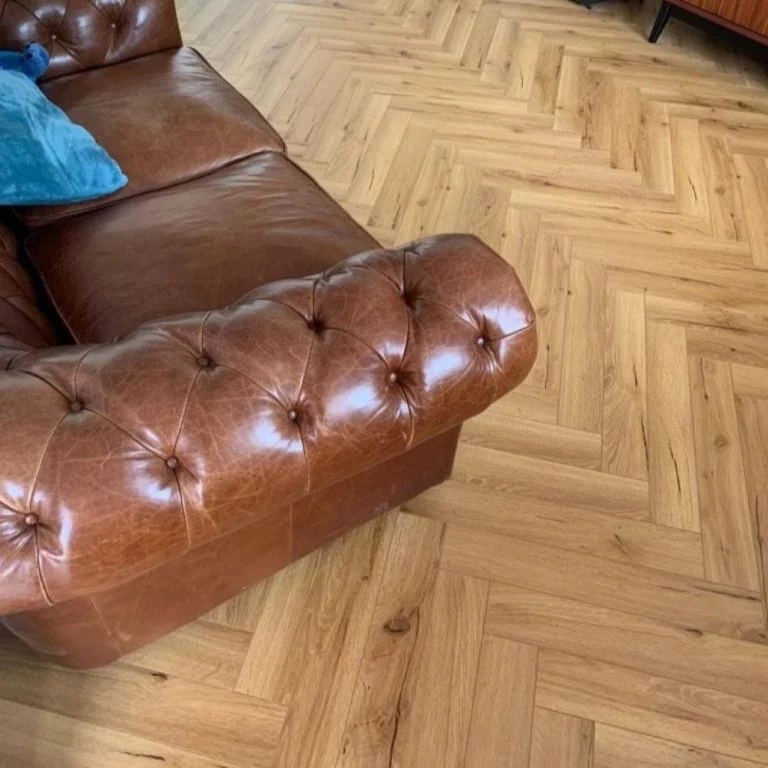
Pulling up carpet for laminate changes what the flat underneath hears, which is why the underlay is chosen first in a tenement.
 Floor type
Glasgow
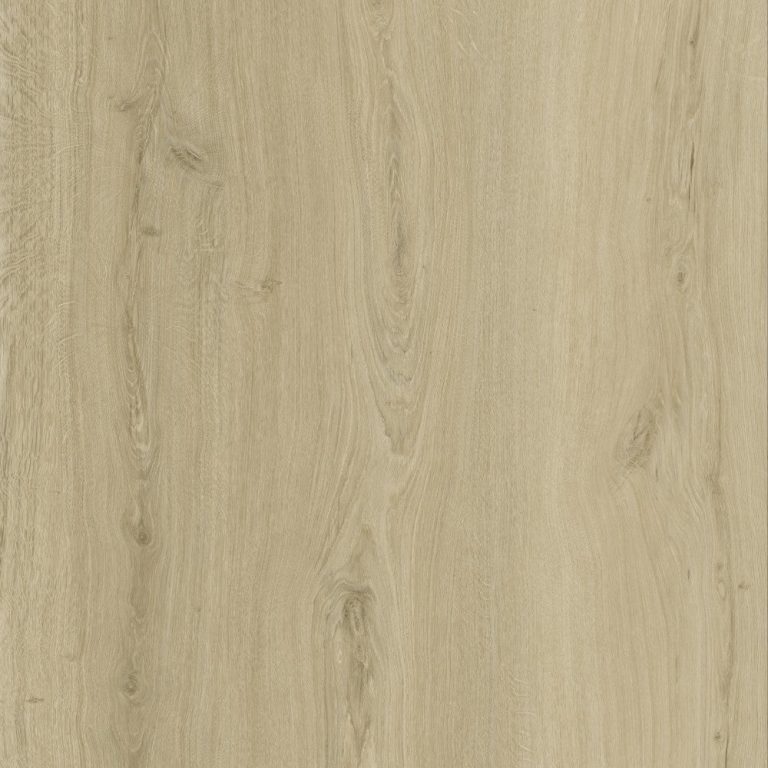
With the largest social-rented share of the 151 towns, rigid-core vinyl, the rentals guide's answer for most lets, is the place to start.
 Floor type
Glasgow
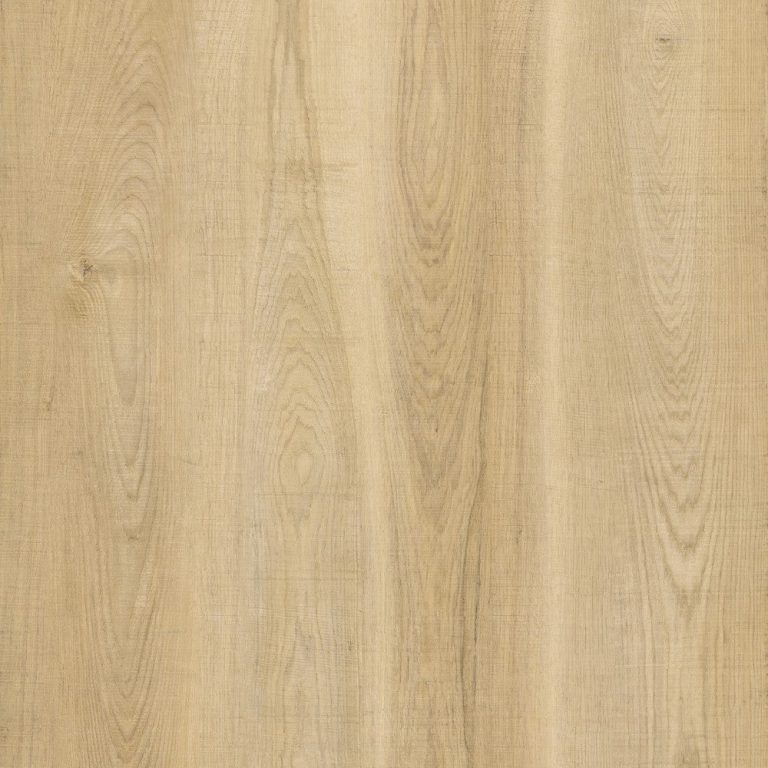
Old subfloors that are no longer perfectly flat are the ground on which a rigid stone-plastic core justifies itself.
RoomGlasgow
Frost, salt and rain all arrive on the hall floor first, so give it the highest wear rating in the home.
 Room
Glasgow
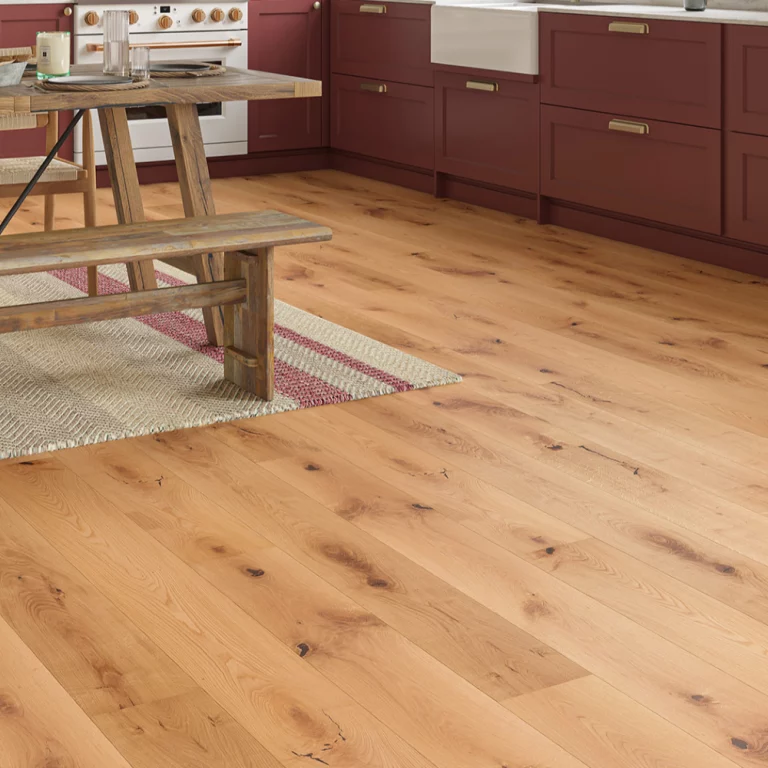
An open-plan flat makes the kitchen floor the living room floor too, and children at the sink push it towards vinyl or tile.
 Room
Glasgow
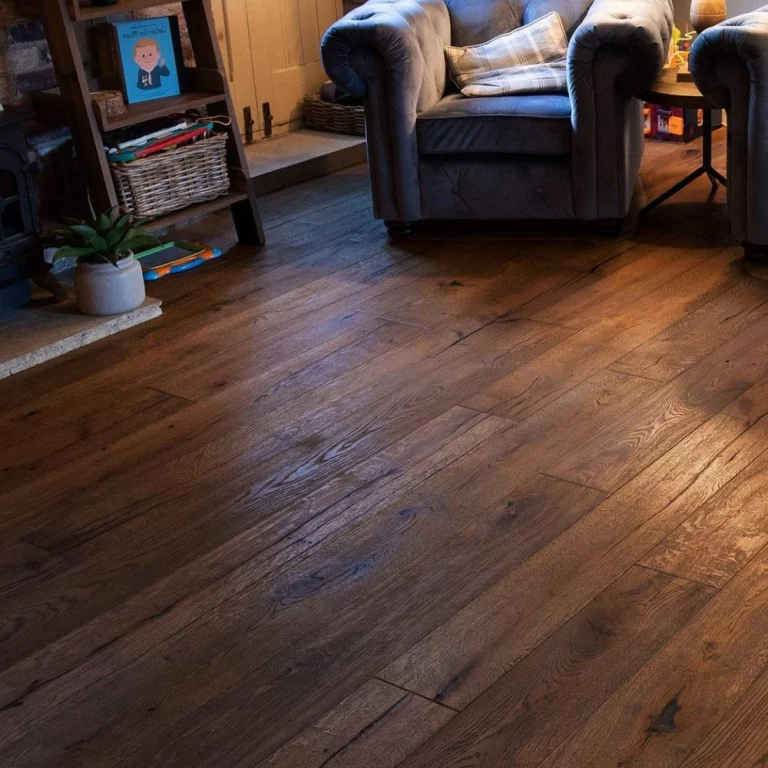
Detached houses are so few that a living room is more often a room in a flat, where the underlay deals with the sound.
 Room
Glasgow
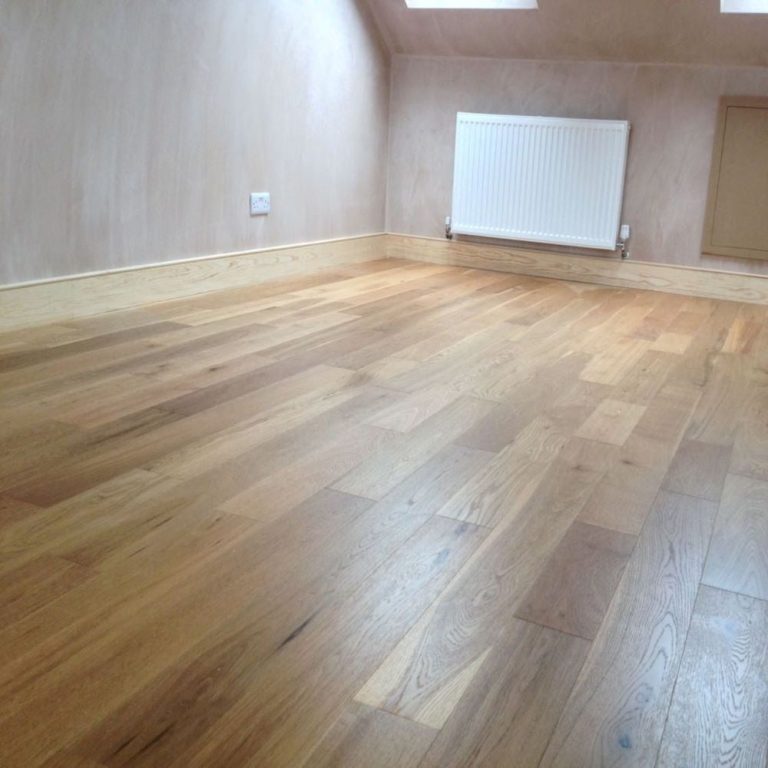
A bedroom asks little of its floor, so a thinner wear layer there leaves money for the hall that takes the traffic.
 Room
Glasgow
The walls behind old bathroom tiles differ with the age of the building, so a refit starts by seeing what they are.
 Room
Glasgow
The washing machine that leaks unnoticed in a let is the reason a utility floor should be one that takes on no water.
 Room
Glasgow
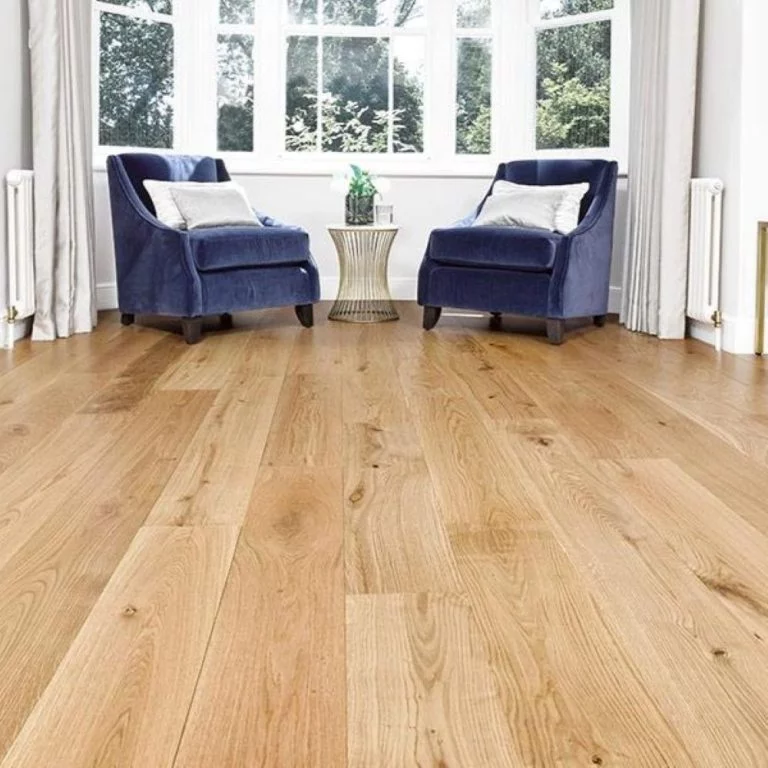
With 3.6 summer days and January nights averaging a minimum of 1.7 degrees, a glazed room's own swing is what its floor must survive.
 Pattern or need
Glasgow
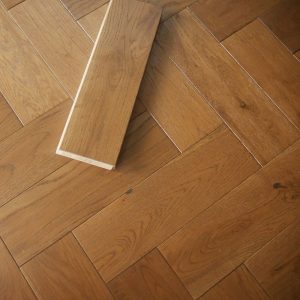
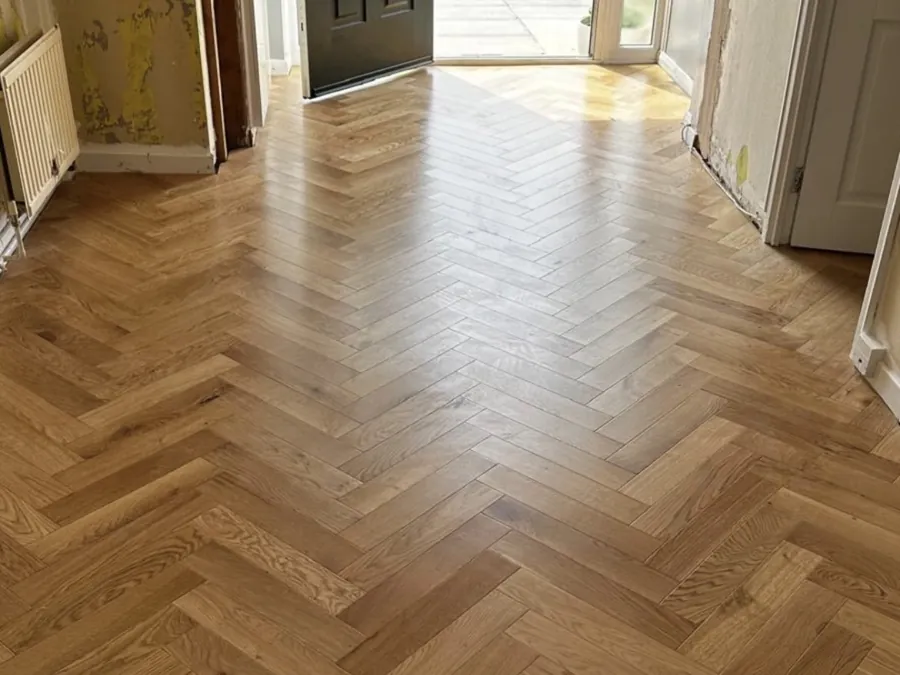
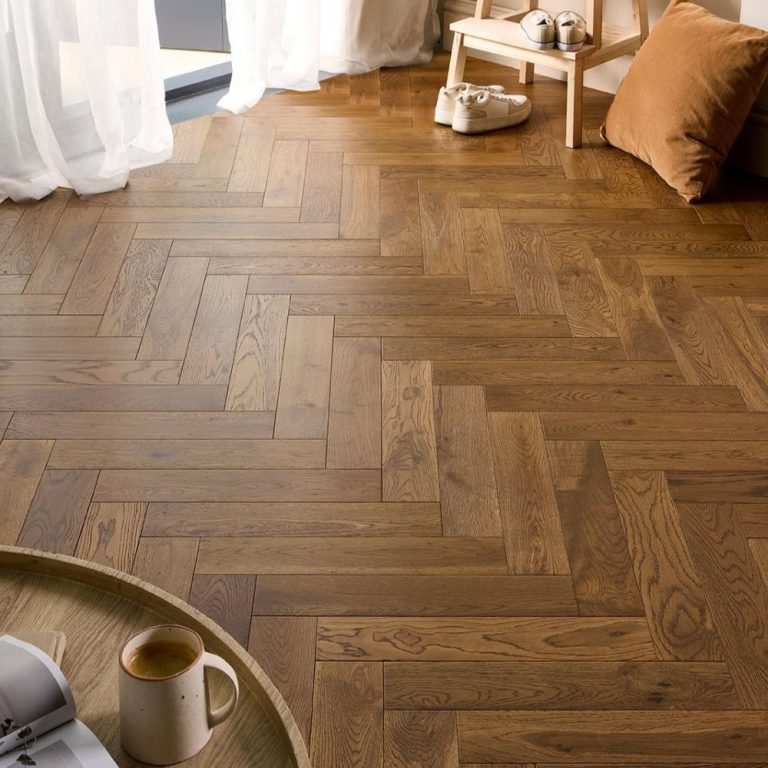
Herringbone blocks were the parquet of halls and front rooms in period homes; check for surviving ones before ordering new.
 Pattern or need
Glasgow
Conservation areas govern facades rather than floors, so a chevron inside turns on listing and on the flatness of the screed below.
 Pattern or need
Glasgow
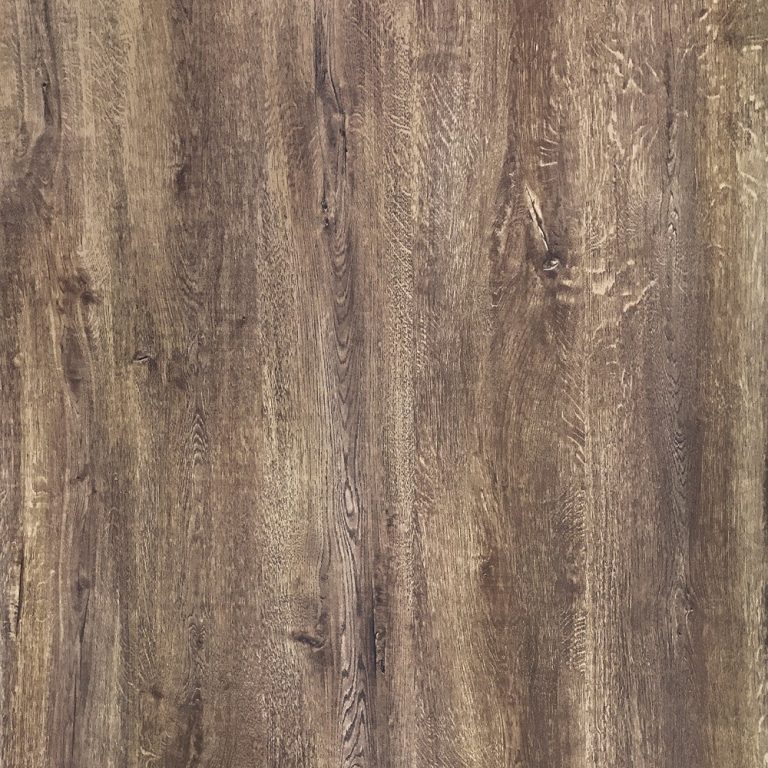
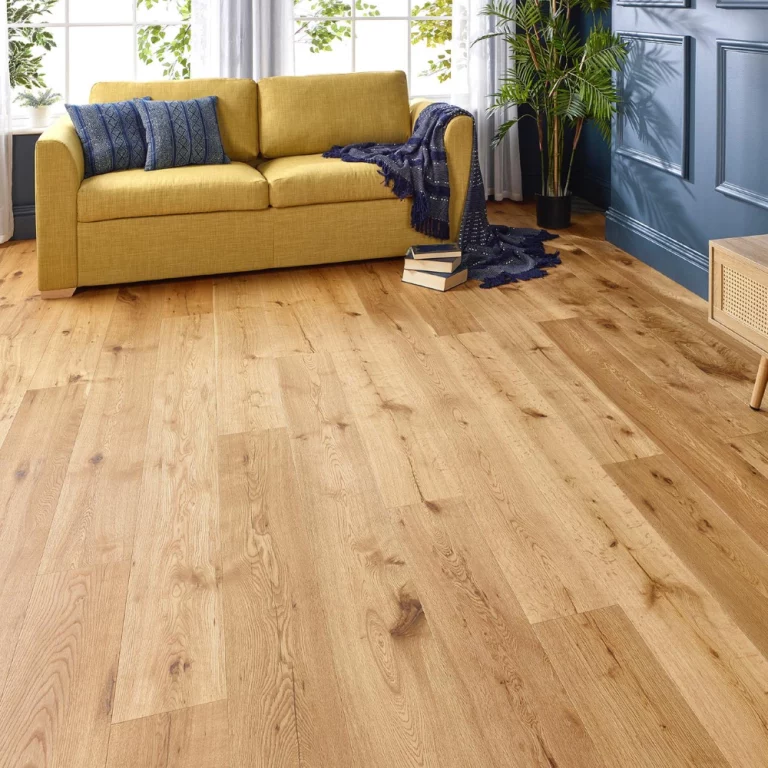
Where water stands rather than splashes, by the door on a wet evening or at the sink, plan for a floor listed as waterproof.
 Pattern or need
Glasgow
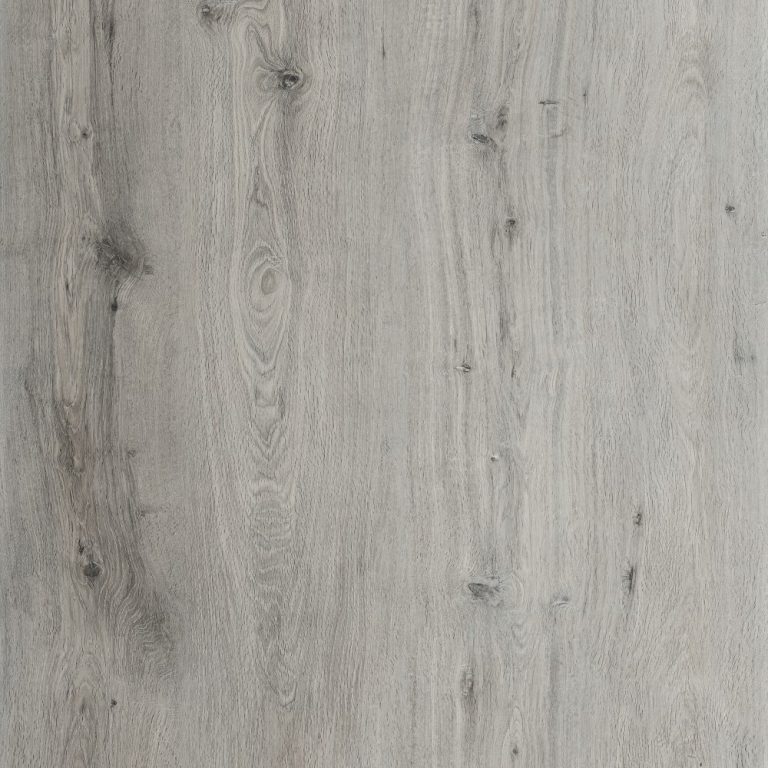
Screeds laid for the 22,569 homes in the proposed plan must dry and then be commissioned before a heated floor goes on top.
 Pattern or need
Glasgow
In a home with a dog, rain on paws and grit from the street count for more than scratches when the floor is chosen.
 Pattern or need
Glasgow
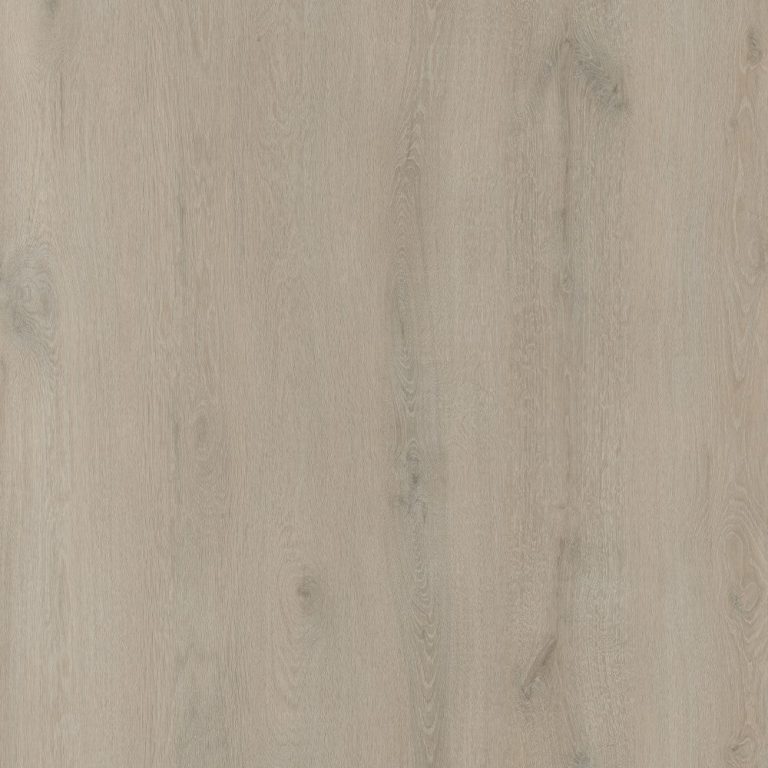
A landlord with several flats who standardises on one grey turns the colour into a portfolio rule, batch by batch.
Bestsellers
Reviews
Trustpilot
Reviews written by our customers on Trustpilot.
Read all reviews on TrustpilotReviews on our Google Business Profile.
Read all reviews on GoogleAsk us first
Call 020 3858 0353, Monday to Friday 10am to 6pm, Saturday 10am to 4pm, or send a photo of the room to info@homesandfloors.com.
Contact usQuestions
What is underneath and who lives below. 68.7% of Glasgow households live in a flat, and a hard covering passes footsteps to the ceiling below more readily than carpet, so choose the underlay by its impact figure.
No. Conservation-area rules concern the outside of buildings. Listing is different: Glasgow has 6.1 listed entries per 1,000 households, and in a listed building lifting original boards can need consent.
Not on the strength of the drying allowance alone, which only says when to start testing. The council's proposed plan sets a requirement of 22,569 homes, and each new screed among them raises the same question.
It changes the calculation. 35.0% of households rent socially and 16.9% privately, and in a let a leak is found late, so wet rooms need floors that take on no water.
It needs one chosen for the room's temperature swing. The town centre has 3.6 summer days a year and a January minimum of 1.7 degrees, but the glazed room swings further than the air outside.
Local facts
16 facts from the census, the Met Office, the council and other public records, each with what it means for a floor in Glasgow and where it comes from.
Homes
Housing type
The Scottish House Condition Survey notes that pre-1919 tenement flats, of the type common in Edinburgh and Glasgow, vary widely in size, layout and exposure.
For your floorBecause pre-1919 tenement flats vary in layout and exposure, the wet rooms and the grit at the door differ from flat to flat in Glasgow.
Area: Scotland (national survey; statement names Edinburgh and Glasgow). Scottish House Condition Survey: 2024 Key Findings – 1 Key Attributes of the Scottish Housing Stock. Data: 2026-02-24 (published; survey year 2024) · retrieved 2026-09-22.
Homes
Housing type
Historic Scotland and Glasgow City Council note that much of Glasgow's pre-war scheme housing consisted of 4-in-a-block or 4-storey tenemental properties built across the city.
For your floorThe 4-in-a-block and tenemental forms of Glasgow's pre-war schemes shape which rooms get wet and where grit enters.
Area: Glasgow (pre-war housing schemes, city-wide). Glasgow's Post-war Listed Buildings (ISBN 978-1-84917-077-2). Data: 2012 · retrieved 2026-09-22.
When they were built
Building period
The council describes the West End as a concentration of Victorian and Edwardian neighbourhoods characterised by well-preserved tenements, civic buildings and planned streetscapes.
For your floorThe Victorian and Edwardian date of West End buildings bears on what their floor joists are made of and what lies beneath.
Area: West End, North West Glasgow policy area (Glasgow City Council). City Development Plan 2 – Proposed Plan (appendix 'Proposed CDP2.pdf' to the report 'City Development Plan (CDP) 2 - Proposed Plan', City Administration Committee, 4 June 2026, submission 122452). Data: June 2026 (Proposed Plan, approved by Full Council on 25 June 2026; representation period 21 August to 18 November 2026; not yet adopted) · retrieved 2026-09-22.
When they were built
Building period
Historic Scotland and Glasgow City Council record that Glasgow's 1951 Development Plan established the large townships of Pollok, Castlemilk, Easterhouse and Drumchapel.
For your floorThe post-war date of the 1951 townships gives their floors a different structure from a Victorian tenement.
Area: Glasgow (post-war peripheral townships). Glasgow's Post-war Listed Buildings (ISBN 978-1-84917-077-2). Data: 2012 · retrieved 2026-09-22.
Who lives here
35.0%
rent socially
1st highest of 151 towns
For your floorIn Glasgow's large social rented sector, an unreported leak on a floor that takes on no water is a drying job, not a replacement.
Households renting from a council or housing association. Area: Glasgow locality (Scotland's Census 2022). National Records of Scotland, Scotland's Census 2022, UV402 and UV404 (households, census localities). Data: 2022-03-20 · retrieved 2026-09-22.
Who lives here
16.9%
rent privately
129th highest of 151 towns
For your floorFor Glasgow's private lets, specifying a floor is a different calculation from choosing one for yourself.
Households renting privately. Area: Glasgow locality (Scotland's Census 2022). National Records of Scotland, Scotland's Census 2022, UV402 and UV404 (households, census localities). Data: 2022-03-20 · retrieved 2026-09-22.
Who lives here
45.7%
own their home
145th highest of 151 towns
For your floorWith fewer owner-occupiers than in Scotland overall, more Glasgow floors are specified for tenancies rather than by the people living on them.
Households owning their home outright or with a mortgage. Area: Glasgow locality (Scotland's Census 2022). National Records of Scotland, Scotland's Census 2022, UV402 and UV404 (households, census localities). Data: 2022-03-20 · retrieved 2026-09-22.
Heritage & plans
6.1 per 1,000 households
Listed building entries per 1,000 households
7th highest of 10 towns
For your floorWhere a Glasgow building is listed, works inside can need consent, while conservation-area rules stay with the outside.
Listed building entries per 1,000 households. Area: Glasgow locality (NRS Census 2022 localities). Historic Environment Scotland, Listed Buildings (layer "Listed Buildings by Category", INSPIRE service). Data: 2026-09-09 · retrieved 2026-09-22.
Heritage & plans
Conservation areas
The council describes Strathbungo, Pollokshields East, Walmer Crescent, Govan and Shawlands as conservation areas that are mixed-use residential in character and contain tenemental town centres.
For your floorIn the tenemental conservation areas of South Glasgow, the rules address the outside of buildings rather than floors inside.
Area: South Glasgow policy area (Glasgow City Council). City Development Plan 2 – Proposed Plan (appendix 'Proposed CDP2.pdf' to the report 'City Development Plan (CDP) 2 - Proposed Plan', City Administration Committee, 4 June 2026, submission 122452). Data: June 2026 (Proposed Plan, approved by Full Council on 25 June 2026; representation period 21 August to 18 November 2026; not yet adopted) · retrieved 2026-09-22.
When they were built
New homes planned
The council's proposed new City Development Plan sets a 10-year Local Housing Land Requirement of 22,569 homes for Glasgow.
For your floorThe 22,569 homes in Glasgow's proposed plan bring new screeds, whose drying allowance says when to test, not that they are dry.
Area: Glasgow City Council area (Proposed Plan, not yet adopted). City Development Plan 2 – Proposed Plan (appendix 'Proposed CDP2.pdf' to the report 'City Development Plan (CDP) 2 - Proposed Plan', City Administration Committee, 4 June 2026, submission 122452). Data: June 2026 (Proposed Plan, approved by Full Council on 25 June 2026; representation period 21 August to 18 November 2026; not yet adopted) · retrieved 2026-09-22.
Weather & ground
3.6
days above 25 °C
142nd highest of 151 towns
For your floorGlasgow's few summer days still leave a conservatory heating up in sun, the hot end of the swing its floor must take.
Days above 25 degrees C per year (1991-2020 average, town centre). Area: Glasgow town centre (Met Office HadUK-Grid 2 km cell). Met Office, HadUK-Grid climate averages 1991-2020 (climate data portal). Data: 1991-2020 · retrieved 2026-09-22.
Weather & ground
1.7 °C
Mean daily minimum temperature in January (1991–2020 average, 12 km grid square at the town centre)
78th highest of 141 towns
For your floorGlasgow's January minimum marks the cold end of a conservatory's swing, near freezing on winter nights.
Mean daily minimum temperature in January (1991–2020 average, 12 km grid square at the town centre). Area: Glasgow town centre (Met Office HadUK-Grid 12 km cell). Met Office, HadUK-Grid (v1.1.0.0) climate averages 1991-2020, Met Office Climate Data Portal: Monthly Temperature Observations 1991-2020 (2 km grid), Monthly Min Temperature Observations 1991-2020 12km (12 km grid), Annual Count of 10mm Rainfall Days 1991-2020 (2 km grid). Data: 1991-2020 · retrieved 2026-09-22.
Nearby
Distances are straight-line miles from Glasgow.
United KingdomScotlandGlasgow
151 towns and cities, 24 county guides, one map.
New ranges and offers. Hear it first.
No spam. Unsubscribe any time.
Free to join
Ideas, advice and offers to help you plan your next floor, by email.
No spam. Unsubscribe any time.