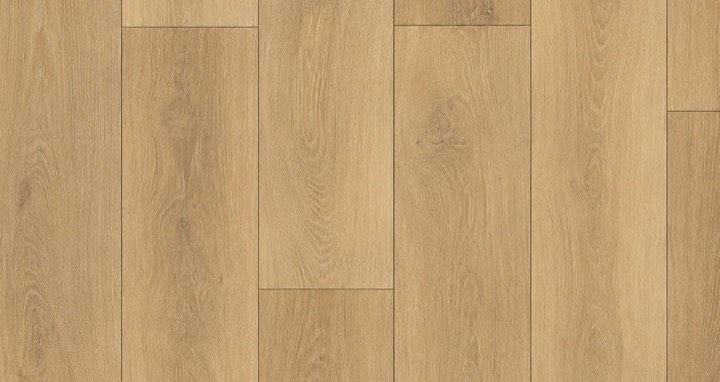
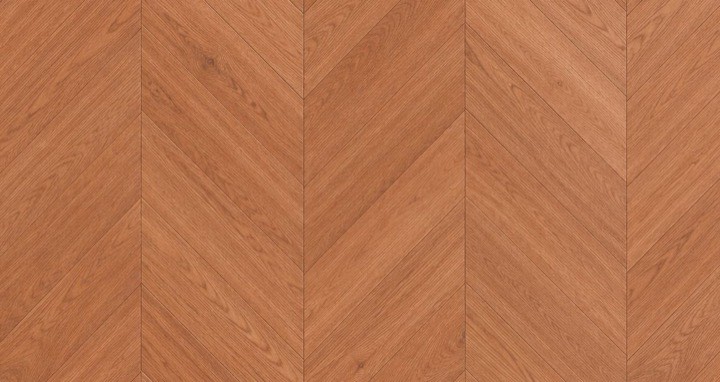
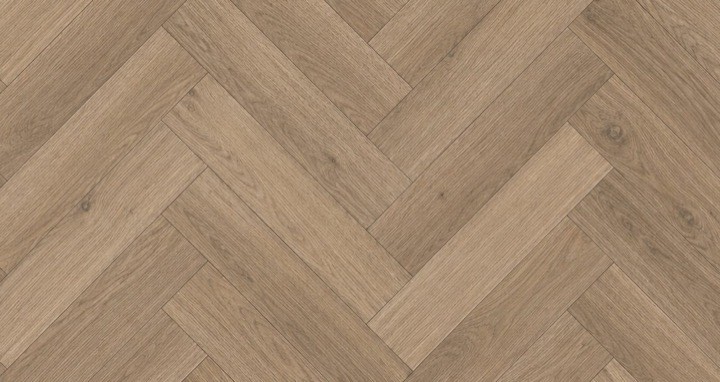
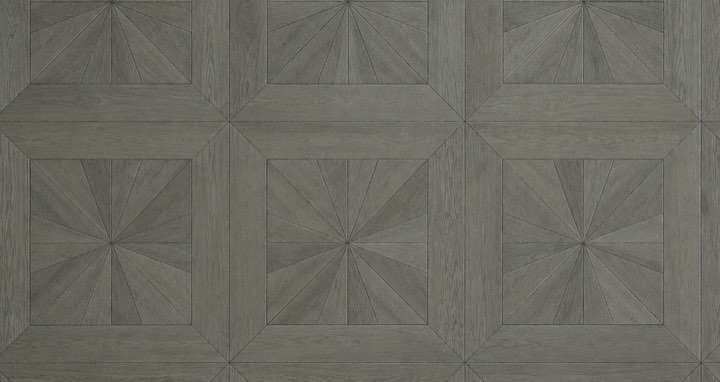
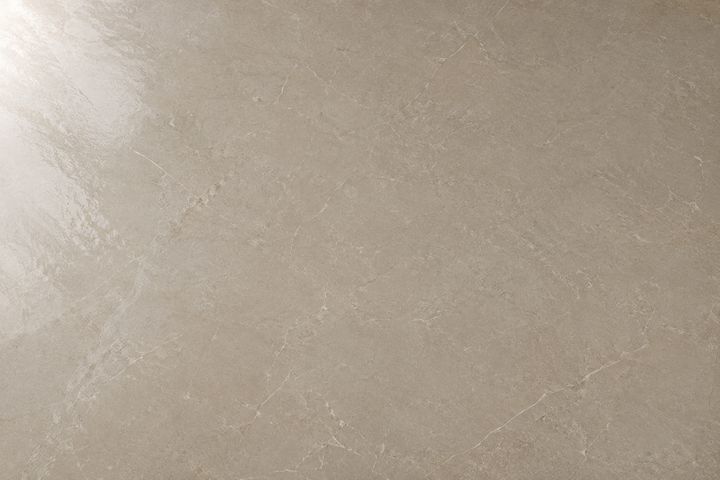
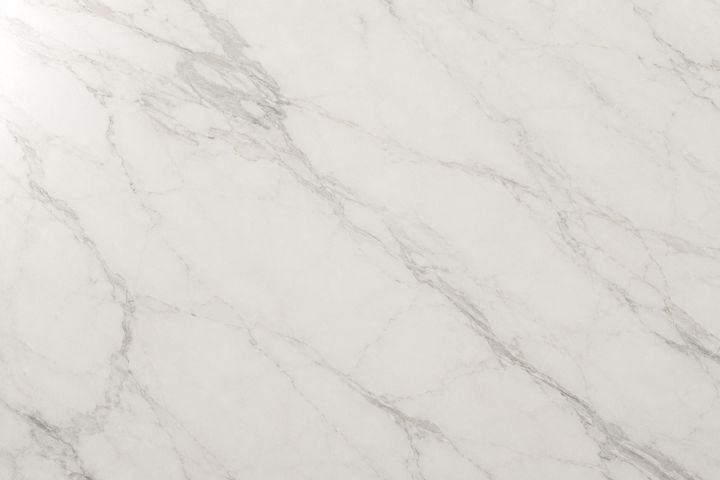
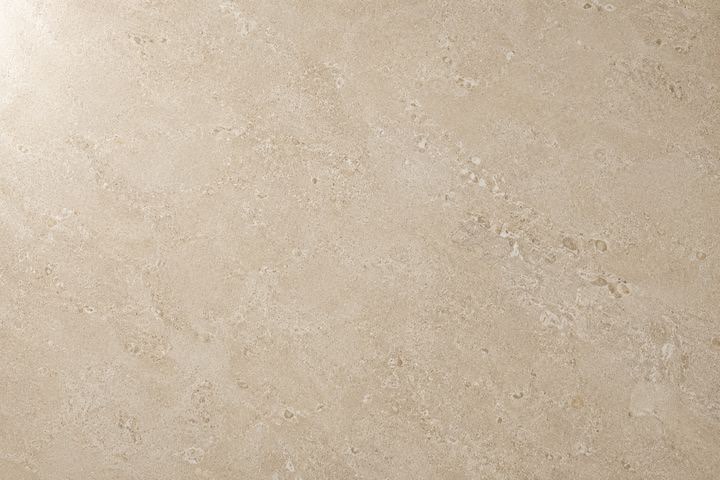
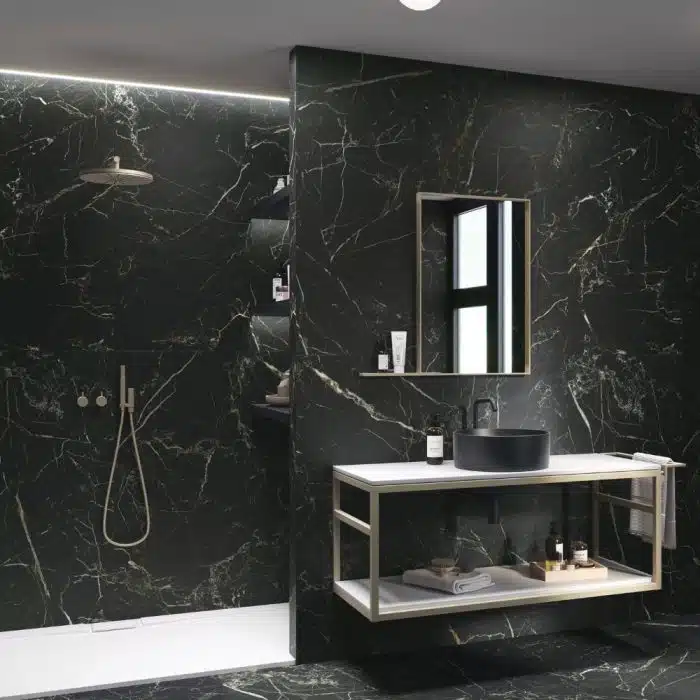
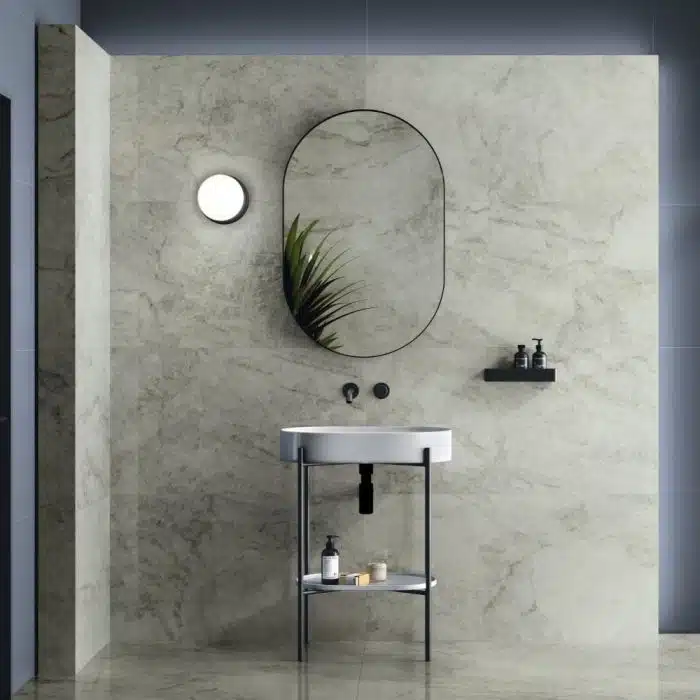
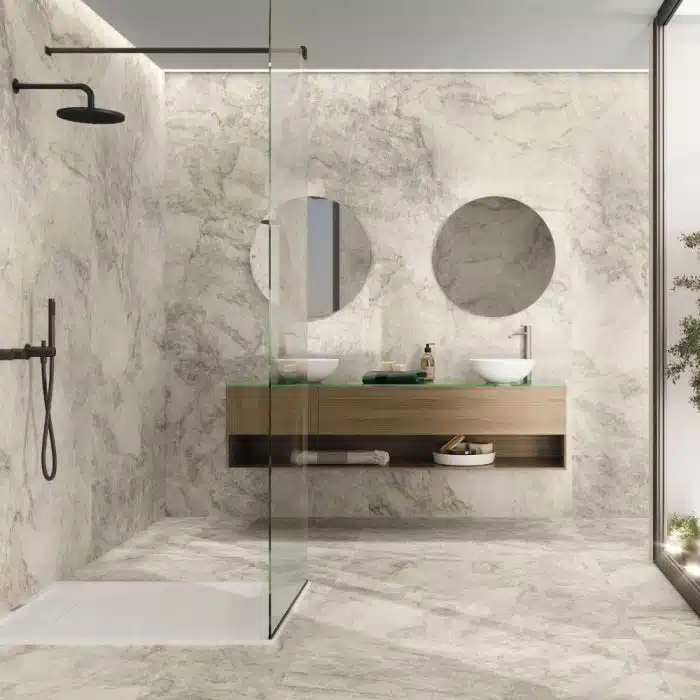
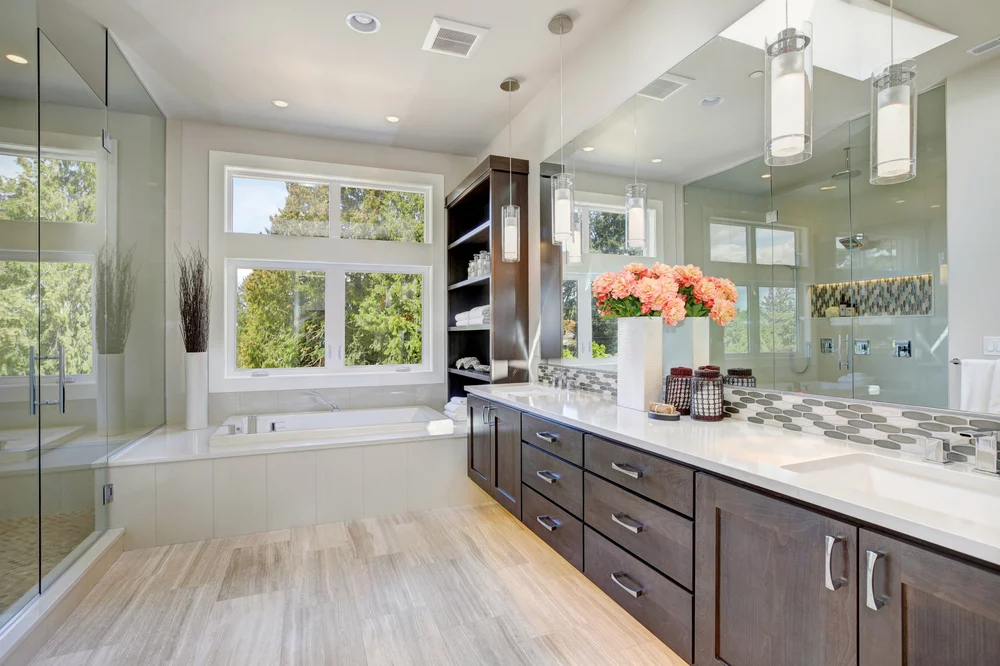
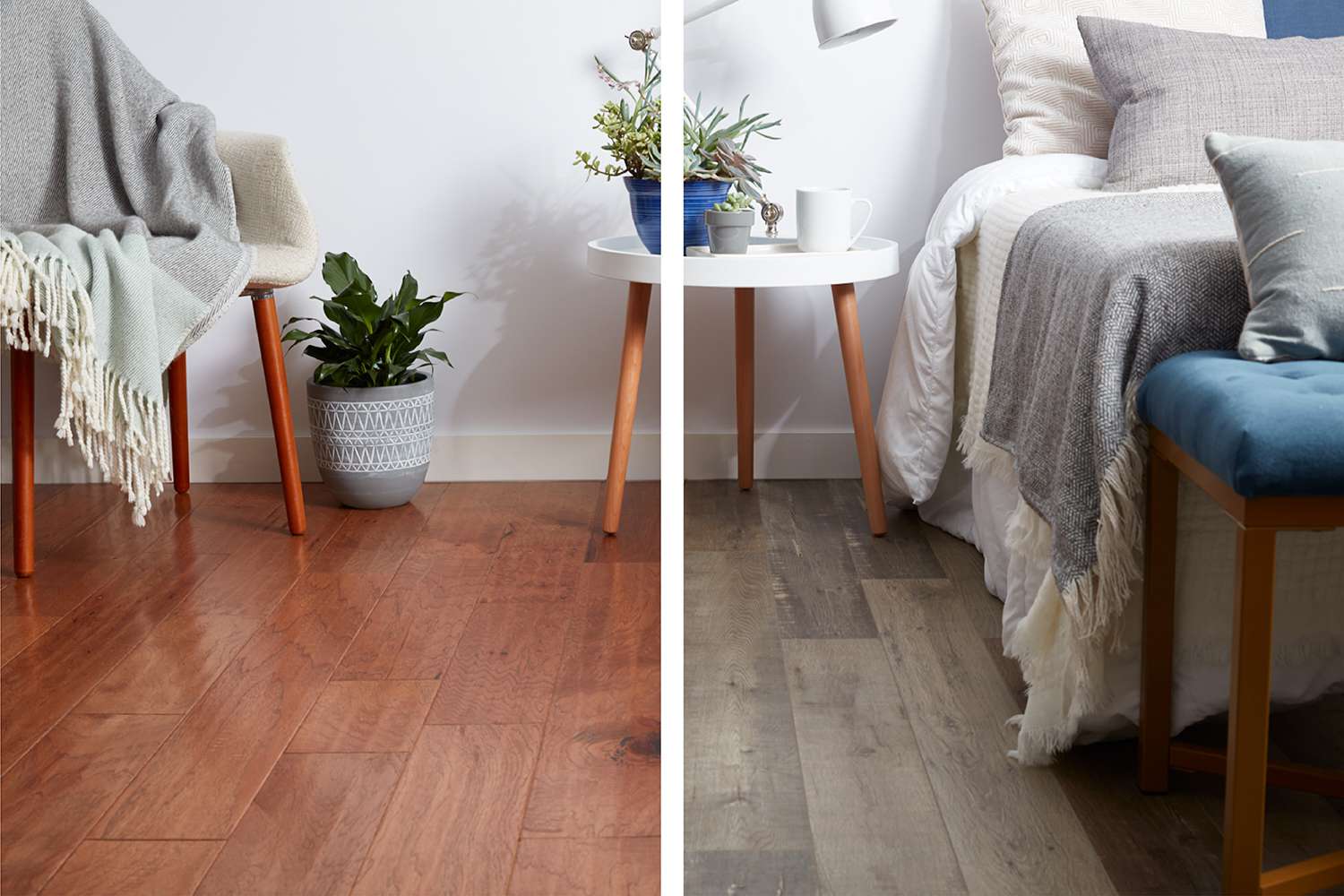
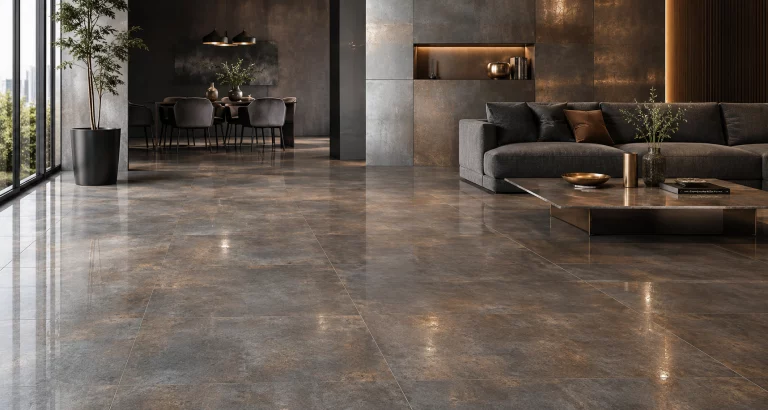
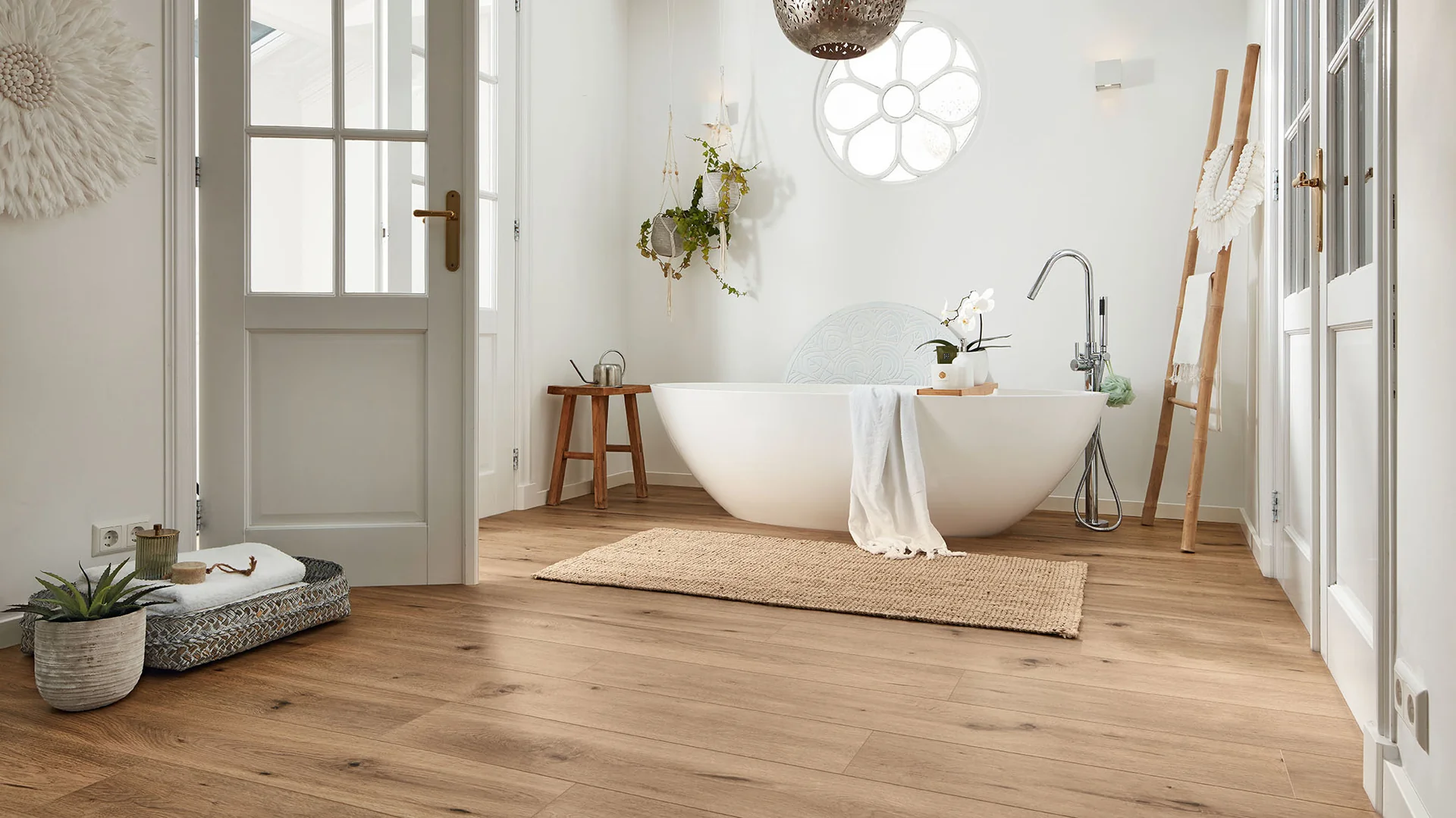
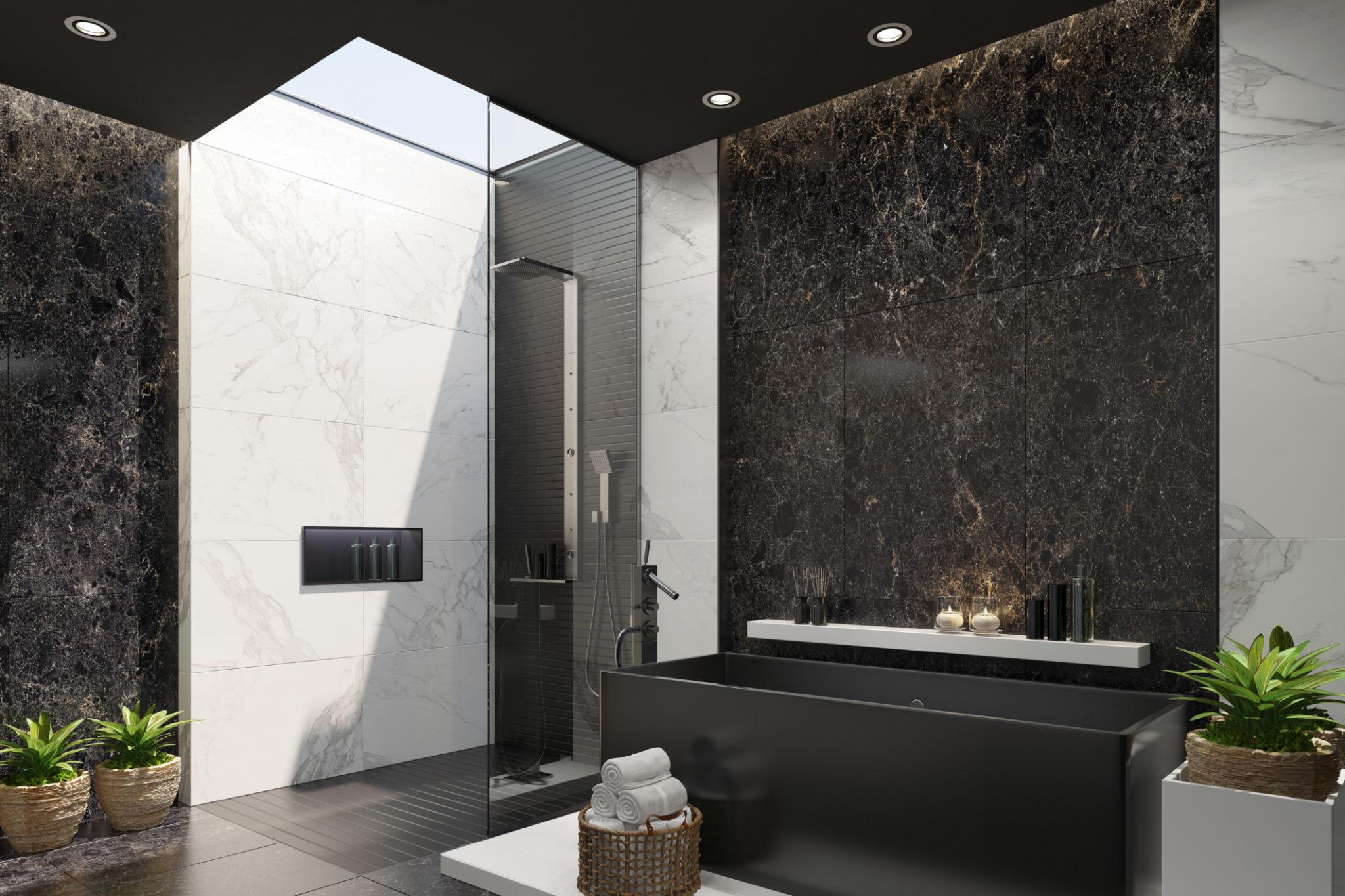
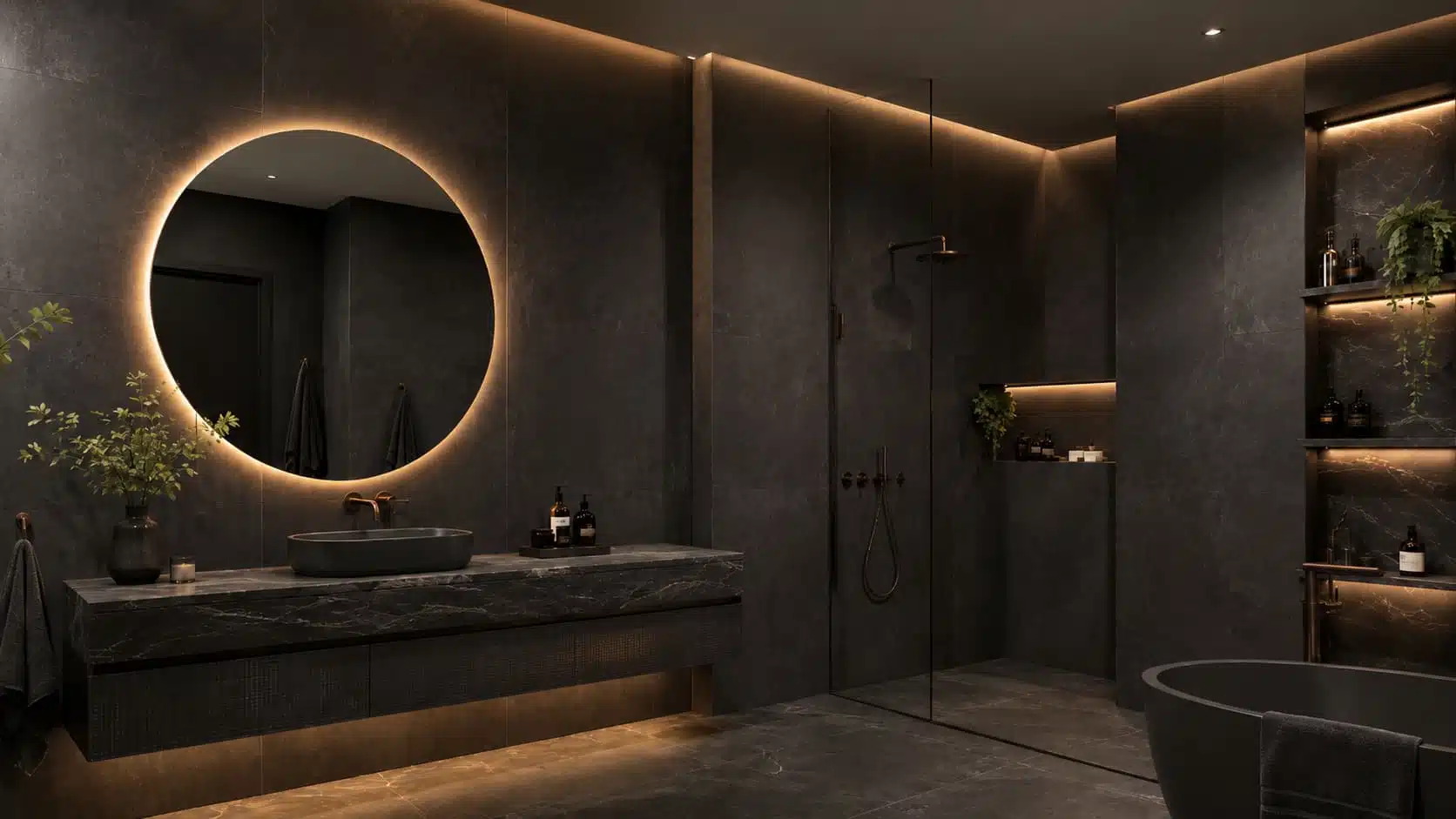
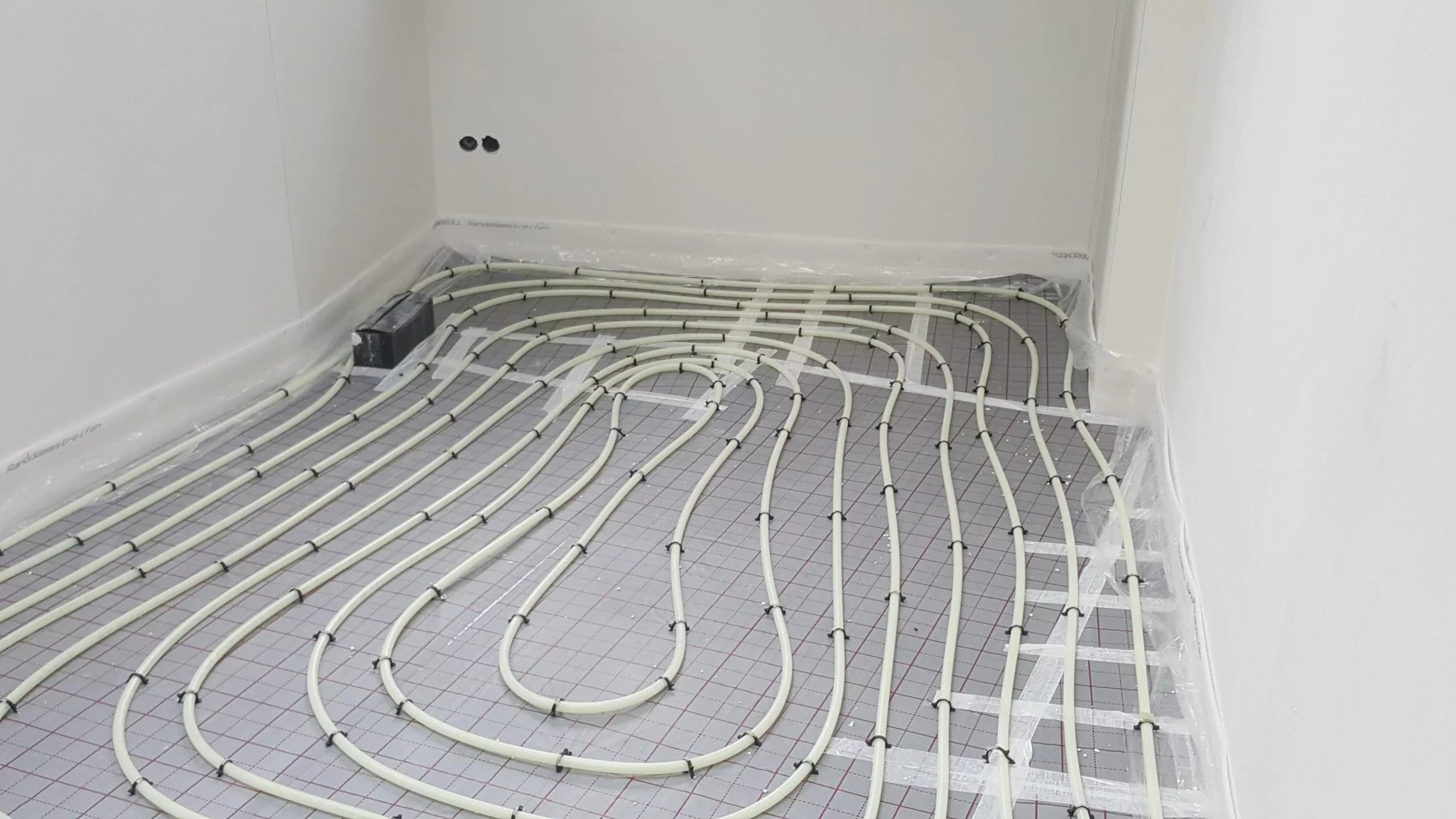
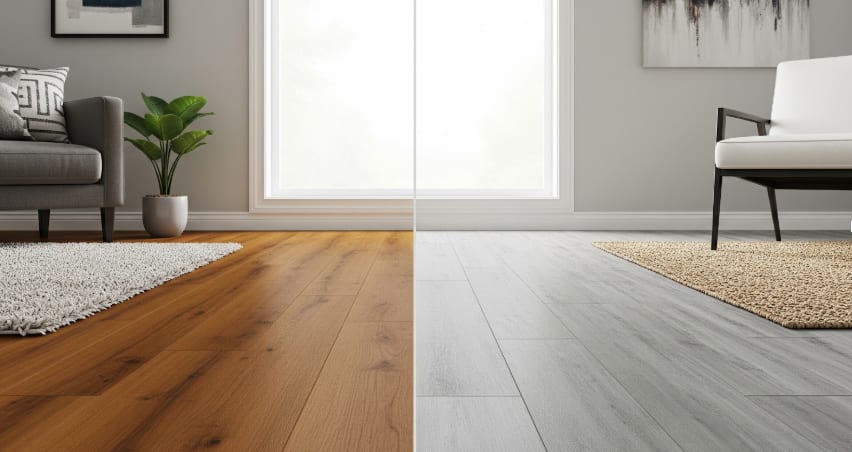
Vinyl absorbs nothing and follows a slightly imperfect base; porcelain is the harder surface and will show any flex in the floor beneath as a cracked joint.
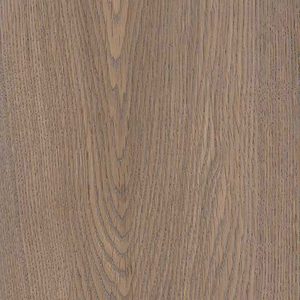
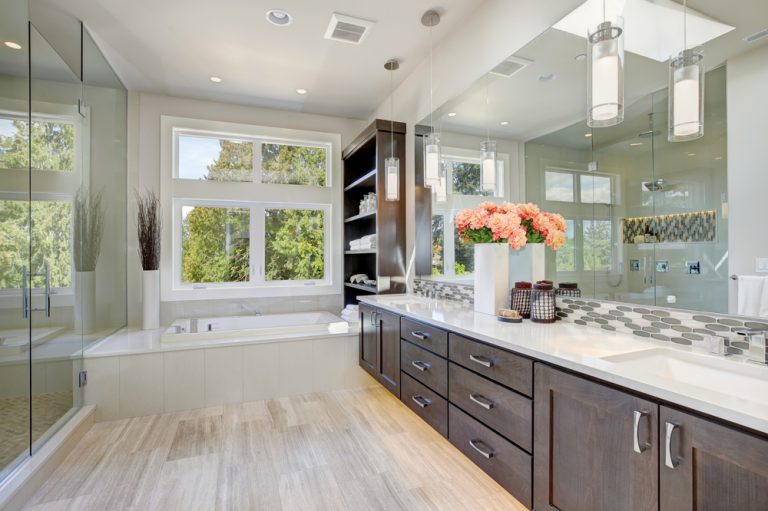
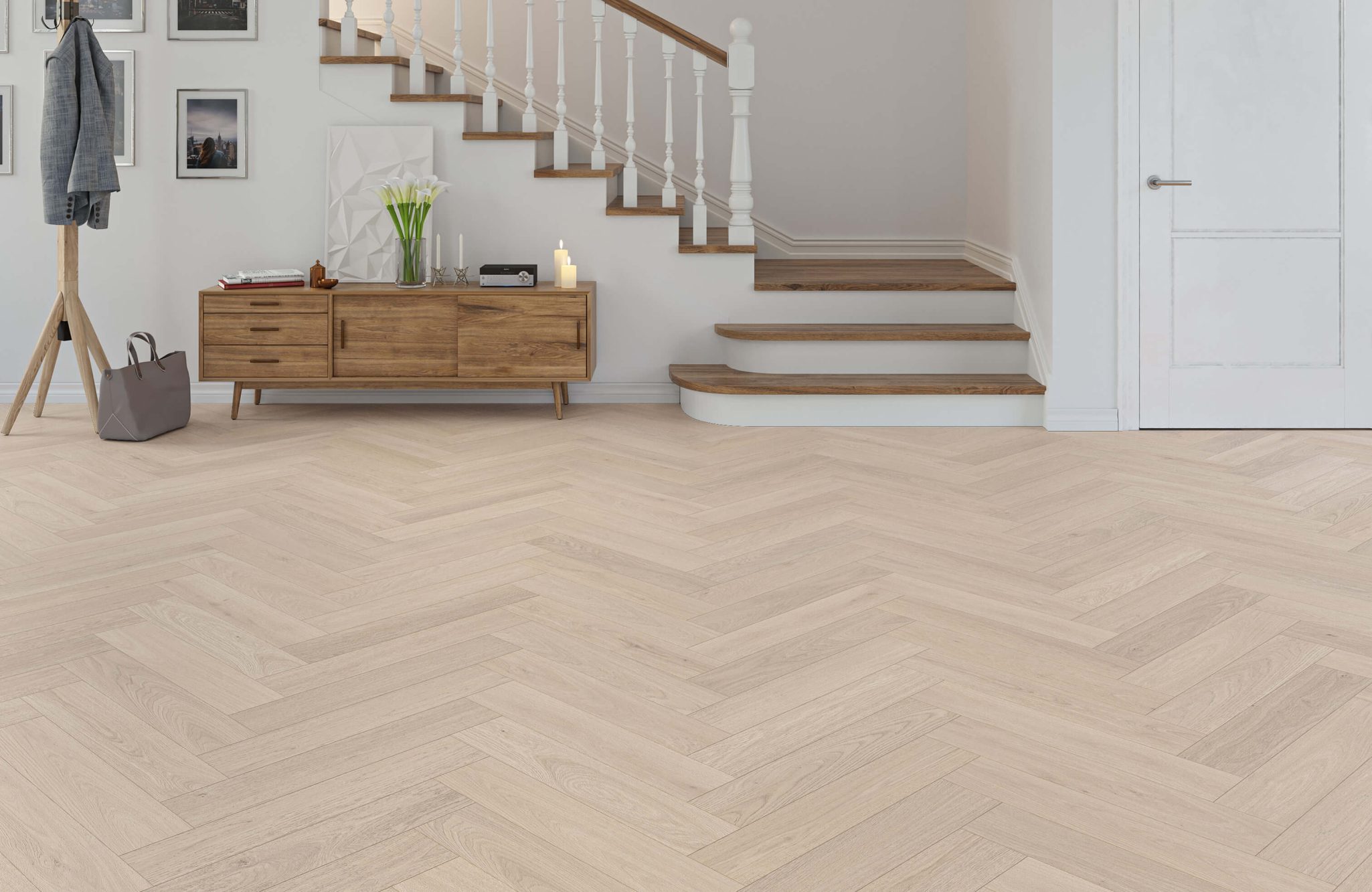
In a Bristol terrace the bathroom is upstairs on joists, and often at the back over a single-storey extension, so the floor moves more than the tiling on the walls suggests. A rigid vinyl tile from the BML range over a levelled, sealed deck follows that movement; the tile itself is listed as waterproof, and it adds little height at a door that was not cut for a tiled build-up. Porcelain from the range belongs on a slab, in a ground-floor wet room or a harbourside flat.
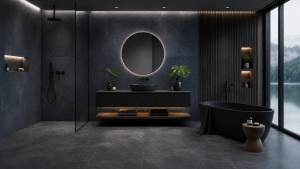
The Berry Alloc panels interlock into a shower wall without grout, which in a bathroom under a Clifton roof with a small extractor is the surface that stays clean. The shower area is tanked before either floor goes down; on a sloping site the water finds the low corner, and the finish is not what keeps it out of the room below.
Flats are 35% of the homes in the City of Bristol district, and a bathroom in a flat is the room a leak from matters most, because it is someone else's ceiling. The rigid-vinyl floor over the slab with the edges sealed to the instructions, and the panels on the shower walls without a grout line to fail, are the two choices that keep the water where it belongs.
Terraced houses are 32% of the homes in City of Bristol, and a terraced bathroom in Bristol is often a later addition, on the ground floor behind the kitchen or in a first-floor extension over it. A timber first floor under a bathroom is the case for the rigid vinyl, which floats and is light; a ground-floor slab takes either floor once the reading says it is dry.