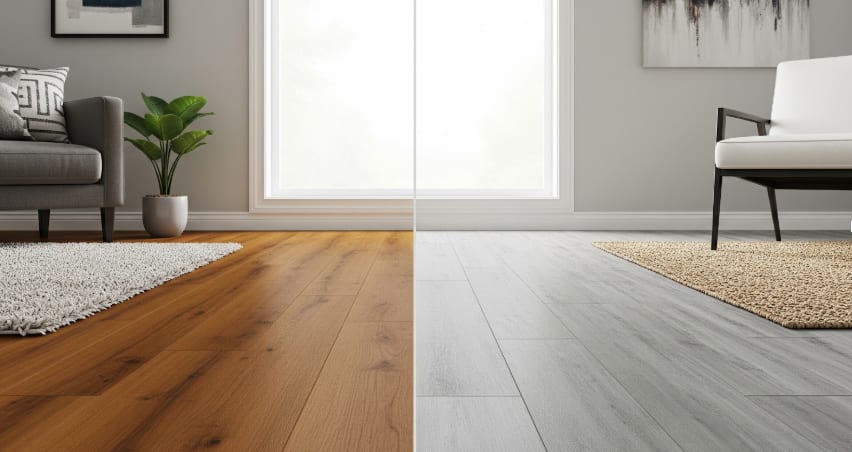
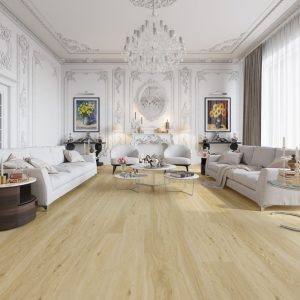
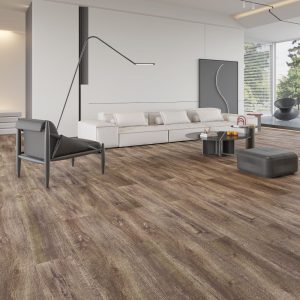
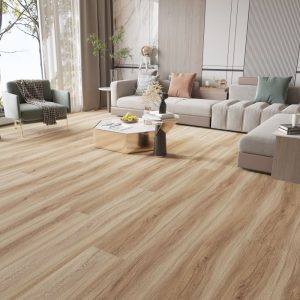
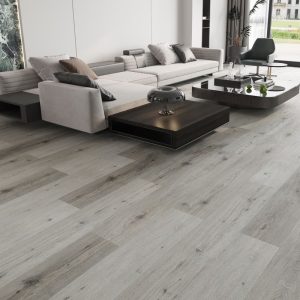
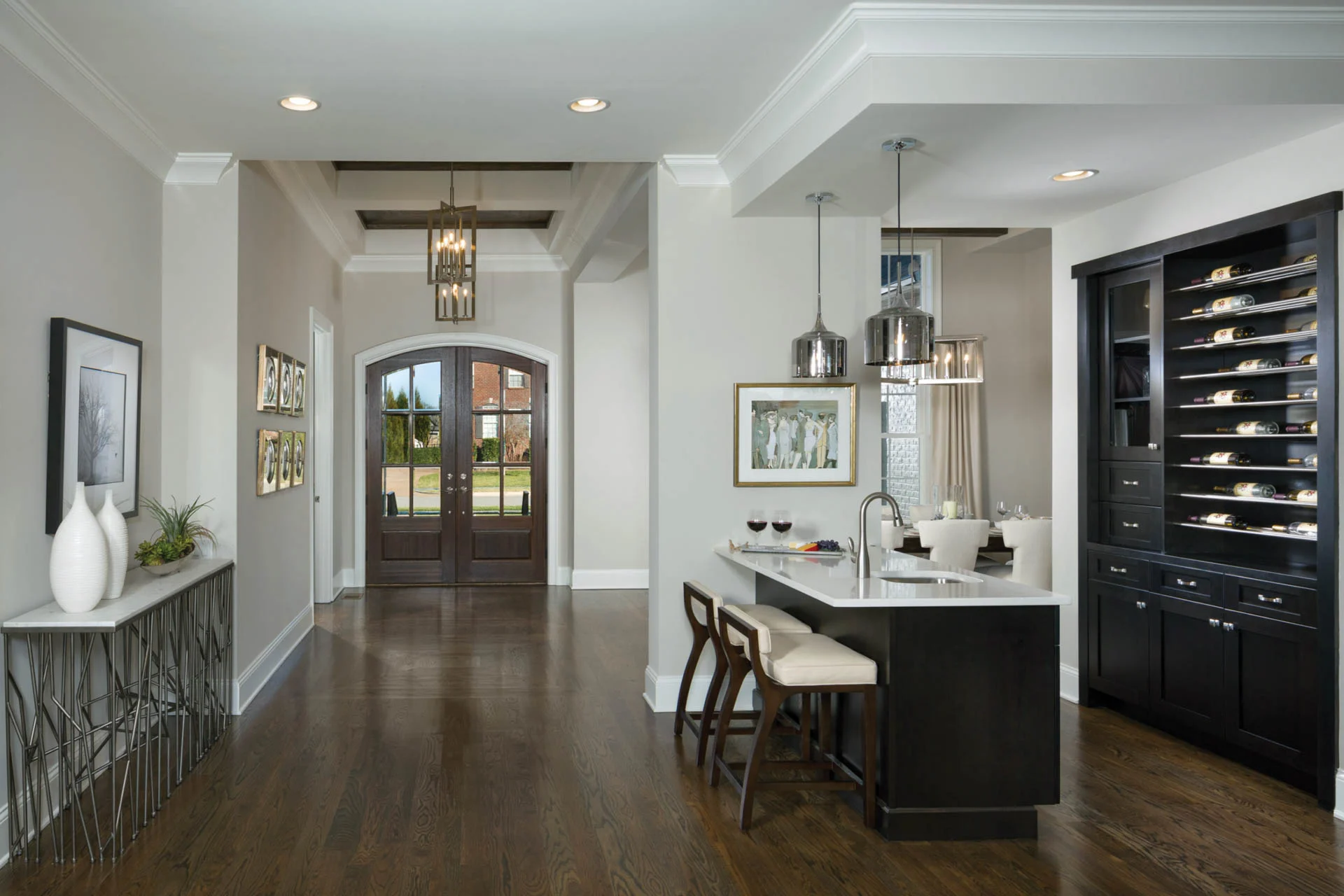
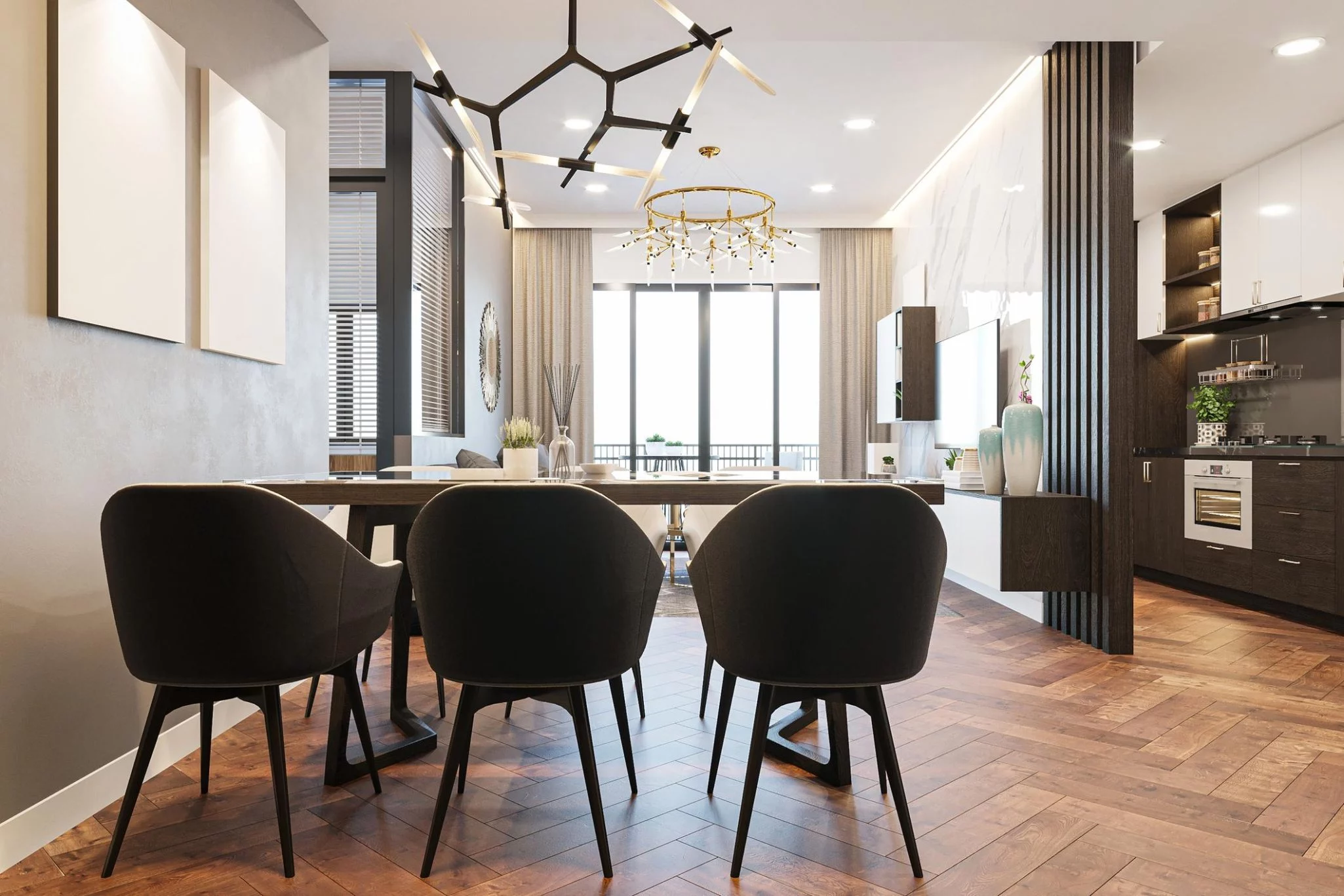
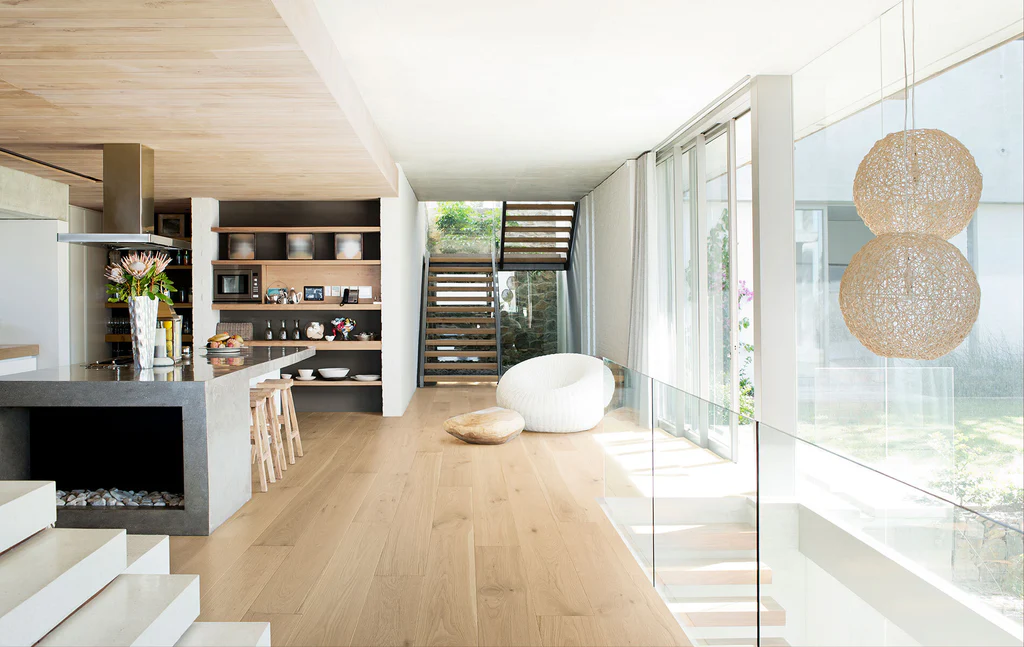
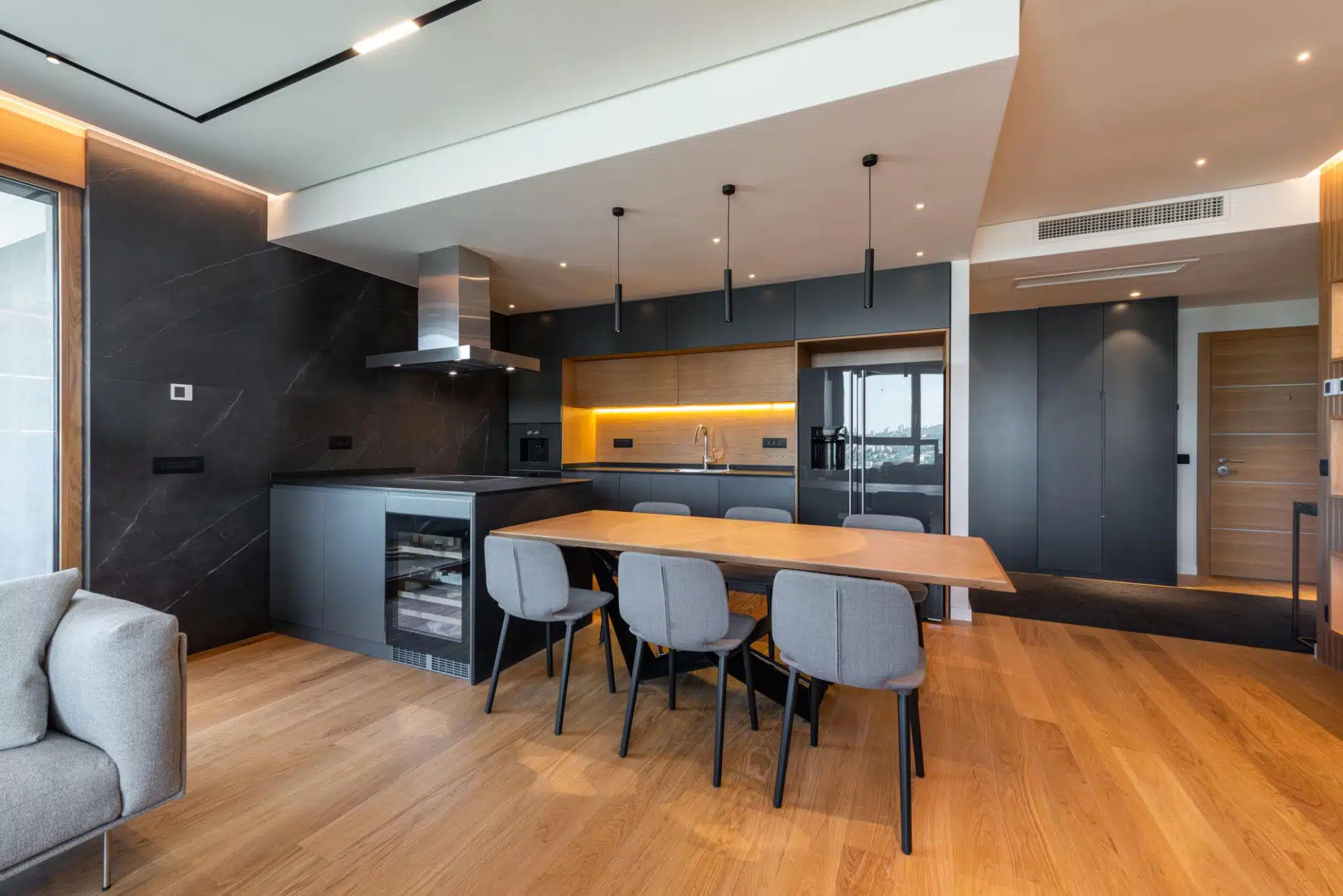
It is warm and quiet underfoot over a cold slab or a draughty void, which is a real difference in a house with a cellar beneath the floorboards.
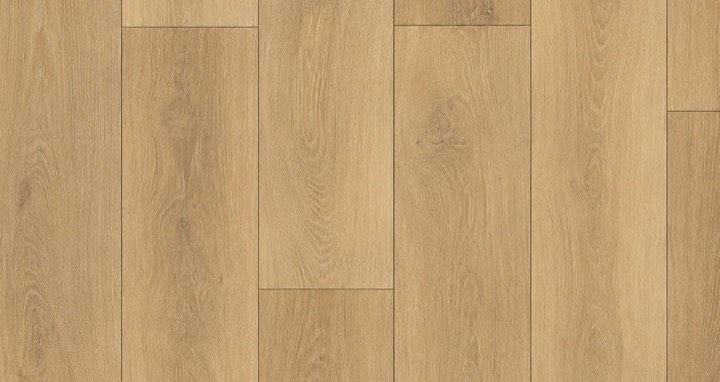
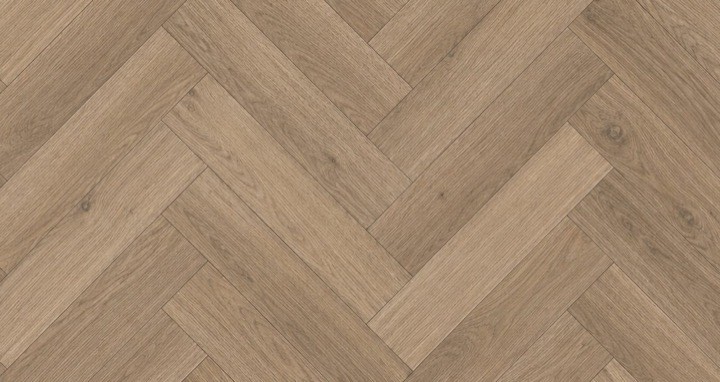
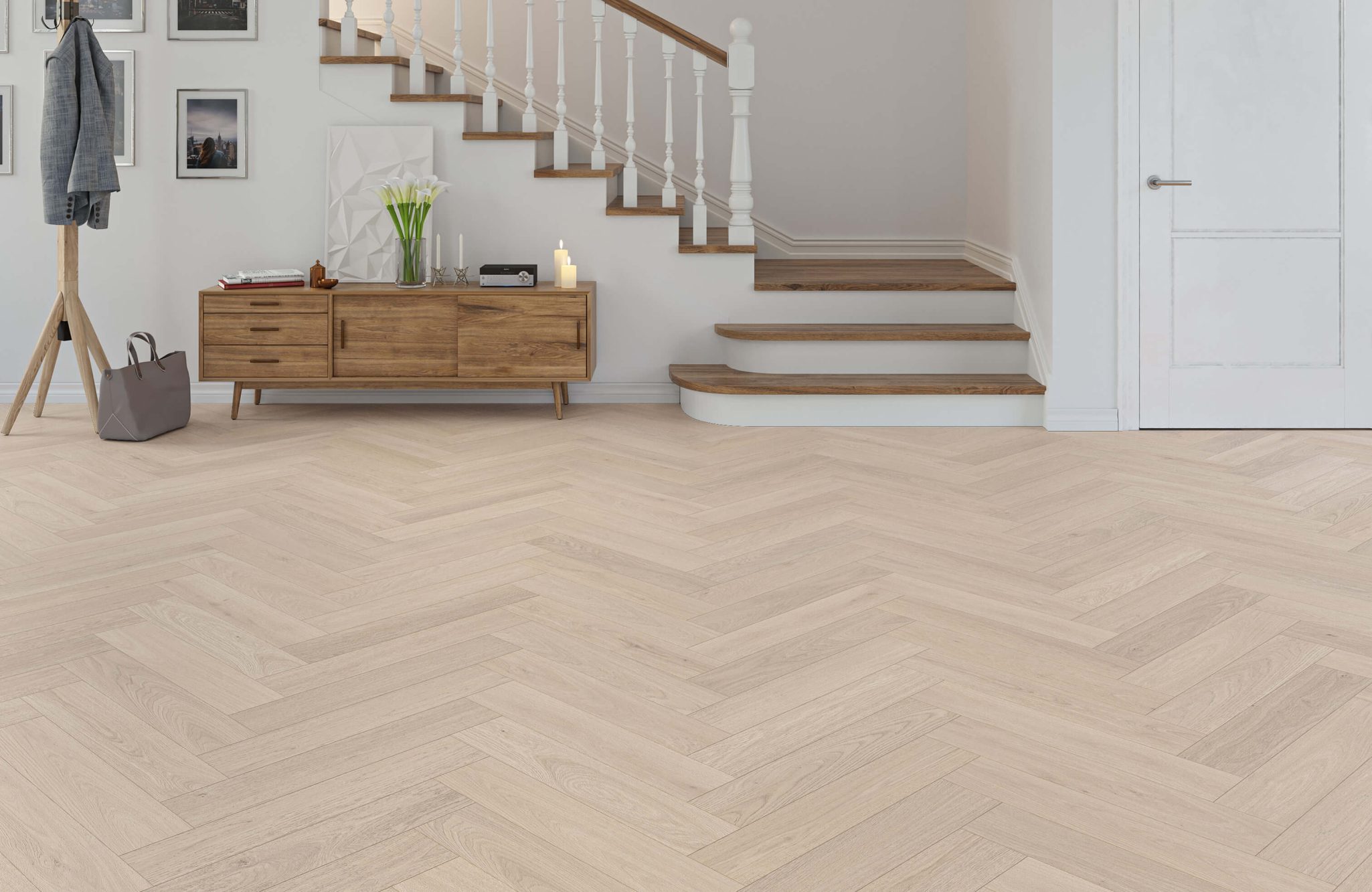
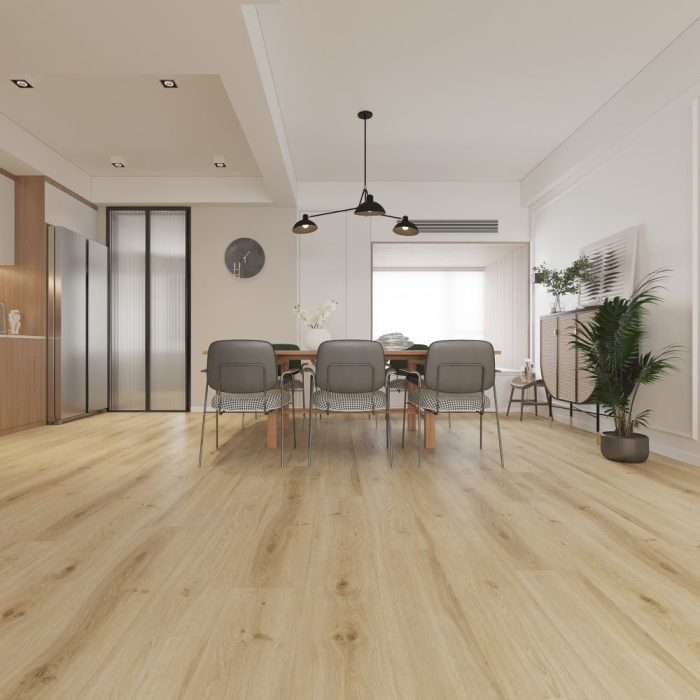
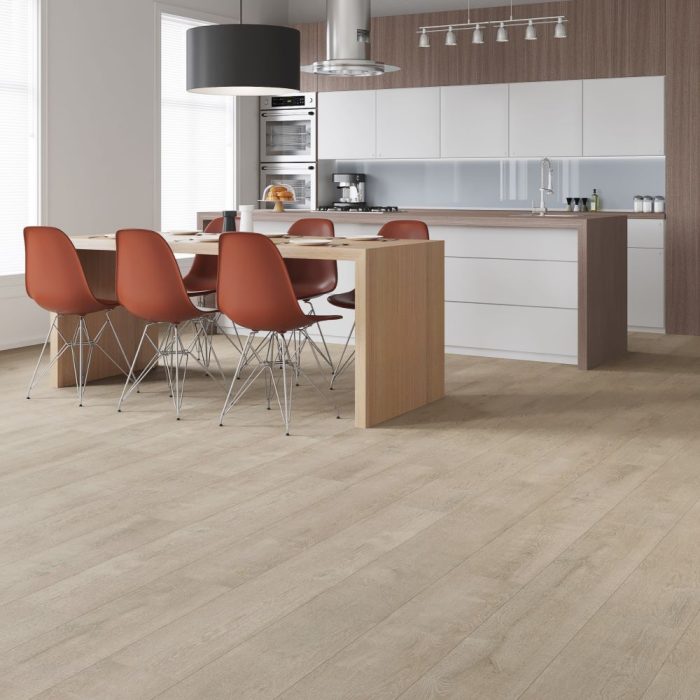
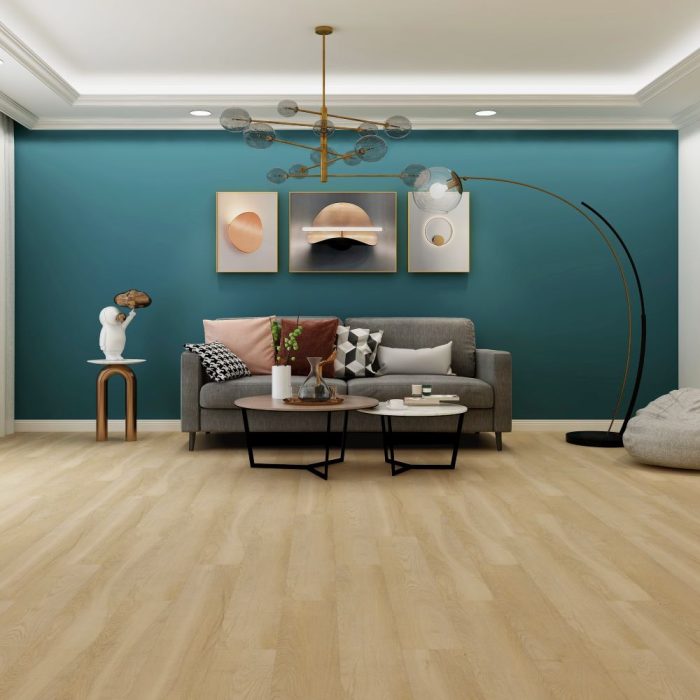
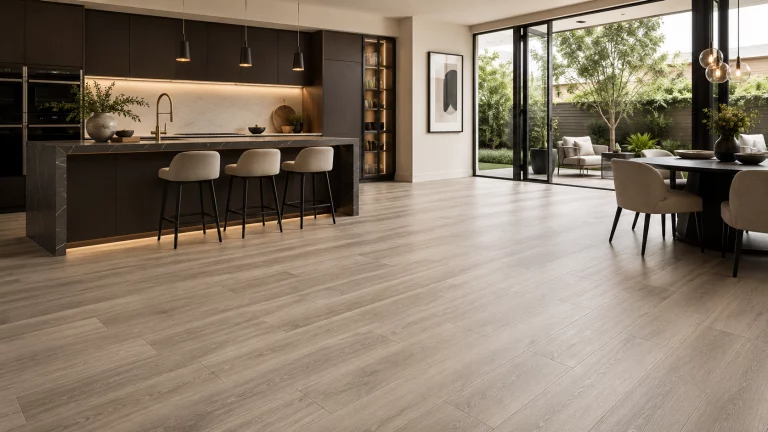
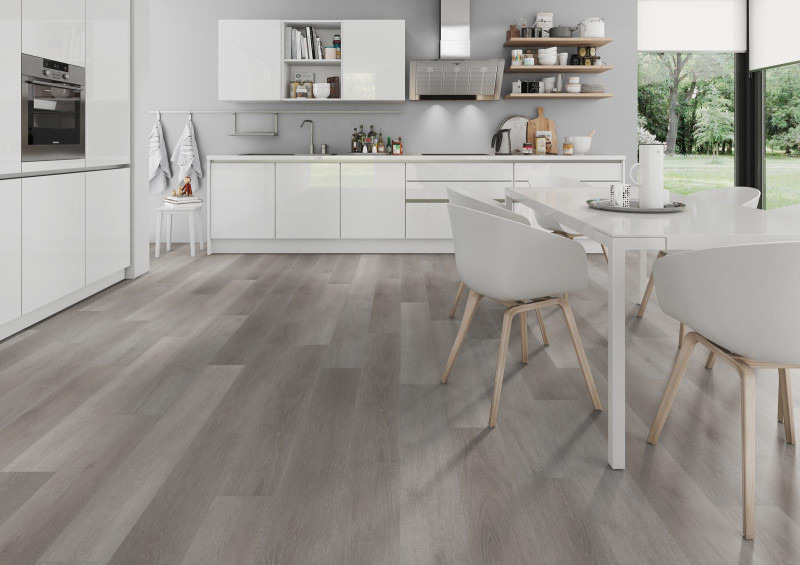
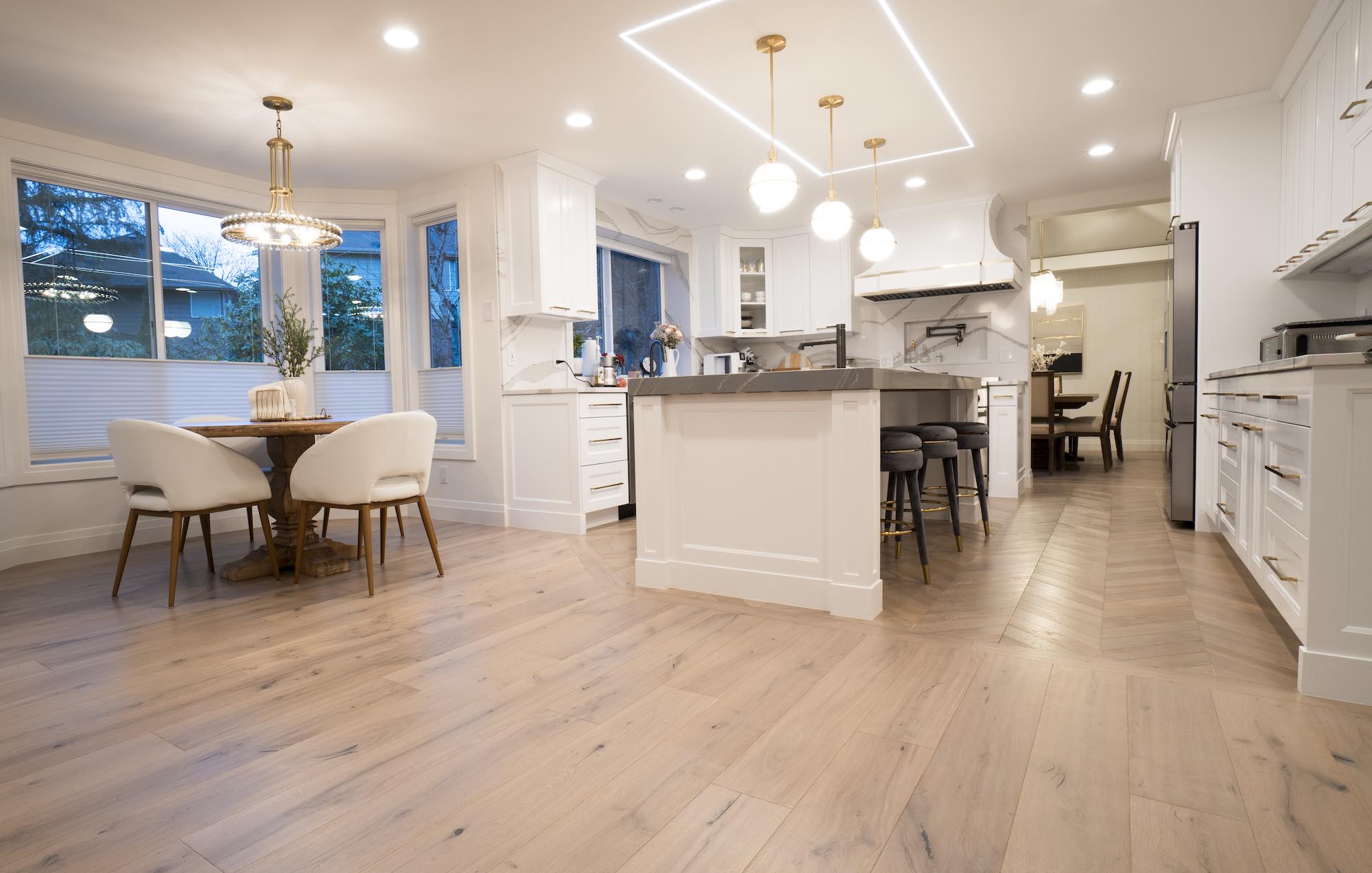
A Bristol terrace with a cellar has a cold, draughty void under its front room and a kitchen pushed out into the garden, and the BML rigid vinyl plank answers both: the plank itself is listed as waterproof, so it runs from the hall through the kitchen to the back door as one plane, and the underlay bonded to its back takes the edge off a cold floor over a void. The base is levelled first, because a rigid click plank shows a dip as a rocking joint.
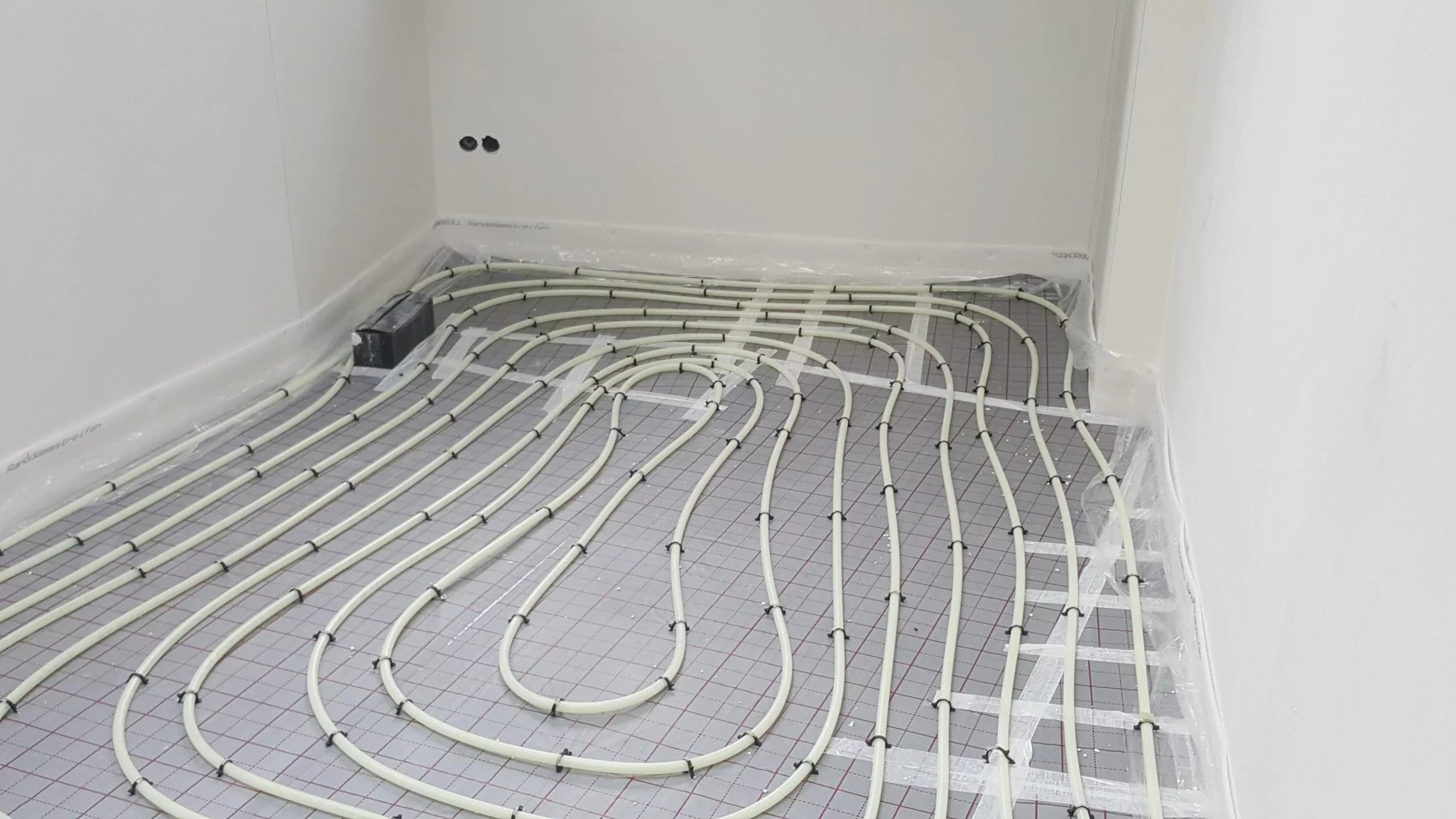
For a landlord letting a house off Stapleton Road or in Easton, the click plank is replaced one board at a time when a tenant leaves. In the Wapping Wharf and Finzels Reach flats the plank goes over concrete with an acoustic layer where the lease asks for one; over the heated screed at Lockleaze it is listed as compatible with the heating. The tile format in the same range suits a bathroom under a sloping roof.
Flats are 35% of the homes in the City of Bristol district, and a rigid-vinyl floor in a flat goes over the slab on an acoustic underlay: it is thin enough to stay under the door thresholds and quiet enough, with the right underlay, to meet the impact-sound clause a lease carries. The kitchen and the bathroom of a flat are its two natural rooms.
Terraced houses are 32% of the homes in City of Bristol, and the terrace is where the rigid-vinyl range does most of its work in Bristol: the kitchen at the back, often a concrete floor with a history of damp, and the hallway that takes the traffic. A rigid board floats over both on an underlay, and its stiff core bridges the small unevenness an old floor has. Over a slab the base is checked for moisture first; BS 8203 practice puts the limit at 75 percent relative humidity under a sealed hygrometer.