
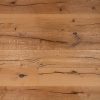
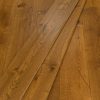
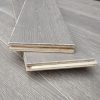
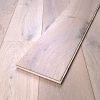
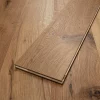
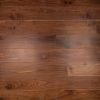
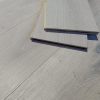







Walnut Engineered Wood Flooring
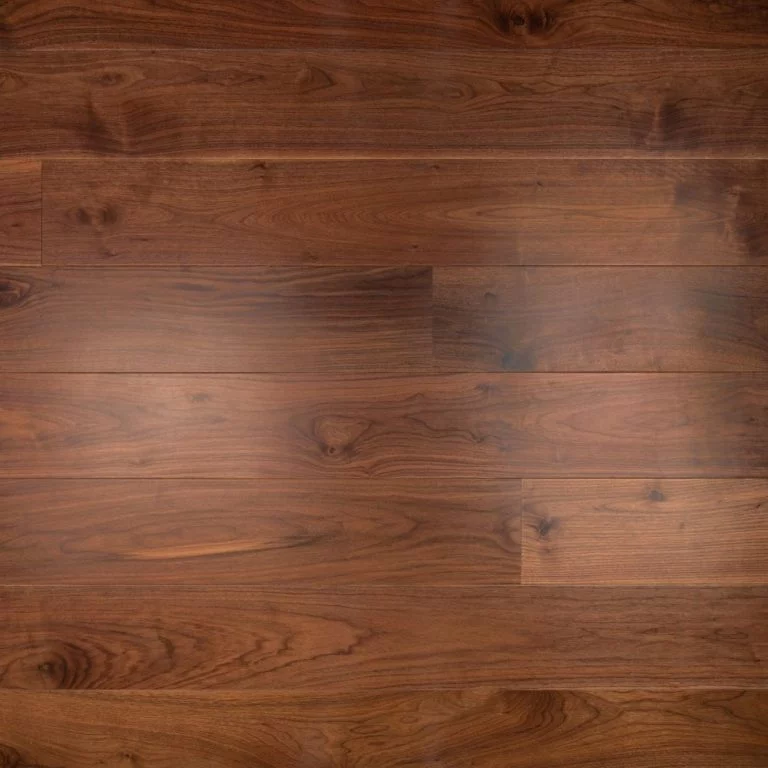
Rich tones with refined elegance. Walnut brings deep chocolate shades, smooth grain detail and a luxurious feel into your home. A premium choice for elegant interiors that need warmth, depth and lasting sophistication.
Shop Walnut
“A real oak surface over a cross-laminated core. This is the version of oak that lives happily over underfloor heating.”
— our flooring team
WalnutThe look
Still unsure? Real people, honest advice.
The look
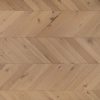
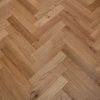
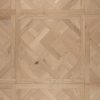
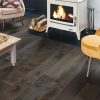
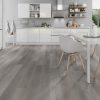
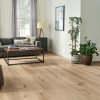
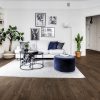
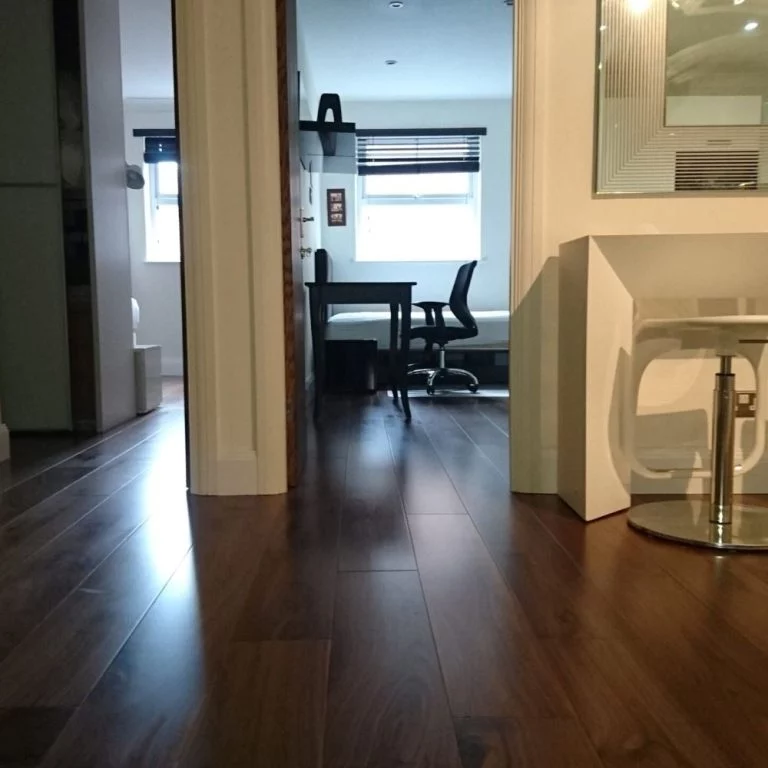
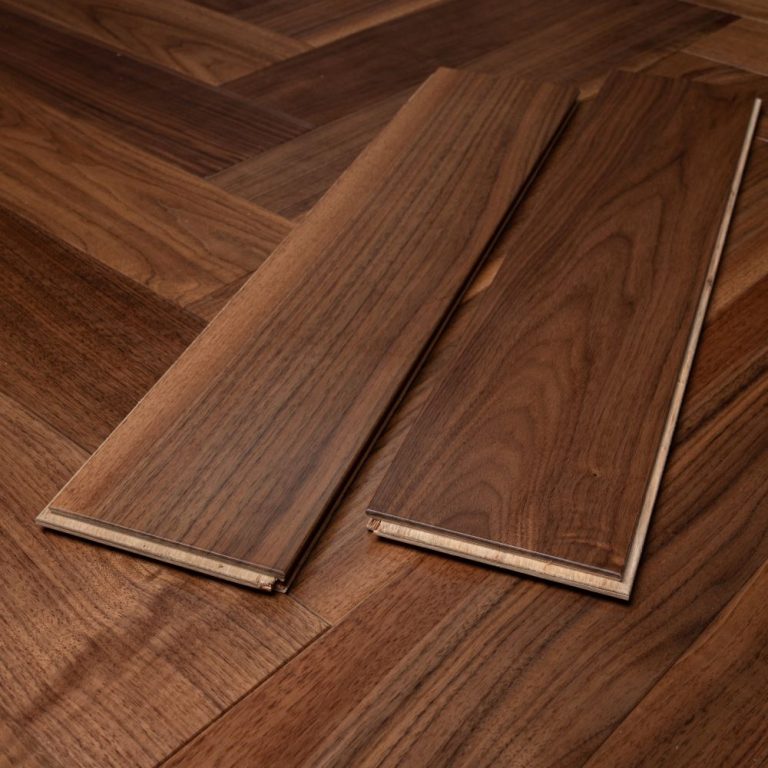
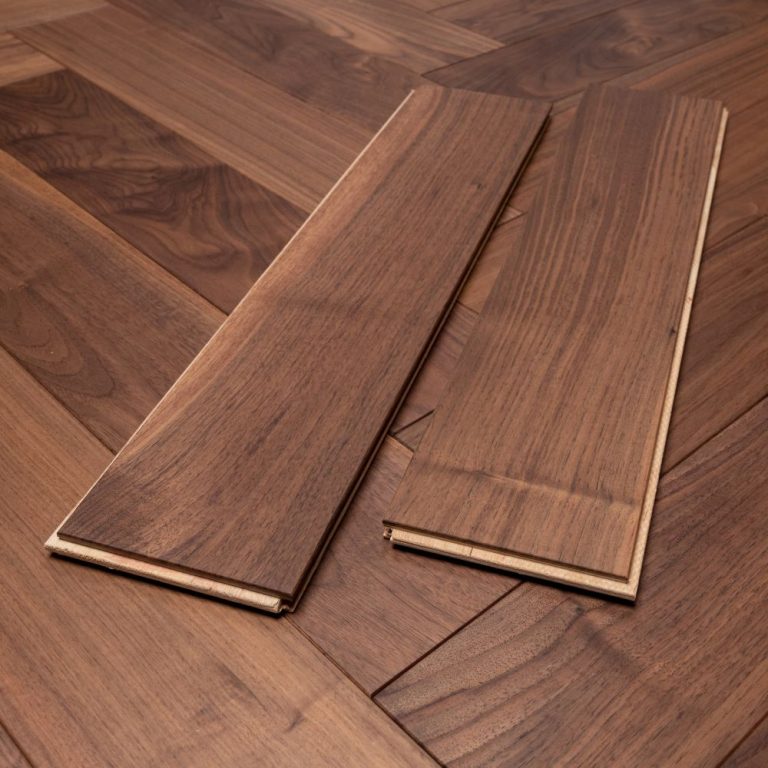
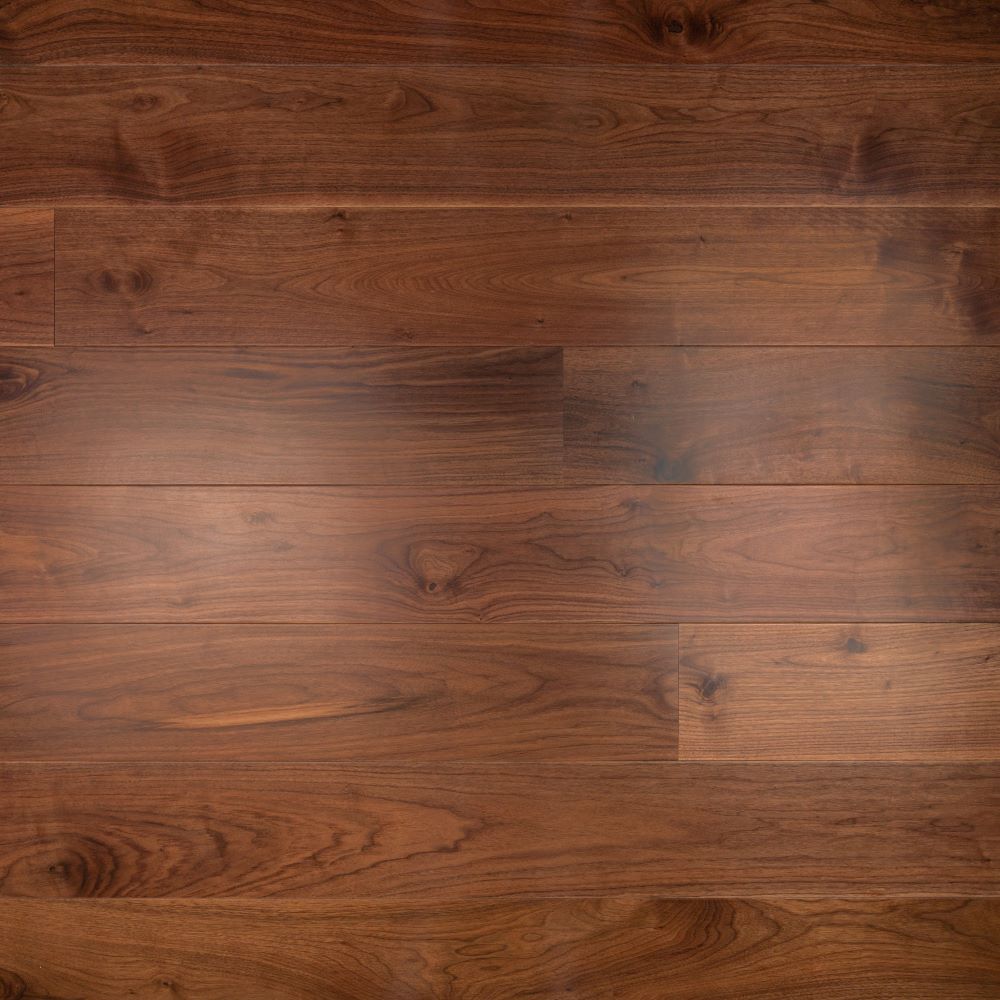
Walnut is American black walnut, not stained oak: a naturally dark timber with a fine, straight grain. Two boards and two herringbone blocks, 4 in all, every one smooth with a 3 mm walnut wear layer; three are UV lacquered and one UV oiled.
A different species
Smooth, lacquered or oiled
Where it belongs
In depth
Choosing engineered walnut
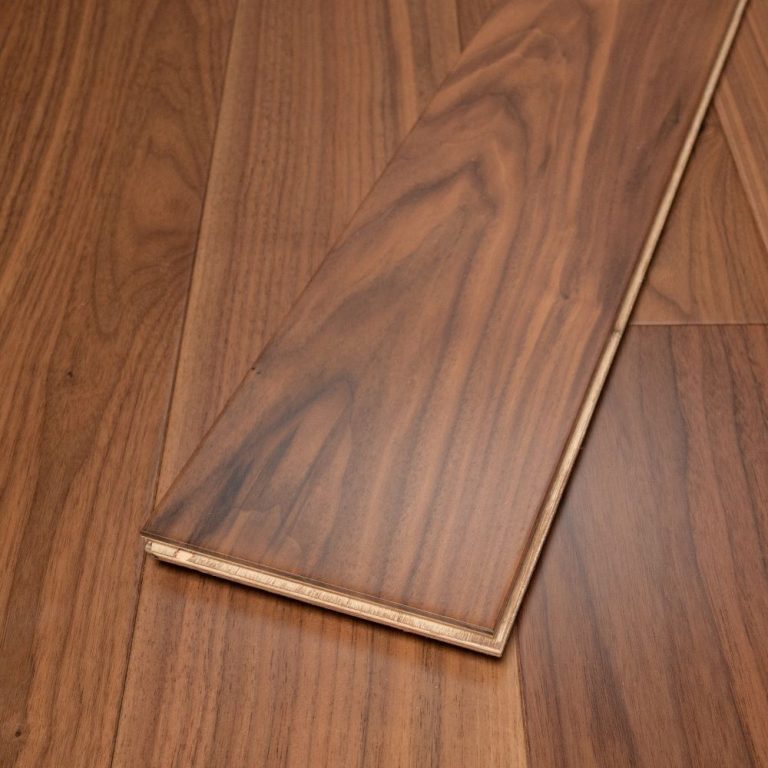
Walnut is the one species in the engineered range that is not oak, and the difference is more than colour. American black walnut is a naturally dark timber, brown with a purple cast, and its grain is straighter and finer than oak's. A stained dark oak imitates the colour; it cannot imitate the grain. All 4 walnut floors here are smooth, which is the surface that shows that grain best, and all carry a 3 mm walnut wear layer over an engineered core.
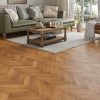
Two are boards. The Cobham American Black Walnut is 150 mm wide in lengths from 400 mm to 1400 mm and suits rooms of ordinary size, where the mix of lengths keeps the floor from looking like a grid. The Weybridge American Black Walnut is 190 mm by 1900 mm and suits larger rooms where a long, wide plank shows the figure of the wood to advantage. Both are UV lacquered and Classic grade. Two are Oxford herringbone blocks at 125 mm by 600 mm, Select grade, one UV lacquered and one UV oiled, for the same timber laid as a pattern. All four are 14 mm thick, tongue and groove with a micro-bevelled edge, listed as compatible with underfloor heating and carry a 15 year manufacturer's warranty.
In practice
Two things about walnut are worth knowing before ordering. It is a softer hardwood than oak, so it marks more readily under point loads: felt pads under chair legs are not optional. And it lightens slowly in daylight, where oak darkens, so a rug left in one place for years leaves a darker rectangle beneath it. Neither is a fault; both are the character of the timber.
If the room is a hallway or a kitchen where grit and water arrive daily, the brushed, oiled dark oak boards are the more forgiving floor in a similar colour. Walnut belongs in the rooms that are looked at.
FAQ
Is walnut softer than oak?
Does walnut fade?
What is the difference between the walnut floors?
How do I order the right amount?
Do you deliver UK-wide and can I get a sample first?
Standards
What the published standards say
Each entry is quoted from its source and linked to it. The full set is in the standards reference.
Cleaning — the manufacturers’ own guidance
For multilayer modular floor coverings the MMFA requires low-moisture cleaning methods and states that pooling of liquid on the floor must be avoided under all circumstances.
“Absolutely avoid ponding in any case!”
Source: Basic cleaning — MMFA (Multilayer Modular Flooring Association)Related looks
More engineered wood looks
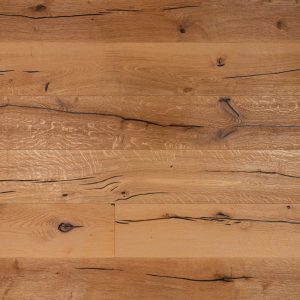 9 floorsAntique Oak
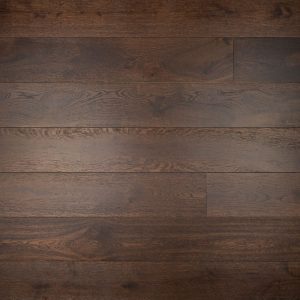 11 floorsDark Oak
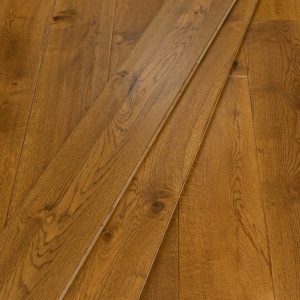 3 floorsGolden Oak
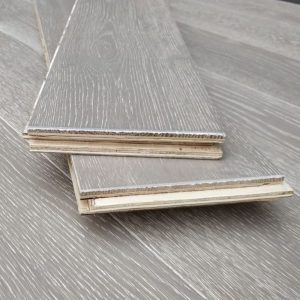 6 floorsGrey Oak
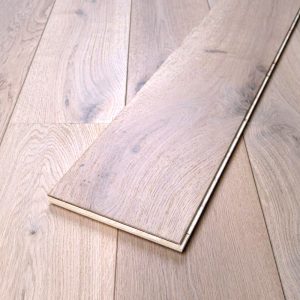 2 floorsLight Oak
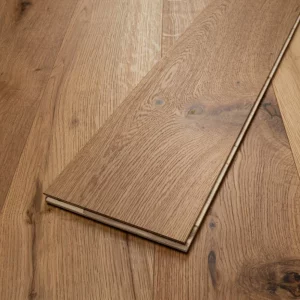 12 floorsNatural Oak
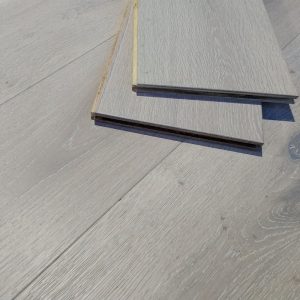 3 floorsWhite Oak
Delivery & areas