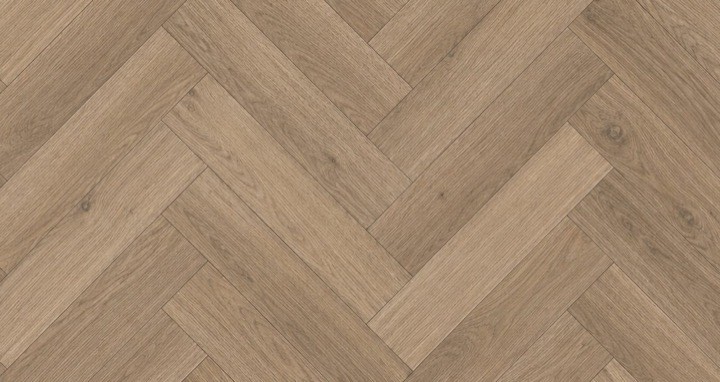
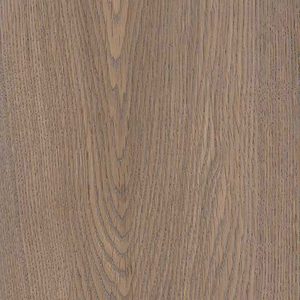
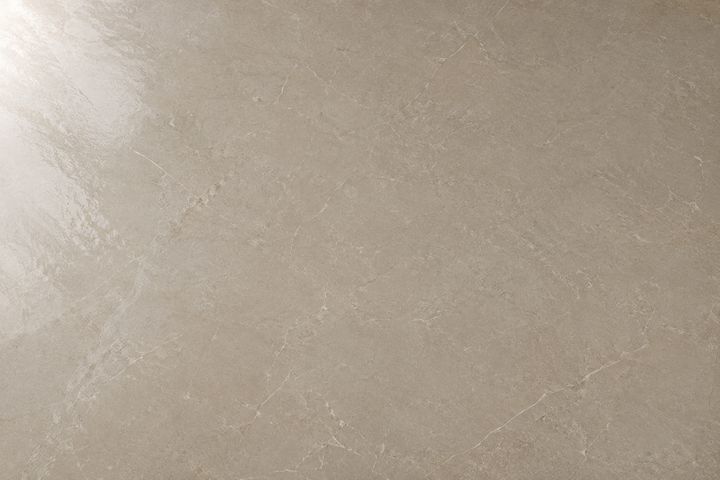
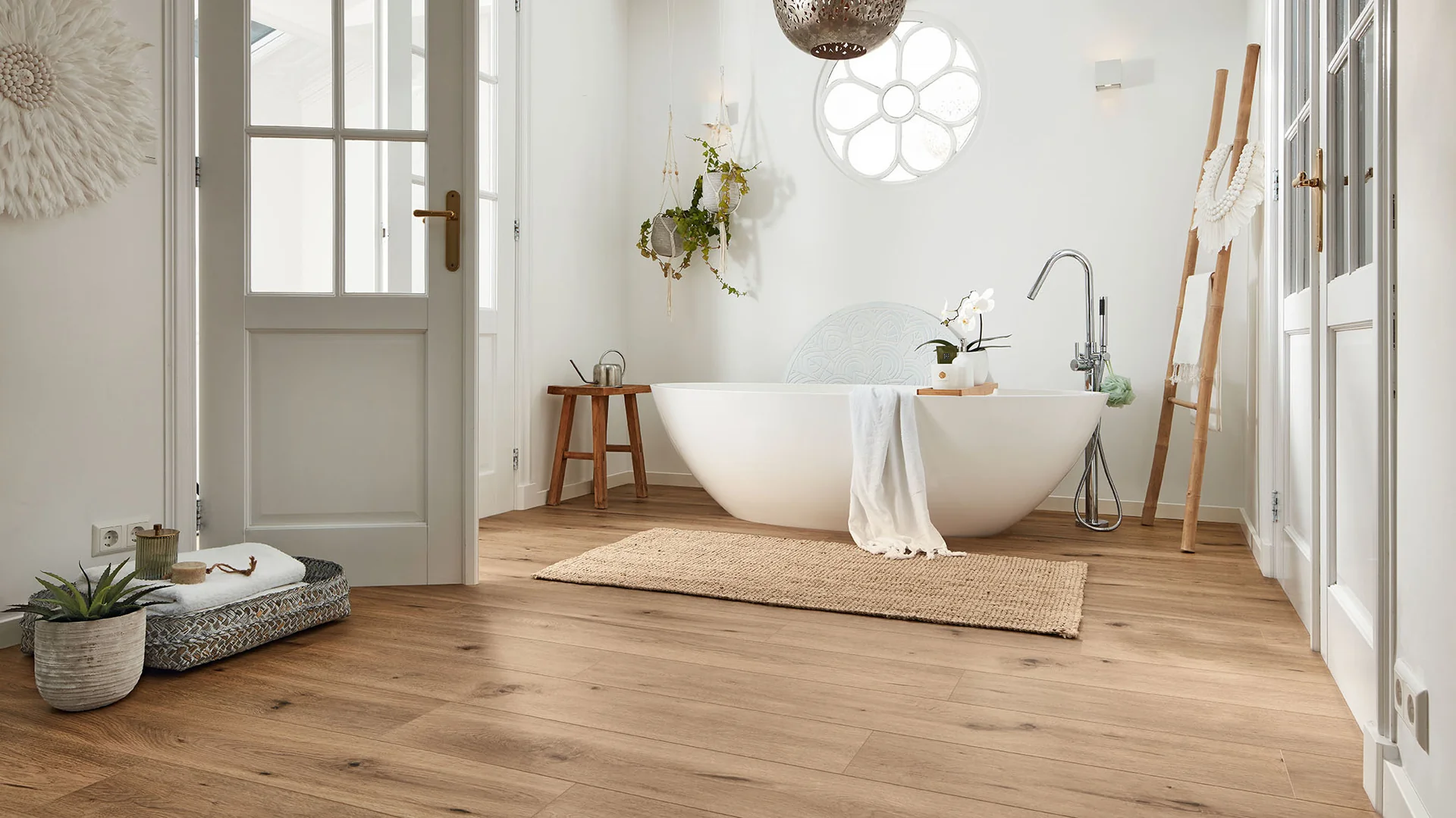
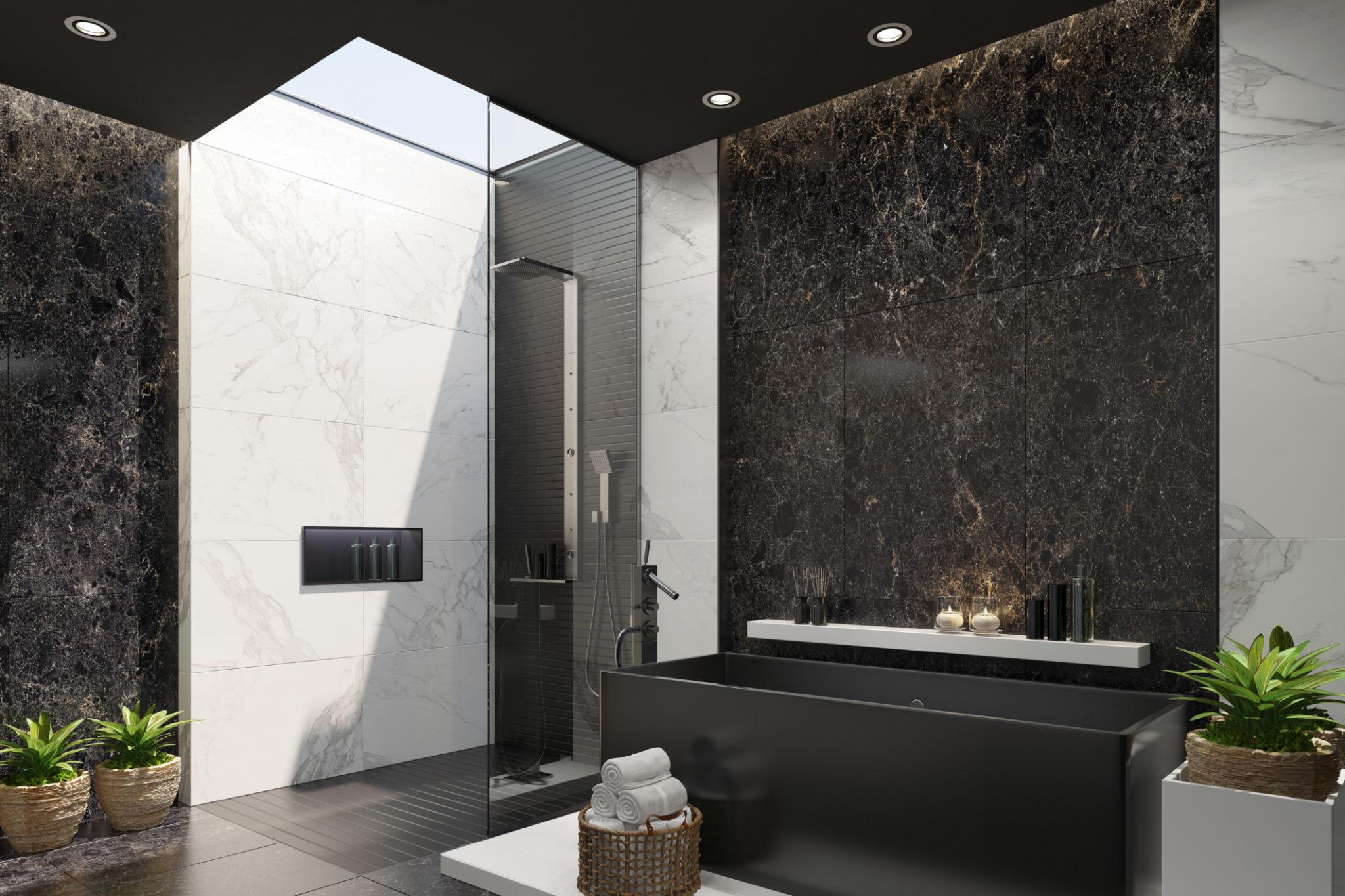
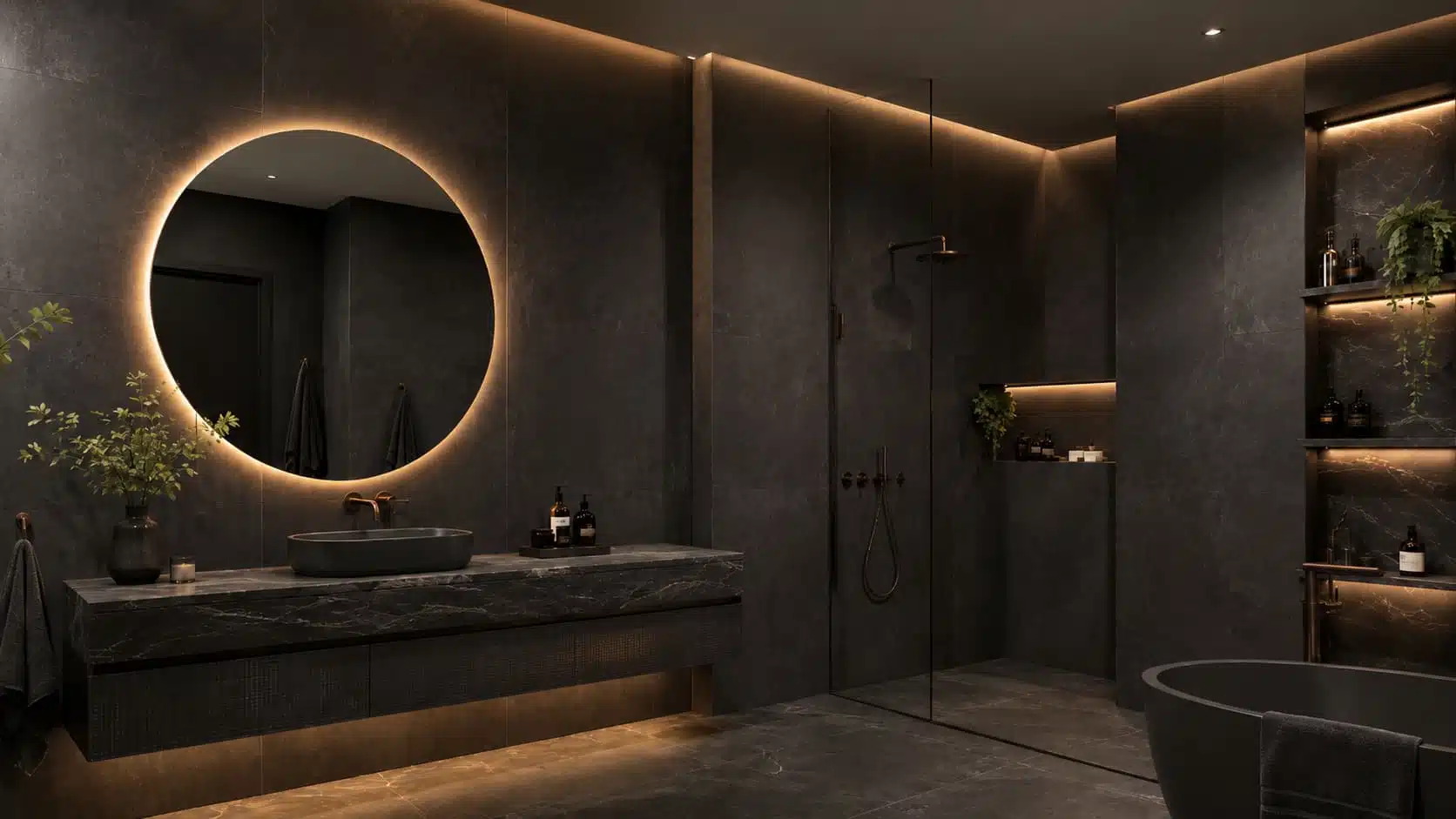
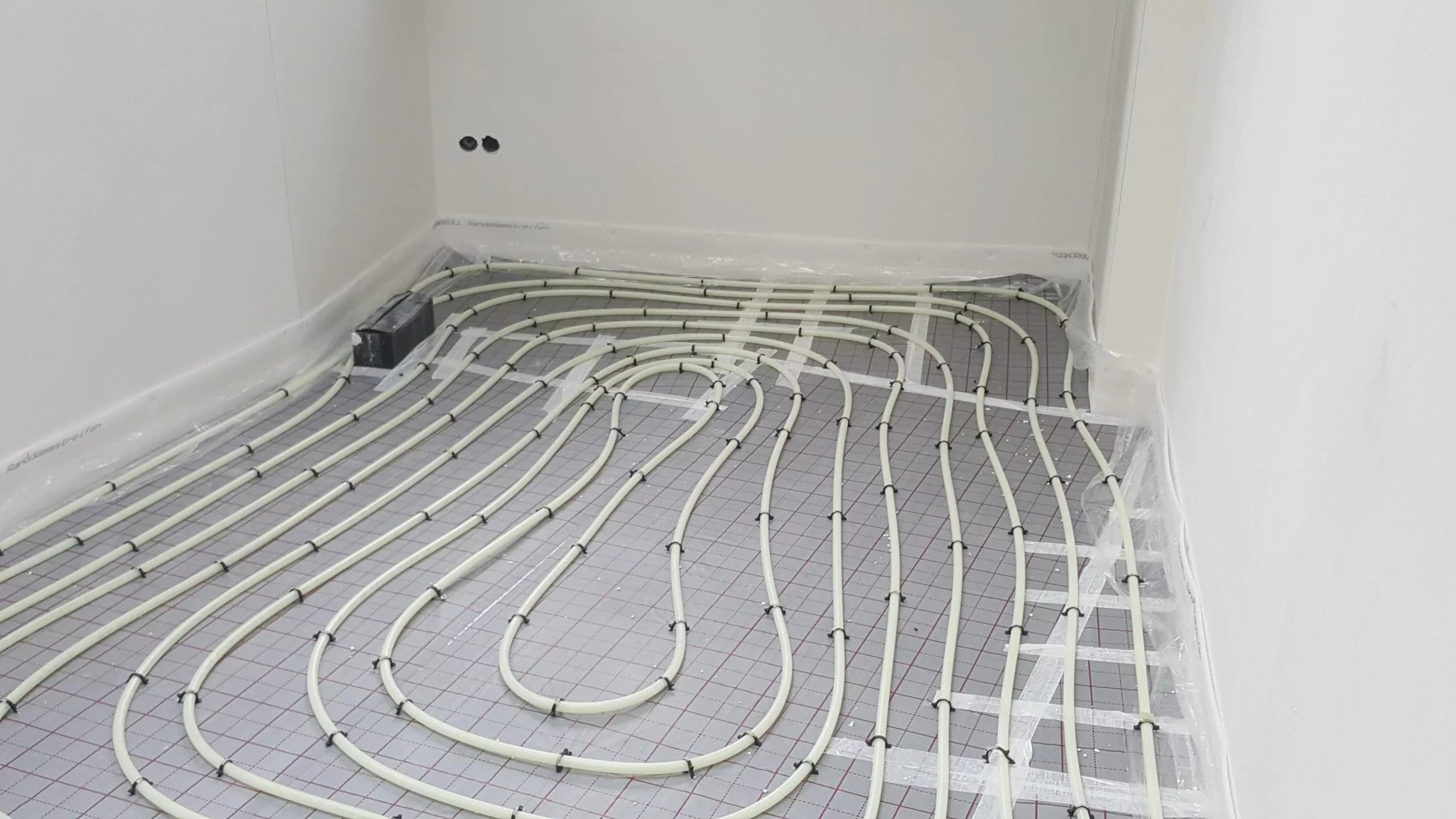
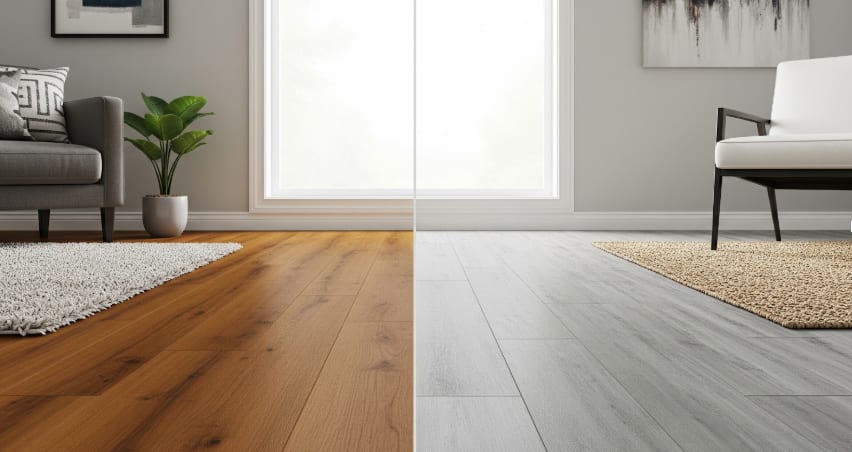
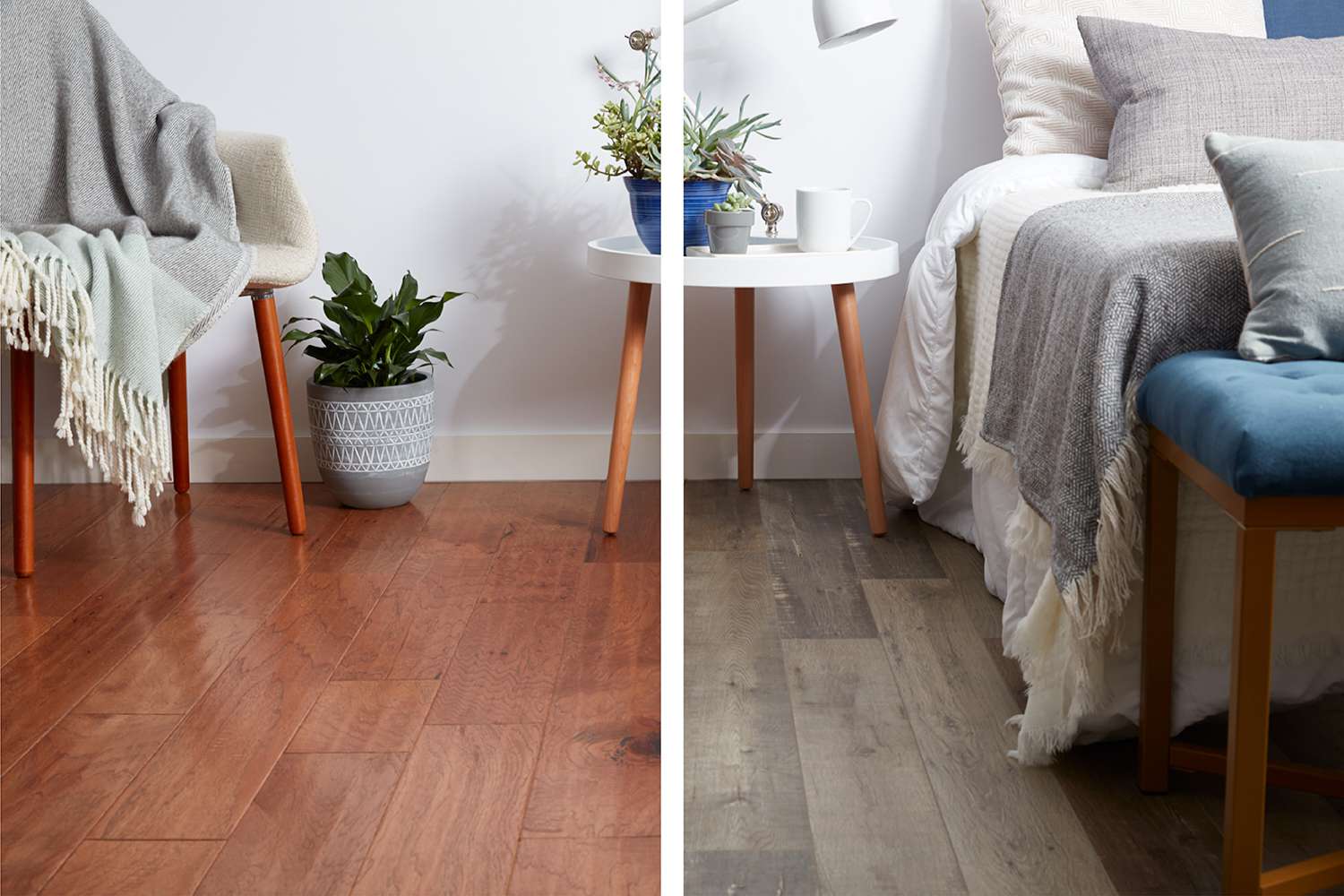
On timber, vinyl is the lighter and more forgiving choice; on a slab, porcelain has the rigidity it needs and will outlast the suite above it.
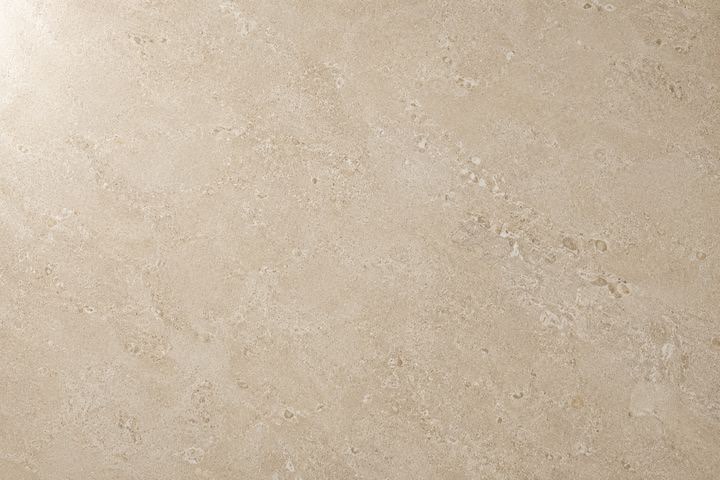
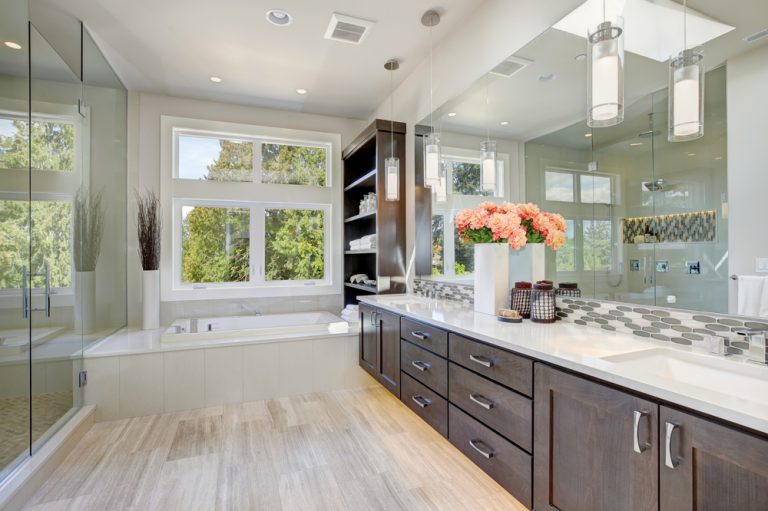
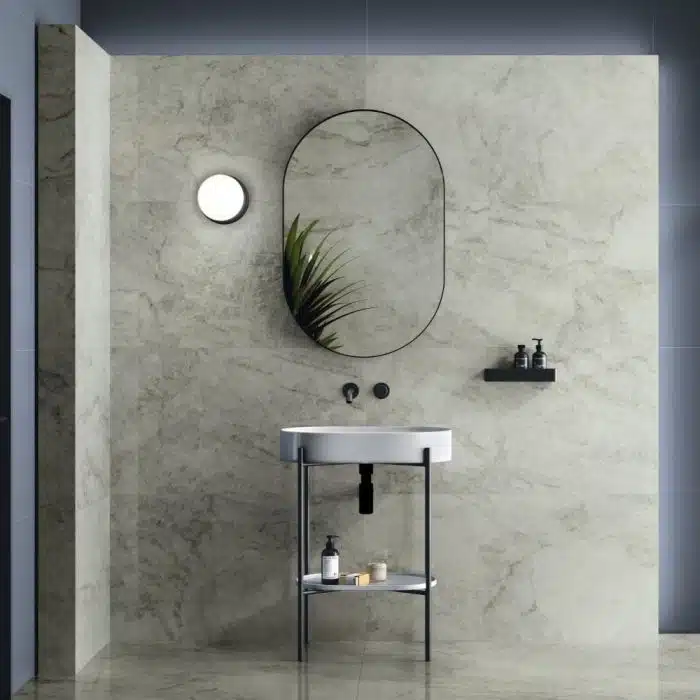
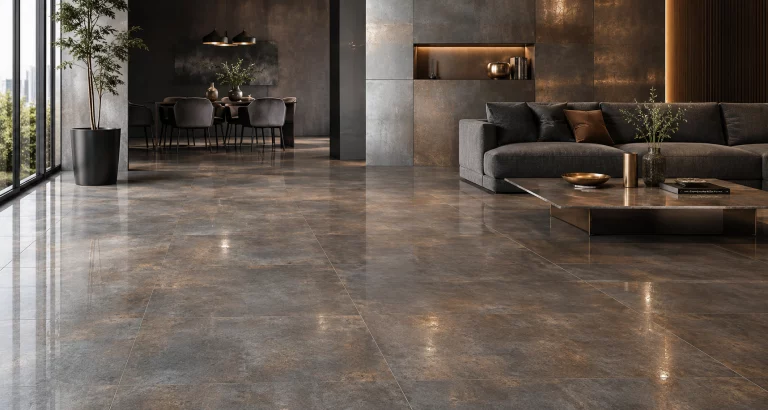
In an Ancoats or Deansgate flat the bathroom sits on concrete, and the floor there can be porcelain from the tile range over a tanked base, or a rigid vinyl tile from the BML range where the lease limits the build-up and the weight. Upstairs in a Chorlton terrace the bathroom sits on joists that flex under a full bath, and the lighter vinyl tile on a levelled, sealed deck is the floor that will not crack.
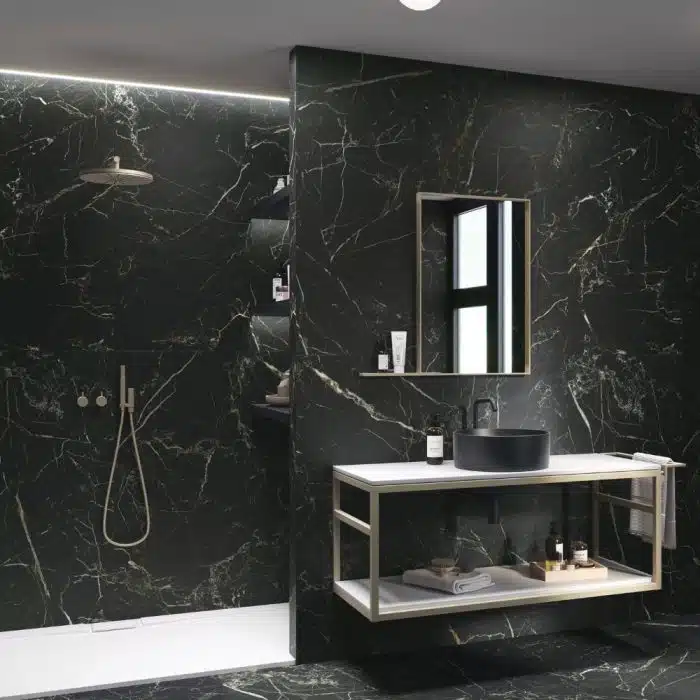
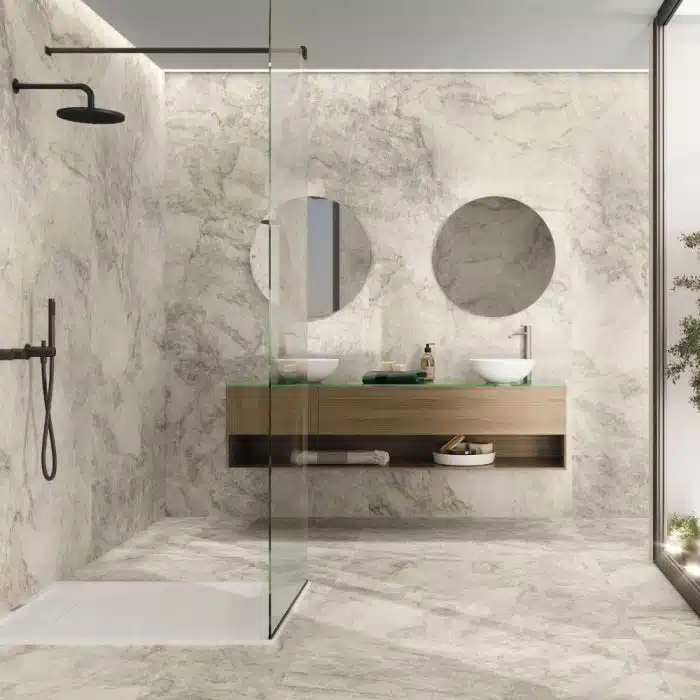
The Berry Alloc panels close the shower walls with a few interlocking boards and no grout lines, which suits a small Manchester bathroom with an extractor that has to work hard through a wet winter. Whichever floor is chosen, the room is tanked at the shower before it is tiled or planked, because the surface is not what keeps water out of the ceiling below.
Flats are 35% of the homes in the Manchester district, and a bathroom in a flat is the room a leak from matters most, because it is someone else's ceiling. The rigid-vinyl floor over the slab with the edges sealed to the instructions, and the panels on the shower walls without a grout line to fail, are the two choices that keep the water where it belongs.
Terraced houses are 28% of the homes in Manchester, and a terraced bathroom in Manchester is often a later addition, on the ground floor behind the kitchen or in a first-floor extension over it. A timber first floor under a bathroom is the case for the rigid vinyl, which floats and is light; a ground-floor slab takes either floor once the reading says it is dry.