






Delivery
Delivered to Tunbridge Wells
Delivery times and options depend on the delivery postcode. See Delivery & Returns for the applicable estimate.
Also nearby: Maidstone, Crawley, Redhill, Brighton
Speak to our team 020 3858 0353 Shop by category
Start with a sample: real cuts of our floors at £1.99 each, sent to your door across the UK.
Start with a sample: real cuts of our floors at £1.99 each, sent to your door across the UK.
Kent · flooring delivered
Old houses, flats and frost
35.3% of Tunbridge Wells dwellings were built before 1900, 3rd highest of 141 towns. What old joists, converted flats, lets and frost mean for a floor.
Delivered to Tunbridge Wells: TN1 to TN4
Start here · Tunbridge Wells in one figure
35.3%
built before 1900
3rd highest of 141 towns
VOA, 2025-03-31 · all local facts →Of all the dwellings in the Tunbridge Wells built-up area, 35.3% were built before 1900, the 3rd highest share of 141 towns and far above the 15.5% recorded for England and Wales.
That figure matters more to a new floor here than colour or grain. A house of that age commonly stands on a ground floor of timber boards laid across joists, with a ventilated void underneath instead of a concrete slab. Oak, laminate or vinyl, whatever you choose rests on that structure and takes on its condition: how true the joists still run, whether the boards are firm, and whether air still moves below them.
So lift a board or open a hatch before you choose a finish. The sections below keep that order, from the buildings to the flats carved out of them, the people living there and the weather at the door.
Read the 7 chapters on Tunbridge Wells homes See all 19 local facts
At a glance
Delivery
Delivery times and options depend on the delivery postcode. See Delivery & Returns for the applicable estimate.
Also nearby: Maidstone, Crawley, Redhill, Brighton
Speak to our team 020 3858 0353Homes in Tunbridge Wells
7 chapters on Tunbridge Wells homes and what they ask of a floor · about 5 min read
01/ 07
The old stock does not end at 1900. Dwellings built before 1919 make up 38.8% of the total, 5th highest of 141 towns (England and Wales: 20.8%), and the share built before 1940 reaches 44.0%, 25th of 141, against 35.4% for England and Wales. A ground floor of boards on joists over an open void stayed a common way to build through those decades. That void is not a flaw waiting to be filled. Air drifting under the timber keeps it dry, and it goes on doing that job only while the airbricks in the outer walls stay free of soil, raised paving and flower beds.
What marks Tunbridge Wells out is how thin the next layer is. Just 1.3% of dwellings date from 1930 to 1939, 136th of 141 towns, where England and Wales stand at 9.9%. For 1945 to 1954 the share is 2.6%, 137th of 141, against 6.4%. A 1930s semi would share the suspended floor of its older neighbours, while a solid floor poured in the years after the war may lack any damp-proof membrane, and wood cannot go over it until someone has found out. Both are rare here; the joist floor from before 1919 is the one you are far more likely to lift a carpet and find.
02/ 07
Flats, maisonettes and apartments are home to 39.3% of households in the built-up area, 13th highest of 151 towns, compared with 21.7% across England and Wales. Once you live in a flat, your floor doubles as a neighbour's ceiling. Heels, a dropped saucepan or a chair scraped back all travel down through the structure, and a hard surface lets more of that noise through than the carpet that came up to make room for it.
The figure that really sets the town apart is conversion. 12.7% of households live in a flat inside a converted or shared house or other converted building, the 6th highest share of 151 towns, while England and Wales stand at 4.2%. In a flat of that kind the floor between you and the people downstairs may be the house's original timber joists, or a concrete slab put in later, and one covering behaves quite differently on the two. Find out which you have before you pick an underlay, not after.
Another 25.3% of households live in a purpose-built block of flats or tenement, 28th of 151, against 16.7% for England and Wales. For that type of flat, Approved Document E expects more of the separating floor, in both airborne and impact sound, than it expects of a conversion. Whatever you lay becomes part of how that floor performs, so judge an underlay by its declared impact figure rather than by how thick it feels in the hand.
03/ 07
Flats or maisonettes accounted for 40.6% of residential sales in 2025, the 6th highest share of 133 towns, where the England and Wales figure is 16.3%. If yours was one of them, the lease deserves a slow read before any floor is chosen. Flat leases commonly include a covenant on floor coverings, and it often requires carpet or the freeholder's consent before a hard floor goes down. Find the clause, ask the managing agent for any consent in writing, and only then order the floor.
04/ 07
Private renting covers 25.6% of households, 31st highest of 151 towns, compared with 20.3% for England and Wales. A floor bought for a let answers to different judges from one you buy for yourself. It has to cope with tenants you will never meet, and a poor choice tends to reveal itself years on, at a check-out inspection rather than on the day it was laid.
Houses sit at the other end. 18.3% of households occupy a detached house, 64th of 151 (England and Wales: 23.2%), and 23.7% live in a home with four or more bedrooms, 18th highest of 150 towns, above the 21.1% for England and Wales. Inside a house, an echoing room is a job for rugs and furniture; the underlay's impact rating matters to the room below only when that room belongs to somebody else. In a bigger house, plan room by room: hold back on the bedrooms and spend the difference on the hall, the kitchen and the stairs, which carry the daily traffic.
05/ 07
The built-up area has 11.7 listed building entries per 1,000 dwellings, 25th of 135 towns and below the England rate of 14.7. Grade I and II* entries, the two upper grades, come to 1.5 per 1,000 dwellings, 16th of 135, above the 1.2 for England. If your home is listed, or sits within a listed building, works that touch its character can need listed building consent indoors as well as outside, and taking up original boards or blocks can be such work. Speak to the conservation officer at the borough council before the old floor comes up, not once it is already in a skip.
06/ 07
The town centre averages 51.9 days of air frost a year (1991 to 2020), the 5th highest count of 151 towns, against a median of 38.1 days. Inside a heated house that hardly reaches the floor, but a conservatory or garden room lives with the weather. Its floor freezes on winter nights and heats up under glass on bright afternoons, every year it stays down, so pick it for that swing and not for what the room is used for.
Rain arrives at the door as well. The town centre records 26.1 days a year with ten millimetres of rain or more, 28th highest of 151 towns, where the median is 17.8 days. On those days grit, sand and water come in together on shoes and wheels, and the stretch of floor just inside the front door meets all of it before any other room does.
January is cool, too: the mean daily temperature there is 4.3 °C, joint 128th of 151 towns, against a median of 4.8 °C. A long heating season dries the indoor air, wood boards give up moisture, and fine gaps can open at their joints during winter before summer humidity closes them again. A hairline gap between boards in February is the season at work, not a fault in the floor.
07/ 07
Recent building runs close to the national pattern: 10.7% of dwellings date from 2009 or later, 65th of 141 towns, with 11.8% for England and Wales. A home on a new estate has a different base beneath its finished floor from the older streets nearby, and that base needs its own checks.
More homes are planned. The borough's adopted Local Plan 2020-2038 sets a housing requirement of 12,204 homes, a figure for the whole borough rather than for the town alone. Where those homes are built on screeds, the drying allowance quoted for each screed is a planning figure: it tells you when to begin testing, not that the screed is dry. A fresh screed can look finished, take a footprint without marking and still be the wettest material in the building, which is why floors laid on it too soon fail and the covering takes the blame.
Floor by floor
19 floors, rooms and needs, each with a note written for Tunbridge Wells homes. Pick one to read it.
 Floor type
Tunbridge Wells
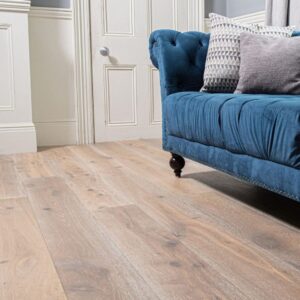
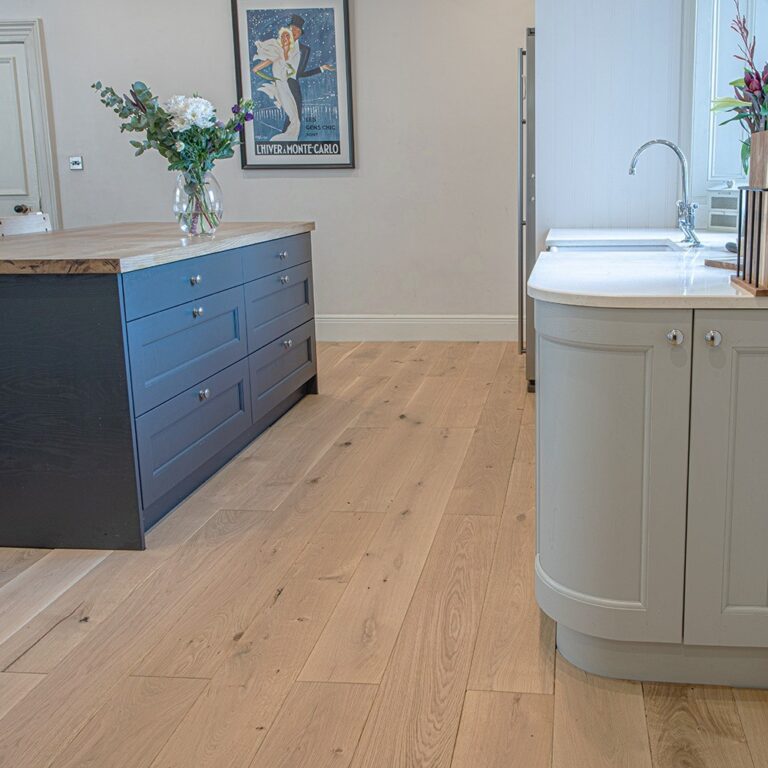
Engineered boards can float over a pre-1900 joist floor once the old boards are firm and the void below still breathes through clear airbricks.
 Floor type
Tunbridge Wells
Solid timber in a listed interior starts with the conservation officer, since taking up the original boards can itself need consent.
 Floor type
Tunbridge Wells
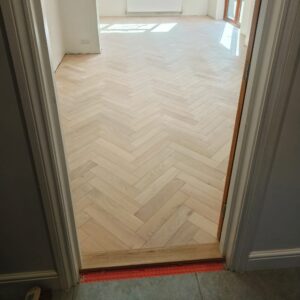
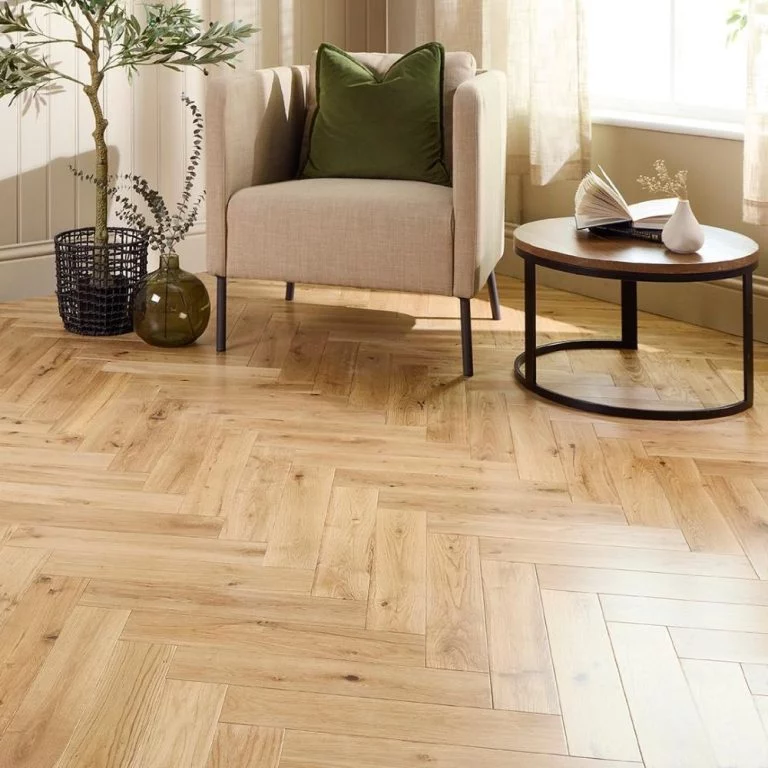
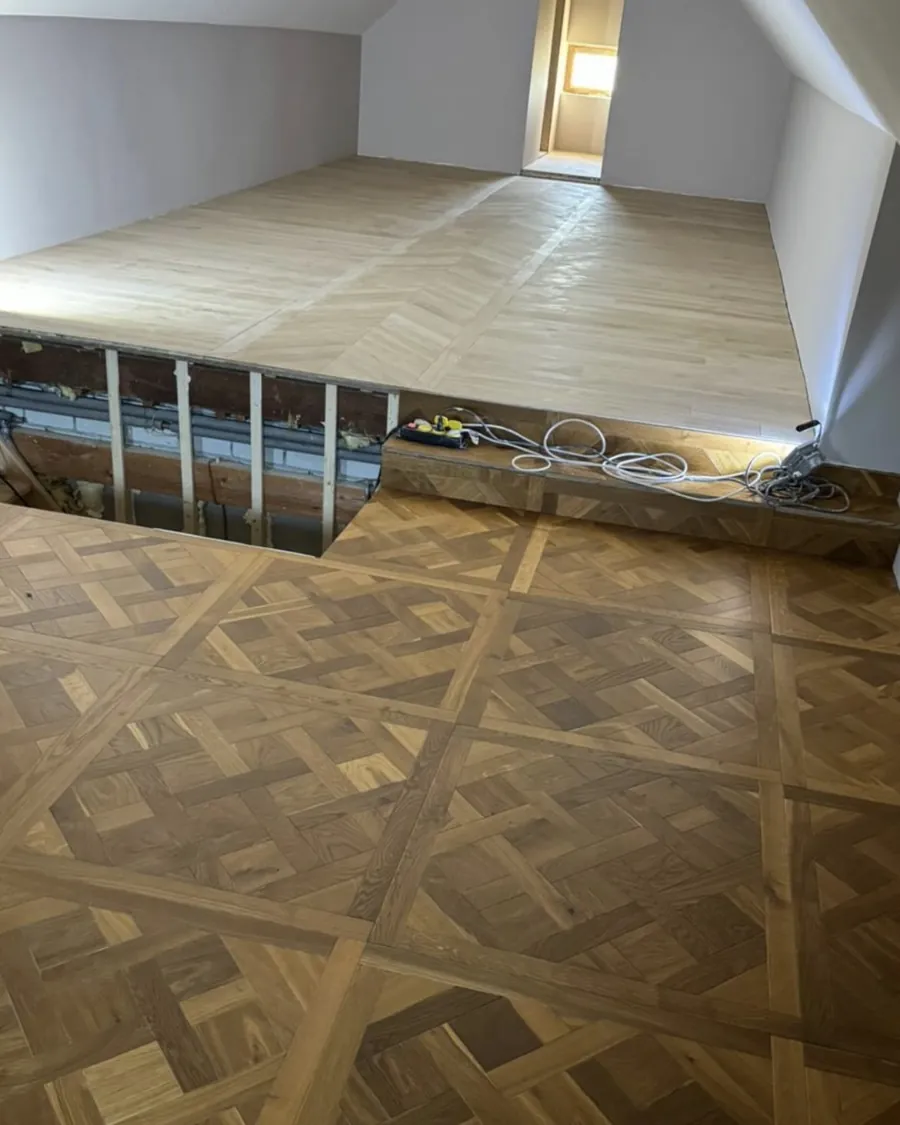
Parquet blocks are bonded to what lies beneath, so in a house built before 1919 the first question is what you can glue them to.
 Floor type
Tunbridge Wells
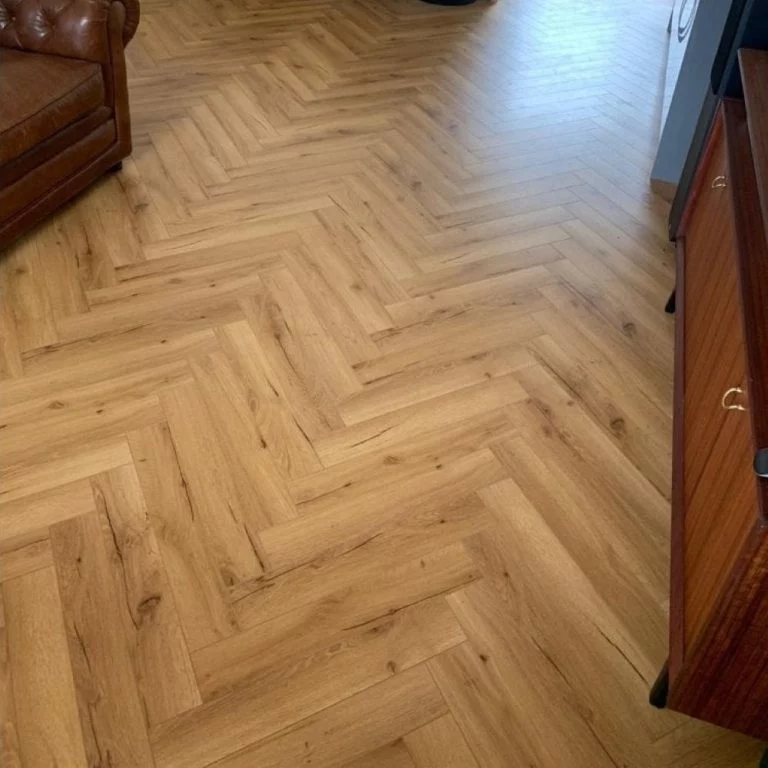
Laminate in a purpose-built block belongs on an underlay whose impact figure respects the stricter sound rules for that kind of flat.
 Floor type
Tunbridge Wells
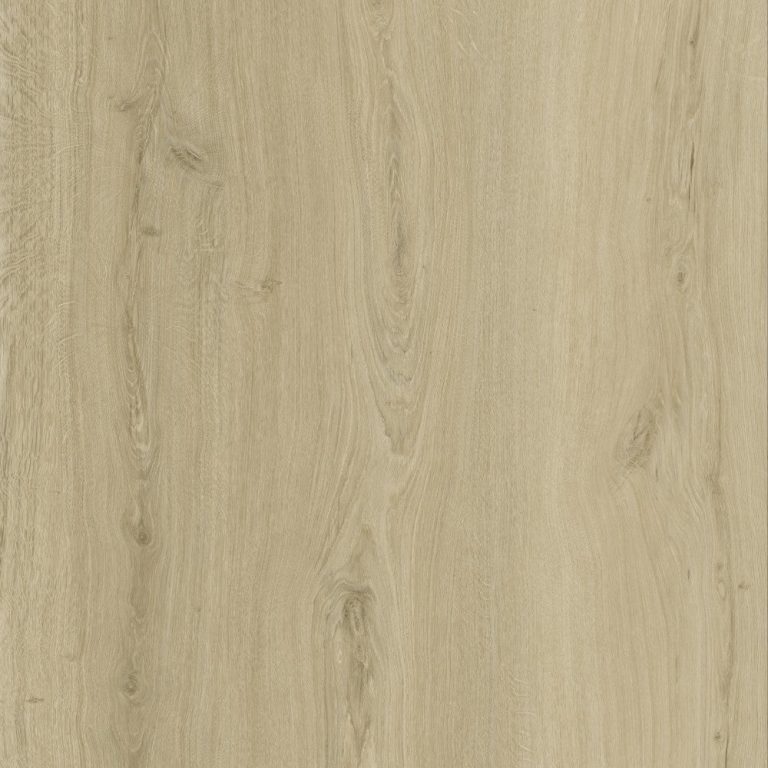
Vinyl planks laid in a flat still want an underlay with a stated impact figure, and 39.3% of households here live in a flat, maisonette or apartment.
 Floor type
Tunbridge Wells
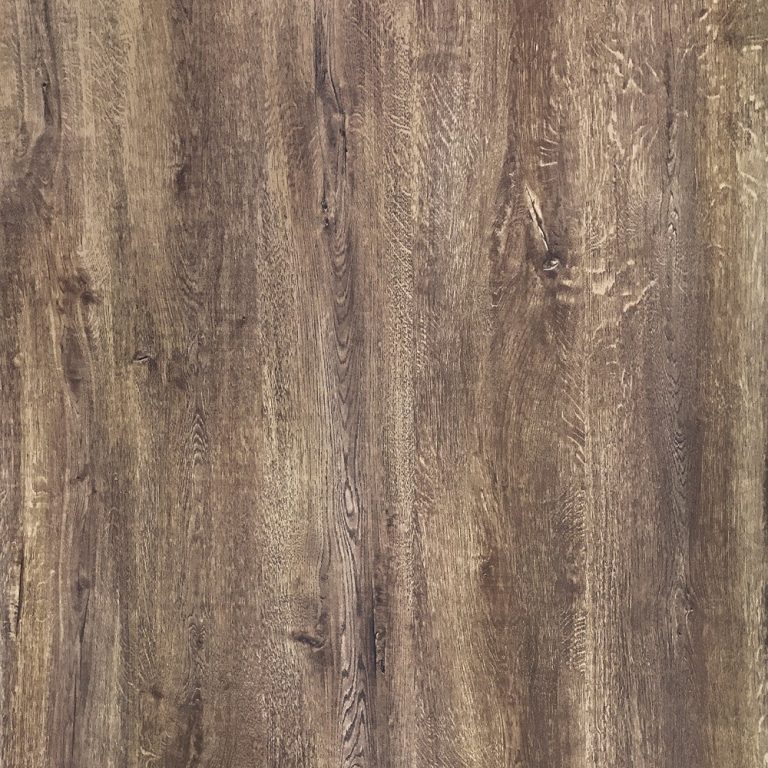
Where a nineteenth-century joist floor has settled unevenly, a rigid stone-plastic core is worth a look, once the worst hollows are dealt with.
RoomTunbridge Wells
With 51.9 days of air frost a year, winter salt and grit reach the hall before any other room, so give it the hardest-wearing surface.
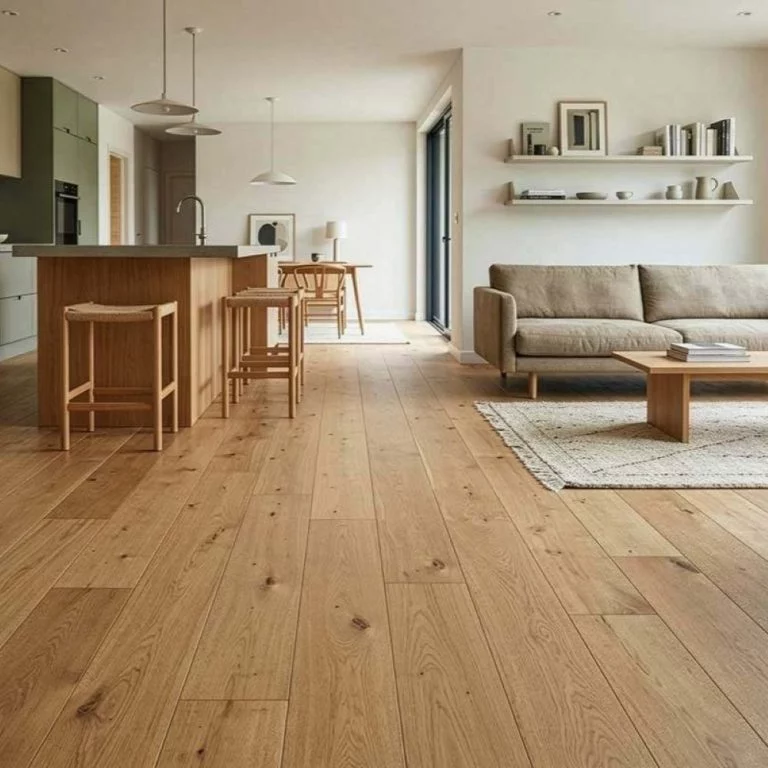 Room
Tunbridge Wells
A back kitchen in an old house may sit on a solid floor of unknown age, so confirm a damp-proof membrane before choosing wood.
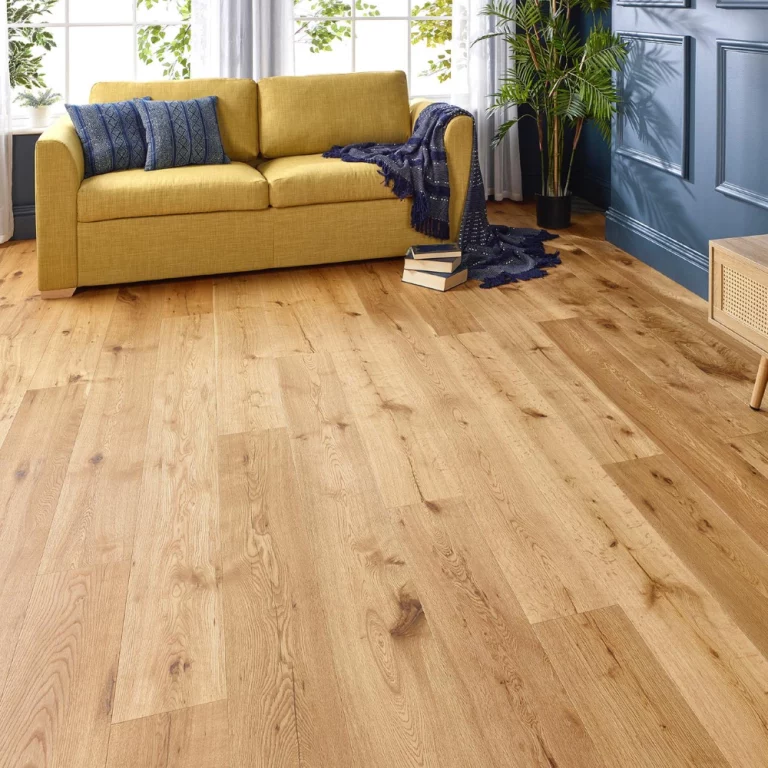 Room
Tunbridge Wells
In a front room built before 1900 the boards underneath decide more than the design on top, so inspect them before you choose.
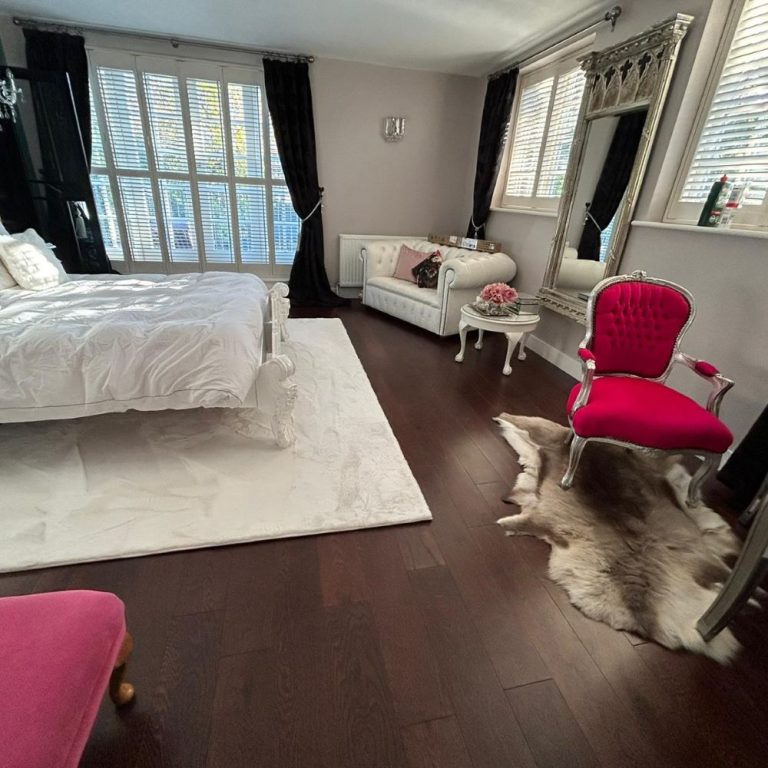 Room
Tunbridge Wells
Bedrooms are the quiet end of a four-bedroom house, so a lighter specification there leaves more for the hall and the stairs.
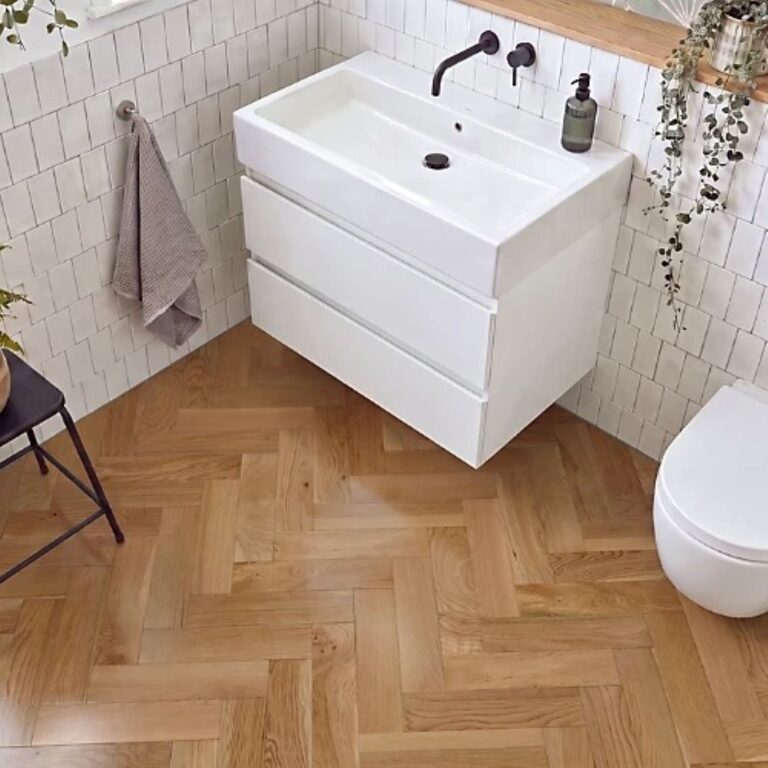 Room
Tunbridge Wells
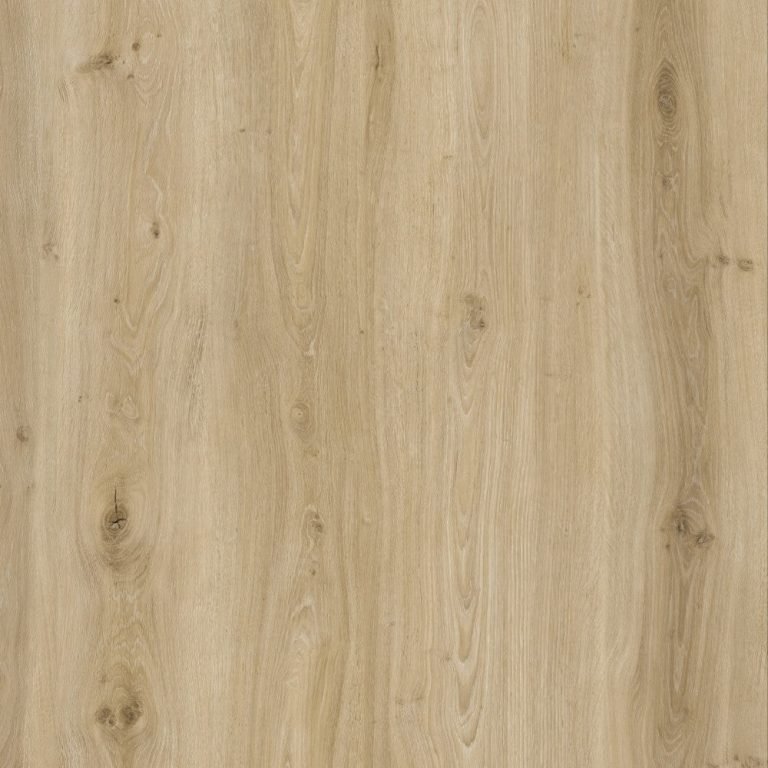
In a converted flat the bathroom floor may be timber over a neighbour's ceiling, so both water and sound have to stop at the surface.
 Room
Tunbridge Wells
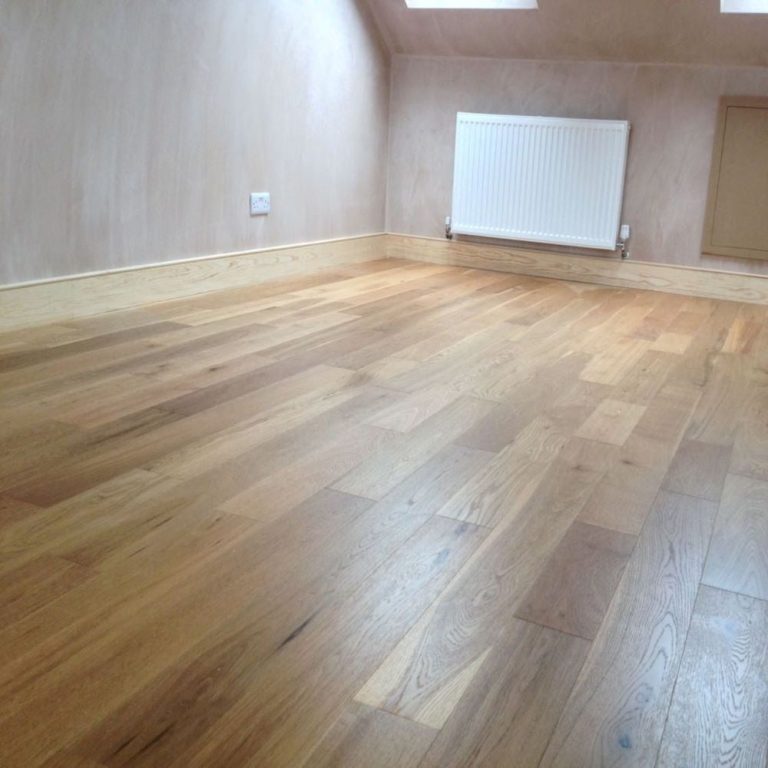
A washing machine that leaks unnoticed in a let is the reason a rented flat's utility floor should take on no water at all.
 Room
Tunbridge Wells
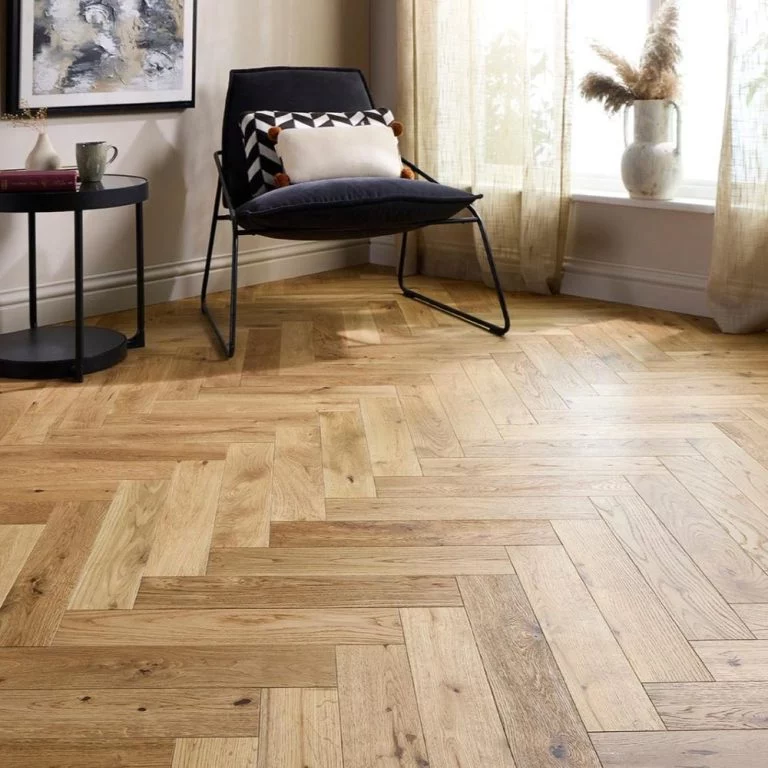
A glazed room in a town centre with 51.9 days of air frost a year needs a floor picked for freezing nights as much as hot afternoons.
 Pattern or need
Tunbridge Wells
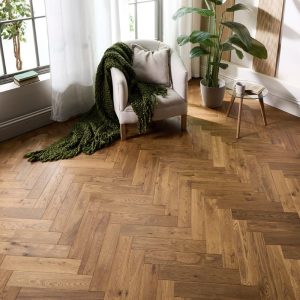
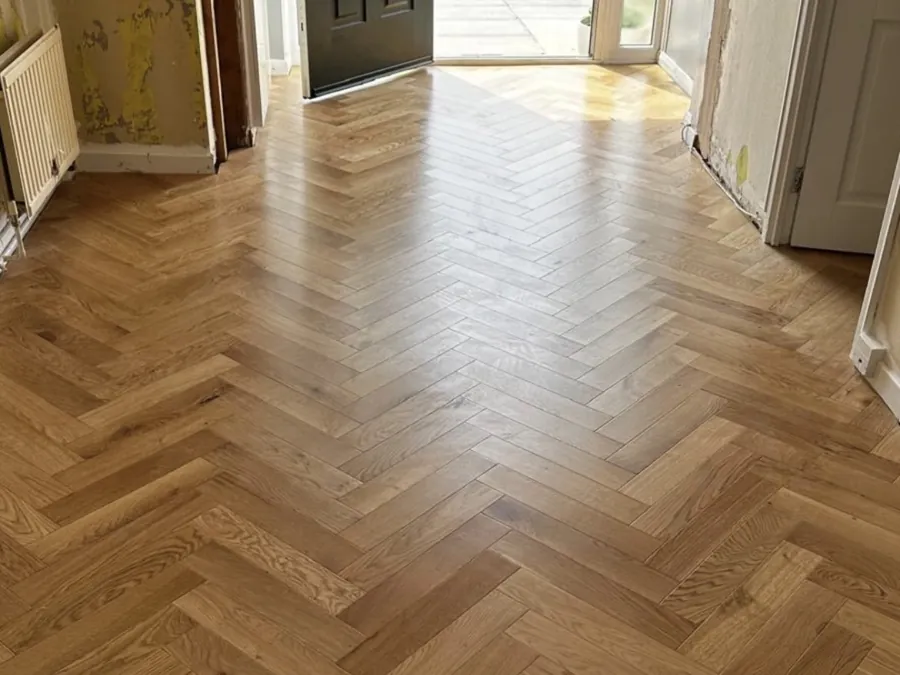
A herringbone hall meets the grit of every day with ten millimetres of rain or more, so settle its finish for wear before the pattern.
 Pattern or need
Tunbridge Wells
Chevron in a flat in a converted or shared house or another converted building is laid over somebody's ceiling, so the underlay under the pattern gets chosen first.
 Pattern or need
Tunbridge Wells
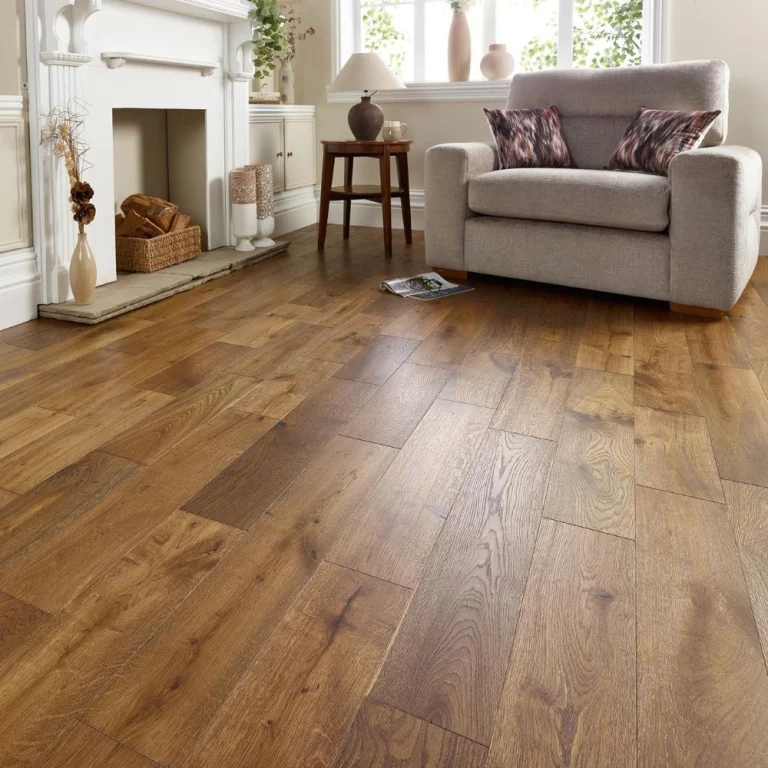
Where the town centre has 26.1 days a year with ten millimetres of rain or more, a floor listed as waterproof keeps water out of the material, though not out of every joint.
 Pattern or need
Tunbridge Wells
A heated screed in one of the borough's new homes goes through drying first and commissioning second, before any floor is laid on it.
 Pattern or need
Tunbridge Wells
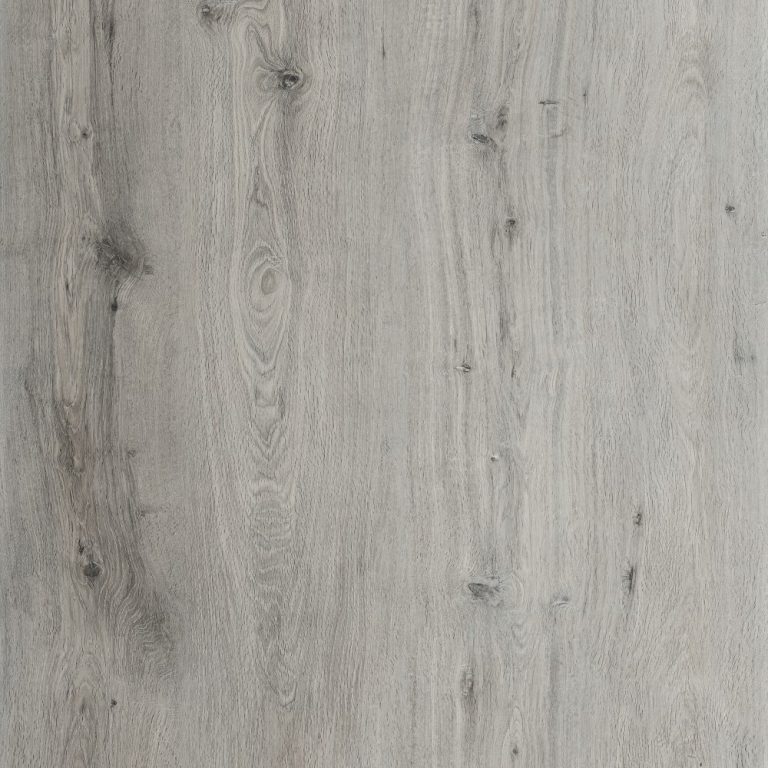
Wet paws count for as much as claws where the town centre has 26.1 days a year with ten millimetres of rain or more, so a pet-friendly floor must cope with water at the door.
 Pattern or need
Tunbridge Wells
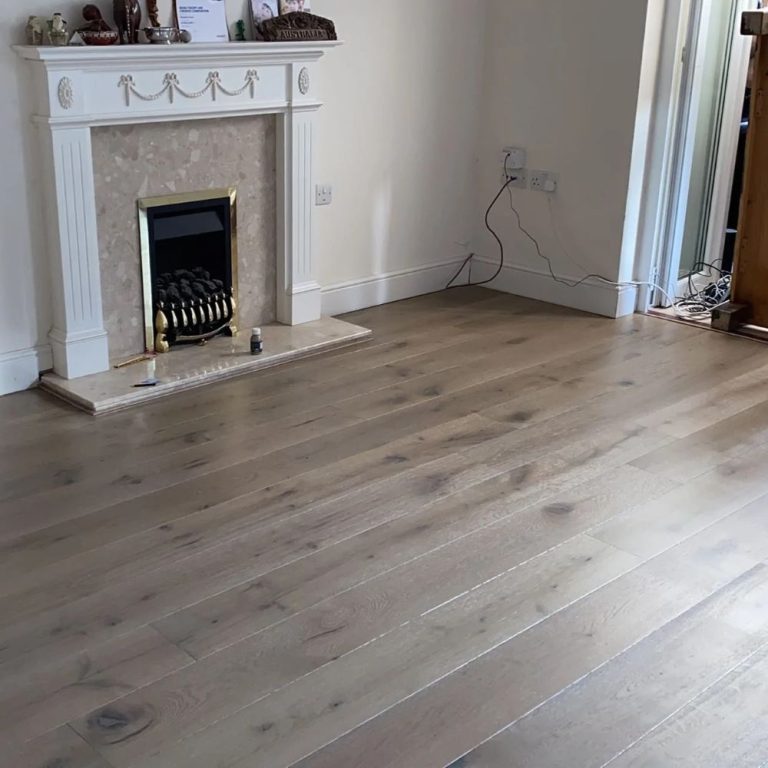
A landlord laying grey through several converted flats should order from one production batch, because separate runs can differ in tone.
Bestsellers
Reviews
Trustpilot
Reviews written by our customers on Trustpilot.
Read all reviews on TrustpilotReviews on our Google Business Profile.
Read all reviews on GoogleAsk us first
Call 020 3858 0353, Monday to Friday 10am to 6pm, Saturday 10am to 4pm, or send a photo of the room to info@homesandfloors.com.
Contact usQuestions
Not in itself. 35.3% of dwellings here were built before 1900, and boards over a ventilated void are common at that age. That floor stays sound while air moves beneath it, so check the airbricks are clear and the boards firm before anything goes on top.
What the floor between you and the flat below is made of, and what your lease says. 12.7% of households live in a flat inside a converted or shared house or other converted building, where that floor may be timber joists or a later concrete slab.
It can. The town has 11.7 listed building entries per 1,000 dwellings, and in a listed building lifting original boards or blocks can count as works affecting its character, so ask the conservation officer first.
In the hall and along the route from the front door. The town centre has 26.1 days a year with ten millimetres of rain or more, and on those days grit and water reach the hall before anywhere else.
Not on the drying allowance alone, which only says when to begin testing. The adopted Local Plan requires 12,204 homes across the borough, and every new screed among them raises the same question.
Local facts
19 facts from the census, the Met Office, the council and other public records, each with what it means for a floor in Tunbridge Wells and where it comes from.
When they were built
35.3%
built before 1900
3rd highest of 141 towns
For your floorWith so many Tunbridge Wells dwellings older than 1900, a joist floor over a ventilated void is a common base that a new covering has to suit.
Dwellings built before 1900. Area: Tunbridge Wells built-up area (ONS Built-up Areas 2024). VOA, Council Tax: stock of properties 2025, table CTSOP4.1 (build period). Data: 2025-03-31 · retrieved 2026-09-22.
When they were built
38.8%
built before 1919
5th highest of 141 towns
For your floorThe pre-1919 share extends the town's stock of timber ground floors on joists, which need checking before anything is laid on them.
Dwellings built before 1919. Area: Tunbridge Wells built-up area (ONS Built-up Areas 2024). VOA, Council Tax: stock of properties 2025, table CTSOP4.1 (build period). Data: 2025-03-31 · retrieved 2026-09-22.
When they were built
44.0%
built before 1940
25th highest of 141 towns
For your floorFor the town's pre-war houses the void under the boards has to stay ventilated, so clear airbricks matter more than the new surface.
Dwellings built before 1940. Area: Tunbridge Wells built-up area (ONS Built-up Areas 2024). VOA, Council Tax: stock of properties 2025, table CTSOP4.1 (build period). Data: 2025-03-31 · retrieved 2026-09-22.
When they were built
1.3%
built 1930 to 1939
136th highest of 141 towns
For your floorHouses from the 1930s are scarce in Tunbridge Wells, so a suspended floor here is far more likely to be older than the inter-war kind.
Dwellings built 1930 to 1939. Area: Tunbridge Wells built-up area (ONS Built-up Areas 2024). VOA, Council Tax: stock of properties 2025, table CTSOP4.1 (build period). Data: 2025-03-31 · retrieved 2026-09-22.
When they were built
2.6%
built 1945 to 1954
137th highest of 141 towns
For your floorFew Tunbridge Wells homes date from the post-war decade, so a solid floor without a damp-proof membrane is an uncommon find here, but one to test for.
Dwellings built 1945 to 1954. Area: Tunbridge Wells built-up area (ONS Built-up Areas 2024). VOA, Council Tax: stock of properties 2025, table CTSOP4.1 (build period). Data: 2025-03-31 · retrieved 2026-09-22.
When they were built
10.7%
built 2009 or later
65th highest of 141 towns
For your floorHomes from 2009 on give part of the town a modern base under the floor, unlike the joists of the older streets.
Dwellings built 2009 or later. Area: Tunbridge Wells built-up area (ONS Built-up Areas 2024). VOA, Council Tax: stock of properties 2025, table CTSOP4.1 (build period). Data: 2025-03-31 · retrieved 2026-09-22.
Who lives here
25.6%
rent privately
31st highest of 151 towns
For your floorFor the town's private lets a floor is specified for tenants, a different judgement from choosing one for your own home.
Households renting privately. Area: Tunbridge Wells built-up area (ONS Built-up Areas 2024). ONS, Census 2021, TS054 Tenure (households). Data: 2021-03-21 · retrieved 2026-09-22.
Heritage & plans
11.7
listed entries per 1,000 homes
25th highest of 135 towns
For your floorWhere a Tunbridge Wells home is listed, lifting original boards or blocks can need listed building consent.
Listed building entries per 1,000 dwellings. Area: Tunbridge Wells built-up area (ONS Built-up Areas 2024). Historic England, National Heritage List for England, listed building entries. Data: 2026-09-21 · retrieved 2026-09-22.
Heritage & plans
1.5 per 1,000 dwellings
Grade I and II* listed building entries per 1,000 dwellings
16th highest of 135 towns
For your floorWith Grade I and II* entries above the England rate, owners in the town should consult the conservation officer before an old floor is lifted.
Grade I and II* listed building entries per 1,000 dwellings. Area: Tunbridge Wells built-up area (ONS Built-up Areas 2024). Historic England, National Heritage List for England, listed building entries. Data: 2026-09-21 · retrieved 2026-09-22.
Weather & ground
51.9
air frost days a year
5th highest of 151 towns
For your floorFrequent air frost in Tunbridge Wells sharpens the cold end of a conservatory's yearly swing, which its floor has to withstand.
Days with air frost per year (1991-2020 average, town centre). Area: Tunbridge Wells town centre (Met Office HadUK-Grid 2 km cell). Met Office, HadUK-Grid climate averages 1991-2020 (climate data portal). Data: 1991-2020 · retrieved 2026-09-22.
Weather & ground
26.1
days with 10 mm of rain or more
28th highest of 151 towns
For your floorFrequent days with ten millimetres of rain or more bring grit and water to the town's front doors, so the entrance floor works hardest.
Days with at least 10 mm of rain per year (1991–2020 average, town centre). Area: Tunbridge Wells town centre (Met Office HadUK-Grid 2 km cell). Met Office, HadUK-Grid (v1.1.0.0) climate averages 1991-2020, Met Office Climate Data Portal: Monthly Temperature Observations 1991-2020 (2 km grid), Monthly Min Temperature Observations 1991-2020 12km (12 km grid), Annual Count of 10mm Rainfall Days 1991-2020 (2 km grid). Data: 1991-2020 · retrieved 2026-09-22.
Weather & ground
4.3
January mean
joint 128th highest of 151 towns
For your floorA cool January means a long heating season in Tunbridge Wells, so wood floors can show fine winter gaps that close again in summer.
Mean daily temperature in January (1991–2020 average, town centre). Area: Tunbridge Wells town centre (Met Office HadUK-Grid 2 km cell). Met Office, HadUK-Grid (v1.1.0.0) climate averages 1991-2020, Met Office Climate Data Portal: Monthly Temperature Observations 1991-2020 (2 km grid), Monthly Min Temperature Observations 1991-2020 12km (12 km grid), Annual Count of 10mm Rainfall Days 1991-2020 (2 km grid). Data: 1991-2020 · retrieved 2026-09-22.
When they were built
New homes planned
The borough's adopted Local Plan 2020-2038, as recorded on the national planning data platform, sets a housing requirement of 12,204 homes for Tunbridge Wells borough.
For your floorThe borough's housing requirement brings new screeds, whose drying allowance tells you when to test, not that they are dry.
Area: Tunbridge Wells borough (local planning authority area, not the town alone). Tunbridge Wells Borough Local Plan 2020-2038 (local plan record, entity 4221115). Data: adopted 2025-12-10 (plan period 2020-2038; record entry date 2026-06-26) · retrieved 2026-10-21.
Nearby
Distances are straight-line miles from Tunbridge Wells.
United KingdomKentTunbridge Wells
151 towns and cities, 24 county guides, one map.
New ranges and offers. Hear it first.
No spam. Unsubscribe any time.
Free to join
Ideas, advice and offers to help you plan your next floor, by email.
No spam. Unsubscribe any time.