




Delivery
Delivered to Solihull
Delivery times and options depend on the delivery postcode. See Delivery & Returns for the applicable estimate.
Also nearby: Birmingham, Redditch, Sutton Coldfield, Coventry
Speak to our team 020 3858 0353 Shop by category
Start with a sample: real cuts of our floors at £1.99 each, sent to your door across the UK.
Start with a sample: real cuts of our floors at £1.99 each, sent to your door across the UK.
West Midlands · flooring delivered
Inter-war semis over ventilated voids
22.8% of Solihull's homes date from the 1930s. What inter-war semis, owners, frost and the borough's 20 conservation areas mean for the floor you choose.
Delivered to Solihull: 6 postcode districts
Start here · Solihull in one figure
22.8%
built 1930 to 1939
2nd highest of 141 towns
VOA, 2025-03-31 · all local facts →Dwellings built between 1930 and 1939 make up 22.8% of Solihull's housing, the 2nd highest share among 141 towns, against 9.9% across England and Wales.
That one decade is the starting point for a great many floors here. A house of that age normally stands on a suspended ground floor: boards fixed across timber joists, with an air space underneath that airbricks in the outside wall keep ventilated.
Oak, laminate or vinyl, whatever you choose goes on top of that structure, so the first job is to lift a corner of the old covering and look at what the house already has.
Read the 8 chapters on Solihull homes See all 22 local facts
At a glance
Delivery
Delivery times and options depend on the delivery postcode. See Delivery & Returns for the applicable estimate.
Also nearby: Birmingham, Redditch, Sutton Coldfield, Coventry
Speak to our team 020 3858 0353Homes in Solihull
8 chapters on Solihull homes and what they ask of a floor · about 5 min read
01/ 08
The council's Local Plan dates the large expansion of settlement into the borough to the years between 1900 and 1955, with the inter-war period the busiest part of it. In the built-up area of Solihull itself, older stock is thin by comparison: just 2.6% of dwellings in the built-up area predate 1919, 134th of 141 towns, where England and Wales stand at 20.8%. The Local Plan does find Victorian and Edwardian development in the more historic parts of the borough's Mature Suburbs, naming Olton, Solihull, Shirley and Castle Bromwich. Still, original boards in a Solihull house are far more likely to date from the 1930s than from the 1890s.
For flooring, the age of the house matters less as a style than as a structure. A suspended ground floor relies on air moving through the void to keep the joists dry, and it stays sound as long as the airbricks are clear, so nothing you lay should cover them. The decade of building also tells you which rooms stand over which, and so how much of a footstep upstairs is heard below.
02/ 08
Semi-detached houses are home to 45.7% of households, 11th highest of 151 towns and well above the 31.5% for England and Wales. According to the Local Plan, the expansion of 1900 to 1955 produced large semi-detached estates at Lyndon, Olton, Elmdon and Shirley, stretching towards Solihull, while detached housing was more predominant around Solihull itself. Detached houses are common in the built-up area as a whole: 28.4% of households live in one, 9th of 151, against 23.2% nationally.
In both kinds of house you step from the front door into a hall before you reach any living room. That hall, not the lounge, is where shoes arrive from the pavement and where abrasion concentrates, so it deserves the hardest-wearing surface in the house. In the living rooms of a house, as opposed to a flat, how a room sounds is a question of rugs, curtains and furniture; the impact figure printed on an underlay matters chiefly where somebody lives underneath you.
03/ 08
Building carried on after the war: 10.2% of dwellings date from 1945 to 1954, 20th highest of 141 towns, compared with 6.4% for England and Wales. A solid ground floor from those years can lack a damp-proof membrane altogether, and nothing made of wood should go down on it until a moisture test, or a look at how it was built, has shown what is there.
The council's appraisal of White House Way shows the next chapter: a private 1960s development off Blossomfield Road, a conservation area since 1999, whose original phase had 26 houses, 6 bungalows and 4 blocks of three-storey flats. That gives three kinds of floor to plan for. A bungalow puts every room and every outside door on the ground floor; a house has bedrooms over its day rooms; a flat shares its floor with the home beneath.
04/ 08
Solihull has the highest rate of home ownership of the 151 towns: 77.7% of households own outright or with a mortgage, against 61.6% for England and Wales. Most floors here are therefore chosen by the people who will walk on them for years, which is a different calculation from fitting out a let.
There is plenty of room as well. In 46.9% of households there are at least two more bedrooms than the household needs, 2nd highest of 150 towns (England and Wales: 35.9%). A spare room slept in a handful of nights a year and a hall crossed every morning are not the same job, so pick wear ratings room by room rather than one specification for the whole house.
05/ 08
Flats, maisonettes and apartments house 16.2% of Solihull households, 118th of 151 towns and below the 21.7% for England and Wales. Yet flats or maisonettes accounted for 21.7% of residential sales in 2025, 42nd of 133 towns, where the figure for England and Wales is 16.3%.
If you are buying one, read the lease before you order a hard floor. Flat leases often contain a covenant on floor coverings, commonly requiring carpet or the freeholder's consent for anything harder. Where a hard floor is allowed, the reason for the rule still holds: footsteps on boards or vinyl travel through the structure into the ceiling below far more readily than on carpet, so the underlay is part of the specification, not an optional extra.
06/ 08
Winters here are colder than in most of the 151 towns compared on these pages. The town centre averages 48.4 days of air frost a year (1991 to 2020), 13th highest of 151 towns, where the median town has 38.1, and 1.8 days on which the temperature stays below freezing all day, 5th highest, against a median of 0.8.
On those icy days grit and salt come in on every shoe and land on the hall floor first, one more reason to give the hall the toughest surface and a mat inside the door. A conservatory feels the cold most: it can warm up on a bright afternoon and fall towards freezing at night, and its floor has to tolerate both, year after year.
January averages 4.3 °C in the town centre, joint 131st of 151 towns and below the median of 4.8 °C. Long spells of central heating dry the indoor air, wood boards give up moisture and shrink a little, and hairline gaps at the joints of a solid or engineered floor in February are normal; they close again as the air turns more humid in summer.
07/ 08
The council has 20 conservation areas in the borough. Among them are Ashleigh Road, Granville Road, Grove Avenue, Malvern Hall and Brueton Avenue, Olton, Solihull, Warwick Road and White House Way. Their controls are about the outside of buildings, so the floor inside an unlisted house is not what they regulate.
For buildings in its conservation areas, the council's historic environment guidance does offer advice that reaches indoors: keep traditional or original floor coverings, exposed boards, stone, brick or tile, as far as possible, and cut joists for new services as little as possible. A new floor laid over old boards can only be as flat and as firm as they are, so refix loose ones and plane down raised edges first.
Listing is the control that does reach the interior, and it is uncommon in Solihull: 1.2 listed building entries per 1,000 dwellings, 125th of 135 towns, against 14.7 for England. In a listed house, work that affects its character inside can need listed building consent, and lifting original boards or blocks may be such work, so speak to the council's conservation officer before anything comes up.
08/ 08
New building has been slow. In the year measured, new homes across the borough were completed at a rate of 1.9 per 1,000 existing dwellings, 111th of 135 towns, compared with 5.5 for England. That may change: the council's Issues and Options consultation for its new Local Plan (January 2026) says that under the government's new standard method the borough's local housing need would rise to 1,331 dwellings a year.
A newly built home normally comes with a fresh screed, and a fresh screed looks finished long before it is dry. The drying allowance on a builder's programme is a planning figure that tells you when to start testing, not proof that the screed is ready, so lay a covering only once a moisture reading confirms it.
Herringbone in Solihull
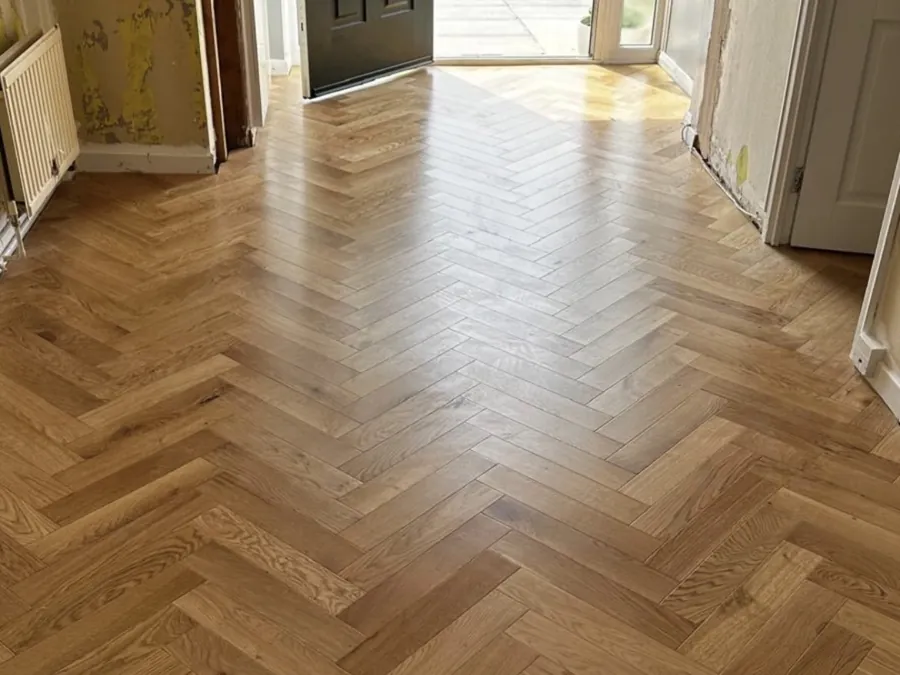
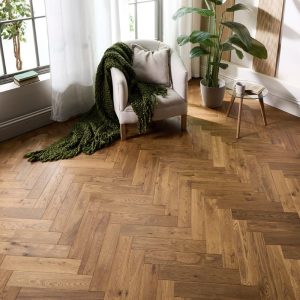
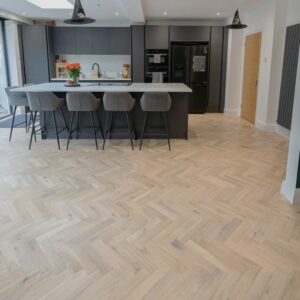
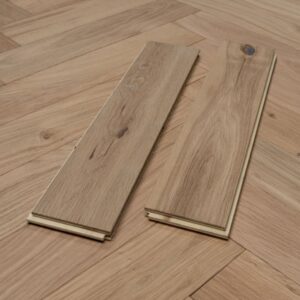
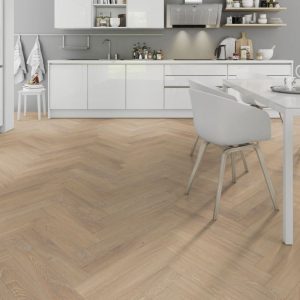
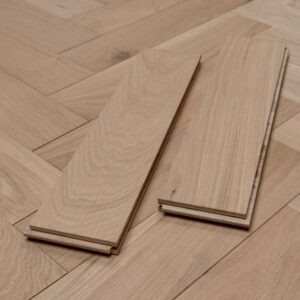
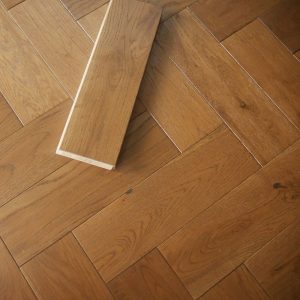
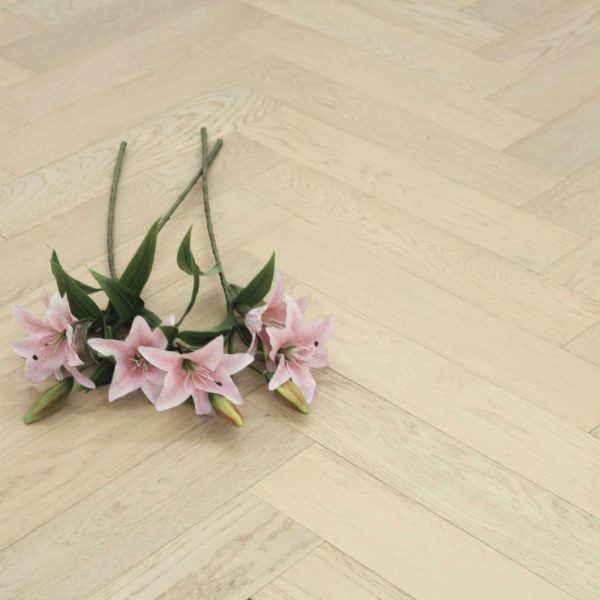
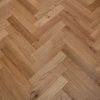
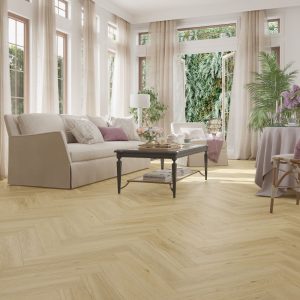
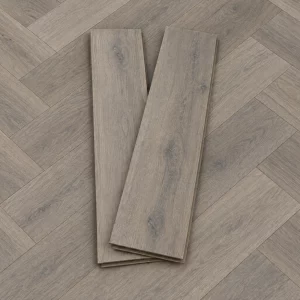
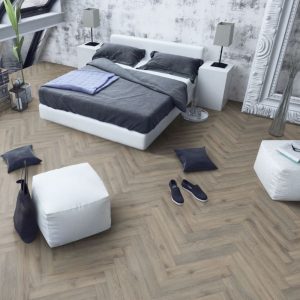
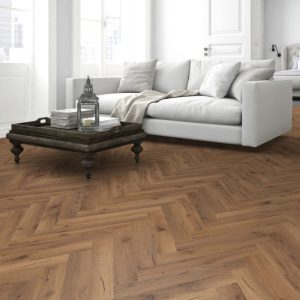
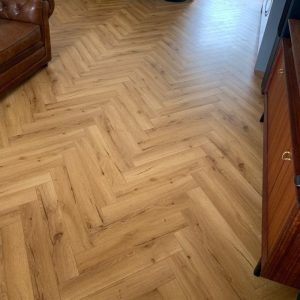
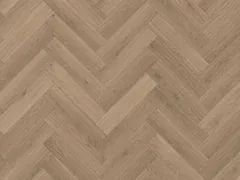
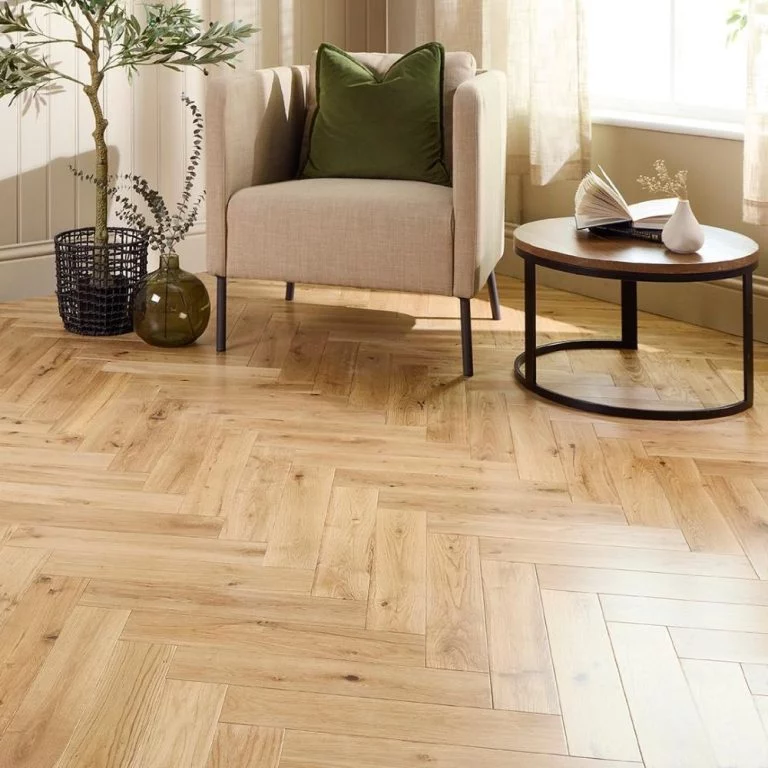
All 35 herringbone floors in our range are delivered to Solihull: 22 engineered oak and walnut block floors, 8 rigid vinyl and 5 laminate, in 7 block sizes. Samples are £1.99 each, up to 10 per order, and come by post. Lay two or three side by side on the floor before you choose a colour.
Floor by floor
19 floors, rooms and needs, each with a note written for Solihull homes. Pick one to read it.
 Floor type
Solihull
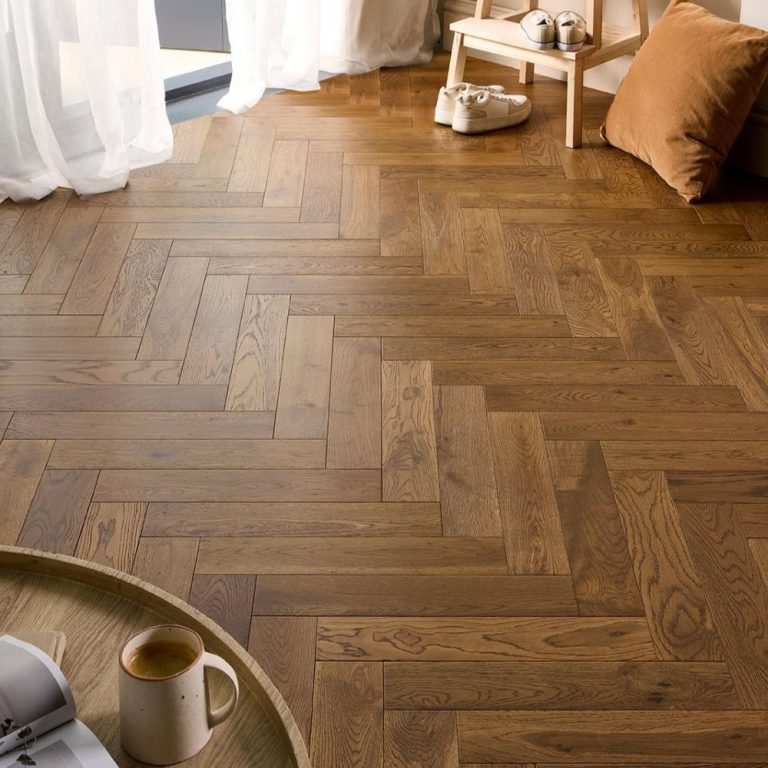
Engineered oak floated over the original boards of a 1930s semi takes on their faults, so screw down any board that rocks before the underlay goes down.
 Floor type
Solihull
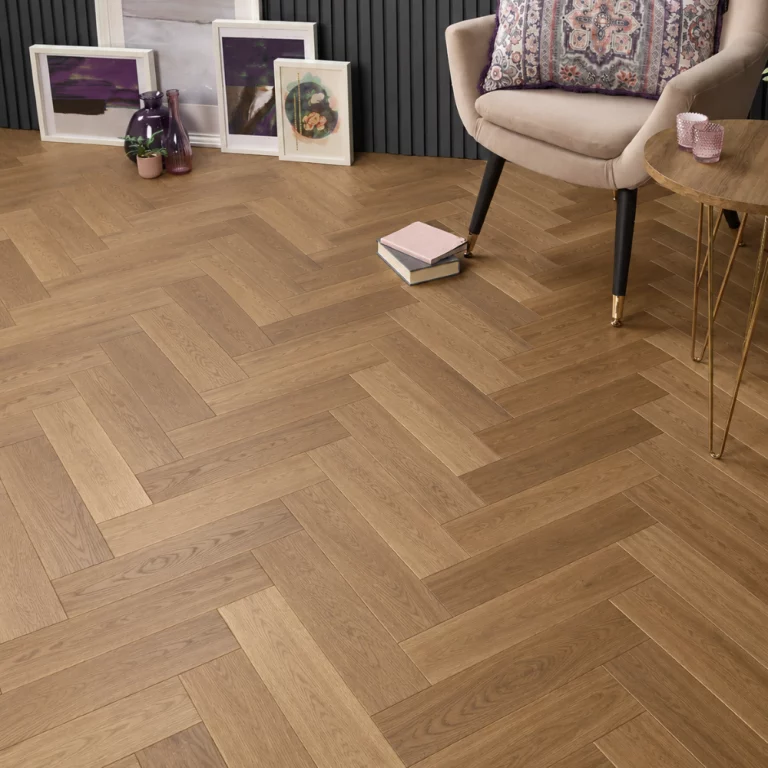
Solid boards nailed to the joists respond to the dry air of a heated Solihull winter, so leave the expansion gap at every wall.
 Floor type
Solihull
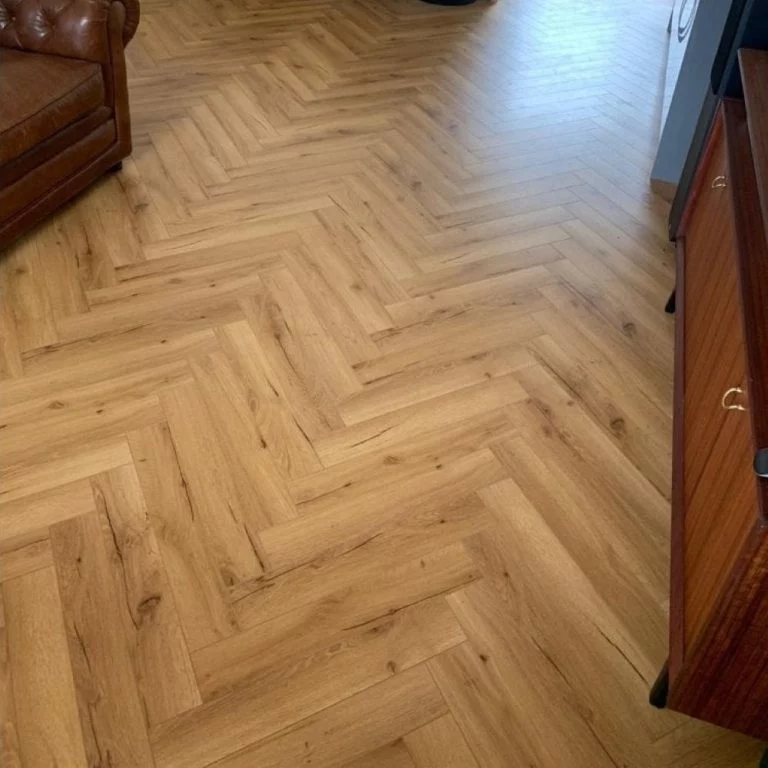
Before parquet is bonded to a ground floor from the years 1945 to 1954, find out whether that slab has a damp-proof membrane, because one laid then may have none.
 Floor type
Solihull
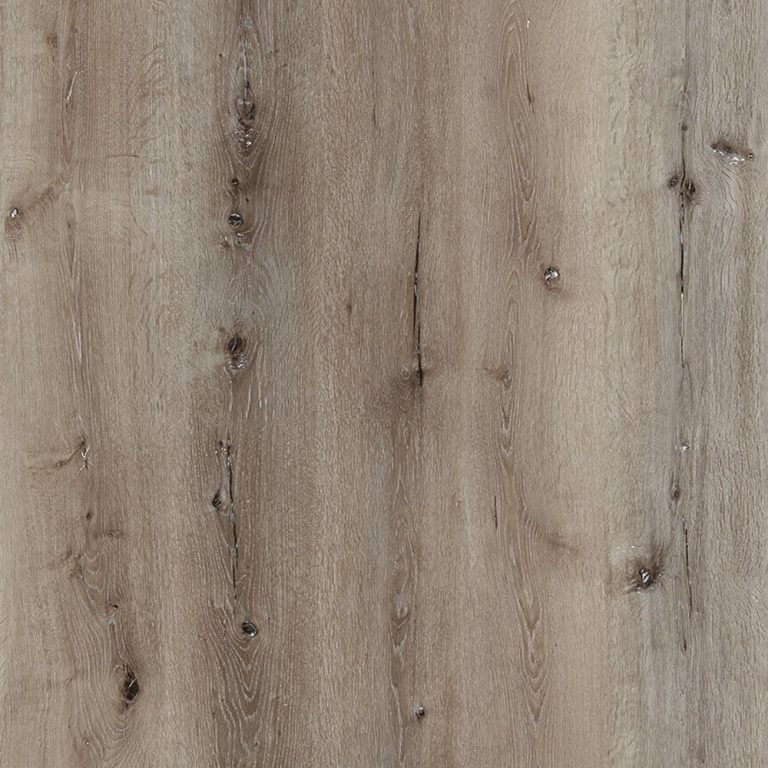
With 46.9% of households having two or more spare bedrooms, laminate upstairs can carry a modest wear class, keeping the higher rating for the hall that takes the street.
 Floor type
Solihull
In an upper flat of a three-storey block, LVT should go down on an underlay or system with a declared impact sound figure, because your footsteps arrive in the ceiling of the flat beneath.
 Floor type
Solihull
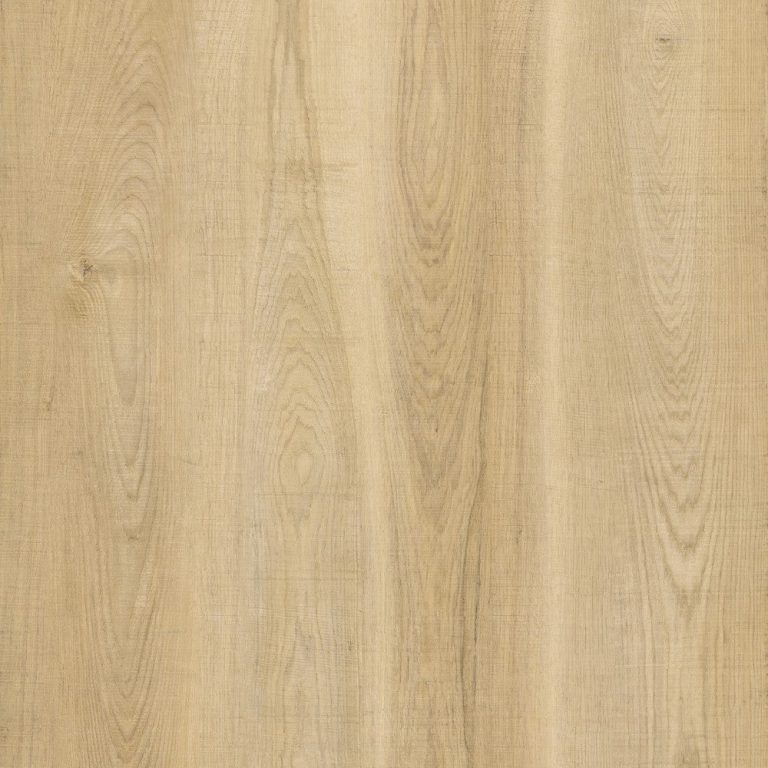
Rigid vinyl click planks float over a sound base, which in Solihull may be inter-war boards or a new screed, each with its own check.
RoomSolihull
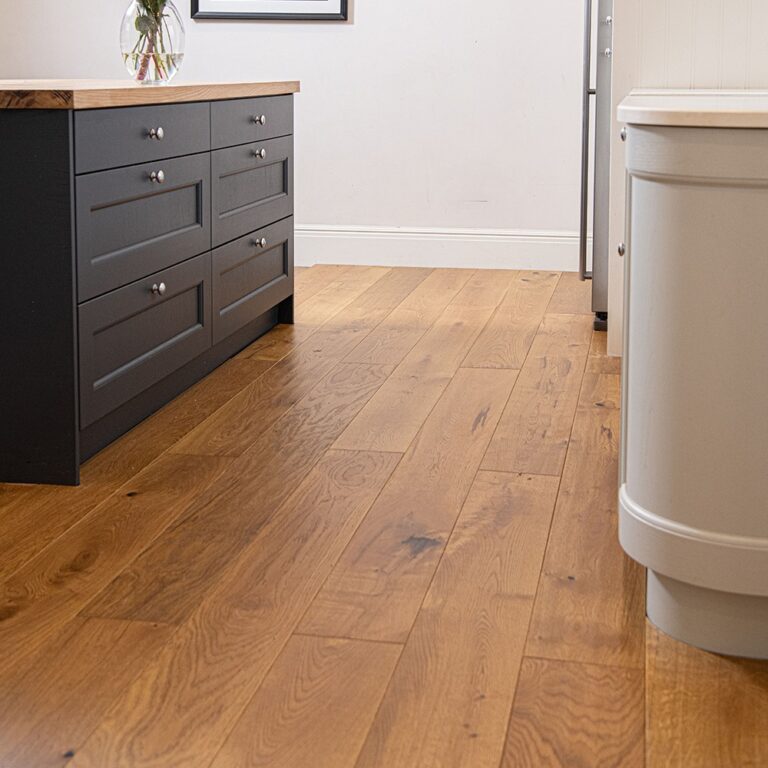
On the 1.8 days a year when Solihull stays below freezing all day, salt and grit come in on every boot, and the hall is the first floor to meet them.
 Room
Solihull
If an older kitchen in a conservation area keeps its original tiles, brick or stone, the council's guidance asks that such floors be kept where possible, so lay over them rather than ripping them out.
 Room
Solihull
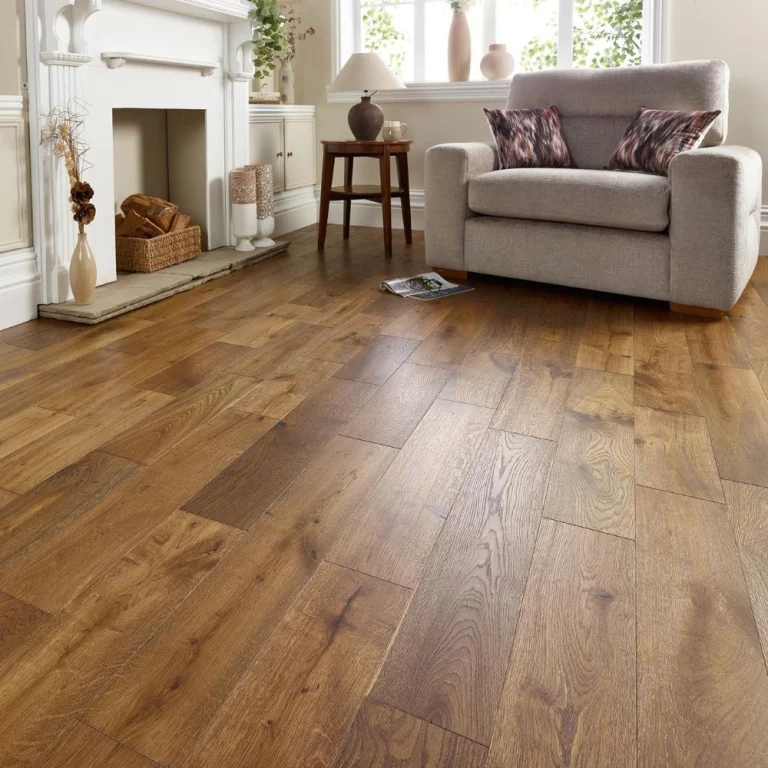
With 28.4% of households in detached houses, many Solihull living rooms have nobody beneath them, so the echo in the room is a matter for rugs and furniture rather than underlay.
 Room
Solihull
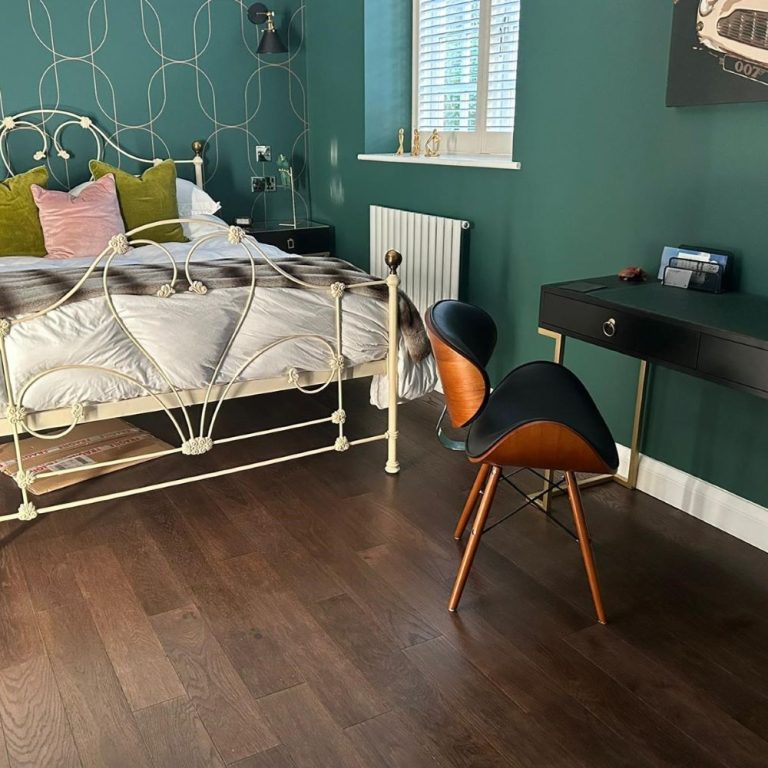
First-floor bedrooms in a semi rest on timber joists above the rooms you use by day, so a softer underlay up there keeps footsteps from carrying downstairs.
 Room
Solihull
In a two-storey house with the bathroom upstairs, its floor is also a ceiling, so a leak through an open joint shows downstairs first; seal the edges and the joints.
 Room
Solihull
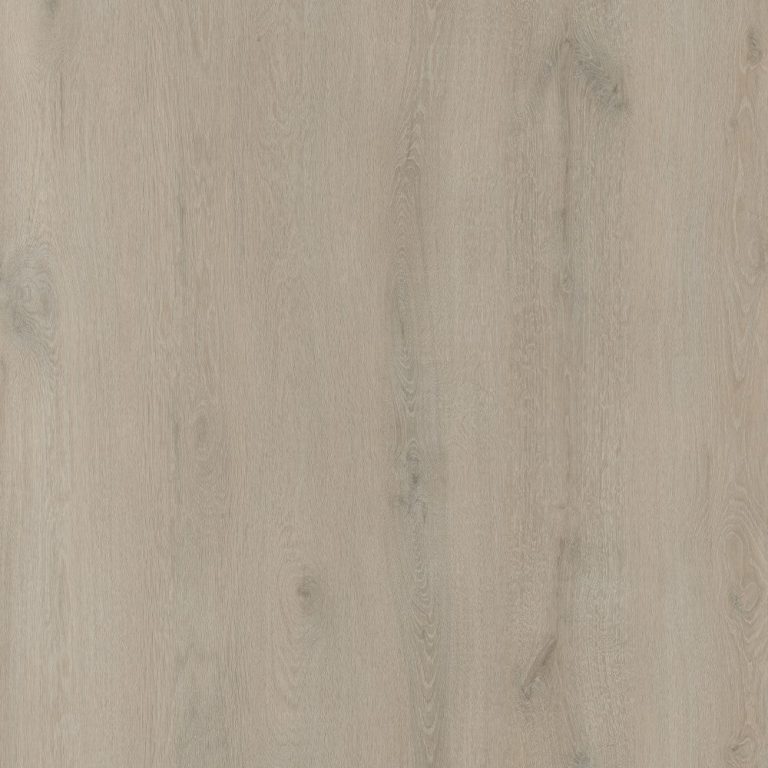
In an owner-occupied home whoever mops up after a leaking washing machine usually chose the utility floor too, which argues for one that does not soak up water.
 Room
Solihull
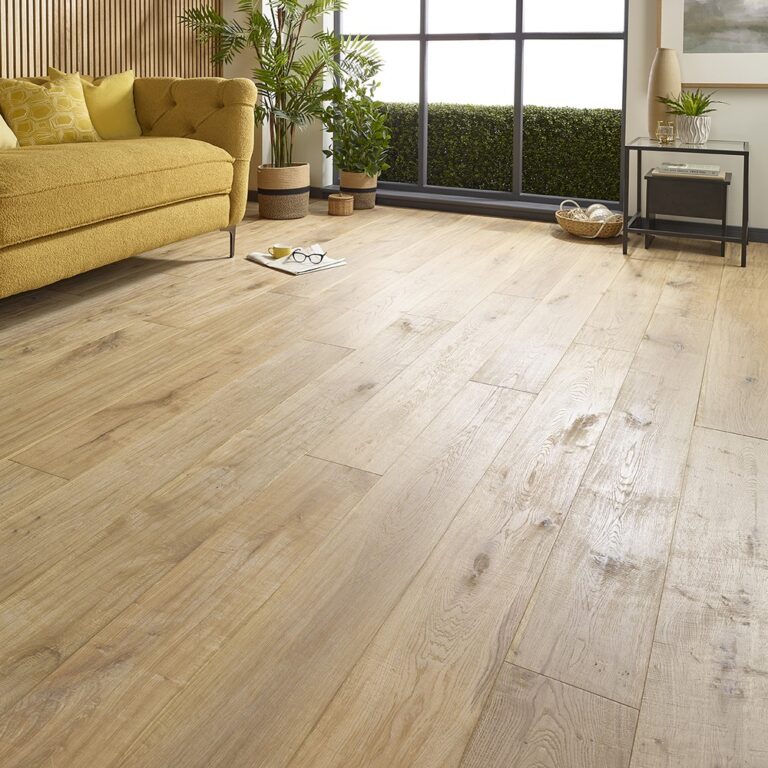
A conservatory in a town with 48.4 days of air frost a year has to take nights near freezing as well as warm afternoons, so its floor must cope with both.
 Pattern or need
Solihull
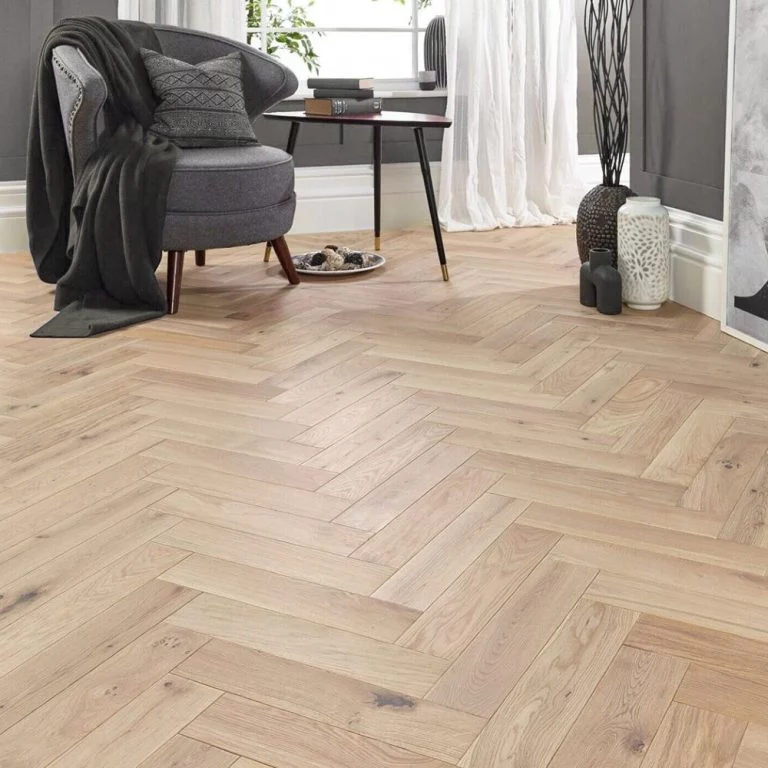
Herringbone shows every hump in the base, which in an inter-war Solihull house is usually boards over joists, so level or overboard them first.
 Pattern or need
Solihull
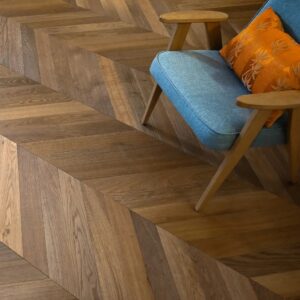
Planning chevron for one of the borough's few listed homes? Tell the conservation officer before any original boards or blocks are lifted.
 Pattern or need
Solihull
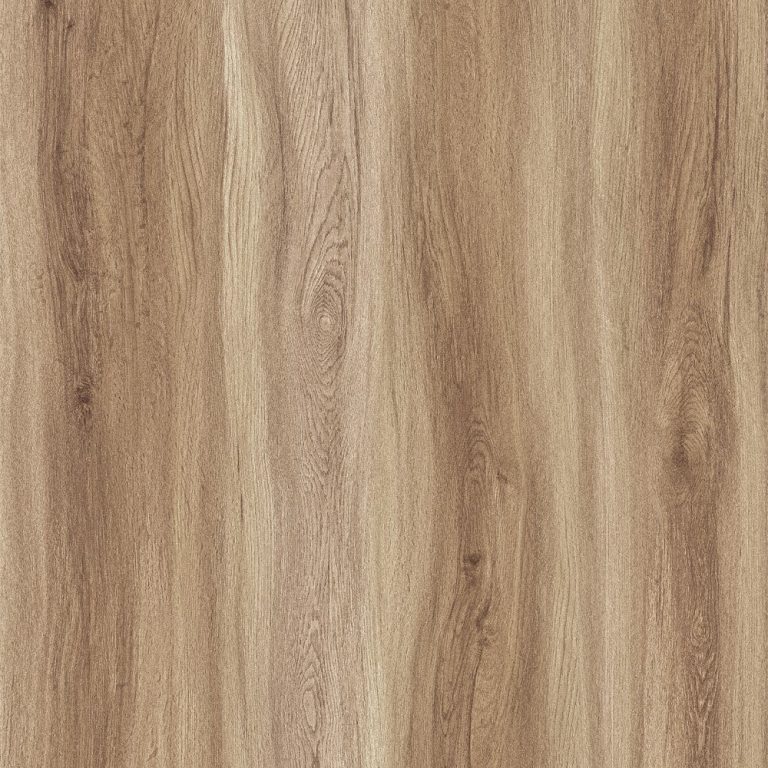
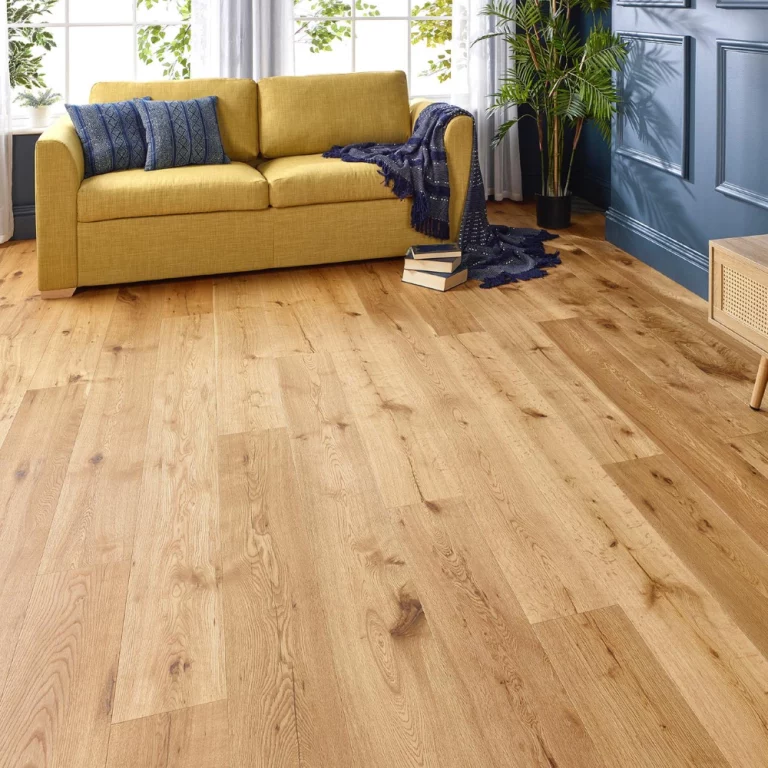
A plank listed as waterproof keeps water out of itself, not out of the 1930s boards below, so the joints and the edge gap still decide what gets wet.
 Pattern or need
Solihull
Beneath the boards of an inter-war house lies an air space rather than a slab, which makes underfloor heating there a different project from pipes cast into a new screed.
 Pattern or need
Solihull
Where 77.7% of homes are owner-occupied, a pet-friendly floor is usually chosen for your own dog, so weigh wet paws and grip as well as scratches.
 Pattern or need
Solihull
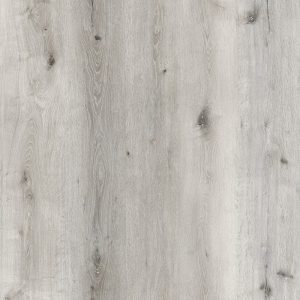
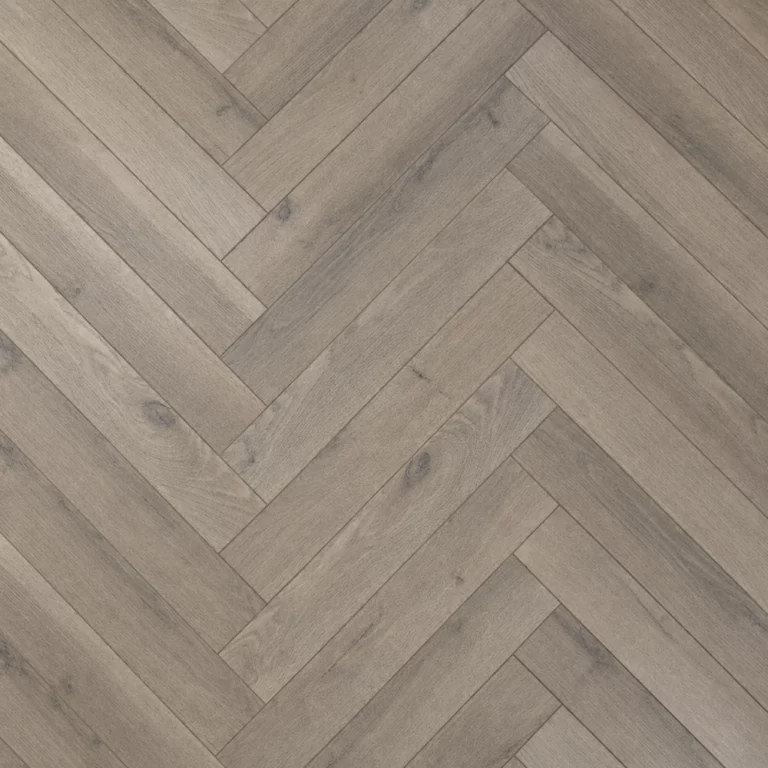
Grey is a finish, not a structure: on a 1960s estate such as White House Way or in a 1930s semi, what lies beneath a grey floor depends on the decade the house went up.
Bestsellers
Reviews
Trustpilot
Reviews written by our customers on Trustpilot.
Read all reviews on TrustpilotReviews on our Google Business Profile.
Read all reviews on GoogleAsk us first
Call 020 3858 0353, Monday to Friday 10am to 6pm, Saturday 10am to 4pm, or send a photo of the room to info@homesandfloors.com.
Contact usQuestions
Very likely. Homes built from 1930 to 1939 make up 22.8% of the town's dwellings, and a house of that age normally has boards on joists over a ventilated void. Lift a corner near the skirting to confirm, and keep the airbricks clear.
Not for an unlisted house: conservation-area controls deal with the outside. Listing does reach inside, but there are only 1.2 listed entries per 1,000 dwellings here; if your home is one of them, ask the conservation officer before lifting old boards.
The lease. Flats made up 21.7% of residential sales here in 2025, and flat leases often require carpet or the freeholder's consent for a hard floor. If hard flooring is allowed, choose the underlay with the neighbour below in mind.
Dry heated air. With January averaging 4.3 °C, the heating runs for long spells, boards lose moisture and shrink slightly, and fine gaps appear at the joints. They normally close as the air becomes more humid in summer.
When a moisture test says it is dry, not when a date passes. Completions across the borough run at 1.9 per 1,000 dwellings a year, and the council's consultation puts housing need at 1,331 a year.
Local facts
22 facts from the census, the Met Office, the council and other public records, each with what it means for a floor in Solihull and where it comes from.
When they were built
22.8%
built 1930 to 1939
2nd highest of 141 towns
For your floorThe inter-war decade left Solihull a large stock of houses whose ground floors are normally boards on joists above an air space, the base that many new floors here go onto.
Dwellings built 1930 to 1939. Area: Solihull built-up area (ONS Built-up Areas 2024). VOA, Council Tax: stock of properties 2025, table CTSOP4.1 (build period). Data: 2025-03-31 · retrieved 2026-09-22.
When they were built
2.6%
built before 1919
134th highest of 141 towns
For your floorVictorian and Edwardian suspended floors are scarce in Solihull, so an old timber floor here is far more often inter-war than nineteenth-century.
Dwellings built before 1919. Area: Solihull built-up area (ONS Built-up Areas 2024). VOA, Council Tax: stock of properties 2025, table CTSOP4.1 (build period). Data: 2025-03-31 · retrieved 2026-09-22.
When they were built
10.2%
built 1945 to 1954
20th highest of 141 towns
For your floorA Solihull house from the decade after the war may stand on a solid floor without a damp-proof membrane, which has to be established before wood goes down.
Dwellings built 1945 to 1954. Area: Solihull built-up area (ONS Built-up Areas 2024). VOA, Council Tax: stock of properties 2025, table CTSOP4.1 (build period). Data: 2025-03-31 · retrieved 2026-09-22.
Who lives here
77.7%
own their home
1st highest of 151 towns
For your floorBecause most Solihull homes are lived in by their owners, floors are chosen by the people who will use them for years rather than specified for a tenancy.
Households owning their home outright or with a mortgage. Area: Solihull built-up area (ONS Built-up Areas 2024). ONS, Census 2021, TS054 Tenure (households). Data: 2021-03-21 · retrieved 2026-09-22.
When they were built
1.9 per 1,000 dwellings
New homes completed in the year per 1,000 existing homes
111th highest of 135 towns
For your floorEach new Solihull home brings a fresh screed that can look dry long before it is, so a moisture test comes before any covering.
New homes completed in the year per 1,000 existing homes. Area: Solihull local authority. MHCLG, Live tables on housing supply: indicators of new supply, Table 253 "Permanent dwellings started and completed, by tenure and district", sheet FY_2025_26, column "All Completions" (building control reported, rounded to the nearest 10 by MHCLG); per 1,000 dwellings in Live Table 125 (dwelling stock at 31 March 2025). Data: 2025-04-01/2026-03-31 · retrieved 2026-09-22.
Weather & ground
48.4
air frost days a year
13th highest of 151 towns
For your floorFrequent frost in Solihull means a conservatory floor here must handle freezing nights as well as warm days.
Days with air frost per year (1991-2020 average, town centre). Area: Solihull town centre (Met Office HadUK-Grid 2 km cell). Met Office, HadUK-Grid climate averages 1991-2020 (climate data portal). Data: 1991-2020 · retrieved 2026-09-22.
Weather & ground
1.8
ice days a year
5th highest of 151 towns
For your floorOn Solihull's all-day freezing days salt and grit come in on shoes, and the hall floor takes them first.
Days on which the temperature stays below 0 degrees C (1991-2020 average, town centre). Area: Solihull town centre (Met Office HadUK-Grid 2 km cell). Met Office, HadUK-Grid climate averages 1991-2020 (climate data portal). Data: 1991-2020 · retrieved 2026-09-22.
Weather & ground
4.3
January mean
joint 131st highest of 151 towns
For your floorA cold Solihull January keeps the heating on, which dries the air and opens fine seasonal gaps in wood floors until summer.
Mean daily temperature in January (1991–2020 average, town centre). Area: Solihull town centre (Met Office HadUK-Grid 2 km cell). Met Office, HadUK-Grid (v1.1.0.0) climate averages 1991-2020, Met Office Climate Data Portal: Monthly Temperature Observations 1991-2020 (2 km grid), Monthly Min Temperature Observations 1991-2020 12km (12 km grid), Annual Count of 10mm Rainfall Days 1991-2020 (2 km grid). Data: 1991-2020 · retrieved 2026-09-22.
Heritage & plans
1.2
listed entries per 1,000 homes
125th highest of 135 towns
For your floorListed homes are rare in Solihull, but in one of them lifting original boards or blocks can need listed building consent.
Listed building entries per 1,000 dwellings. Area: Solihull built-up area (ONS Built-up Areas 2024). Historic England, National Heritage List for England, listed building entries. Data: 2026-09-21 · retrieved 2026-09-22.
When they were built
Building period
The Solihull Local Plan dates the large expansion of settlement into Solihull to the years between 1900 and 1955, above all the inter-war period.
For your floorThe Local Plan's dating of Solihull's growth to 1900 to 1955 tells you which construction, and which arrangement of rooms over rooms, to expect in most of its houses.
Area: Solihull Metropolitan Borough (Solihull Local Plan, historical development). Solihull Local Plan: Shaping a Sustainable Future. Data: adopted 3 December 2013 (current statutory development plan, plan period 2011 to 2028) · retrieved 2026-10-21.
When they were built
Building period
The Local Plan places the more historic parts of the borough's Mature Suburbs in Castle Bromwich, Olton, Solihull and Shirley, and describes them as characterised by Victorian and Edwardian development, the canal and railway network, a tighter urban grain, extensive gardens and parks.
For your floorIn the older parts of the Mature Suburbs the Victorian and Edwardian date of a house is the clue to its joists and to which rooms lie above which.
Area: Mature Suburbs of Solihull Metropolitan Borough (Solihull Local Plan, section 2.5). Solihull Local Plan: Shaping a Sustainable Future. Data: adopted 3 December 2013 (current statutory development plan, plan period 2011 to 2028) · retrieved 2026-10-21.
Homes
Housing type
According to the Local Plan, that expansion produced large semi-detached housing estates at Lyndon, Olton, Elmdon and Shirley, stretching towards Solihull.
For your floorThe inter-war semi estates of Lyndon, Olton, Elmdon and Shirley share one house type, and with it a common pattern of hall, kitchen and wet rooms to floor.
Area: Lyndon, Olton, Elmdon and Shirley (Solihull Metropolitan Borough). Solihull Local Plan: Shaping a Sustainable Future. Data: adopted 3 December 2013 (current statutory development plan, plan period 2011 to 2028) · retrieved 2026-10-21.
Homes
Housing type
The Local Plan adds that detached housing development was more predominant around Solihull itself.
For your floorDetached houses around Solihull itself set their own pattern of entrances and wet rooms, which shapes where grit and water reach the floor.
Area: Solihull (surroundings of the town, Solihull Local Plan). Solihull Local Plan: Shaping a Sustainable Future. Data: adopted 3 December 2013 (current statutory development plan, plan period 2011 to 2028) · retrieved 2026-10-21.
Homes
Housing type
White House Way, a private housing development of the 1960s off Blossomfield Road and a conservation area since 1999, had 26 houses, 6 bungalows and 4 blocks of three-storey flats in its original phase, according to the council's appraisal.
For your floorHouses, bungalows and flats side by side on White House Way each place the wet rooms and the front door differently, so each needs its floors planned on its own terms.
Area: White House Way Conservation Area, Solihull. White House Way Conservation Area Appraisal and Management Plan. Data: 2025 refreshed document offered to residents for comment (file published February 2026); replaces the 2007 statement · retrieved 2026-10-21.
Heritage & plans
Conservation areas
Solihull Metropolitan Borough Council has 20 conservation areas in the borough, among them Ashleigh Road, Granville Road, Grove Avenue, Malvern Hall and Brueton Avenue, Olton, Solihull, Warwick Road and White House Way.
For your floorSolihull's conservation areas protect the outside of buildings, so they do not decide what floor goes inside an unlisted house.
Area: Solihull Metropolitan Borough (Solihull Metropolitan Borough Council area). Conservation Areas (web page, section "Conservation Areas in Solihull"). Data: undated web page (content as retrieved 2026-10-21) · retrieved 2026-10-21.
Heritage & plans
Construction and materials
The council's historic environment guidance asks that traditional or original floor coverings, such as exposed floorboards, stone, bricks or tiles, be retained as far as possible, and that cutting joists for new services be kept to a minimum.
For your floorWhere the council's guidance keeps original boards in place, a new floor laid over them in Solihull inherits their flatness and their faults.
Area: Solihull Metropolitan Borough (advice on alterations to buildings in conservation areas, adapted from the advice for listed buildings). Supplementary Planning Guidance No. 1: The Historic Environment. Data: December 2001 (formally adopted by Planning Committee on 19 March 2001; listed as adopted guidance on the council's Additional Planning Policy Documents page, retrieved 2026-10-21) · retrieved 2026-10-21.
When they were built
New homes planned
The council's Issues and Options consultation for its new Local Plan (January 2026) states that under the government's new standard method the borough's local housing need would rise to 1,331 dwellings a year.
For your floorThe borough's planned rise in new homes means more fresh screeds in Solihull, where the drying allowance only marks when testing should begin.
Area: Solihull Metropolitan Borough (local housing need). Emerging Local Plan: Issues and Options Consultation. Data: January 2026 (consultation 30 January to 16 March 2026; not adopted) · retrieved 2026-10-21.
Nearby
Distances are straight-line miles from Solihull.
United KingdomWest MidlandsSolihull
151 towns and cities, 24 county guides, one map.
New ranges and offers. Hear it first.
No spam. Unsubscribe any time.
Free to join
Ideas, advice and offers to help you plan your next floor, by email.
No spam. Unsubscribe any time.