





LVT vs Laminate
Two floors that look alike and behave quite differently. The core is the whole difference, and it decides which rooms each one belongs in.
These two get compared more than any other pair, because on a showroom floor they look alike and sit close on price. The difference is not in the surface. It is in what the surface is stuck to, and that decides everything else.
On this page
The construction, in one paragraph each
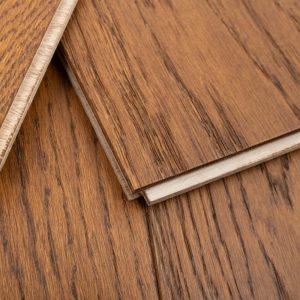
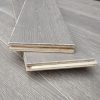
Laminate is a photographic decor layer under a hard melamine wear surface, bonded to a high-density fibreboard core. The core is wood fibre. It is dense, it is stable, and it swells irreversibly when water reaches it.
LVT is a printed design under a clear vinyl wear layer, on a core that is either flexible vinyl or — in rigid-core and SPC formats — a dense mineral-filled composite. Nothing in that stack is wood. It takes on no water.
Where each one wins
The room-by-room answer
The two specifications to compare, and they are not the same thing
People compare the wrong numbers here, because the two products measure durability differently.
One is a class, the other is a dimension. They do not convert into each other, and a higher number on one side means nothing about the other.
If you want one answer
For a whole house with a fixed budget: LVT in the kitchen, the bathroom and the hall, laminate in the dry rooms upstairs. That puts the money where water and grit actually are, and it costs less than flooring everything in either one.
Common questions
What does "waterproof" actually mean on a floor?
An LVT core takes on no water; a laminate core is wood fibre and does. That is the real difference, and it is a material property rather than a marketing claim. But no floor installation is waterproof: water can still reach the subfloor through the joints and the perimeter gap on either. For a room where water stands rather than passes, glue-down LVT or tile is the specification, not a click floor of any kind.
Which lasts longer?
In a dry room, a well-specified laminate can outlast a thin LVT, because the melamine surface resists abrasion well. In anything that gets wet, LVT outlasts laminate by a margin that makes the comparison pointless. The honest answer is that the room decides it, not the product.
Can either go over underfloor heating?
Both usually can, and both have limits. Check the maximum surface temperature in the specification for the range rather than assuming, and remember that underlay thickness affects heat transfer as much as the board does. Rigid-core LVT is generally the more predictable of the two over heating, because the core is dimensionally stable across a wider temperature range.
If the shortlist is really between vinyl types rather than against laminate, what SPC and rigid core actually mean sorts out the names. The ranges are at LVT and rigid vinyl and laminate.
Which rooms get wet, and how much grit comes through the door, has as much to do with the house as with the household. Browse by town and region.

Who publishes this guide
What the published standards say
Related reading
- Samples £1.99 each
- UK-wide delivery
- Advice before you order