



Engineered Wood over Underfloor Heating
The 27 °C surface limit, what board thickness costs in heat, the 20 mm rule over joists and why gaps open in winter, checked against our engineered range.
Wood and underfloor heating get on better than their reputation suggests. The heat has to pass through the floor to reach the room, wood holds it back more than stone does, and a board warmed from below moves with the seasons. None of that rules engineered wood out. It sets the terms: a temperature the surface must not exceed, a ceiling on how much the floor and its underlay may insulate, and a few rules about what the boards sit on. This guide takes them in that order, with the published figures and the boards in our range.
On this page
What the range says, product by product
Every product listing carries an underfloor heating line, and we counted them. All 65 engineered floors in the range, planks and parquet blocks alike, are listed as compatible with underfloor heating. All 20 solid wood floors are listed as not compatible. That is the practical answer to the question most people arrive with: if the floor goes over underfloor heating and it should be real wood, it should be engineered.
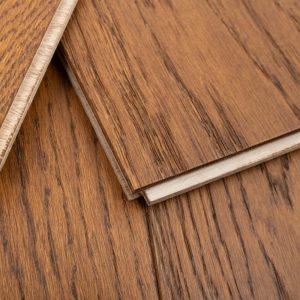
The reason is construction. An engineered board is a layer of hardwood bonded to a core of cross-laid layers, and the layers hold each other in check as the board warms and dries. Its product standard is BS EN 13489, the standard for multi-layer parquet elements. A solid board is one piece of timber through its whole thickness, and heat from below reaches its underside first. Trade guidance does not ban wood over heating outright; it ties it to a temperature limit. The listing tells you which side of that line a particular floor sits on.
The two limits
The first is the surface temperature. Junckers, a maker of hardwood floors, says the surface of its boards should not exceed 27 °C and that the heating must be adjusted to suit, and says the flow temperature in the pipes is normally between 35 and 45 °C; the Contract Flooring Association lists 27 °C for real wood floors too. The setting belongs to whoever commissions the heating, and it is worth giving them the figure from your floor's instructions in writing.
The second is thermal resistance: how much the floor and whatever lies under it hold the heat back. Floor coverings over a water-based system are normally limited to 0.15 m²K/W, which is the case Uponor, for one, designs its systems in dwellings for. The limit applies to the whole build-up above the pipes, board and underlay together, not to the board alone.
What thickness costs in heat
Junckers publishes the thermal resistance of its own wood boards by thickness: 0.08 m²K/W at 14 mm, 0.09 at 15 mm, 0.12 at 20.5 mm and 0.13 at 22 mm. Its worked example puts a 14 mm board on its PolyFoam underlay, at 0.07, and arrives at exactly 0.15. Those are one manufacturer's figures for its own boards, not a property of every engineered floor, but they show the order of magnitude and the arithmetic: a thicker board takes more of the allowance, and the underlay has to fit into what is left.
The engineered floors in our range are 14 mm thick in 44 cases, 15 mm in 6, 18 mm in 8, 20 mm in 6 and 12 mm in one. On the published figures a thin board leaves more room for the underlay, and a 20 mm board leaves very little. That is why the underlay is not an afterthought over underfloor heating.
Over a screed, over joists
Where the heating is in a screed, engineered boards can float over an underlay or be bonded to the screed. Where it sits between joists or battens, BEAMA's guidance is specific: unless installed over a screeded slab, engineered boards of less than 20 mm thickness should be supported and fixed to an additional decking material, unless the manufacturer states otherwise. In our range 59 of the 65 engineered floors are thinner than 20 mm, so over joists most of them need that extra deck.
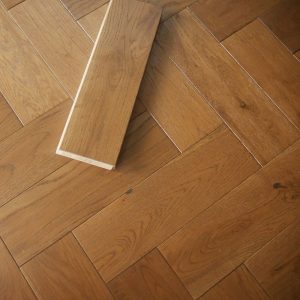
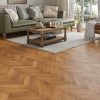
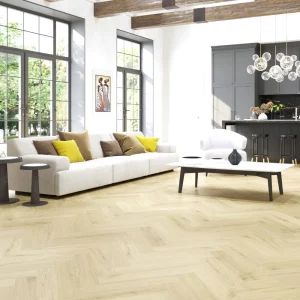
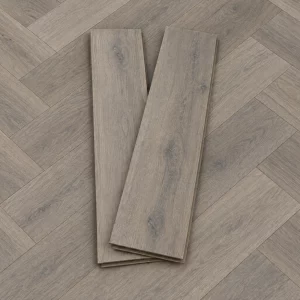
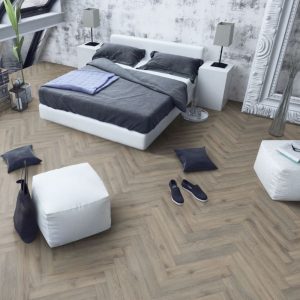
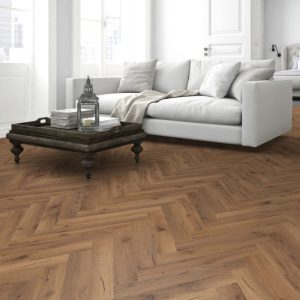
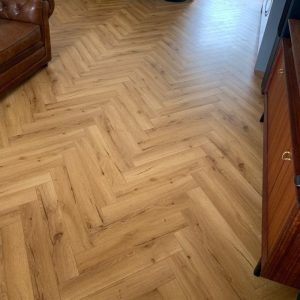
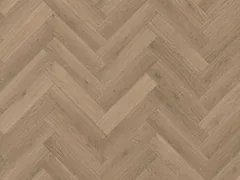
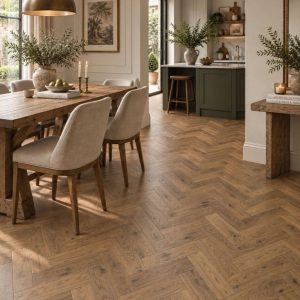
Parquet is the exception to floating. BEAMA describes parquet blocks over underfloor heating as continuously glued onto the screed or timber deck for good heat transfer, with a floor temperature sensor always fitted. A herringbone floor over heating is therefore a bonded floor, and the adhesive is part of the specification rather than a detail for the day.
Why gaps open in winter
Wood gives up moisture when it is warmed and takes it back when the heating goes off. Junckers puts it plainly: during the heating season larger gaps than normal form between the boards, and larger still under low furniture and well-insulating rugs, where the floor runs warmer. The same data sheet gives 35 to 65 % as the normal relative humidity of a lived-in home. A floor that shows fine gaps in January and closes them in June is behaving as wood does. A heavy rug on a heated wooden floor is also where the boards run warmest and move most, so a thinner one is kinder to the floor beneath it.
Before the floor goes down
A heated screed has to be taken through a full heating-up and cooling-down cycle before any floor covering is laid, and the Contract Flooring Association puts that commissioning period at usually around 21 days. After that the screed still has to read dry on a hygrometer, and the boards still need their time in the room. The sequence has its own guide.
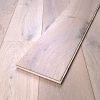
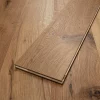
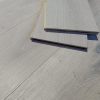
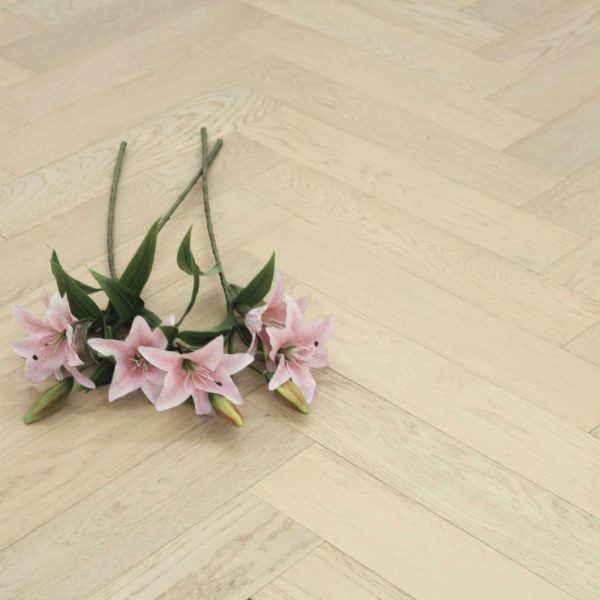
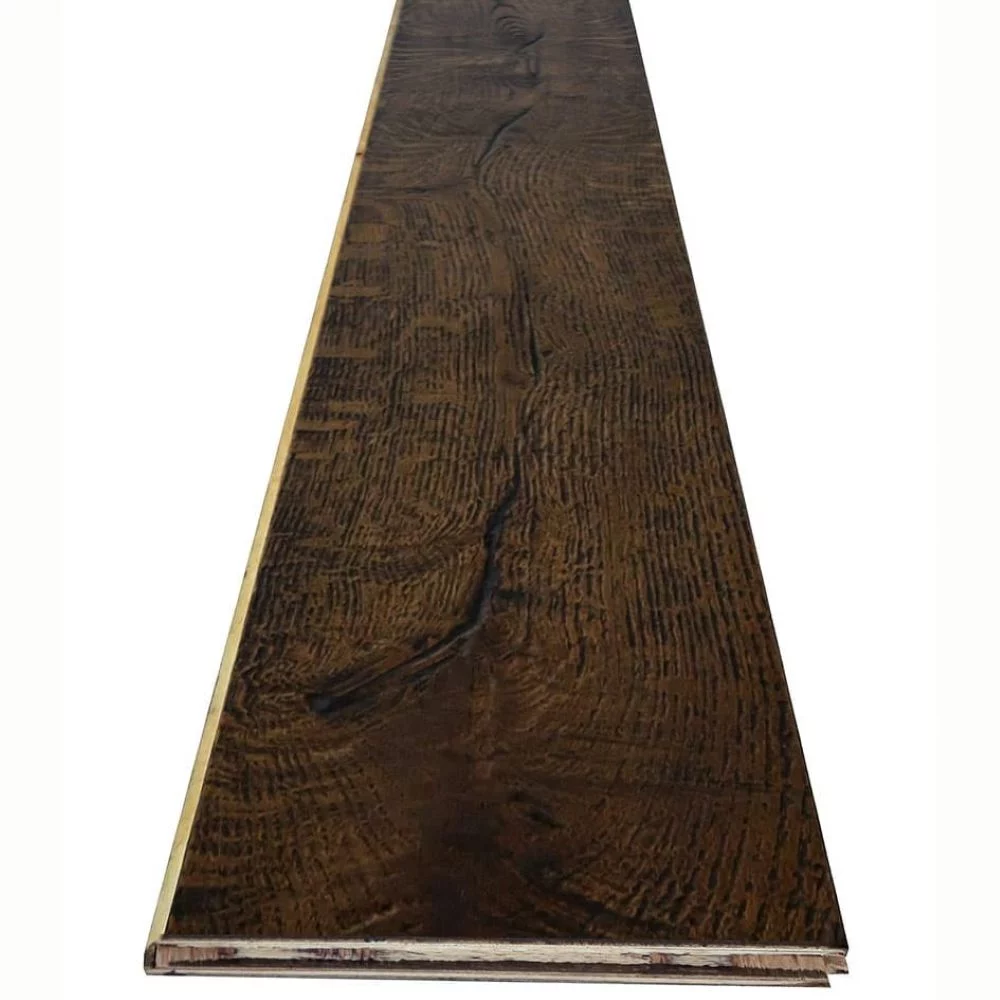
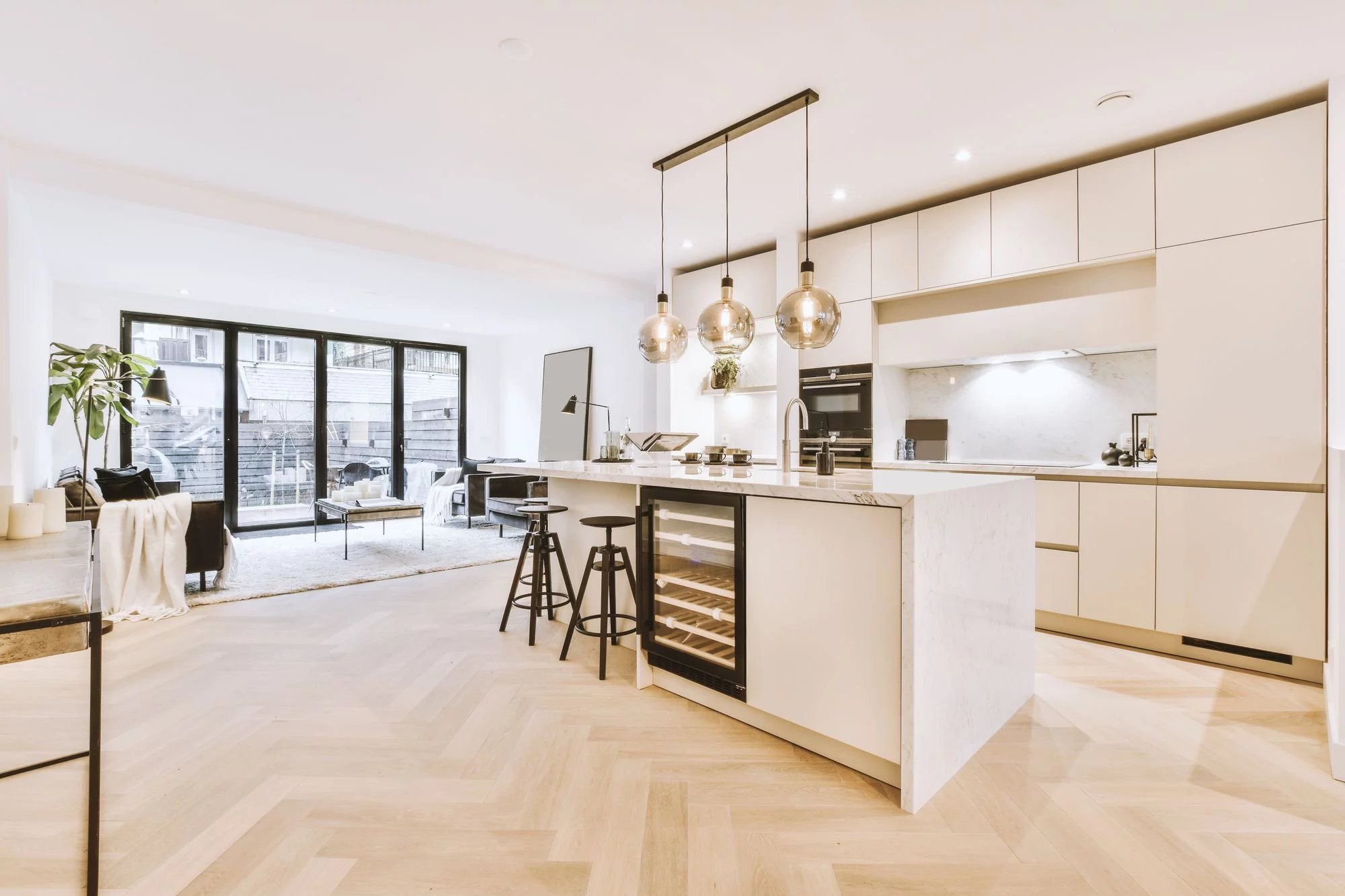
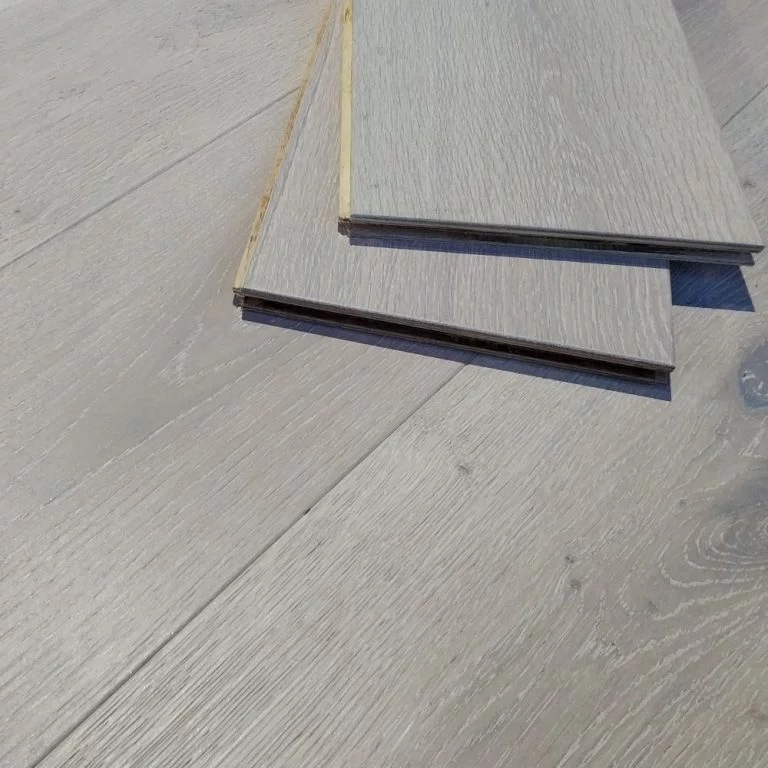
Every engineered board in our range is listed as suitable for underfloor heating, from the white oak and natural oak boards to the walnut; the commissioning and the readings above still apply to each of them.
Common questions
Can engineered wood go over underfloor heating?
Yes. All 65 engineered floors in our range are listed as compatible with underfloor heating. Keep the surface at or below 27 °C, or the figure in your floor's instructions, and the board and underlay together within 0.15 m²K/W.
What thickness of engineered wood is best over underfloor heating?
A thinner board holds back less heat. On Junckers' published figures a 14 mm board is 0.08 m²K/W and a 20.5 mm board 0.12, against a ceiling of 0.15 for board and underlay together. Over joists rather than a screed, BEAMA advises an additional deck under engineered boards thinner than 20 mm.
Can solid oak go over underfloor heating?
Not the solid floors in our range: all 20 are listed as not compatible with underfloor heating. Trade guidance ties wood over heating to a temperature limit rather than banning it, but the listing for the individual floor is what decides, and for real wood over heating our answer is engineered.
Why does my heated wooden floor have gaps in winter?
Because wood dries and shrinks when it is warmed. Junckers notes that larger gaps than normal form between boards in the heating season, and larger still under low furniture and insulating rugs. They close again as the heating season ends; a room kept within 35 to 65 % relative humidity shows less of it.
Does parquet over underfloor heating have to be glued?
BEAMA describes parquet blocks over underfloor heating as continuously glued onto the screed or timber deck for good heat transfer, with a floor temperature sensor always fitted.
We deliver engineered oak town by town across the UK. Browse by town and region.
What the published standards say
Who publishes this guide
- Samples £1.99 each
- UK-wide delivery
- Advice before you order