







Samples available UK-wide delivery

Your Cart

0

Your cart is empty

Start with a sample: real cuts of our floors at £1.99 each, sent to your door across the UK.

Subtotal £0.00
Shipping & discounts calculated at checkout
SSL encrypted, safe and secure
Rigid Vinyl and Laminate over Underfloor Heating
Underfloor heating 7 min read

Rigid Vinyl and Laminate over Underfloor Heating

Why vinyl is often held to 26 °C, what one laminate maker sets, why conservatories need care, and how the vinyl and laminate in our range are listed.

Start reading

Rigid vinyl and laminate are the two floors most often laid over new underfloor heating, and for good reason: they are thin, they click together as a floating floor, and heat passes through them without much fuss. The limits that apply to them are lower than many people expect, though, and they are set by each manufacturer for its own floor. This guide sets out the published figures, what they mean in a room, and how the floors in our range are listed.

On this page
  1. What the range says
  2. The temperature, and why vinyl is lower
  3. Laminate: one manufacturer's rules
  4. Conservatories and other cold rooms
  5. Fitting over a heated floor
  6. Common questions
  7. What the published standards say
  8. Who publishes this guide
01

What the range says

All 36 rigid vinyl floors in the range, the BML collection, are listed as compatible with underfloor heating. They have a solid polymer core, the SPC in their name, click together and come with their underlay backing attached; 24 of them are 6.5 mm thick and 12 are 5.2 mm. All 5 laminate floors in the range are listed as compatible too; they click together and are rated AC4.

02

The temperature, and why vinyl is lower

BEAMA, the UK underfloor heating trade association, says vinyl works well over water-based heating because the heat passes easily through the thin layer, but that most vinyls should not be heated above 26 °C, so the floor temperature should be restricted. For one well-known luxury vinyl brand it gives 27 °C, and for linoleum and vinyl in general it notes that most manufacturers state 27 °C. The MMFA, the association for click vinyl, allows 29 °C. The safe reading of all of them is the same: the figure that counts is the one in the instructions for your floor, and for vinyl it may be a degree lower than for the rest of the house.

A floor temperature sensor wired to the thermostat is what holds that limit in practice. A room thermostat on its own reads the air, not the floor.

03

Laminate: one manufacturer's rules

Quick-Step, one of the largest laminate makers, publishes its rules for its own floors over heating: a maximum contact temperature of 27 °C at the surface, a total thermal resistance of no more than 0.15 m²K/W for floor and underlay together, the laminate always installed floating, and one of its own underlays, Thermolevel, excluded. The laminate in our range is not Quick-Step, so these are not its rules. They are a fair picture of what a laminate maker asks, and the instructions in the box are where your own floor's rules are written.
See also
04

Conservatories and other cold rooms

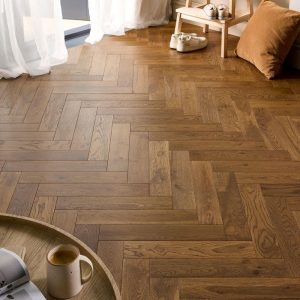
A lower surface temperature means less heat from the floor. BEAMA warns that in rooms with high heat losses, such as conservatories, it may not be possible to heat the room sufficiently with a restricted floor temperature. A vinyl floor held at 26 °C in a glazed room on a winter day can be comfortable underfoot and still leave the room cool. That is a question for the heating design, and it is best asked before the floor is chosen.
See also
05

Fitting over a heated floor

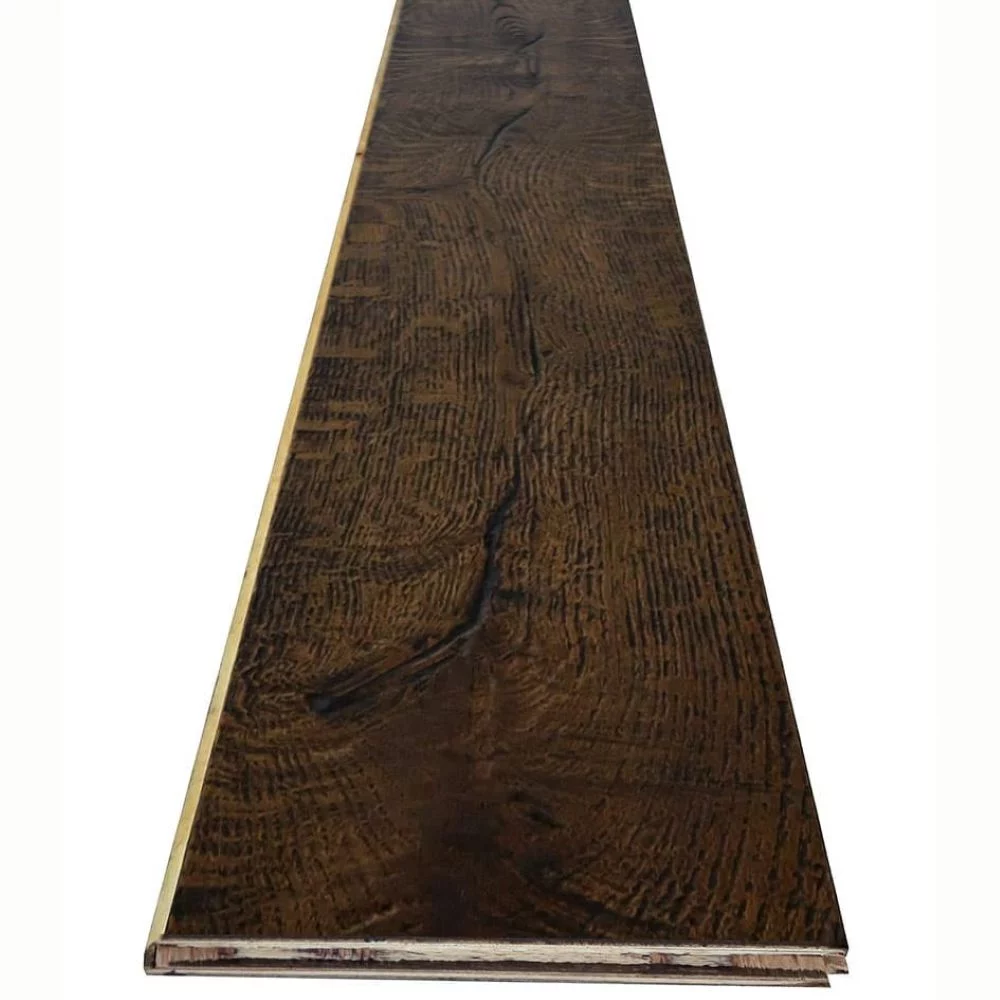
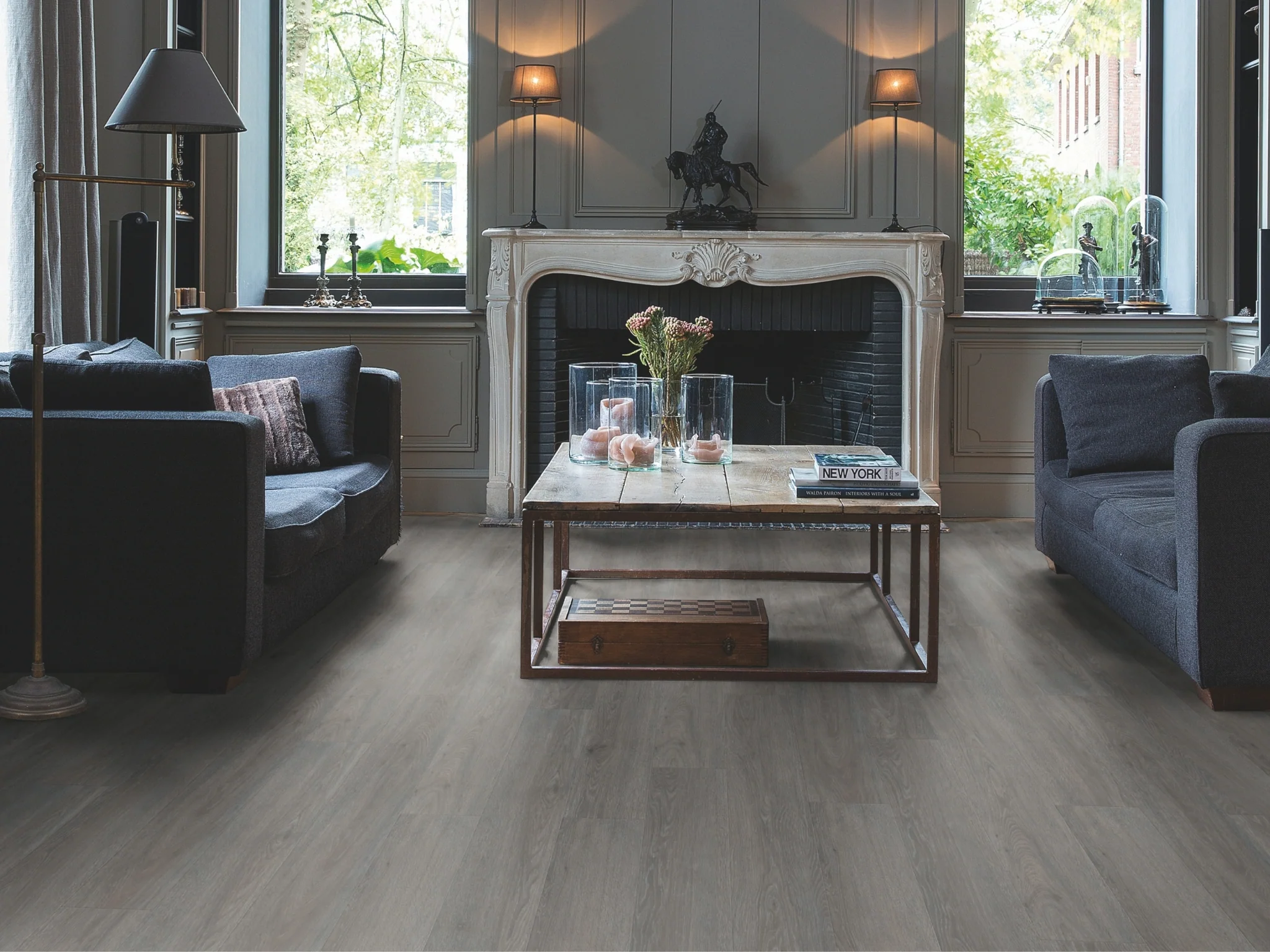
Both floors float, so the subfloor beneath them still has to be dry and flat, and the heating still has to have been through its full heating-up and cooling-down cycle before they go down; the Contract Flooring Association puts that at usually around 21 days. The boards need their time in the room as well: the MMFA, the European association for multilayer modular floors, asks for at least 48 hours in the same conditions as the installation area, flat and cross-stacked in unopened boxes, at roughly 15 to 25 °C and 35 to 65 % relative humidity.
See also
06

Common questions

Can rigid vinyl go over underfloor heating?

Yes. All 36 rigid vinyl floors in our range are listed as compatible with underfloor heating. BEAMA advises that most vinyls should not be heated above 26 °C, so set the floor temperature to the figure in your floor's instructions.

What is the maximum floor temperature for vinyl over underfloor heating?

BEAMA puts most vinyls at 26 °C and gives 27 °C for one luxury vinyl brand. The figure that counts is the one the manufacturer of your floor states.

Can laminate go over underfloor heating?

Yes, where the manufacturer lists it as suitable, and all 5 laminate floors in our range are. As an example of what a maker asks, Quick-Step sets 27 °C at the surface, 0.15 m²K/W for floor and underlay together, and a floating installation.

Is vinyl a good choice for a conservatory with underfloor heating?

It can be, but BEAMA warns that in rooms with high heat losses, such as conservatories, a restricted floor temperature may not heat the room sufficiently. Check the heating design against the floor's temperature limit first.

How long should the boards sit in the room before fitting?

The MMFA asks for at least 48 hours in the same conditions as the installation area, flat and cross-stacked in unopened boxes, at roughly 15 to 25 °C and 35 to 65 % relative humidity.
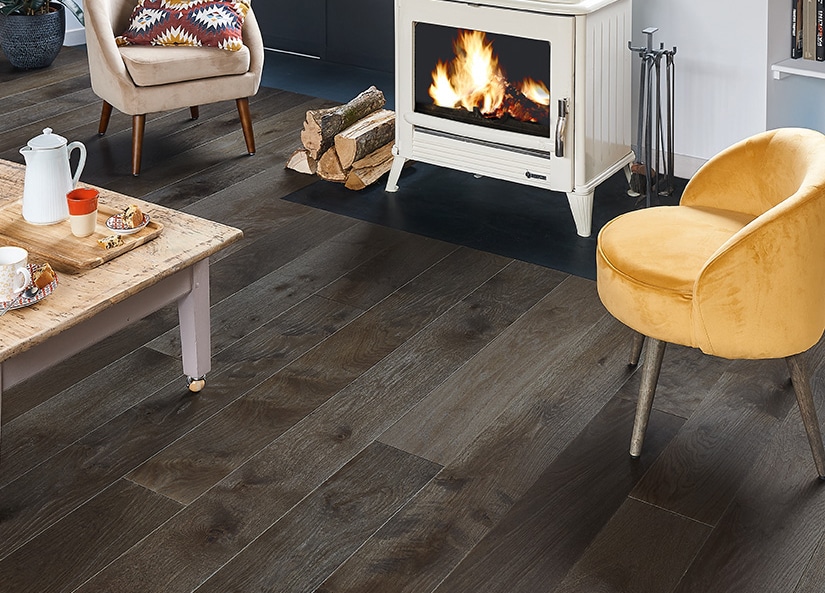
Rigid vinyl and laminate go out on the same pallet network as the rest of the range. Browse by town and region.
See also
07

What the published standards say

Each entry is quoted from its source and linked to it. The full set is in the standards reference.

1 of 7
BEAMA

Vinyl over underfloor heating: 26 °C

26 °C maximum temperature for most vinyls

BEAMA advises that most vinyls should not be heated above 26 °C, so the floor temperature should be restricted, and warns that in rooms with high heat losses such as conservatories a restricted floor temperature may not heat the room sufficiently.

The exact wording

“However, as most vinyls should not be heated to above 26°C, the floor temperature should be restricted. Care should be taken in the design of systems in rooms with high heat losses, such as conservatories, as it may not be possible to sufficiently heat the room with a restricted floor temperature limit.”

Source: BEAMA Underfloor Heating — Choosing your floor covering to maximise your underfloor heating efficiency (April 2020)
BEAMA

Floor surface temperature: what most manufacturers state

27 °C maximum floor surface temperature stated by most manufacturers

The UK underfloor heating trade association says, in its section on linoleum and vinyl, that most manufacturers state a maximum floor surface temperature of 27 °C, which is more than adequate in the majority of situations.

The exact wording

“Most manufacturers state 27°C, which is more than adequate in the majority of situations.”

Source: BEAMA Underfloor Heating — Choosing your floor covering to maximise your underfloor heating efficiency (April 2020)
Quick-Step

Laminate over underfloor heating: one manufacturer's rules

27 °C maximum contact temperature
0.15 m2K/W maximum total thermal resistance

Quick-Step allows its laminate over low-temperature underfloor heating or cooling with a maximum contact temperature of 27 °C and a total thermal resistance of no more than 0.15 m2K/W, always floating, and excludes its Thermolevel underlay.

The exact wording

“This means that the maximum permitted contact temperature (= contact surface of the floor with the feet) is 27°C. … Please ensure that the total thermal resistance does not exceed 0.15 m² K/W. … make sure that the laminate is always installed floating.”

Source: Quick-Step — Can I use Quick-Step laminate in combination with underfloor heating? (FAQ)
Uponor

Thermal resistance of the floor covering

0.15 m2K/W maximum thermal resistance of floor covering (R lambda,B)

Floor coverings over a warm water underfloor heating system are normally limited to a thermal resistance of R(λ,B) ≤ 0.15 m2K/W; Uponor, for one, designs its systems in dwellings for that worst case.

The exact wording

“The following types of floor coverings can be laid on Uponor surface heating/cooling systems if a maximum thermal resistivity of Rλ,B ≤ 0,15 m²K/W is observed and approved by the manufacturer”

Source: Uponor underfloor heating/cooling — Planning information (Technical Information TI-1186660)
Multilayer Modular Flooring Association

What SPC rigid core actually is

SPC Solid Polymer Core
WPC Wood Plastic Composite
EPC Expanded Polymer Core

According to the Multilayer Modular Flooring Association, SPC stands for Solid Polymer Core, whereas WPC stands for Wood Plastic Composite; both are listed as alternative core-layer materials for multilayer modular floor panels, the SPC core being a solid polymer compound and the WPC core a wood-polymer composite.

The exact wording

“Core layers can be wood composites such as HDF or cork, but also polymer or polymer composite materials such as PFC (Perfluorcarbone), natural fibre-reinforced plastics, WPC (Wood Plastic Composite), EPC (Expanded Polymer Core) and SPC (Solid Polymer Core); but also mineral-based substrates, e.g. MPC ("Mineral Plastic Composites").”

Source: Multilayer Modular Flooring in focus - MMFA (Multilayer Modular Flooring Association)
Multilayer Modular Flooring Association

Room conditions at the time of fitting

at least 48 h acclimatisation before installation
15-25 °C storage and acclimatisation temperature
35-65 % storage and acclimatisation relative humidity

The MMFA, the European association for multilayer modular floor coverings, requires the flooring to acclimatise for at least 48 hours in the same conditions as the installation area, stored flat and cross-stacked in unopened boxes at roughly 15-25 degrees Celsius and 35 to 65 per cent relative humidity.

The exact wording

“Leave the floor covering to acclimatise in the same environmental conditions as the installation area for a period of at least 48 hours prior to installation. Always store the boards flat and cross-stacked, in their original unopened boxes and at approx. 15-25 °C and between 35 % and maximum 65 % relative humidity.”

Source: Prior to installation — MMFA (Multilayer Modular Flooring Association)
Contract Flooring Association

Commissioning the heating before the floor goes down

21 days typical duration of the heat-up / cool-down commissioning cycle

Before any subfloor preparation or floorcovering is laid, the underfloor heating must be run through a full drying and commissioning cycle of heating up and cooling down, typically lasting about 21 days.

The exact wording

“In all instances, UFH systems must be run through a full drying / commissioning cycle of heating up and cooling down before any subfloor preparation or installation of decorative floor coverings are installed. This period of commissioning is usually around 21 days.”

Source: CFA Guidance Document — Beyond Installation: Guidance on Underfloor Heating (Contract Flooring Association)
08

Who publishes this guide

Homes and Floors Ltd, registered in England and Wales, company number 11762665, incorporated in January 2019. Endeavour House, Floor 3, Coopers End Road, Stansted CM24 1SJ.

Where a guide quotes a standard or a regulation, the source is named and linked. Product figures come from the specifications on the product pages. If something here is wrong, tell us at info@homesandfloors.com and we will check it.

First published . Last updated .

Your next step
Still deciding?
A sample on the floor, in the room it is for, answers most of what a description cannot.
  • Samples £1.99 each
  • UK-wide delivery
  • Advice before you order

Join the Homes & Floors Club

New ranges and offers. Hear it first.

  • Room ideas & honest guides
  • New floors first
  • Special offers

No spam. Unsubscribe any time.