




Laminate Flooring Thickness: What the Millimetres Mean
Thickness changes the height at doors and thresholds; wear is graded by AC class under EN 13329, not by the millimetre. What to check, and our 12 mm range.
Laminate is sold by thickness, from thin boards to 12 mm, and the number is easy to over-read. Egger, a laminate maker that produces boards from 6 to 12 mm, puts it bluntly: for the suitability of a floor in its area of use, the thickness or gauge of the flooring is not decisive; what matters is that it has the correct stress class, the use class, for that area. This guide explains what the thickness is made of, what it does and does not change, and what the laminates in our range are.
On this page
What a laminate board is
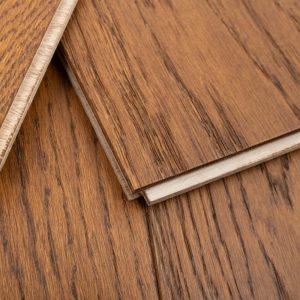
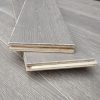
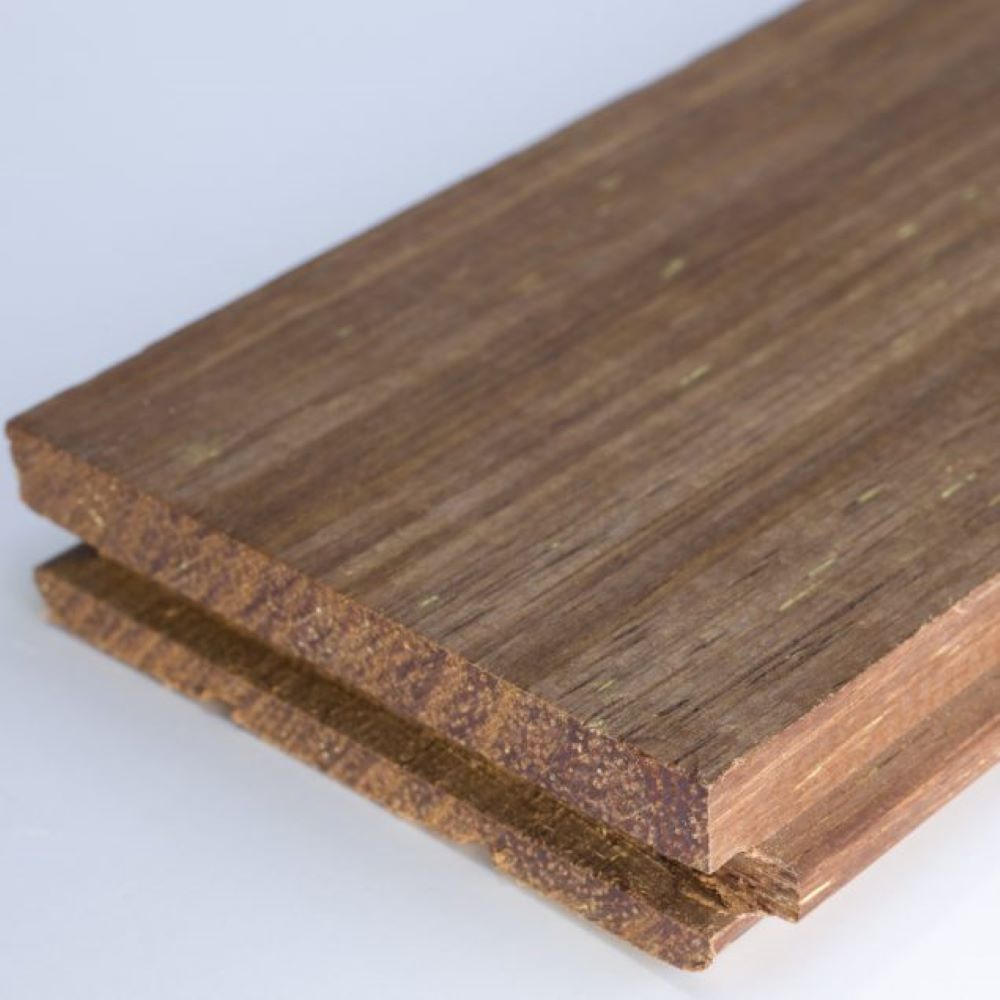
The product standard for laminate, BS EN 13329, defines it as a rigid floor covering, typically in a plank or tile format, with a multiple layer structure: a backer, a substrate, a décor and worked edges that join into one floor. The substrate is the core: the standard names particleboard, MDF or high density fibreboard, HDF, an MDF board with a density of at least 800 kg/m³. The backer is the layer opposite the surface, used to balance and stabilise the board. All 5 laminates in our range are listed as Laminate HDF.
What the standard says about thickness
Less than people expect. The thickness appears in EN 13329 as a tolerance: the measured thickness of a board, without underlay, may differ from the stated one by no more than 0.50 mm on average. What the standard classifies is use: every laminate is classified as suitable for different levels of use according to the requirements of its classification table, with abrasion classes AC1 to AC6 and the use classes of EN ISO 10874, from 21 to 23 for homes and 31 to 34 for commercial use.
What thickness does change
The laminates in our range
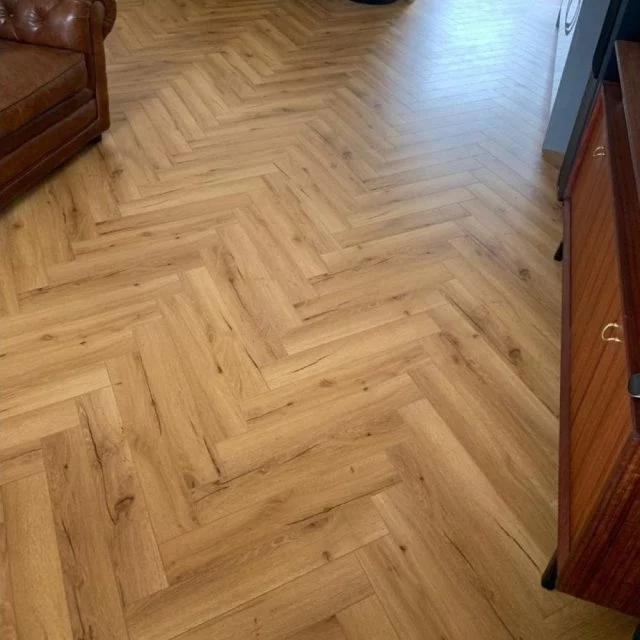
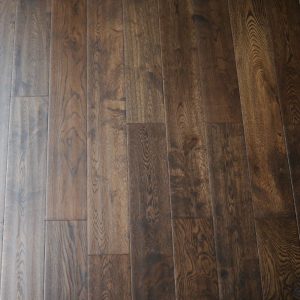
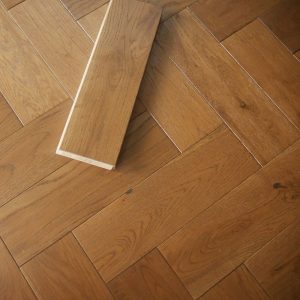
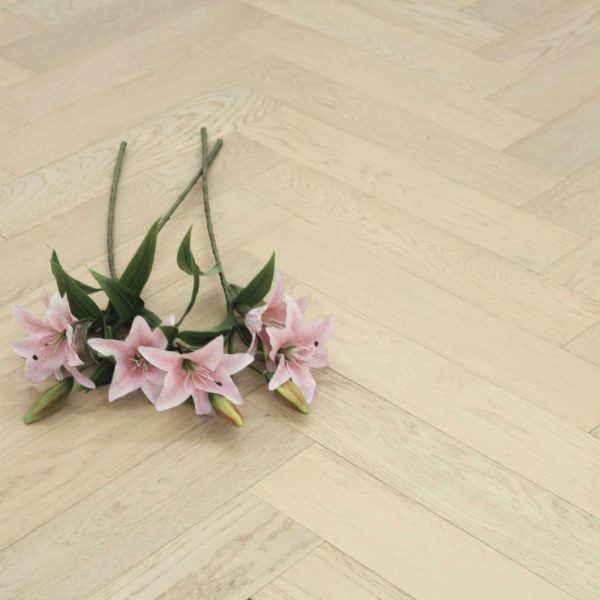
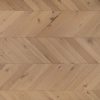
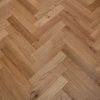
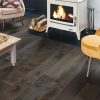
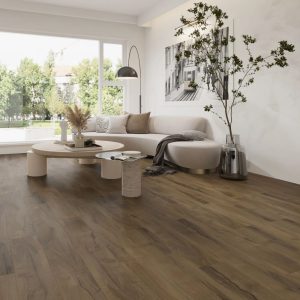
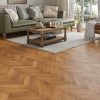
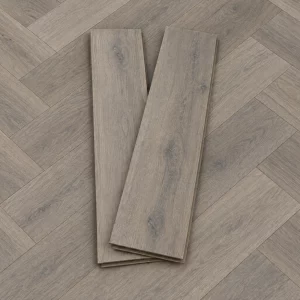
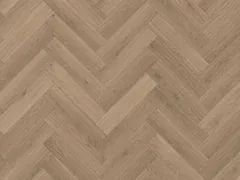
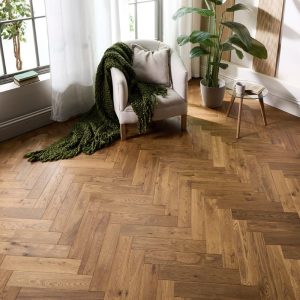
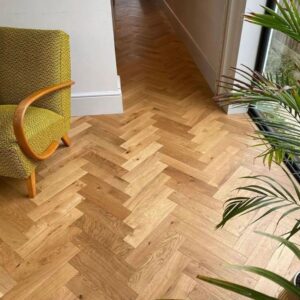
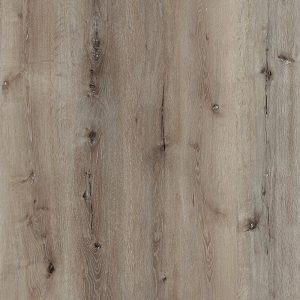
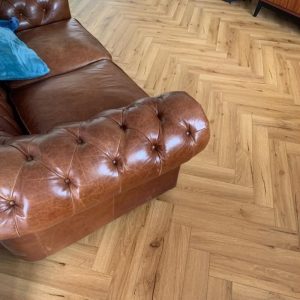
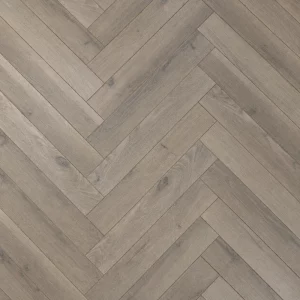
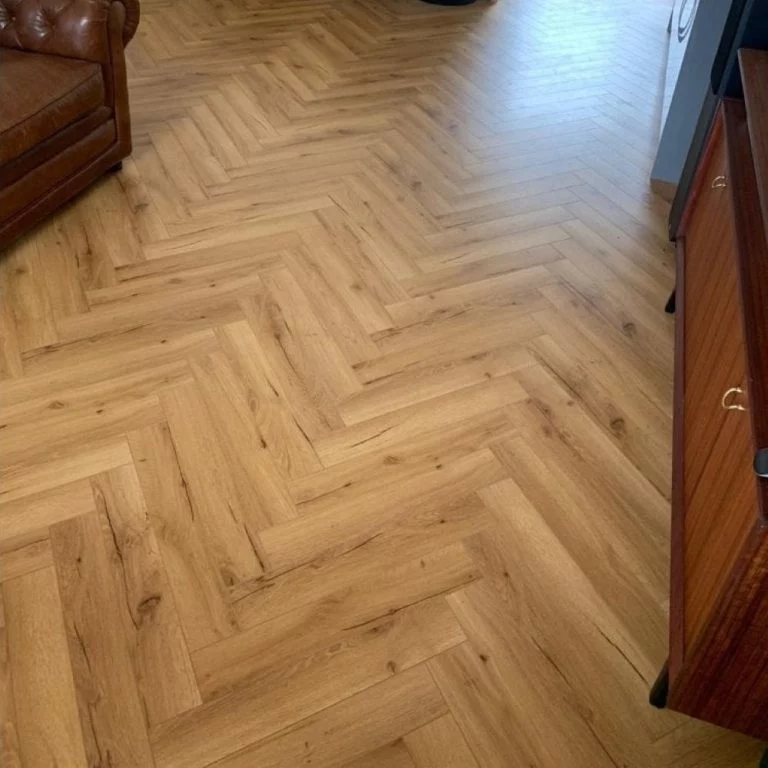
Our 5 laminates are all 12 mm thick, in a herringbone format of 100 × 600 mm, with an AC4 abrasion rating and a registered embossed finish. All click together, all are listed as compatible with underfloor heating, and they carry a 15 year manufacturer's warranty. Four have a 4V bevelled edge and one is micro-bevelled. A box holds 32 boards, 1.92 square metres.
How to choose
Choose in this order: the use class or AC rating the room needs, then the look and the format, then the thickness that suits your door heights and subfloor. Spend the difference on a good underlay rather than on extra millimetres of board.
Common questions
Is 12 mm laminate better than 8 mm?
Not automatically. Egger says the thickness of a laminate floor is not decisive for its suitability; the correct use class for the room is. EN 13329 classifies wear, not thickness.
Is thicker laminate quieter?
No source we could read says so. The published figure for sound belongs to the underlay: the EPLF says a laminate underlay should improve impact sound by at least 14 dB, tested to EN 16354. Egger warns that an underlay that is too thick can harm the click joints.
Does thicker laminate hide an uneven floor?
Not by the published tolerances. The EPLF's typical tolerances for click laminate are 2 mm over 1 m and 3 mm over 2 m, with no sharp step larger than 1.2 mm, and they make no allowance for a thicker board.
What thickness are your laminates?
All 5 are 12 mm, herringbone boards of 100 × 600 mm with an AC4 rating, click fitting and a 15 year manufacturer's warranty.
Can 12 mm laminate go over underfloor heating?
Our 5 laminates are all listed as compatible with underfloor heating. The underlay has to suit the heating as well; Egger warns that one that is too thick can reduce its efficiency.
We deliver laminate town by town across the UK. Browse by town and region.

What the published standards say
Who publishes this guide
- Samples £1.99 each
- UK-wide delivery
- Advice before you order