










Scratches on Wood Floors: Prevent, Repair, Refinish
Where scratches on a wood floor come from, how to prevent most of them, and how oiled and lacquered floors are repaired, from a recoat to a full sand.
Every wood floor scratches. The question is how deep, and the answer decides the repair. The US National Wood Flooring Association says most scratches in wood flooring occur in the finish, not the wood itself, which is good news: a scratch in the finish is a smaller job than a scratch in the oak. This guide covers where scratches come from, how to prevent most of them, and how oiled and lacquered floors are put right.
On this page
Where scratches come from
Grit, first. The NWFA notes that particles have the potential to be ground into floors, damaging the finish, and grit is carried in on every pair of shoes. After grit come furniture dragged across the floor, pets' claws and narrow heels. Grit dulls a whole walkway with fine scratches; the others leave their own lines and marks.
Preventing most of them
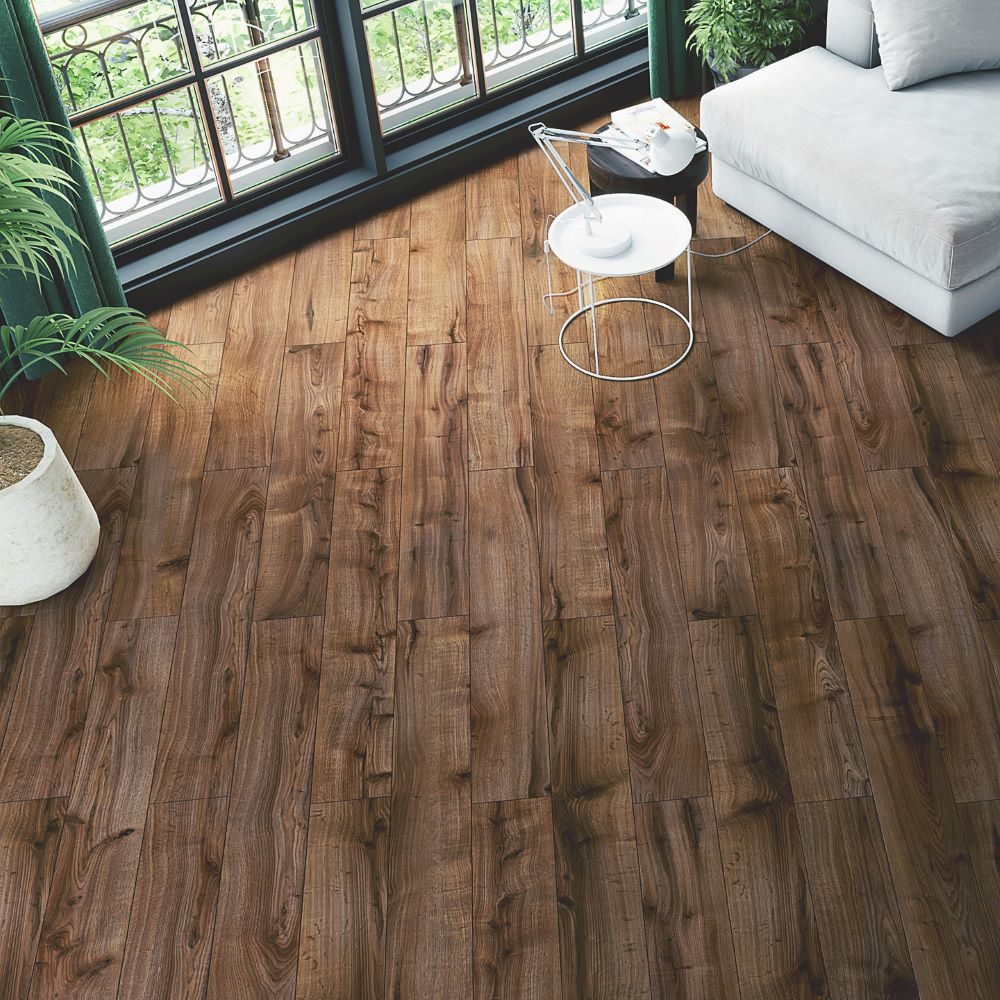
How deep is it?
The depth decides the repair: a scratch in the finish is put right by renewing the finish, a scratch into the oak by sanding the wood itself. The NWFA's guidance below runs the same way, from a light abrade and a new coat to a complete sand and refinish.
Repair by finish
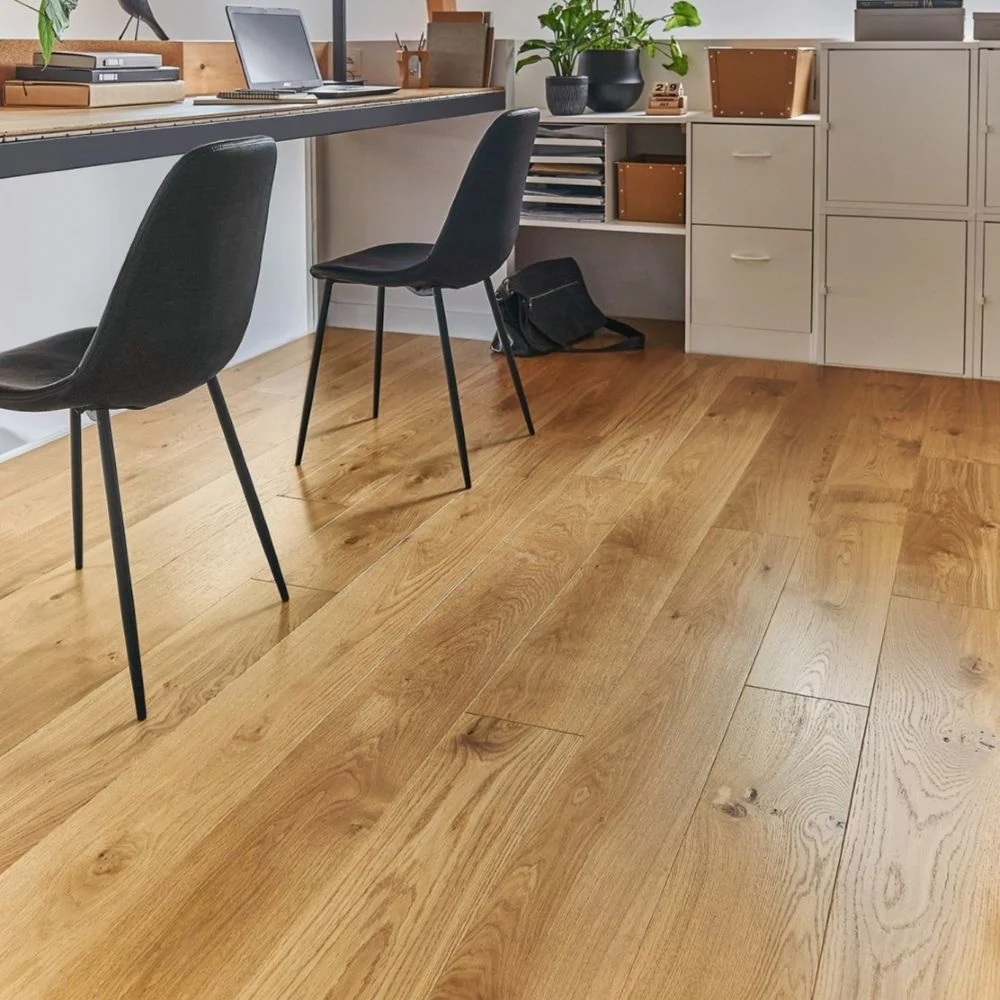
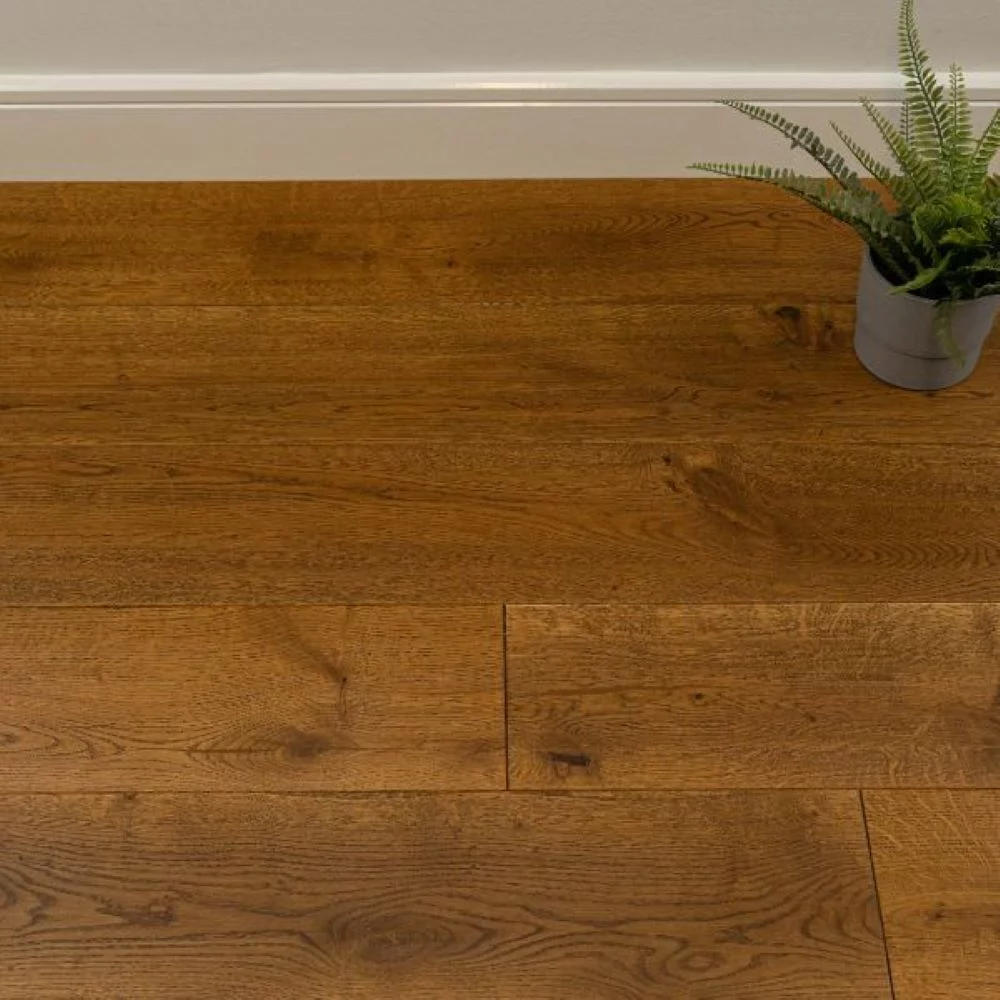
When it needs a full sand
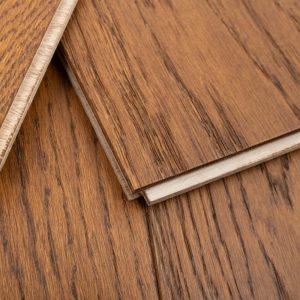
An engineered floor can be sanded and refinished, though not as many times as solid wood flooring, the NWFA notes; how often depends on the oak wear layer. In our range 47 of the 65 engineered floors have a 3 mm wear layer, 13 have 4 mm and 3 have 6 mm. The sanding guide sets out the published minimums and what to check before a sander starts.
Choosing a floor that hides scratches
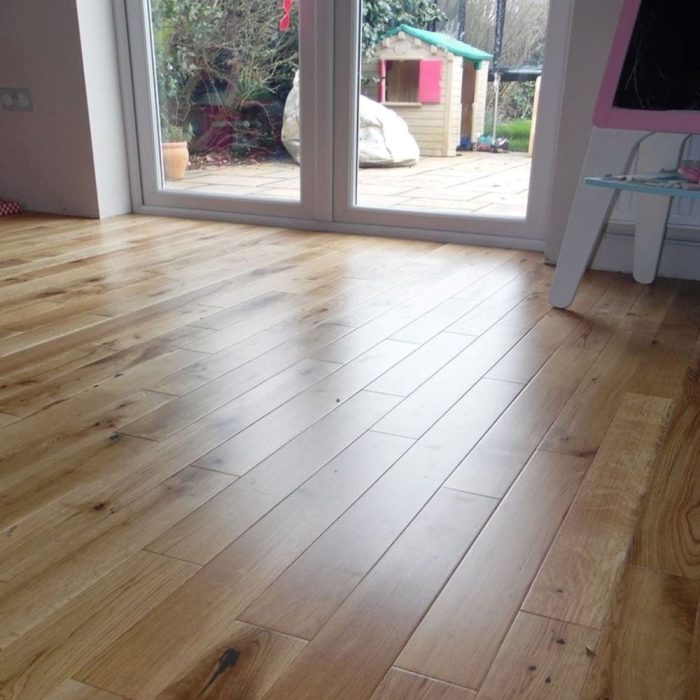
A matt, textured surface hides fine scratches far better than a smooth, glossy one, and an oiled floor can be repaired where it wears. In our range 43 engineered floors are brushed and 9 deep brushed, and 32 are oiled. For a house with dogs or a busy hallway, those are the ones to look at first.


Common questions
How do I fix a scratch in a wood floor?
It depends on the finish and the depth. On an oiled floor the area is cleaned and re-oiled; on a lacquered floor the NWFA says a professional may lightly abrade the finish and apply a new coat; a deep scratch into the wood calls for a sand and refinish of the area or the floor.
Are most scratches in the wood or the finish?
In the finish. The NWFA says most scratches in wood flooring occur in the finish, not the wood itself.
How do I stop chairs scratching my floor?
Fabric-faced glides under every leg, which the NWFA recommends to prevent scuffing and scratching, checked from time to time for embedded grit, and furniture lifted rather than dragged.
Do dogs scratch wood floors?
Their claws can. The NWFA advises keeping pet claws trimmed and in good repair, and a brushed, oiled floor hides marks better and can be repaired where it wears.
When does a scratched floor need sanding?
When the damage is in the wood, such as deep scratches and dents, or when the finish has worn away; the NWFA recommends a complete sand and refinish then. On engineered wood the wear layer decides how often that can be done.
We deliver engineered and solid oak town by town across the UK. Browse by town and region.

What the published standards say
Who publishes this guide
- Samples £1.99 each
- UK-wide delivery
- Advice before you order