



Samples available UK-wide delivery

Your Cart

0

Your cart is empty

Start with a sample: real cuts of our floors at £1.99 each, sent to your door across the UK.

Subtotal £0.00
Shipping & discounts calculated at checkout
SSL encrypted, safe and secure
Can You Sand Engineered Wood Flooring?
Care guide 8 min read

Can You Sand Engineered Wood Flooring?

Yes, if the wear layer allows it. The published minimums, how many times a floor can be sanded, what our boards carry and what to check before you start.

Start reading

Yes, usually, and the answer sits in one number: the thickness of the oak wear layer. An engineered board is a layer of oak bonded to a core; sanding takes some of that oak away, and the floor can be sanded for as long as enough of it is left. The US National Wood Flooring Association puts it in a sentence: engineered wood can be sanded and refinished, but it cannot be done as many times as solid wood flooring. This guide sets out the published minimums, what our floors carry, and what to check before a sander touches the floor.

On this page
  1. The wear layer decides
  2. The published minimums
  3. What our floors carry
  4. How many times?
  5. Sanding or recoating
  6. Before the sander starts
  7. Oil or lacquer afterwards
  8. Common questions
  9. What the published standards say
  10. Who publishes this guide
01

The wear layer decides

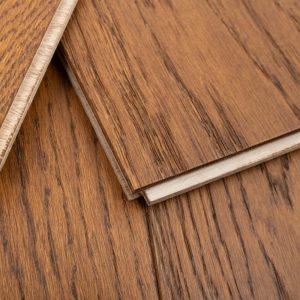
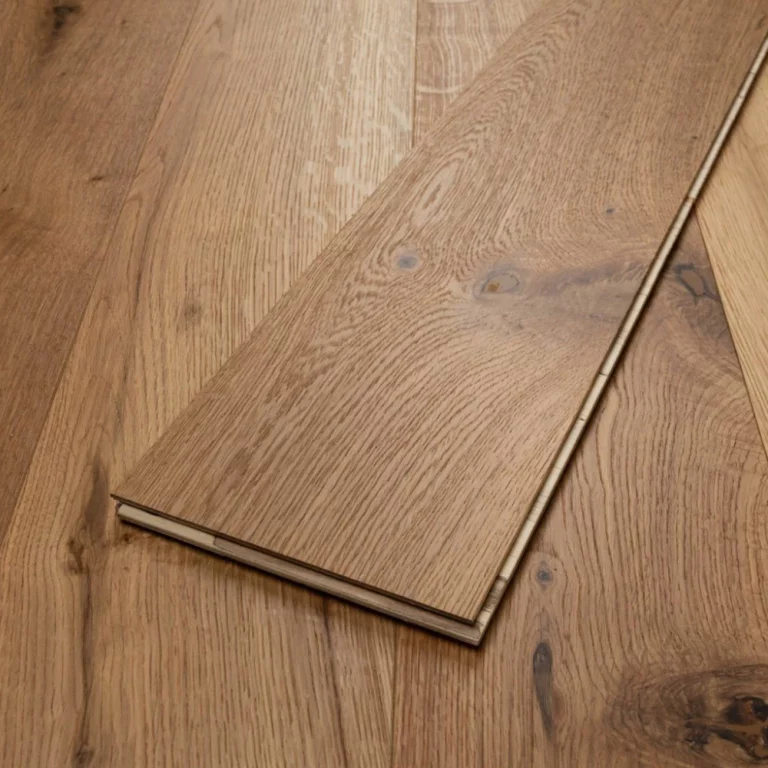
The wear layer is the oak you walk on. When a floor is sanded, the surface is taken back below the scratches and the old finish, and the bare wood is finished again. Each sanding removes some of the wear layer; once it is gone, the core shows and the floor cannot be sanded again. A thick wear layer allows more sandings than a thin one, and the figure on the specification is the one to look for.

02

The published minimums

BS EN 13489, the product standard for multi-layer parquet, defines it as a wood flooring system with a solid wood top layer of at least 2.5 mm thickness, and does not allow the top layer to fall below 2.5 mm whatever the production tolerance. That is the oak a parquet floor starts with.

For sanding, the reference most often cited is American. The NWFA reports that its Sand and Finish Guidelines state that, in general, if the wear thickness is less than 3/32 inch, the floor should not be sanded, and its programme for refinishable engineered floors asks a factory-finished smooth floor for a wear layer of 2.5 mm. 3/32 inch is a little under 2.5 mm; read together, the two sources put the working minimum at about 2.5 mm of oak.

See also
03

What our floors carry

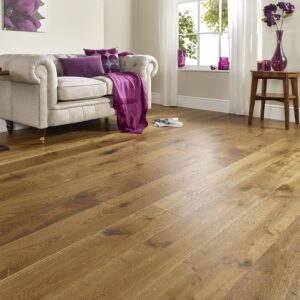
We counted the wear layer on every engineered floor in our range. 47 of the 65 have a 3 mm oak wear layer, 13 have 4 mm and 3 have 6 mm, all above that line. One, a 12 mm plank, lists a 2 mm wear layer, below the NWFA's threshold for sanding, and one walnut plank does not list a wear layer at all; for those two, ask before anyone sands. Every product page states the figure.

See also
04

How many times?

No trade body we could find puts a number on it, because a light sanding removes less than a heavy one and a well-kept floor needs fewer and lighter sandings. The one sourced figure comes from a manufacturer, Kährs, which says engineered floors can be sanded up to four times depending on the thickness of the wear layer. Treat it as one maker's guidance for its own boards, not a rule for every floor.

05

Sanding or recoating

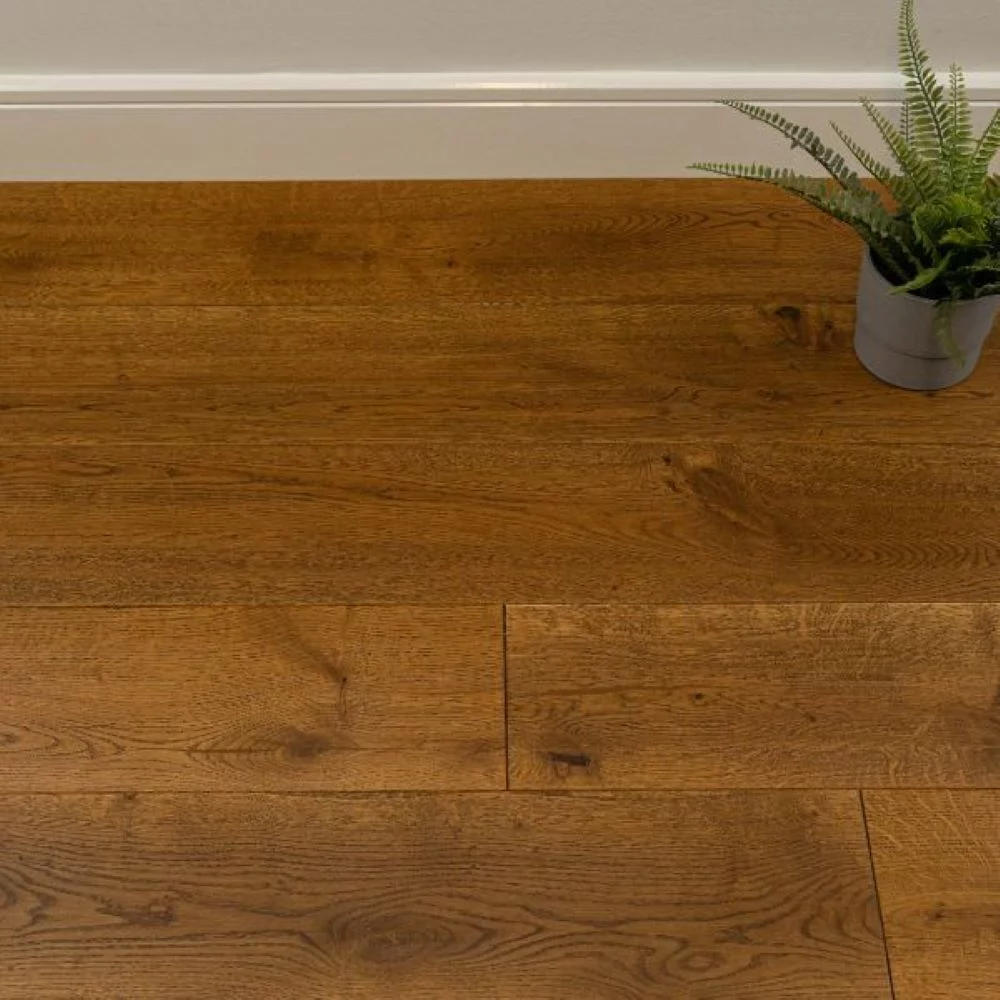
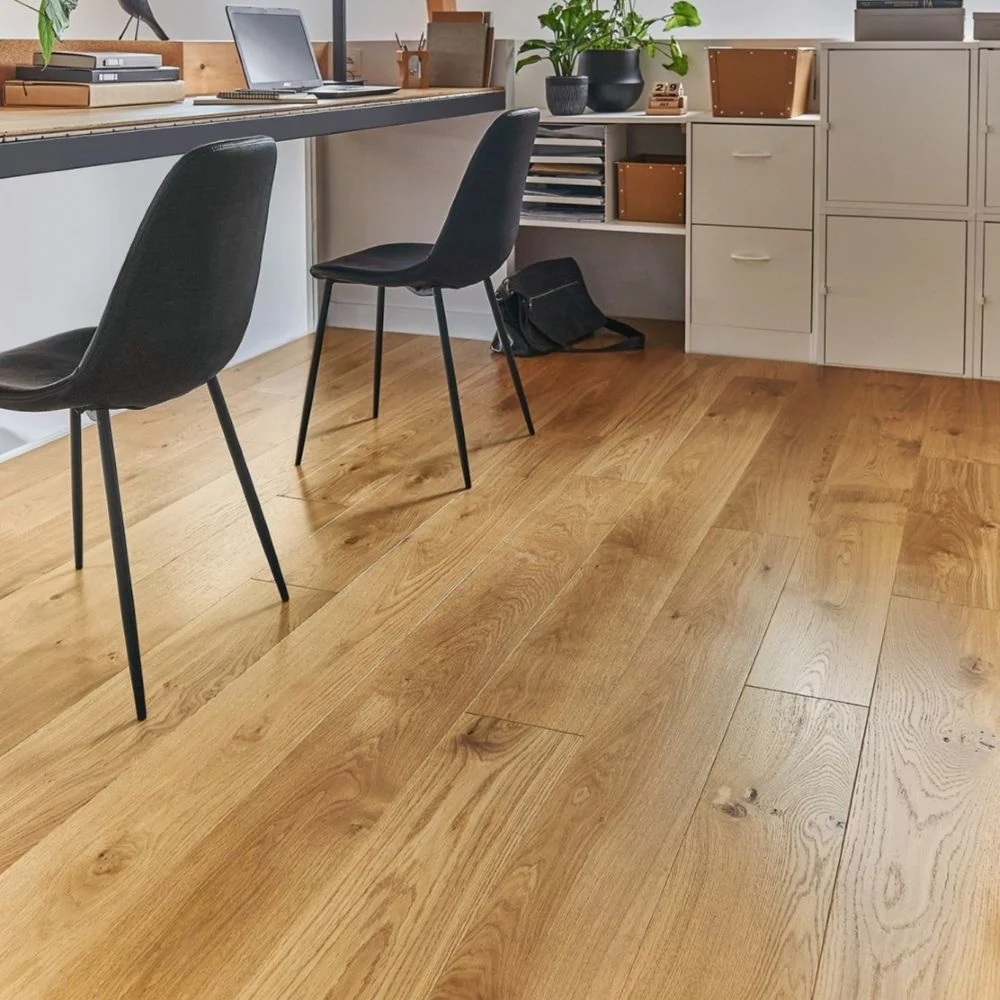
A worn floor does not have to be sanded. On a lacquered floor, wear that has not gone through the film is dealt with by recoating the area; an oiled floor is re-oiled where it has worn. The two care guides go through both. Sanding back to bare wood is for a floor whose finish has worn through, which is marked deeper than the finish, or whose colour is to change.
See also
06

Before the sander starts

Know the wear layer: from the product page, from the paperwork, or from a board end at a threshold. Tell the floor sander the figure before they start, because a heavy pass through a thin layer cannot be undone. Then plan the finish. The Wood Handbook of the US Forest Products Laboratory describes finishing a floor in four steps: sanding the surface, applying filler, staining to achieve a desired colour and finishing with a clear coat. It adds that the detailed procedure depends largely on the species of wood and the finish chosen, and that flooring associations and manufacturers are the place to ask.

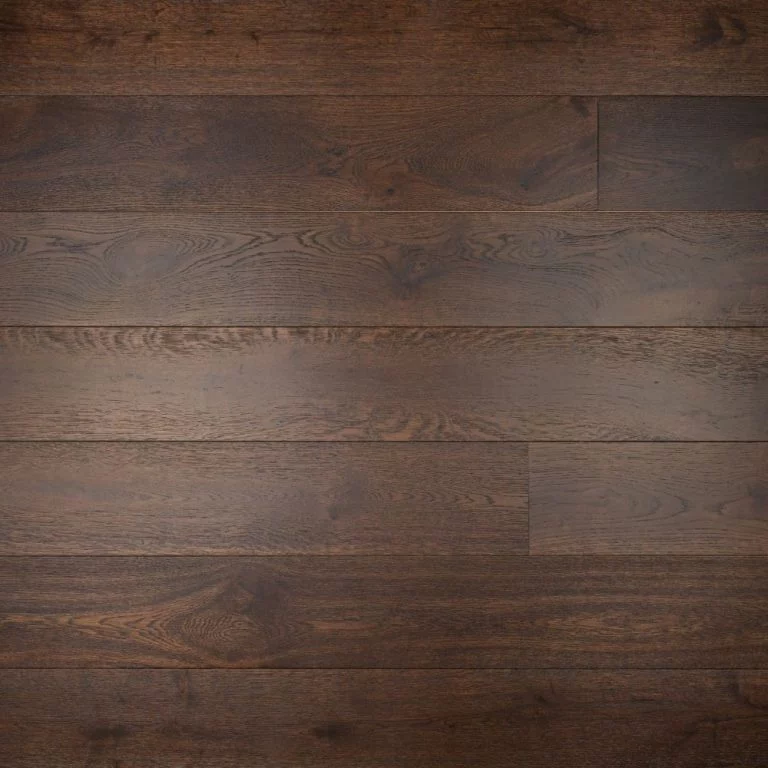
The thickest wear layer in our range is 6 mm, on boards in the natural oak, dark oak and golden oak collections; every product page states the figure.
See also
07

Oil or lacquer afterwards

Once the floor is back to bare wood, the finish is chosen again. The Handbook describes film-forming finishes such as varnish as generally easier to clean, and oils as penetrating finishes that leave the surface texture intact; floors need thicker, harder films. The guide to oiled and lacquered floors weighs them room by room.

See also
08

Common questions

Can you sand engineered wood flooring?

Yes, if the wear layer is thick enough. The NWFA says engineered wood can be sanded and refinished, though not as many times as solid wood flooring, and reports that a floor with less than 3/32 inch of wear layer should not be sanded.

How thick does the wear layer need to be?

About 2.5 mm or more. BS EN 13489 sets a top layer of at least 2.5 mm for multi-layer parquet, and the NWFA's threshold for sanding, 3/32 inch, is a little under that.

How many times can engineered wood be sanded?

It depends on the wear layer and on how much each sanding takes off. The only sourced number is a manufacturer's: Kährs says up to four times, depending on the thickness of the wear layer.

Can a 3 mm wear layer be sanded?

Yes, with care: 3 mm is above the 2.5 mm minimum, and a light sanding by someone who knows the figure leaves oak for later. 47 of our 65 engineered floors have a 3 mm wear layer.

Is sanding engineered wood different from sanding solid wood?

The method is the same; the margin is not. A solid board is oak throughout, an engineered board only to the depth of its wear layer, which is why the NWFA says engineered floors cannot be sanded and refinished as many times as solid wood flooring.

Every engineered floor we sell states its wear layer on the product page. We deliver town by town across the UK. Browse by town and region.

See also
09

What the published standards say

Each entry is quoted from its source and linked to it. The full set is in the standards reference.

1 of 6
National Wood Flooring Association

Engineered wood can be refinished, less often than solid

The US National Wood Flooring Association says engineered wood floors are real wood in multiple layers with a top layer of high-quality wood, and that they can be sanded and refinished, but not as many times as solid wood flooring.

The exact wording

“Engineered wood floors are also made of real wood, but include multiple layers, with the top layer made of high-quality wood. … While this type of flooring can be sanded and refinished, it cannot be done as many times as solid wood flooring.”

Source: Types of Wood Floors - woodfloors.org, consumer site of the National Wood Flooring Association (NWFA), 10 October 2023
National Wood Flooring Association

The wear layer below which a floor is not sanded

2.5 mm Minimum wear layer, factory-finished smooth engineered floor (NWFA refinishable programme)

According to the US National Wood Flooring Association, its Sand and Finish Guidelines say that, in general, a floor with a wear thickness of less than 3/32 inch should not be sanded, and its refinishable programme asks a factory-finished smooth engineered floor for a wear layer of at least 2.5 mm (3/32 inch).

The exact wording

“• Factory Finished Smooth Wood Flooring: 2.5 mm (3/32”) … the NWFA Wood Flooring Sand and Finish Guidelines state that, in general, if the wear thickness is less than 3/32”, the floor should not be sanded.”

Source: NWFA Launches Engineered Wood Flooring Refinishable Program, by John Forbes, NWFA - Hardwood Floors magazine (published by the National Wood Flooring Association), August/September 2022
European standard (EN)

Multi-layer parquet: a top layer of at least 2.5 mm

2.5 mm Minimum top layer thickness, multi-layer parquet (EN 13489:2023, 3.1 and Table 1)

EN 13489, the product standard for multi-layer parquet, defines multi-layer parquet as a wood flooring system of laminated construction with a solid wood top layer of at least 2.5 mm, and requires the top layer never to be thinner than 2.5 mm, whatever the production deviation.

The exact wording

“wood flooring system of laminated construction with a solid wood top layer of at least 2,5 mm thickness … Due to process in production, the deviation of declared top layer thickness can be ± 0,2 mm but the thickness shall be never less than 2,5 mm.”

Source: EN 13489:2023 - Wood-flooring and parquet - Multi-layer parquet elements (SIST preview of the standard, clause 3.1 Terms and definitions, clause 4.1.3 Dimensional characteristics)
Kährs

How often a wood floor can be sanded

up to 4 times sanding cycles, engineered wood floor (manufacturer statement)

No trade-association or standards source found puts a number on how often an engineered wood floor can be sanded; the only sourced figure comes from a manufacturer, Kährs, which says engineered floors can be sanded up to four times depending on wear-layer thickness.

The exact wording

“Depending on the thickness of the wear layer, they can be sanded up to four times, extending their lifespan significantly.”

Source: FAQ about flooring - Kährs
USDA Forest Products Laboratory

Finishing a wood floor: what a finish does, and the four steps

The Wood Handbook of the US Forest Products Laboratory says finishes enhance the natural beauty of wood floors, protect them from excessive wear and make them easier to clean, and describes finishing a floor in four steps: sanding the surface, applying filler, staining to the desired colour and finishing with a clear coat. Detailed procedures and products depend on the wood species and the finish chosen, and the Handbook refers readers to flooring associations and manufacturers for them.

The exact wording

“Finishes enhance the natural beauty of wood floors, protect them from excessive wear, and make them easier to clean (Fig. 16–31). Detailed procedures and specific products depend largely on the species of wood used and finish preference. Obtain additional information specific to your needs from flooring associations or individual flooring manufacturers. Finishing floors consists of four steps: sanding the surface, applying filler, staining to achieve a desired color, and finishing with a clear coat.”

Source: Wood Handbook — Wood as an Engineering Material, General Technical Report FPL-GTR-190 (Centennial Edition, 2010), chapter 16 "Finishing of Wood", section "Finishes for Wood Floors" — USDA Forest Service, Forest Products Laboratory
USDA Forest Products Laboratory

Oils and film finishes compared

The 2021 Wood Handbook of the US Forest Products Laboratory compares the two kinds of clear finish: film-forming finishes such as varnish are generally easier to clean and better at keeping wood from getting dirty than penetrating finishes such as oils, which leave the surface texture intact; films can protect against scratches and dents but are worn away by cleaning and abrasion, and floors need thicker, harder films.

The exact wording

“Smooth film-forming finishes, such as varnish, are generally easier to clean and better at preventing wood from getting dirty, compared with penetrating finishes such as oils that leave the surface texture intact. Films, especially when thicker, can also protect the wood from scratches and dents. Films often get worn away by repeated cleaning or by abrasion. Thicker, harder films are needed for high wear applications such as floors.”

Source: Wood Handbook — Wood as an Engineering Material, General Technical Report FPL-GTR-282 (2021), chapter 16 "Finishing of Wood", section "Transparent Finishes" — USDA Forest Service, Forest Products Laboratory
10

Who publishes this guide

Homes and Floors Ltd, registered in England and Wales, company number 11762665, incorporated in January 2019. Endeavour House, Floor 3, Coopers End Road, Stansted CM24 1SJ.

Where a guide quotes a standard or a regulation, the source is named and linked. Product figures come from the specifications on the product pages. If something here is wrong, tell us at info@homesandfloors.com and we will check it.

First published . Last updated .

Your next step
A question about a floor you already have?
Tell us the floor and what has happened to it, and we will say what the manufacturer's guidance allows.
  • Samples £1.99 each
  • UK-wide delivery
  • Advice before you order

Join the Homes & Floors Club

New ranges and offers. Hear it first.

  • Room ideas & honest guides
  • New floors first
  • Special offers

No spam. Unsubscribe any time.