



Solid Wood vs Engineered Wood Flooring: The Honest Comparison
Same oak on the surface, completely different behaviour underneath. Why construction decides where each one belongs.
On this page
01
The only difference that matters
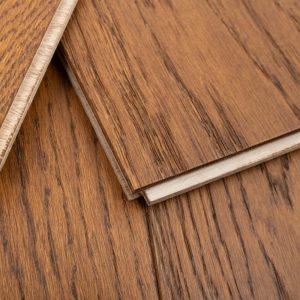
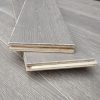
Solid wood is one piece of timber all the way through. Engineered wood is a real oak wear layer bonded to a core whose layers run at right angles to each other.
On the surface they can be indistinguishable. Underneath, the cross layered core restrains movement, and that restraint is what decides which rooms each floor can go in.
Not a quality question: Engineered is not a lesser version of solid. It is a different construction that solves a specific problem, and in a modern home it usually solves it better.
02
Where they differ in practice
Five differences, and they all trace back to the core.
Movement
Solid moves most across its width through the seasons. Engineered holds its width.
Underfloor heating
Solid is not suitable. Engineered is. This is the decisive point in most modern homes.
Board width
Wide boards are normally engineered, because a wide solid board moves too much.
Fitting
Solid is usually nailed to a timber subfloor. Engineered can be floated, glued or nailed.
Refinishing
Solid can be sanded many times. Engineered can be sanded as far as its wear layer allows.
03
Which suits your home
The building usually answers this before taste does.
Underfloor heating
Engineered. There is no version of this where solid is the right answer.
Concrete subfloor
Engineered, glued or floated. Solid wants timber to fix into.
Period property, timber joists
Solid is at home here, and it is the traditional detail.
Wide boards
Engineered, for stability across the width.
04
Living with each
Both are real wood, so the care is the same. What differs is what happens in twenty years.
Same daily routine
Sweep often, damp mop rarely, felt under furniture, mats at the doors.
Same seasonal movement
Fine gaps in winter that close in summer. Larger on solid than on engineered.
Refinishing
Solid gives you more future sandings. Engineered gives you as many as the wear layer allows, which is usually enough for a domestic life.
Over underfloor heating
None of our solid floors is listed for it; the engineered boards are.
Important: Some solid floors are made for underfloor heating and come with their maker's own limits; none of ours is, so for real wood over heating choose engineered.
See also
05
Questions about solid and engineered oak
Is engineered wood real wood?
Yes. The surface is a layer of real oak, 3 to 6 mm thick in our range, bonded to a cross layered core. What you see, walk on and eventually sand is oak. The core is what stops the board moving with the seasons, which is why the engineered board suits underfloor heating and a concrete slab where solid oak does not.
Can solid oak go over underfloor heating?
Not from our range: none of the fifteen solid oak boards is listed for it. Some solid floors are made for heating, with their maker's own limits; none of ours is. The engineered range gives the same oak surface on a core built for a heated screed, and every board in it is listed.
Which can be sanded more often?
A solid board is oak all the way through and can be sanded for as long as the house stands. An engineered board can be sanded as often as its wear layer allows: the 4 and 6 mm layers on the 15 and 20 mm Victorian boards take more than one cycle, a 3 mm layer at least one. No trade body publishes a number of sandings per millimetre, so the fitting instructions govern.
Which should I choose for a period house?
Where the original floor is timber on joists and the room is heated evenly, solid oak fixed to the joists is the closest to the original construction. Where the ground floor is concrete, the kitchen is an extension on a slab, or there is underfloor heating, the engineered board is the honest recommendation.
See also
06
What the published standards say
07
Related reading
Your next step
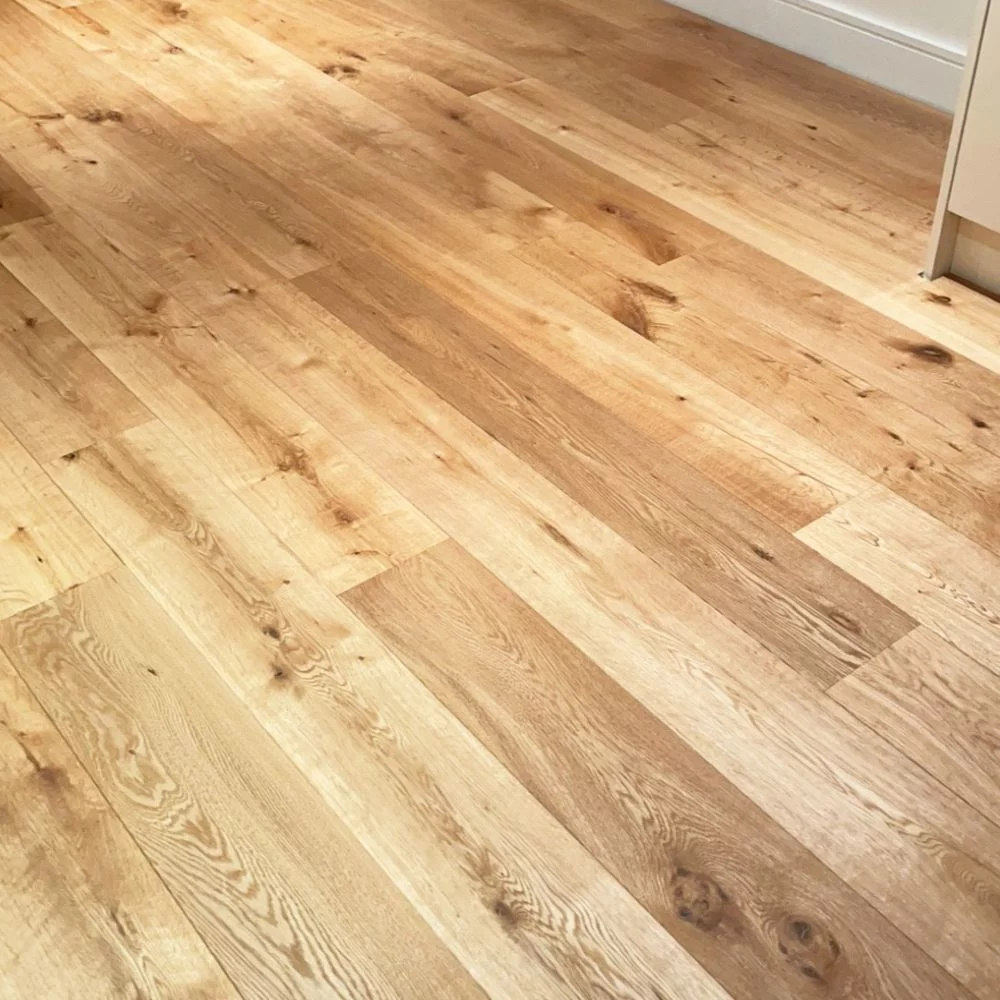
Both are real oak. See them together.
The surface can be identical. Order a sample of each and decide on the room rather than the description.
- Samples £1.99 each
- UK-wide delivery
- Advice before you order
On this page
Not sure it suits your room?
A real cut from a real board. Samples £1.99 each, up to 10 per order.
Order samples · £1.99