
Fitting Solid Oak Flooring
The standards, the 65 % screed reading, acclimatisation, how a tongue-and-groove board is fixed, and why the range's solid oak stays off underfloor heating.
A solid oak board is one piece of tree, 18 mm thick in this range, and it goes on behaving like a tree after it is laid: it takes on moisture and swells, gives it up and shrinks, for as long as the floor exists. Fitting solid oak is the craft of controlling that movement. Engineered oak was invented to need less of that craft; solid oak rewards it. This guide sets out what the standards ask, what the boards in the range are, and the order of the job.
On this page
The standards behind the board
The product standard is BS EN 13226, which specifies the characteristics of solid parquet elements with grooves and tongues for internal use as flooring, with or without a surface treatment. Every solid board and block in the range is a tongue-and-groove element of that kind. The installation is covered by BS 8201:2011, the UK code of practice for flooring of wood and wood-based panels, which gives recommendations on the material, the environment and the installation, the three variables the standard says together decide how a wood floor performs. A fitter who quotes to BS 8201 is quoting to the document that describes the job.
The subfloor, and the stricter figure
Solid timber is the covering for which UK practice sets the lower moisture limit. A hygrometer maker's data sheet that cites BS 8203, BS 5325 and BS 8201 treats a screed as dry enough for most floor coverings at readings not exceeding 75 % relative humidity, and for solid timber at 65 %. The reading is taken with a hygrometer sealed to the surface inside an insulated box, left to reach equilibrium: at least four hours on a 50 mm screed with the membrane beneath it, and 72 hours where the membrane lies below the base slab. The Contract Flooring Association adds the rest of the base's conditions: clean, sound, level, strong enough to carry the preparation and the finish, mechanically prepared and dust free.
The ten-point gap between 75 and 65 is the whole difference between solid and engineered oak on a screed. An engineered board takes moisture into a cross-bonded core that resists it; a solid board takes it into the same grain the whole way through. On a suspended timber floor the question is the same one asked differently: the joists and boards beneath must be dry and sound, and any void beneath them ventilated.
The board's own moisture
A wood floor is fitted at a moisture content close to the one it will settle at in the room. For multi-layer parquet, EN 13489 requires 5 to 9 % at first delivery, measured by the oven-dry method of EN 13183-1. The corresponding figure for solid parquet under EN 13226 was not available from a source we could read, so we do not state one; a fitter measures the boards with a moisture meter and compares them with the room. The point of the measurement is not the number on its own but the gap between board and room, because the gap is the movement that will happen after the floor is laid.
Letting it arrive
The CFA's guide says the room should be at its in-service temperature 48 hours before installation, so that the flooring can be kept in the room and brought to room temperature before it is laid. For solid oak that period is the floor of the requirement, not the ceiling: the boards stay in the room, in their packs, until the meter says they and the room agree. In a new house that means the heating on and the plaster dry first, which the new screed guide sets out.
How a solid board is fixed
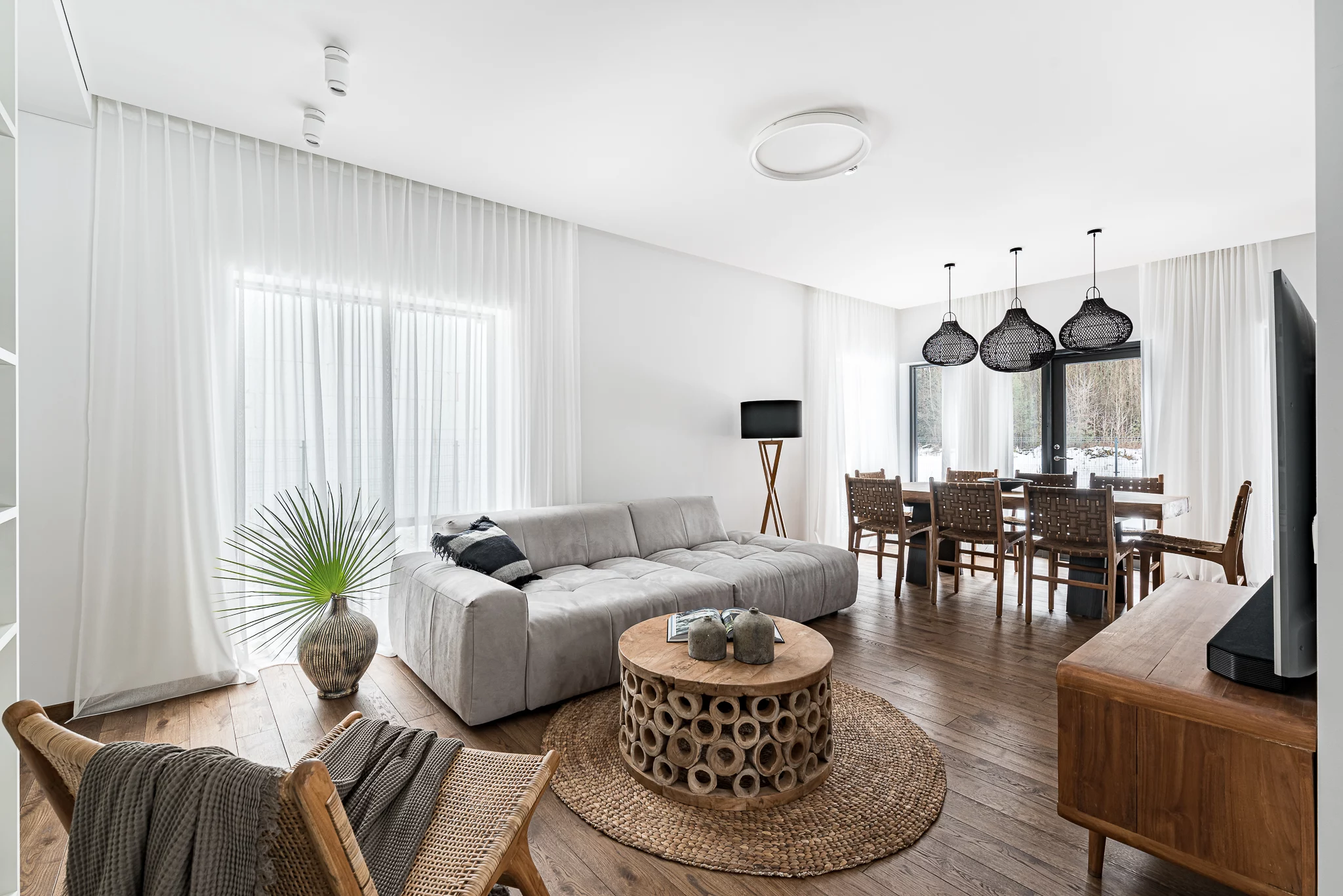
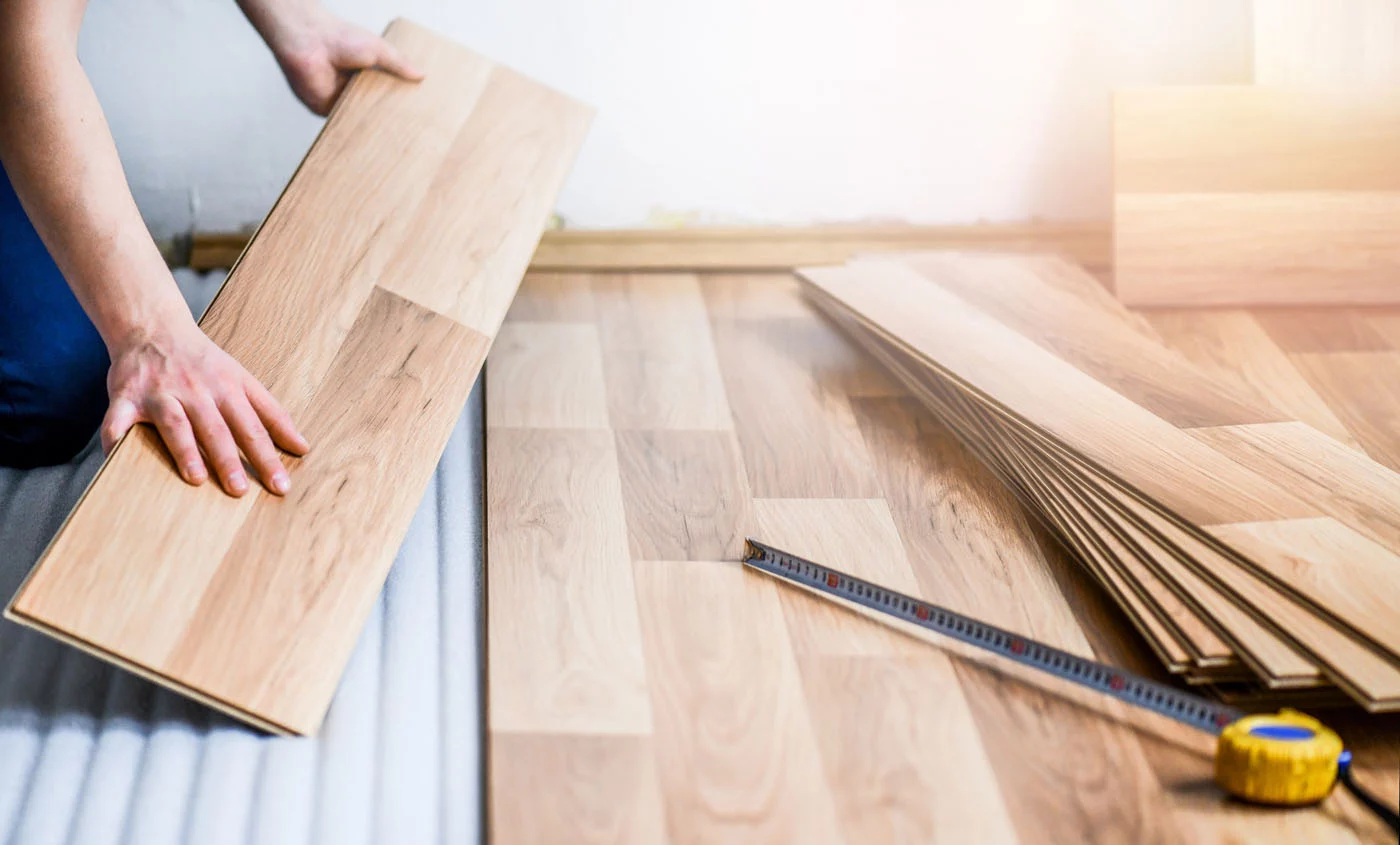
Solid oak is a fixed floor. The tongue-and-groove joint locates the boards to each other; the fixing holds the floor to the building, either by nailing through the tongue into a timber subfloor or battens, or by bonding to a screed with a flexible wood-flooring adhesive. Which method, which adhesive and what gap is left at the perimeter are set by the manufacturer's fitting instructions and by BS 8201, and they are the specification the fitter works to. What the range does not offer is a floating solid board: the click and floating formats belong to engineered oak, laminate and rigid vinyl, and the click or tongue-and-groove guide explains why.
Underfloor heating
Every solid oak board and block in the range is listed as not compatible with underfloor heating. UK trade guidance sets no blanket ban on wood over heating, tying it instead to a surface temperature limit and noting that some hardwood floor finishes are installed with a maximum of 27 °C; for these boards the manufacturer has answered the question in the attribute, and the answer is no. Over a heated floor the range's oak is the engineered oak, and the underfloor heating guide covers the limits.
The boards and blocks in the range
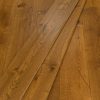
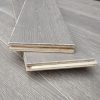
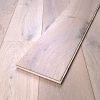
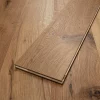
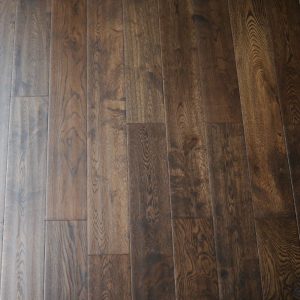
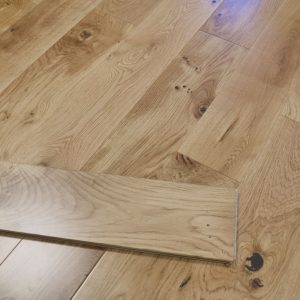
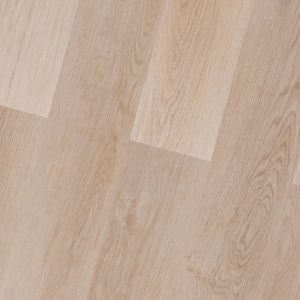
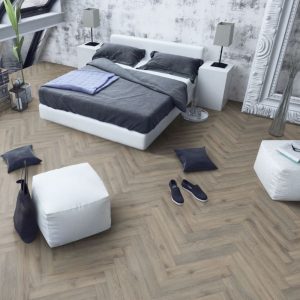
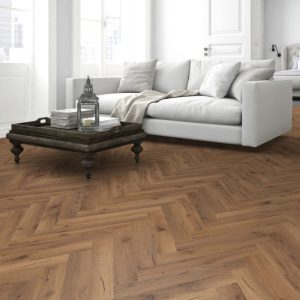
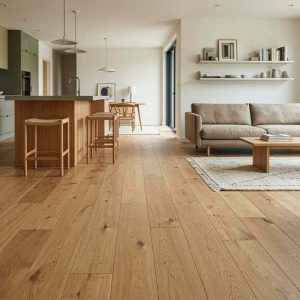
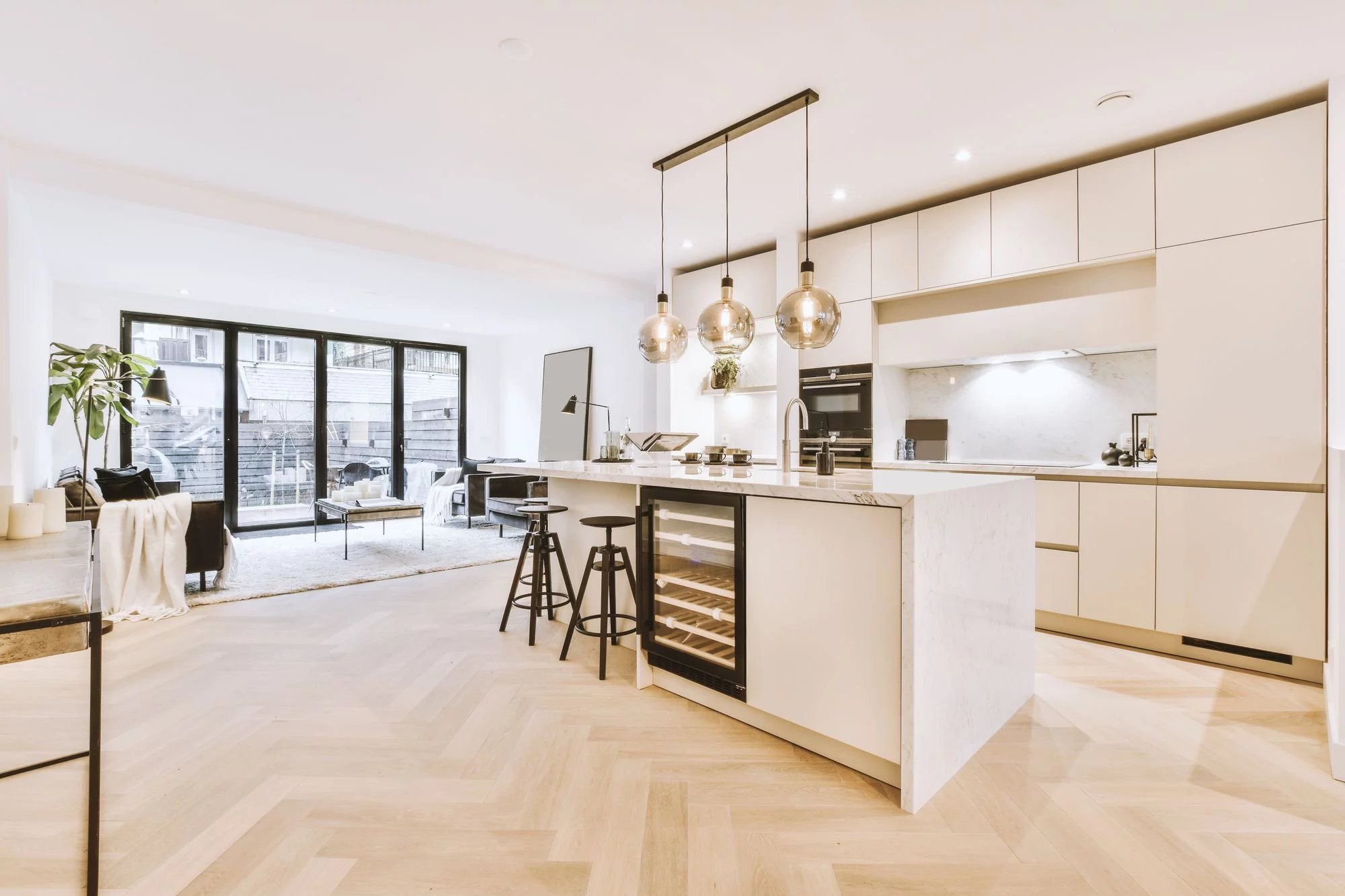
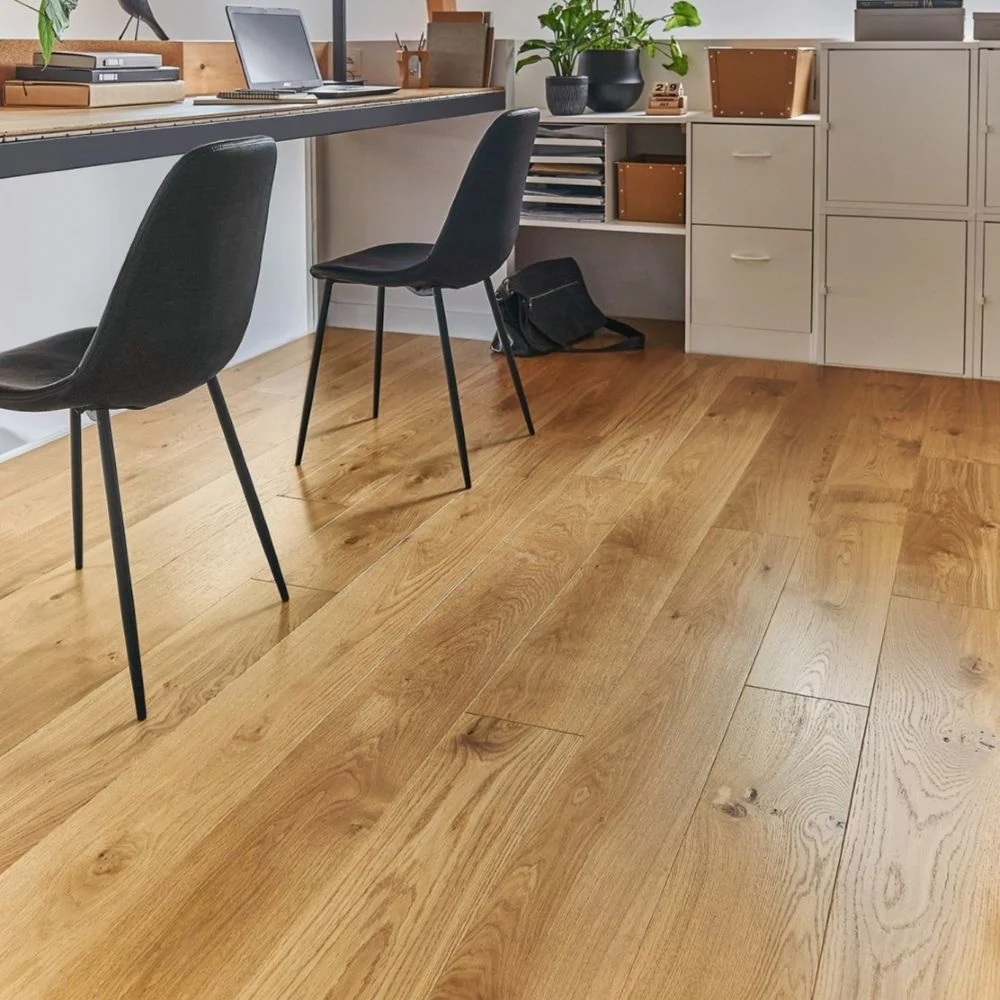
The Windsor solid oak planks are 18 mm European oak in rustic grade, tongue and groove with a micro-bevelled edge, in random lengths and three widths: 90 mm at 1.08 m² a box, 125 mm at 1.2 m² and 150 mm at 1.44 m². The finishes are brushed and UV oiled, UV lacquered, hand-scraped and lacquered, and brushed matt lacquered in smoked and dark tones, all with a 20-year manufacturer's warranty. Width is a movement decision as much as a look: for the same change in moisture a 150 mm board moves more across its face than a 90 mm one, so the wider board asks more of the subfloor reading and the acclimatisation.
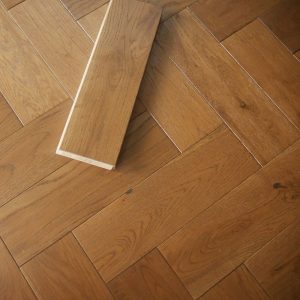
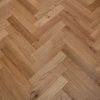
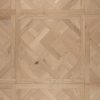
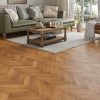
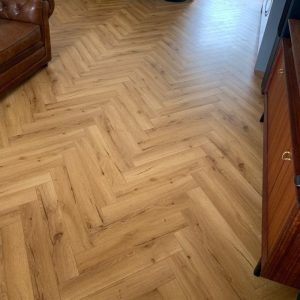
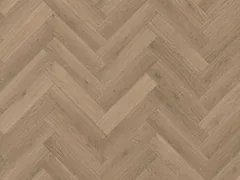
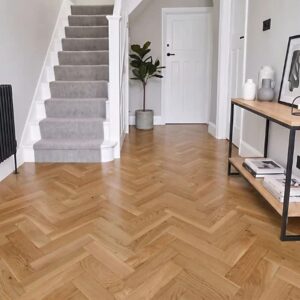
The Marlow parquet blocks are the same oak at 18 mm by 90 mm by 300 mm, 1.08 m² a box, in brushed oiled smoked oak, brushed matt lacquered natural and light oak, and an unfinished block that is sanded and finished on site. The unfinished block is the traditional route: laid, sanded flat as one surface, then oiled or lacquered, and the oiled or lacquered guide covers that choice.
Sanding, later
A solid board can be sanded back and refinished, and what there is to draw on is the oak above the tongue. How many times is a question no standard or trade body we found puts a number on; the only sourced figure is a manufacturer's, Kährs, saying an engineered floor can be sanded up to four times depending on its wear layer, and that figure is for engineered boards. For solid oak we do not state a count.
Common questions
Can solid oak go over underfloor heating?
Not the boards in this range: every solid plank and block is listed as not compatible. Trade guidance ties wood over heating to a surface temperature limit rather than a ban, but the manufacturer's attribute is the answer for these products, and the range's oak for a heated floor is engineered.
Can I float a solid oak floor?
The range's solid boards are tongue and groove for a fixed installation, nailed to a timber subfloor or bonded to a screed as the fitting instructions describe. Floating formats in the range are engineered oak, laminate and rigid vinyl.
How dry does the screed need to be?
UK practice following BS 8203 treats a screed as dry enough for solid timber at hygrometer readings not exceeding 65 % relative humidity, against 75 % for resilient coverings. The hygrometer is sealed to the surface and left to reach equilibrium before it is read.
How long should the boards acclimatise?
The CFA's guide puts the room at its in-service temperature 48 hours before installation so the flooring can reach room temperature there. For solid oak the packs stay in the room until a moisture meter shows the boards and the room agree, which can be longer.
Solid oak on a suspended timber floor is a different job from solid oak on a screed, and which one you have depends on when the house was built. Browse by town and region.
What the published standards say
Who publishes this guide
Related reading
- Samples £1.99 each
- UK-wide delivery
- Advice before you order