Is Engineered Oak Waterproof?
No, and why: what water does to oak, what a lacquer or oil can and cannot do, why the cross-laid core helps, and which of our floors are listed as waterproof.
No. Engineered oak is real oak on top of a cross-laid core, and oak takes on water like any other wood. What the construction changes is how far a board moves when its moisture content changes, not whether water gets in. This guide sets out what water does to an oak floor, what the finish and the construction can and cannot do about it, and which floors in our range are listed as waterproof instead.
On this page
Why oak is not waterproof
The Wood Handbook of the US Forest Products Laboratory opens its chapter on moisture with the property that matters here: wood, like many natural materials, is hygroscopic; it takes on moisture from the surrounding environment. How much depends on the relative humidity and temperature of the air and on the water already in the wood. The oak wear layer of an engineered board is wood like any other, so it can be protected but not made waterproof.
Liquid water is the faster problem. The Handbook says contact with liquid water can induce rapid changes in the moisture content of wood, in contrast to the slow changes caused by water vapour in the air, and that wood absorbs it most rapidly along the grain, where the end grain is exposed. On a floor, end grain sits at the end of every board, and a spill left standing finds the joints.
What water does to a wood floor
Wood changes size with its moisture content. In the Handbook's words, wood swells as it gains moisture and shrinks as it loses it, and that shrinking and swelling can result in warping, checking and splitting, with gaps in flooring among the problems it names. It also notes that wood moves most in the direction of the growth rings, about half as much across them and only slightly along the grain, so a floor board moves across its width far more than along its length. The US National Wood Flooring Association is blunter about water on a finished floor: standing water will result in cracks, splits, cupping, warping and degradation of the finish.
What the finish does, and what it does not
A finish protects the surface; it does not seal the wood. The Handbook is direct about it: moisture content changes can be retarded, but not prevented, by protective coatings such as varnish, lacquer or paint. An oil is a penetrating finish rather than a film on top, and the guide to oiled and lacquered floors explains what that means day to day. Of the 65 engineered floors in our range, 33 carry a lacquer and 32 an oil or hard wax oil, and on every one of them the rule is the same: water does not stay on the floor.
What the construction does
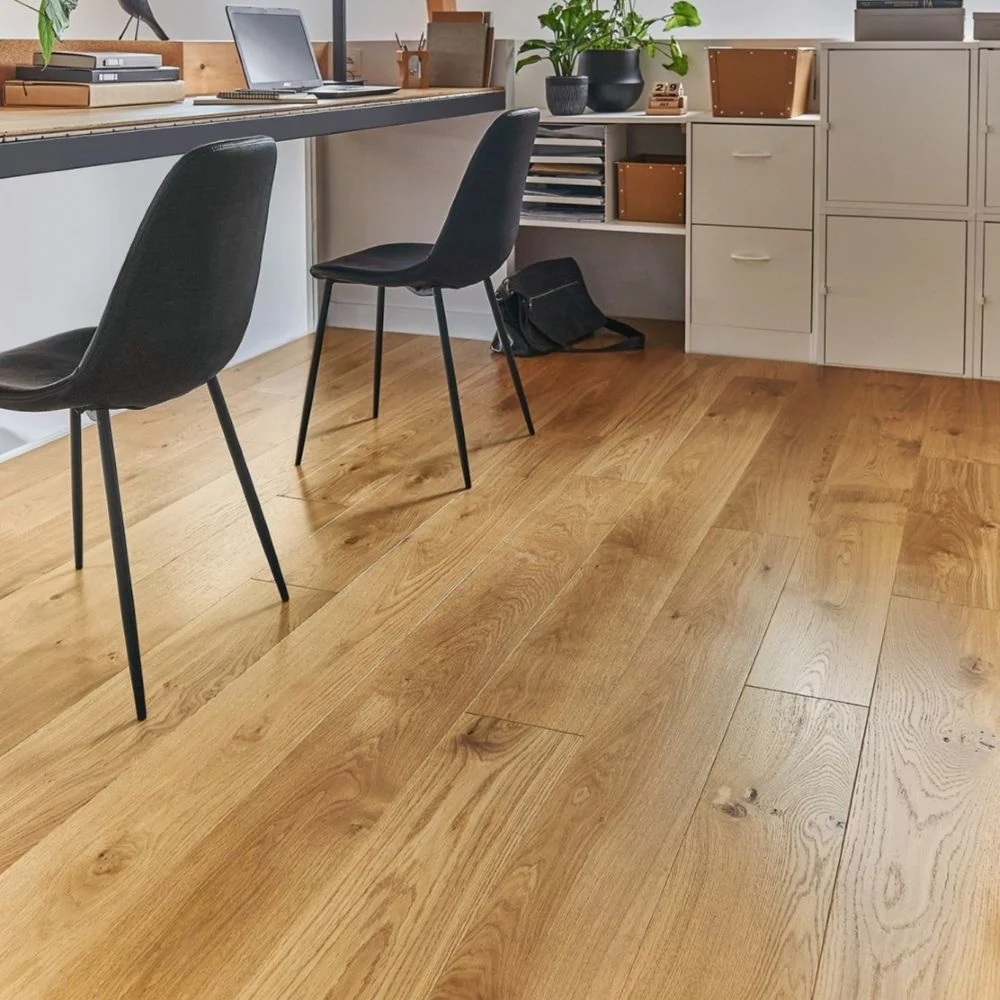
An engineered board is a layer of oak bonded to a core whose layers run across each other. The Handbook names the benefit of bonding wood in crossing directions, as in plywood: the product has much lower swelling and shrinkage with changes in humidity or moisture. The product standard, BS EN 13489, notes that the cross laminated construction minimizes the possibility of the wood to move, and BEAMA, the UK underfloor heating trade association, describes engineered timber as a more stable option than solid timber because it is cross-laminated, so its moisture content is less critical. Stable is not the same as waterproof. The cross-laid core limits how far the board moves; it does not stop the oak on top from taking on water.
Dry before it goes down
The boards arrive dry: BS EN 13489 requires a moisture content between 5 % and 9 % at the time of first delivery. The Handbook adds that, in general, no significant dimensional changes will occur if wood is installed at a moisture content corresponding to the average conditions it will be exposed to. That is why the boards acclimatise in the room, and the Contract Flooring Association asks for the room to be at its in-service temperature 48 hours before installation. It is also why the subfloor is checked, because water reaches a floor from below as well as from above. The CFA asks for a solid base to show a hygrometer reading not greater than 75% relative humidity before the floor goes down, and Approved Document C says floors next to the ground should resist the passage of ground moisture to the upper surface.
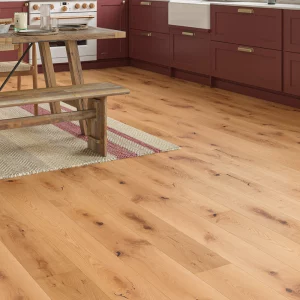
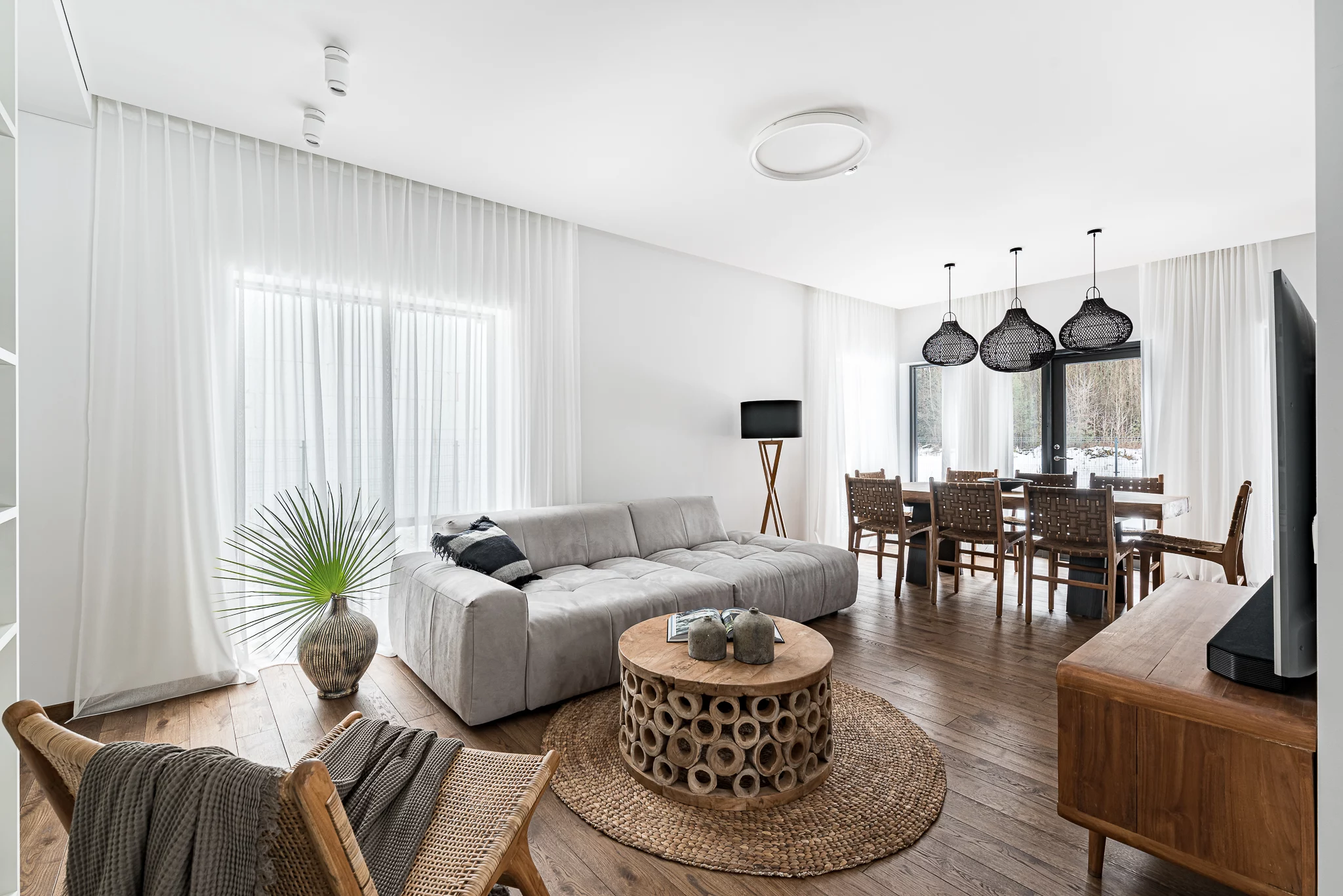
Kitchens, bathrooms and the floors listed as waterproof
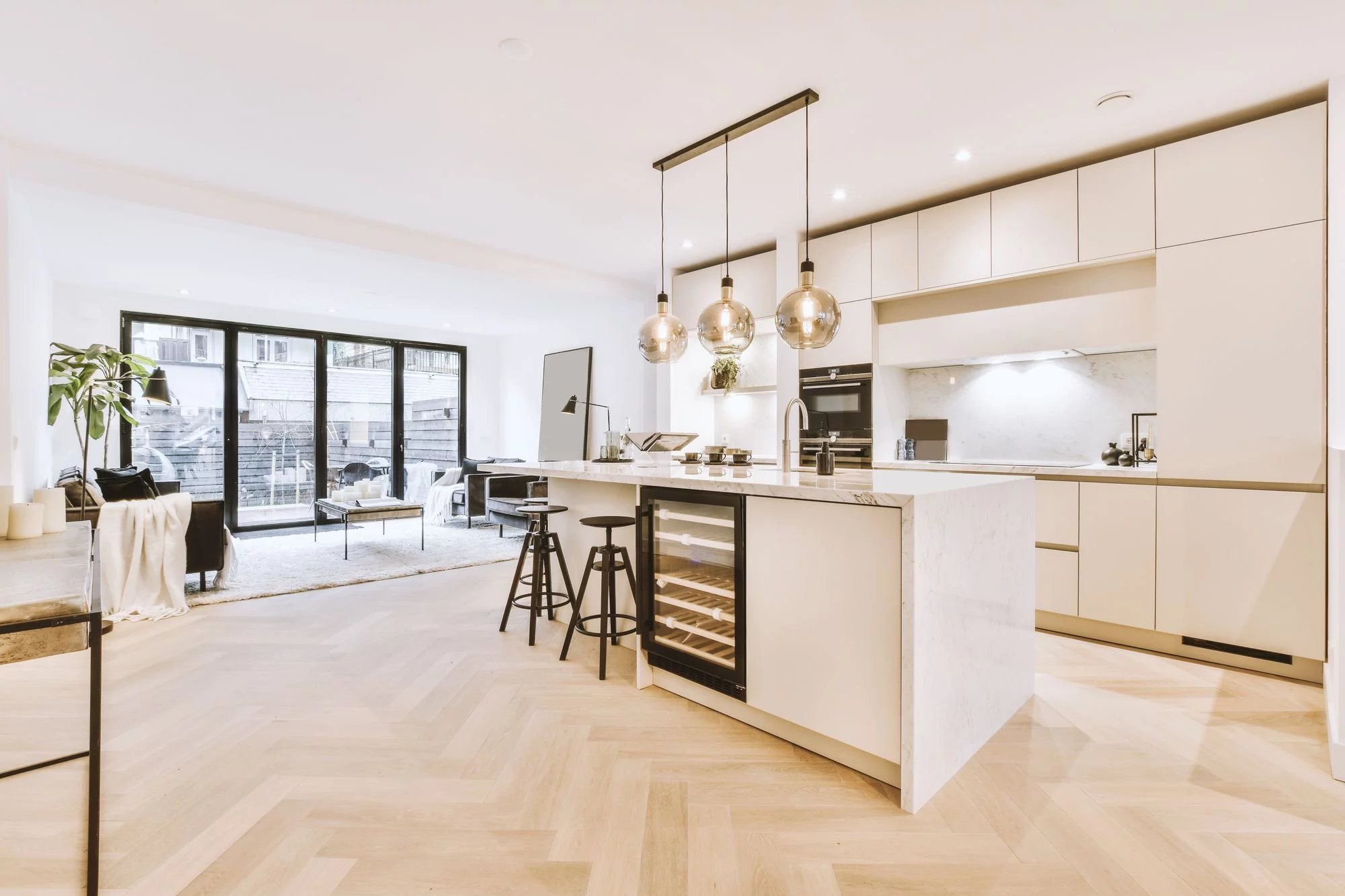
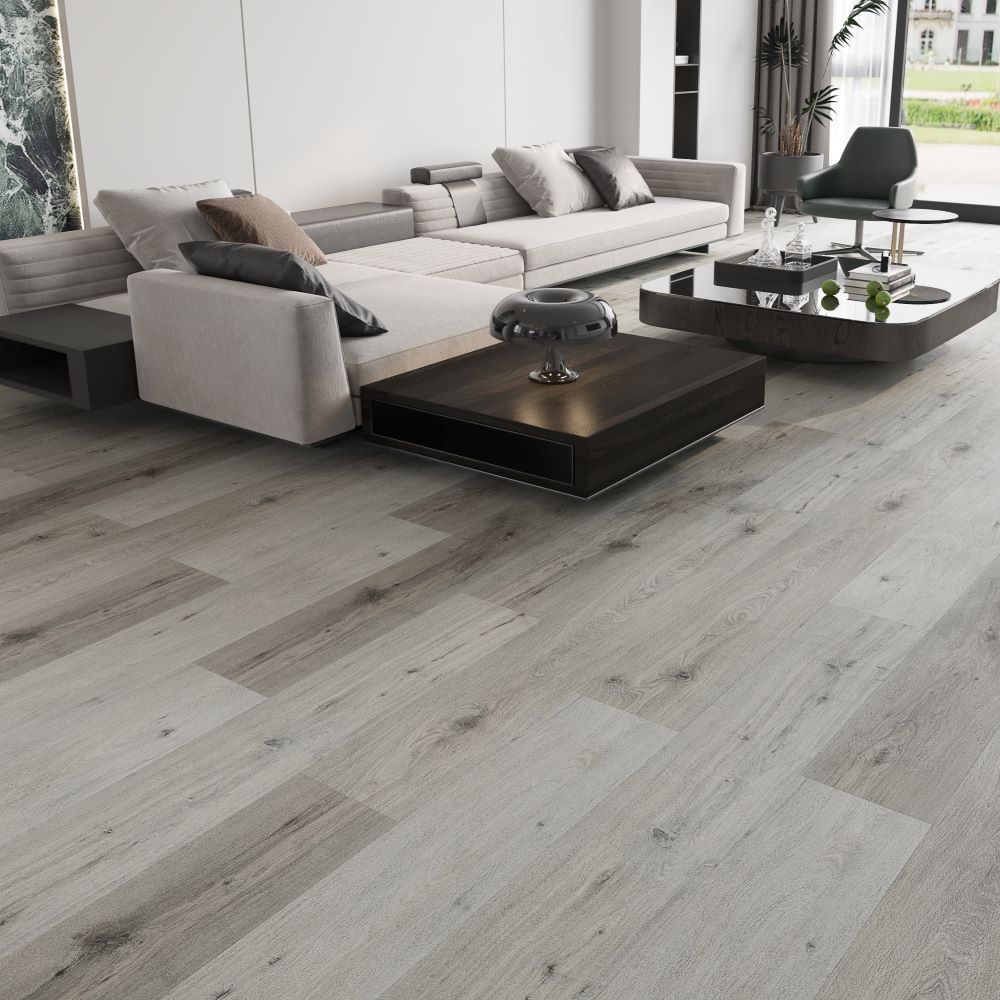
In a kitchen, water is occasional: a spill, a splash at the sink, a leak. Where engineered oak goes into a kitchen, it goes in on the understanding that water is wiped up rather than left. In a bathroom, water is daily and it stands. For that, the floors in our range listed as waterproof are the 36 rigid vinyl floors, all click-fitted with the underlay attached. Even there, the association for these floors, the MMFA, says to avoid ponding in any case: listed as waterproof describes the plank, not a floor that can be flooded.
If the floor does get wet
Take standing water up straight away and find where it came from, above or below. Then let the floor dry before deciding what it needs, since wood that has swollen shrinks again as it loses moisture. Boards that stay warped or lifted once dry are a question for a fitter, and the cause, a leak or damp from below, is dealt with before any repair.
Common questions
Is engineered oak waterproof?
No. It is real oak on top of a cross-laid core, and wood is hygroscopic: it takes on moisture from the air and from liquid water. The construction makes it more stable than solid oak, not waterproof. In our range, the floors listed as waterproof are the 36 rigid vinyl floors.
Does a lacquered finish make oak waterproof?
No. The Wood Handbook of the US Forest Products Laboratory says moisture content changes can be retarded, but not prevented, by protective coatings such as varnish, lacquer or paint. A lacquer slows water down; it does not keep it out of the wood.
Is engineered oak more water resistant than solid oak?
It is more stable, which is a different thing. BEAMA describes engineered timber as more stable than solid timber because it is cross-laminated, so its moisture content is less critical. The oak surface takes on water in the same way.
Can engineered oak go in a kitchen?
Yes, on the understanding that water is wiped up rather than left: a spill left standing finds the joints and the end grain. For the wet end of a kitchen or a utility room, the rigid vinyl floors listed as waterproof are the alternative.
Can engineered oak go in a bathroom?
Not where water stands every day. Wood takes on liquid water rapidly through the end grain, and a finish slows that down without stopping it. The floors in our range listed as waterproof are the 36 rigid vinyl floors, and the MMFA still asks for ponding to be avoided on them.
We deliver engineered oak and rigid vinyl town by town across the UK. Browse by town and region.

What the published standards say
Who publishes this guide
- Samples £1.99 each
- UK-wide delivery
- Advice before you order