








Samples available UK-wide delivery

Your Basket

0

Your basket is empty

Browse our editorial collections and find your perfect floor.

Browse Collections
Subtotal £0.00
Shipping & discounts calculated at checkout
SSL encrypted — safe and secure
Unfinished Oak Flooring: Finished on Site
How to choose 4 min read

Unfinished Oak Flooring: Finished on Site

What unfinished oak is, why and how it is finished after fitting, oil or lacquer, how its colour changes, and the unfinished oak floor in our range.

Guide type
How to choose
Reading time
4 min
Acclimatisation
48 h
Max. surface temp., wood
27 °C

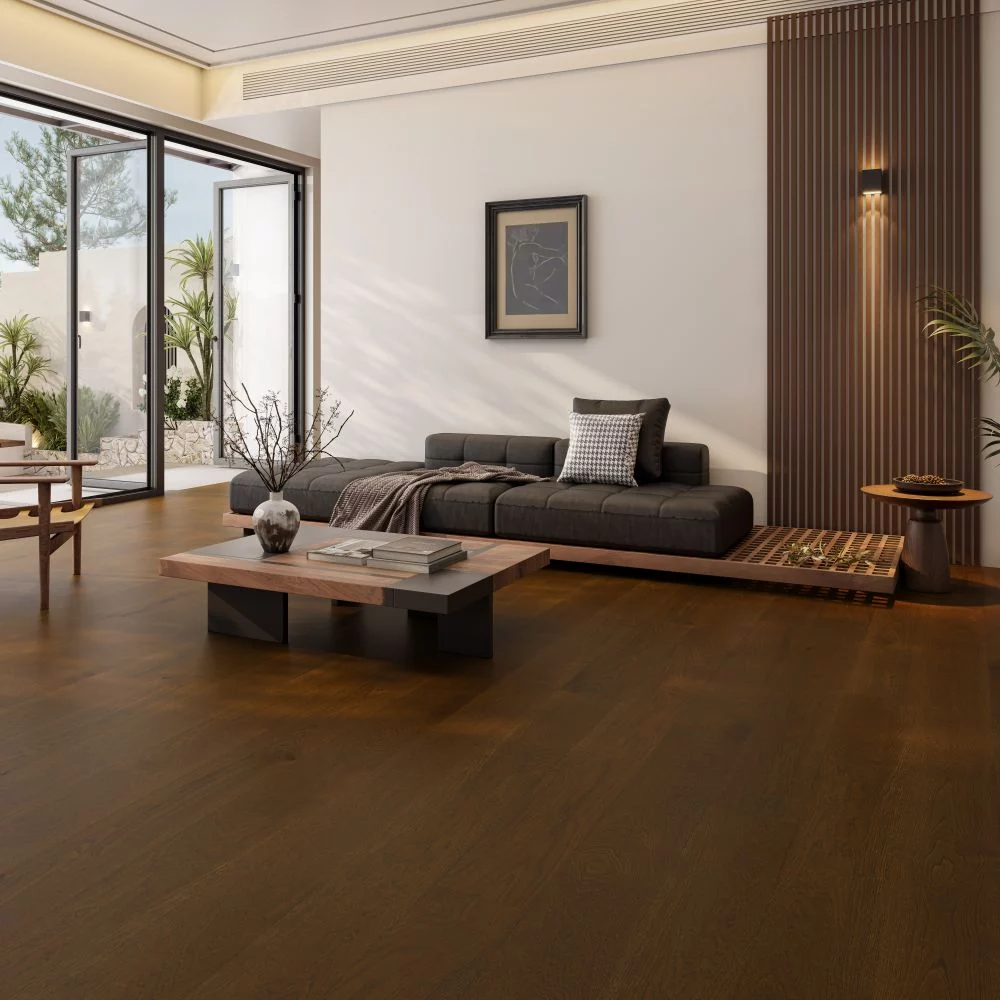
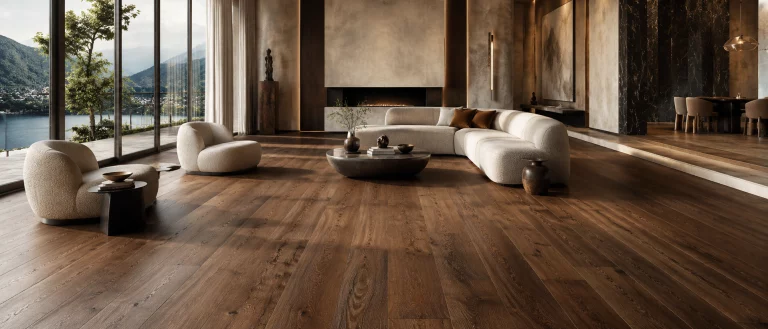
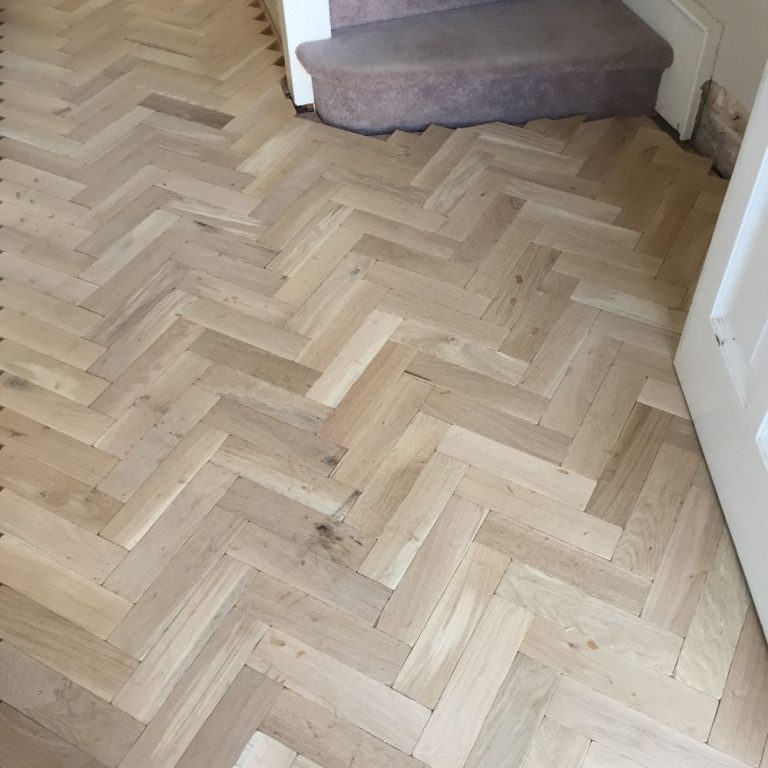
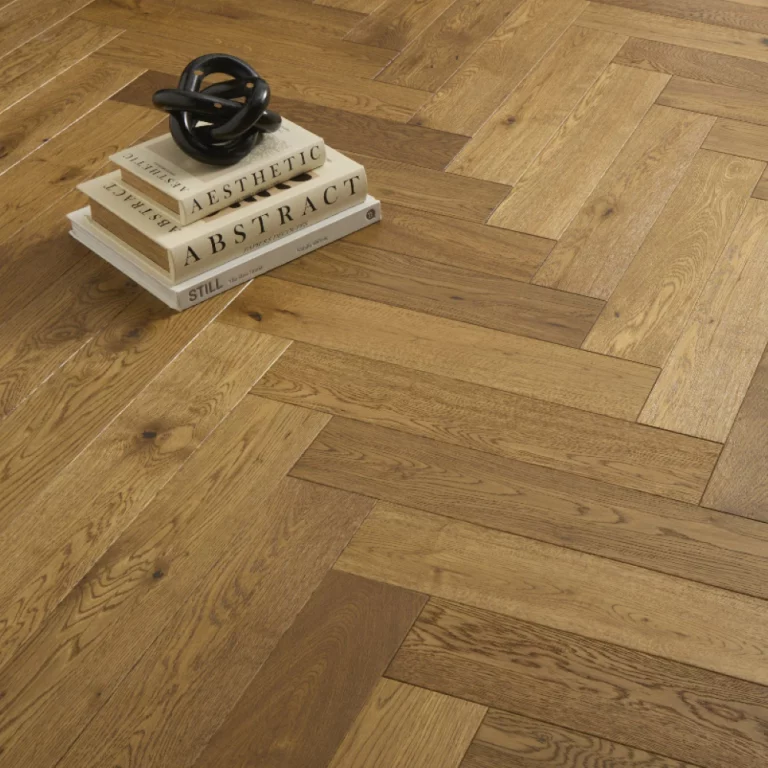
Unfinished oak is oak sold without a factory finish: the Finish line of the listing reads Unfinished, and the boards arrive as bare wood. The finish goes on once the floor is down, so the sheen and the final colour are chosen in the room rather than from a sample. In our range that is exactly one oak floor, the Marlow Solid Unfinished Oak Parquet Blocks, and one floor in another species, merbau.

1/ 9
01

What the range has

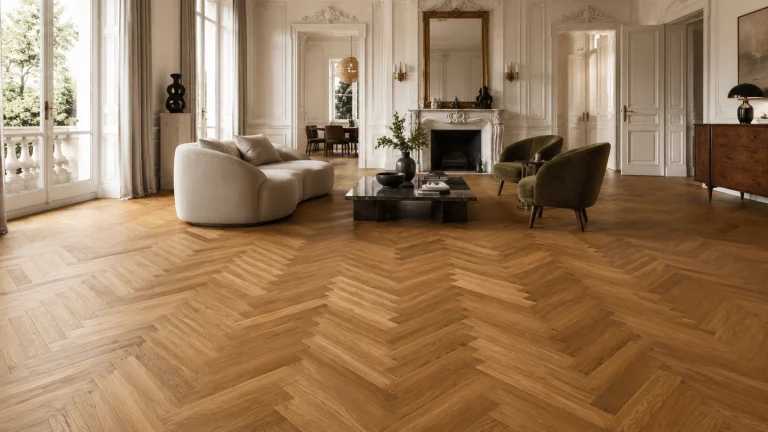
The Marlow Solid Unfinished Oak Parquet Blocks are solid European oak, 18 mm thick, in blocks of 90 × 300 mm with a tongue and groove joint, and carry a 20 year manufacturer's warranty. The only other unfinished floor is the Marlow Solid Merbau Parquet Blocks, 18 × 70 × 280 mm. The same Marlow oak block also comes finished at the factory, 7 times over: 3 at 300 mm long and 4 at 450 mm, 5 of them lacquered and 2 oiled. Solid parquet blocks like these are made to BS EN 13226, the product standard for solid parquet elements with grooves and/or tongues.
See also
02

Why an unfinished floor is finished

A bare floor is not meant to stay bare. The Wood Handbook of the US Forest Products Laboratory names three things a finish does for a wood floor: it enhances the natural beauty of the wood, protects it from excessive wear and makes it easier to clean. Choosing unfinished means choosing that finish yourself, and having it applied after fitting.

03

How the finish goes on

The Handbook describes finishing a floor in four steps: sanding the surface, applying filler, staining to a desired colour, and finishing with a clear coat. It adds that the detailed procedure and the products depend largely on the species of wood and the finish chosen, and it sends readers to flooring associations and manufacturers for them. In practice that means following the instructions of the finish you choose.

04

Oil or lacquer

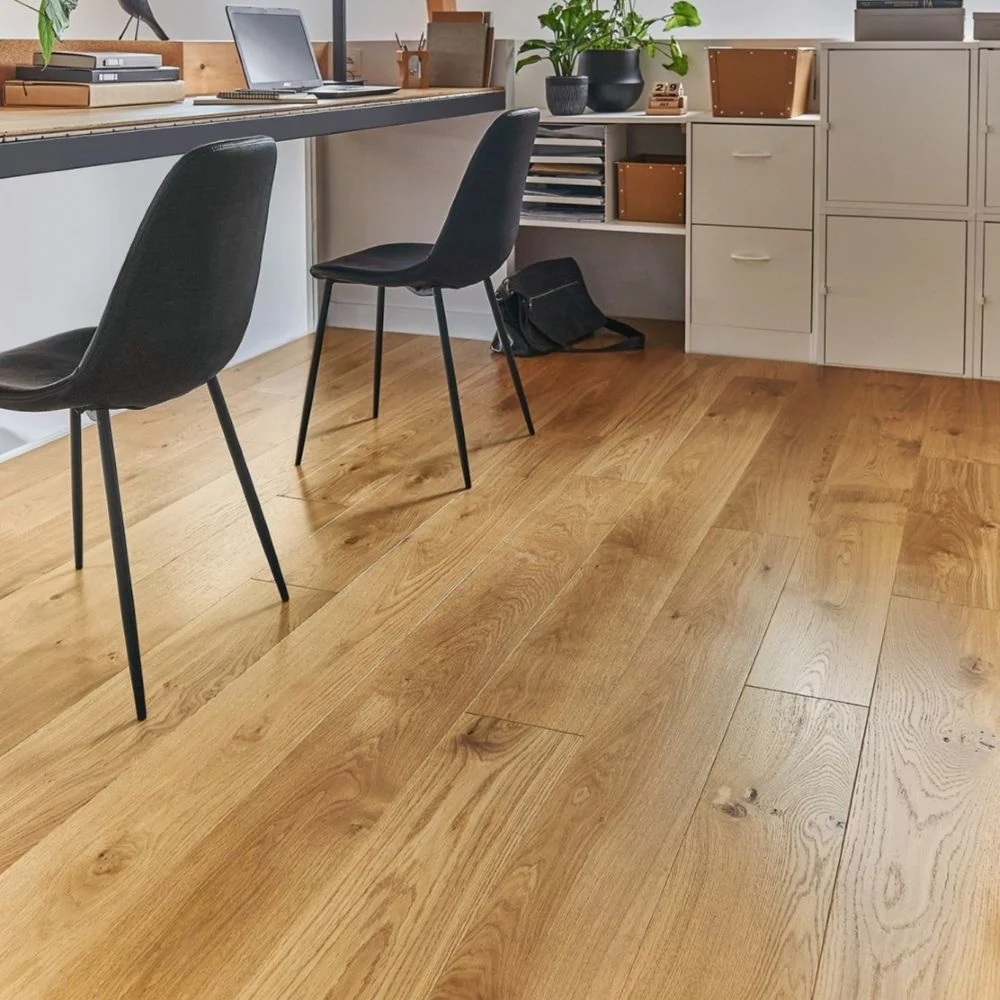
Clear finishes come in two kinds, and the Handbook compares them. A film-forming finish such as varnish is generally easier to clean and better at keeping the wood from getting dirty; a penetrating finish such as oil leaves the surface texture intact. Films are worn away by repeated cleaning and abrasion, and floors need thicker, harder films. Which suits which room is set out in the guide to oiled and lacquered floors.
See also
05

Unfinished oak changes colour too

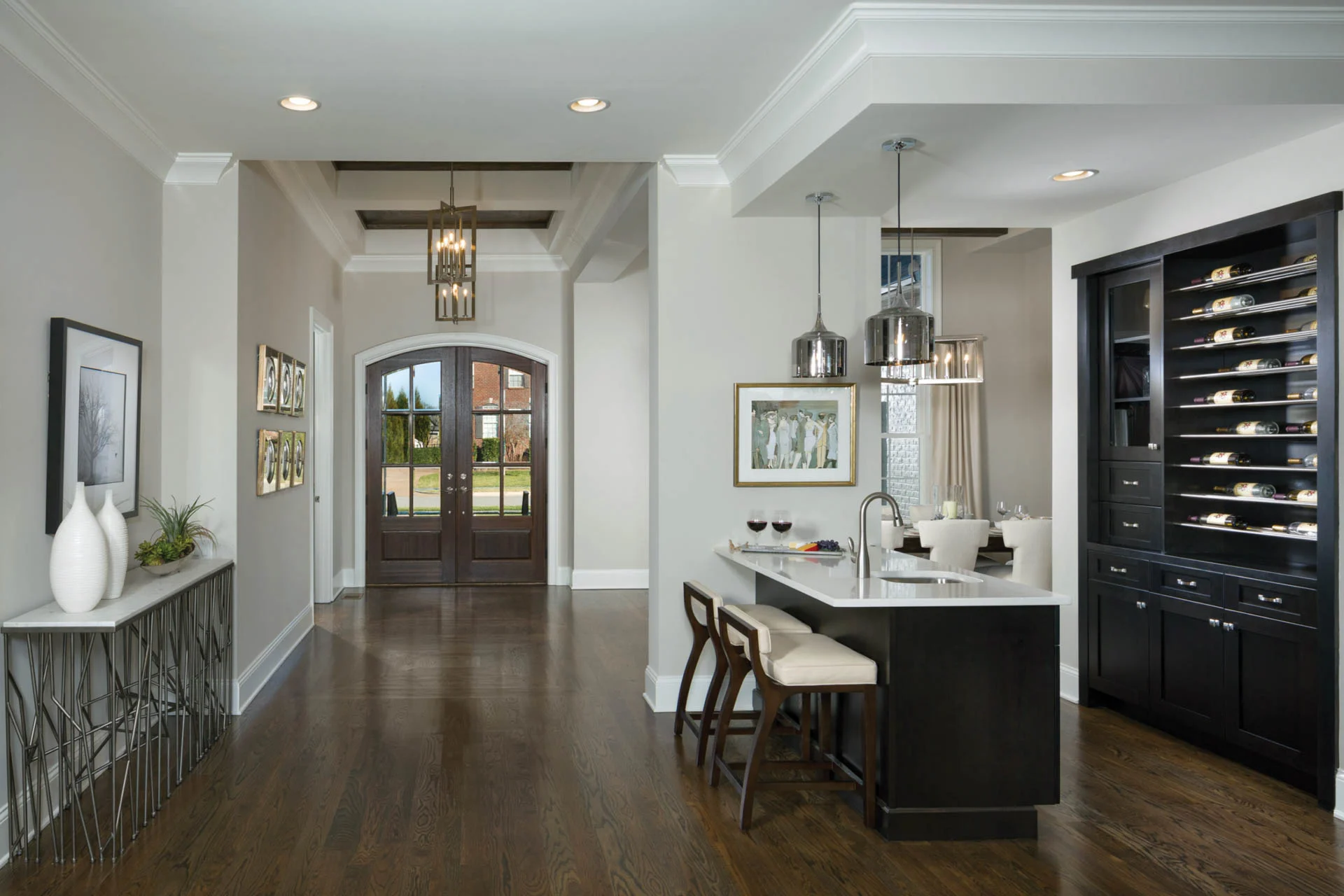
Leaving the factory finish off does not stop the colour moving. The Handbook says wood changes colour as it ages indoors, whether unfinished or finished, and that in general dark wood gets lighter and light wood gets darker. Its advice for a newly laid floor is to check under rugs after a few weeks and, if the colour is changing, to move the rugs from time to time so that no sharp lines form.

06

Before it goes down

The Contract Flooring Association asks for the room to be at its in-service temperature 48 hours before installation, so that the flooring can be kept in the room and reach room temperature first. The Marlow blocks are listed as not compatible with underfloor heating, as are all 20 solid wood floors in the range; over a heated floor the answer is one of the 65 engineered floors, all listed as compatible.
See also
07

Common questions

What is unfinished oak flooring?

Oak sold without a factory finish, as bare wood, to be finished once it is laid. In our range it is one floor: the Marlow Solid Unfinished Oak Parquet Blocks, 18 × 90 × 300 mm.

Does unfinished oak have to be finished?

It is meant to be. The Wood Handbook of the US Forest Products Laboratory says finishes enhance the natural beauty of wood floors, protect them from excessive wear and make them easier to clean.

Should unfinished oak be oiled or lacquered?

Either; they behave differently. The Wood Handbook describes film finishes such as varnish as generally easier to clean, and oils as penetrating finishes that leave the surface texture intact. The guide to oiled and lacquered floors sets out which suits which room.

Can unfinished oak go over underfloor heating?

Not the unfinished oak in our range: the Marlow blocks are listed as not compatible with underfloor heating, like all 20 solid wood floors we sell. All 65 engineered floors are listed as compatible.

Will unfinished oak change colour?

Yes, like finished oak. The Wood Handbook says wood changes colour as it ages indoors, finished or not, and that in general light wood gets darker and dark wood lighter.

We deliver solid oak town by town across the UK. Browse by town and region.
See also
08

What the published standards say

Each entry is quoted from its source and linked to it. The full set is in the standards reference.

Finishing a wood floor: what a finish does, and the four steps

The Wood Handbook of the US Forest Products Laboratory says finishes enhance the natural beauty of wood floors, protect them from excessive wear and make them easier to clean, and describes finishing a floor in four steps: sanding the surface, applying filler, staining to the desired colour and finishing with a clear coat. Detailed procedures and products depend on the wood species and the finish chosen, and the Handbook refers readers to flooring associations and manufacturers for them.

“Finishes enhance the natural beauty of wood floors, protect them from excessive wear, and make them easier to clean (Fig. 16–31). Detailed procedures and specific products depend largely on the species of wood used and finish preference. Obtain additional information specific to your needs from flooring associations or individual flooring manufacturers. Finishing floors consists of four steps: sanding the surface, applying filler, staining to achieve a desired color, and finishing with a clear coat.”

Source: Wood Handbook — Wood as an Engineering Material, General Technical Report FPL-GTR-190 (Centennial Edition, 2010), chapter 16 "Finishing of Wood", section "Finishes for Wood Floors" — USDA Forest Service, Forest Products Laboratory

Oils and film finishes compared

The 2021 Wood Handbook of the US Forest Products Laboratory compares the two kinds of clear finish: film-forming finishes such as varnish are generally easier to clean and better at keeping wood from getting dirty than penetrating finishes such as oils, which leave the surface texture intact; films can protect against scratches and dents but are worn away by cleaning and abrasion, and floors need thicker, harder films.

“Smooth film-forming finishes, such as varnish, are generally easier to clean and better at preventing wood from getting dirty, compared with penetrating finishes such as oils that leave the surface texture intact. Films, especially when thicker, can also protect the wood from scratches and dents. Films often get worn away by repeated cleaning or by abrasion. Thicker, harder films are needed for high wear applications such as floors.”

Source: Wood Handbook — Wood as an Engineering Material, General Technical Report FPL-GTR-282 (2021), chapter 16 "Finishing of Wood", section "Transparent Finishes" — USDA Forest Service, Forest Products Laboratory

Wood changes colour indoors, finished or not

The 2021 Wood Handbook of the US Forest Products Laboratory says wood changes colour as it ages indoors, whether unfinished or finished, and that in general dark wood gets lighter and light wood gets darker; it advises checking under rugs on newly installed floors after a few weeks and moving the rugs periodically if the colour is changing, to avoid sharp lines.

“As with wood used outdoors, wood changes color as it ages indoors, whether unfinished or finished. In general, dark wood gets lighter and light wood gets darker. … Check under rugs on newly installed floors after a few weeks to see if color change is occurring. If so, remove or move the rugs periodically to avoid sharp lines.”

Source: Wood Handbook — Wood as an Engineering Material, General Technical Report FPL-GTR-282 (2021), chapter 16 "Finishing of Wood", section "Interior Finishes" — USDA Forest Service, Forest Products Laboratory

BS EN 13226 — solid parquet elements

BS EN 13226 specifies the characteristics of solid parquet elements with grooves and/or tongues intended for internal use as flooring, covering elements with or without surface treatment.

“This European Standard specifies the characteristics of solid parquet elements with grooves and/or tongues for internal use as flooring. This standard is not applicable to panels made from elements for which a separate standard is in course of preparation.”

Source: BS EN 13226:2009 - Wood flooring. Solid parquet elements with grooves and/or tongues

Acclimatisation before fitting

The Contract Flooring Association's guide states that the room should be at its in-service temperature 48 hours before installation so that the flooring can be kept in the room and reach room temperature before it is laid.

conditioning before installation48 h

“They also advise that this temperature should be attained 48 hours prior to the installation, so that floorings can be kept in the room and brought to room temperature (acclimatised) before installation.”

Source: CFA Guide to Contract Flooring - Contract Flooring Association

Wood over underfloor heating

UK trade-association guidance sets no blanket ban on wood over underfloor heating but ties it to a temperature limit, noting that some hardwood floor finishes are installed with a maximum floor surface temperature of 27 °C.

maximum floor surface temperature for some hardwood finishes27 °C

“For example, some hardwood floor finishes are installed with a maximum floor surface temperature of 27°C.”

Source: CFA Guidance Document — Beyond Installation: Guidance on Underfloor Heating (Contract Flooring Association)
09

Who publishes this guide

Homes and Floors Ltd, registered in England and Wales, company number 11762665, incorporated in January 2019. Endeavour House, Floor 3, Coopers End Road, Stansted CM24 1SJ.

Where a guide quotes a standard or a regulation, the source is named and linked. Product figures come from the specifications on the product pages. If something here is wrong, tell us at info@homesandfloors.com and we will check it.

First published .

Still deciding?
A sample on the floor, in the room it is for, answers most of what a description cannot.
Newsletter

New ranges and offers. Hear it first.

Unsubscribe anytime